
BWF Approves Synthetic Shuttlecocks for International Play Amid Global Feather Shortage
The Badminton World Federation has authorized the use of synthetic shuttlecocks in selected international tournaments to combat skyrocketing costs and a severe shortage of goose feathers. The trial marks a historic technological shift for the world's fastest racket sport.
By Xia Wu

For over a century, the distinct sound of a badminton smash has been produced by a highly specific piece of equipment: a cork base ringed by exactly sixteen natural bird feathers. But the sport's highest governing body is now rewriting that tradition. In April 2026, the Badminton World Federation (BWF) officially approved the use of synthetic shuttlecocks for sanctioned international competition.
The landmark decision authorizes artificial shuttlecocks for BWF Grade 3 tournaments and Junior International events, marking the first time non-feather projectiles will be used in professional-track global play. The move is not merely a technological experiment; it is an urgent response to a severe supply chain crisis that is threatening the accessibility of the world's fastest racket sport.[1][2]
The BWF's approval specifically greenlights two high-end synthetic models for the initial trial phase: the Victor New Carbon Sonic Max and the Yonex Crosswind 70. Tournament organizers and member associations hosting Grade 3 or Junior events can now register to use these approved synthetics instead of traditional feather shuttlecocks.
This initiative is the first step in a long-term strategy to evaluate whether artificial plumes can eventually replace natural feathers at the sport's most elite levels, including the World Championships and the Olympic Games. By introducing them at the junior and lower-tier professional levels, the BWF aims to gather extensive performance data and direct feedback from the next generation of elite athletes.[1]
The catalyst for this historic shift is a crippling global shortage of the specific duck and goose feathers required to manufacture traditional shuttlecocks. China, which dominates the global production of badminton equipment, has seen a sharp decline in duck and goose agricultural output in recent years.
This decline is largely attributed to changing consumer dietary habits and shifting agricultural priorities within the country. Because the sport's popularity is simultaneously exploding across Asia and Europe, the surging demand has collided violently with the shrinking supply. The result has been a severe economic squeeze on players, clubs, and tournament organizers worldwide.[4][5]
The economics of the feather shortage have become impossible for the sport to ignore. Over the past year, skyrocketing raw material costs in China caused the retail price of high-quality tournament shuttlecocks to more than double. While BWF Secretary-General Thomas Lund previously noted that the shortage was not yet at a crisis level, the governing body's internal reviews concluded that proactive measures were necessary to protect the sport's growth. If local clubs and developing nations are priced out of purchasing shuttlecocks, the global pipeline of badminton talent risks severe contraction.[2][4]
To understand why replacing feathers is so difficult, one must look at the exacting anatomy of a traditional shuttlecock. A tournament-grade shuttlecock requires exactly 16 feathers, which must be sourced from either the left or the right wing of a goose or duck—never mixed—to ensure the projectile spins correctly in flight.
These feathers provide unparalleled aerodynamic stability, allowing the shuttlecock to decelerate rapidly after a high-speed smash and drop vertically, a unique flight trajectory that defines professional badminton tactics. Replicating this exact aerodynamic profile with plastics or nylon has been the holy grail of sporting goods engineering for decades.[2][4][5]
Historically, synthetic shuttlecocks—often made of molded nylon—were relegated to recreational play and backyard sets. While highly durable, their flight path was notoriously imprecise, and they lacked the crisp feel and acoustic feedback that professional players rely on to judge their shots. However, the newly approved models represent a massive leap in materials science.
The Victor New Carbon Sonic Max, for example, utilizes aerodynamically optimized synthetic feathers attached to a carbon composite shaft. This design mimics the structural integrity and flex of a natural feather quill, providing a much more consistent trajectory and a reproducible feel during high-speed rallies.[2]
The primary advantage of these advanced synthetics is their extreme durability. A traditional feather shuttlecock is fragile; the feathers easily fray or snap during the explosive exchanges of a professional match, where smash speeds can exceed 500 kilometers per hour. It is common for professional players to discard and replace a feather shuttlecock every few points.
In contrast, the carbon-composite structures of the new synthetics can withstand significantly more punishment, maintaining their flight characteristics over much longer periods of play. For clubs with high shuttlecock consumption, this durability translates to massive cost savings, even if the initial unit price of the synthetic shuttle is comparable to a natural one.[2]
The BWF's trial phase is designed to rigorously test whether this increased durability comes at the cost of elite precision. Throughout the 2026 season, the governing body will collect comprehensive performance data from the manufacturers, alongside qualitative feedback from the players, technical officials, and event organizers participating in the Grade 3 and Junior tournaments.
This data will be crucial in determining if the synthetic flight characteristics truly align with current competition standards. If the shuttlecocks behave unpredictably under the immense physical stress of professional play, the BWF will have to delay any rollout to higher-tier events.[1][2]
National badminton associations are already preparing for what many see as an inevitable transition. The Badminton Association of Malaysia (BAM), one of the sport's powerhouse federations, has signaled that it will comply with the BWF's directives if the synthetic rollout expands.
BAM deputy president Datuk V. Subramaniam emphasized that the sheer availability of shuttlecocks is now a more pressing concern than the financial cost. If the shortage is serious, the world body has to look into other options, Subramaniam stated, acknowledging that while the transition may be difficult, the sport cannot function without a reliable supply of its most essential piece of equipment.[3]
Despite the optimism from governing bodies and manufacturers, skepticism remains high among traditionalists and current elite players. The tactile feedback of natural feathers is deeply ingrained in the muscle memory of top-tier athletes. Subtle variations in how a synthetic shuttlecock grips the air or bounces off the racket string bed could fundamentally alter the execution of delicate net shots or defensive lifts.
While the junior players testing the new equipment this year may adapt quickly, convincing veteran champions to abandon the natural feathers they have trained with for decades will likely be the BWF's greatest political hurdle.[2]
The environmental implications of this shift are also becoming a larger part of the conversation. Producing millions of feather shuttlecocks annually requires a massive agricultural footprint, and as global focus shifts toward sustainability and animal welfare, the traditional manufacturing process has faced increased scrutiny.
While the current push for synthetics is primarily driven by supply shortages and economics, the successful adoption of artificial shuttlecocks would inadvertently solve a looming public relations issue for the sport. A transition to carbon-composite and advanced plastics, provided they can be recycled or manufactured sustainably, aligns badminton more closely with the eco-conscious values of younger generations of fans and players.
The engineering challenge of the skirt—the flared portion of the shuttlecock—remains the most scrutinized element of the new synthetics. Natural feathers have microscopic barbs that interlock, creating a semi-porous surface that catches the air in a highly specific manner. To replicate this, manufacturers have had to move beyond simple molded plastics.
The latest iterations utilize micro-perforated synthetic membranes that attempt to mimic the exact drag coefficient of interlocking goose feathers. Engineers use high-speed wind tunnels and computational fluid dynamics to fine-tune these synthetic skirts, ensuring the shuttlecock decelerates at the exact rate required for professional play.
Another critical factor in the BWF's evaluation will be the impact of the new shuttlecocks on player health and biomechanics. Because synthetic shuttlecocks can sometimes feel slightly heavier or stiffer off the racket face, there are lingering questions about whether they might increase the transmission of shock through the racket shaft and into the player's arm.
Badminton already places immense strain on the wrist, elbow, and shoulder joints. Technical officials and sports scientists will be closely monitoring injury rates and player feedback during the Grade 3 trials to ensure the new materials do not inadvertently increase the risk of repetitive strain injuries among competitors.
The rollout strategy itself—starting with Junior International tournaments—is a calculated move by the BWF. Junior players, who are still refining their techniques and are generally more adaptable to equipment changes, provide an ideal testing ground. By introducing the synthetics at this level, the BWF is essentially seeding the future of the sport.
If these young athletes grow accustomed to the flight and feel of the Victor New Carbon Sonic Max or the Yonex Crosswind 70, they will carry that preference into the senior ranks, naturally phasing out the reliance on natural feathers over the next decade.[1]
As the 2026 season progresses, the badminton world will be watching the Grade 3 circuit with unprecedented interest. The data collected from these tournaments will not just dictate the future of equipment manufacturing; it will determine the tactical evolution of the sport itself.
If the synthetic shuttlecocks prove to be slightly faster or slower in specific conditions, players and coaches will have to adapt their strategies, potentially altering the balance of power between aggressive smashers and defensive tacticians. The humble shuttlecock is the heart of badminton, and its synthetic reinvention is poised to send ripples through every level of the game.[1][2]
Ultimately, the BWF's 2026 synthetic shuttlecock trial represents a critical inflection point for badminton. The sport is being forced to balance its rich, century-old traditions against the harsh realities of modern supply chains and environmental sustainability.
If the Victor and Yonex models prove successful in the junior and Grade 3 circuits, it will pave the way for a more affordable, accessible, and sustainable future for the game. The transition may be born out of necessity, but it has the potential to democratize badminton, ensuring that the next generation of players isn't grounded by the rising cost of a few goose feathers.[1][3][4]
Key points
- The BWF has approved synthetic shuttlecocks for Grade 3 and Junior International tournaments.
- A severe global shortage of duck and goose feathers has caused equipment prices to double.
- The approved synthetics use carbon composite shafts to mimic the aerodynamics of natural feathers.
- The trial aims to determine if synthetics can eventually replace feathers at the elite level.
- Manufacturers claim the new synthetics offer massive durability and cost-saving advantages.
How we got here
Pre-2024
Traditional goose and duck feather shuttlecocks dominate all levels of professional badminton.
2024-2025
Declining agricultural output in China causes a severe global shortage of high-quality feathers, doubling equipment costs.
Early 2026
The BWF conducts internal reviews regarding the sustainability and cost of traditional shuttlecocks.
April 2026
The BWF officially approves the Victor New Carbon Sonic Max and Yonex Crosswind 70 for Grade 3 and Junior International tournaments.
Mid-2026
Official market launch and widespread testing of the new BWF-approved synthetic models begins.
- Badminton Governing Bodies
- Prioritizing the long-term survival and accessibility of the sport amid supply chain crises.
- Equipment Manufacturers
- Focusing on technological innovation to close the performance gap between plastics and natural feathers.
- Traditionalists & Elite Players
- Expressing skepticism about the ability of synthetics to replicate the precise feel and flight of natural feathers.
Perspectives this story doesn't cover
- Agricultural suppliers in China
- Recreational badminton players
Sources
Source coverage
5 outlets
3 viewpoints surfaced





- [1]BWF CorporateBadminton Governing Bodies
Use of Synthetic Shuttlecocks at Selected BWF Tournaments
Read on BWF Corporate → - [2]Inside The GamesTraditionalists & Elite Players
BWF to test synthetic feather shuttlecocks
Read on Inside The Games → - [3]ScoopBadminton Governing Bodies
BAM signals inevitable shift to synthetic shuttlecocks amid global feather shortage
Read on Scoop → - [4]ABS-CBN SportsTraditionalists & Elite Players
Badminton to trial synthetic shuttlecocks because of feather shortage
Read on ABS-CBN Sports → - [5]Fly FMTraditionalists & Elite Players
BWF To Trial Synthetic Shuttlecocks Due to Feather Shortage
Read on Fly FM →
More in Sports
See all →Sports Biomechanics
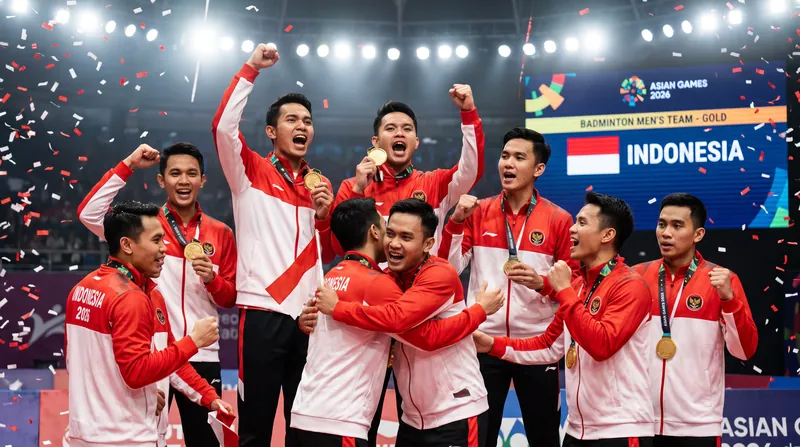
The 400 km/h Illusion: How Aerodynamic Drag Strips the Badminton Smash of Its Power
6 sources
Standings
Liu Shengshu and Tan Ning Command BWF Women's Doubles Standings Amid Historic Veteran Reshuffle
6 sources
Standings
Shi Yuqi and An Se-young Command BWF Standings as Race to Hangzhou Enters High-Stakes World Championships
5 sources
Standings
Historic French Surge Shakes Up BWF Men's Singles Standings as Popov and Lanier Crack Top 10
6 sources
Comments
Every angle. Every day.
Get Sports stories with full source coverage and perspective breakdowns, free every day.