
U.S. and Iran Sign Memorandum to End 110-Day War, but Lebanon Ceasefire Remains Fragile
President Trump and Iranian President Masoud Pezeshkian have signed a 14-point framework to halt hostilities and reopen the Strait of Hormuz. The agreement kicks off a 60-day window for a final nuclear deal, though immediate clashes in Lebanon threaten to derail the fragile truce.
By Factlen Editorial Team
- Trump Administration
- Views the agreement as a historic victory achieved through military strength.
- Iranian Leadership
- Frames the deal as a diplomatic success that secured vital economic relief.
- Israeli Government
- Fears the agreement allows Iran to preserve its nuclear ambitions.
- U.S. Critics
- Argues the administration surrendered crucial economic leverage upfront.
What's not represented
- · Lebanese civilians displaced by the ongoing cross-border strikes.
- · Global shipping companies navigating the mine-clearing operations in the Strait of Hormuz.
Why this matters
The 110-day conflict severely disrupted global energy markets and international shipping. This ceasefire not only reopens the critical Strait of Hormuz—promising relief for global oil prices—but also sets the stage for a high-stakes 60-day negotiation that will determine the future of Iran's nuclear program and the broader stability of the Middle East.
Key points
- The U.S. and Iran signed a 14-point memorandum to end their 110-day war.
- The deal immediately reopens the Strait of Hormuz and lifts U.S. oil sanctions.
- A 60-day window is set to negotiate a final settlement on Iran's nuclear program.
- Iran agreed to down-blend its 440kg stockpile of highly enriched uranium.
- The pact requires a ceasefire in Lebanon, which Israel initially defied before agreeing to a truce.
- Israeli officials and U.S. critics argue the deal gives up too much leverage upfront.
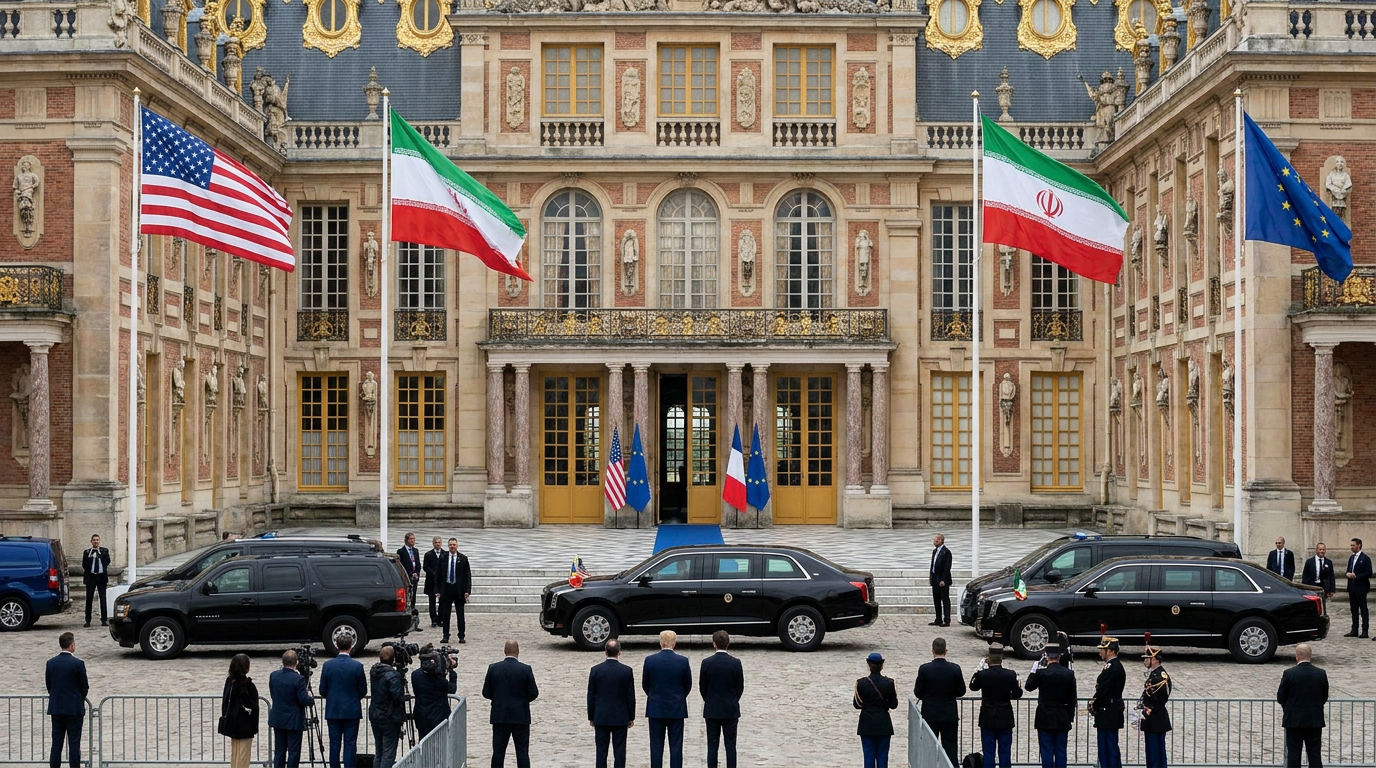
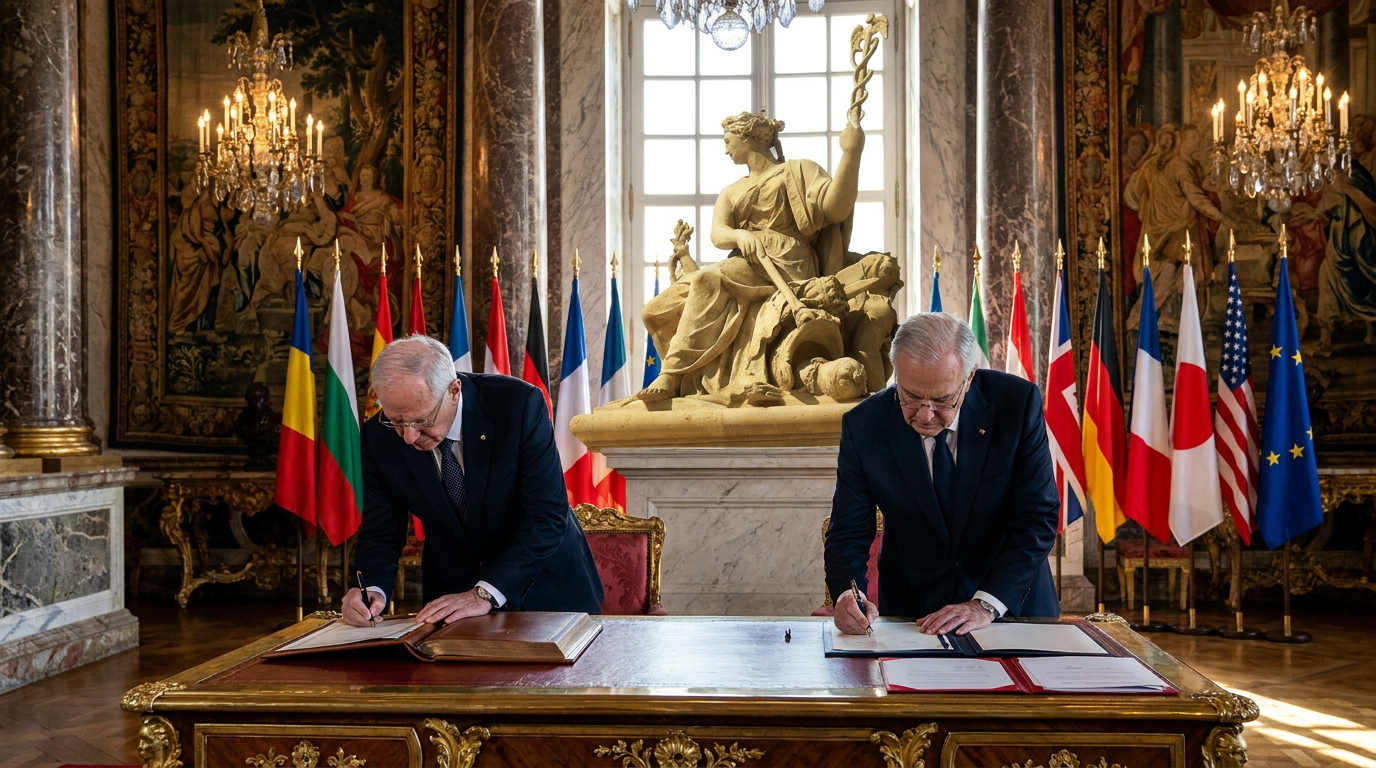
The United States and Iran have signed a 14-point memorandum of understanding (MOU) to end their 110-day war, halting a conflict that has devastated the global energy market and claimed thousands of lives. Signed by U.S. President Donald Trump and Iranian President Masoud Pezeshkian at the Palace of Versailles, the framework immediately reopens the Strait of Hormuz and lifts the U.S. naval blockade of Iranian ports.[1][6]
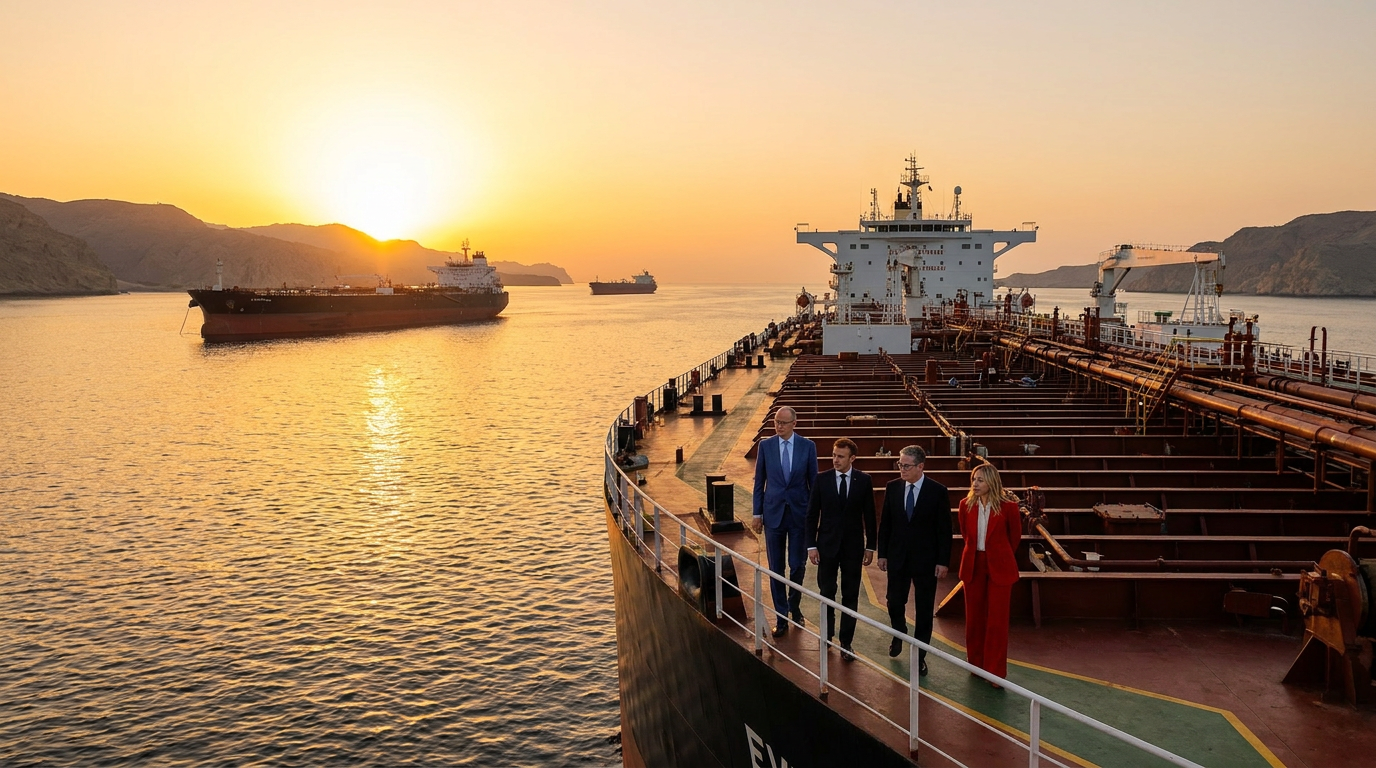
The war, which began on February 28 with a massive campaign of U.S. and Israeli airstrikes targeting Iranian leadership and nuclear sites, quickly devolved into a punishing asymmetric conflict. Iran retaliated by mining the Strait of Hormuz, effectively choking off a vital artery for global oil and natural gas and triggering a worldwide energy crisis.[6]
The newly signed agreement establishes a 60-day negotiating window to finalize a comprehensive settlement regarding Iran's nuclear program and the lifting of international sanctions. In the interim, Washington has granted immediate waivers allowing Tehran to resume crude oil exports, a move that sent global energy prices tumbling.[1][5]

The core of the upcoming 60-day negotiation period will focus on Iran's nuclear capabilities. According to U.S. officials, Iran has agreed that its 440-kilogram stockpile of highly enriched uranium will, at a minimum, be down-blended on Iranian soil under the supervision of the International Atomic Energy Agency (IAEA).[1][6]
In exchange, Iran is seeking access to billions of dollars in frozen assets and a reported $300 billion postwar reconstruction fund. The MOU stipulates that full access to frozen funds is contingent upon the implementation of the final agreement, though the immediate oil waivers provide Tehran with a vital economic lifeline.[1][4]
In exchange, Iran is seeking access to billions of dollars in frozen assets and a reported $300 billion postwar reconstruction fund.
However, the pact's durability is already being tested. The MOU explicitly calls for an immediate and permanent termination of military operations "on all fronts, including in Lebanon." This clause effectively requires Iran to rein in Hezbollah, while placing pressure on the U.S. to ensure Israeli compliance.[1][2]
Israel, which was not a party to the MOU, initially defied the ceasefire provision. Hours after the agreement was signed, the Israeli military launched deadly airstrikes in southern Lebanon, killing at least 18 people, while Hezbollah retaliated, resulting in the deaths of four Israeli soldiers.[3][4]

The flare-up in Lebanon prompted Iran to suspend technical talks scheduled to take place in Geneva, Switzerland, leading U.S. Vice President JD Vance to postpone his trip. Iranian Foreign Minister Abbas Araghchi stated that the U.S. has a "commitment and responsibility" to ensure the deal is upheld on all fronts.[2][4]
Following intense diplomatic pressure from the White House—with President Trump stating he personally asked Israel to stand down—Israel and Hezbollah agreed to renew their ceasefire on Friday. The truce was mediated by Qatar, the U.S., and Iran, temporarily saving the broader agreement from collapse.[3][4]
The deal has drawn sharp criticism from Israeli leadership and U.S. Democrats. Israeli officials feel sidelined and fear the 60-day pause allows Iran to preserve its nuclear infrastructure rather than dismantling it. Meanwhile, critics of the Trump administration argue the 1.5-page MOU front-loads economic relief without securing the ironclad, verified benchmarks seen in the 160-page 2015 Joint Comprehensive Plan of Action (JCPOA).[5][6]

Conversely, the White House and its allies have championed the agreement as a historic diplomatic breakthrough achieved through American strength. Supporters emphasize that the deal successfully reopens the critical Strait of Hormuz and secures a written commitment from Iran to never acquire a nuclear weapon.[7]
As the 60-day clock ticks down, the Middle East remains in a precarious interregnum. With either side able to walk away at any time, the success of the Versailles agreement hinges on whether technical negotiators in Geneva can bridge decades of mistrust, and whether the fragile truce in Lebanon can hold while maritime authorities work to clear the 500-vessel backlog in the Strait of Hormuz.[1][6]
How we got here
Feb 28, 2026
The U.S. and Israel launch a massive campaign of airstrikes against Iran, beginning the 110-day war.
Spring 2026
Iran retaliates by mining the Strait of Hormuz, triggering a global energy crisis.
June 17, 2026
U.S. and Iranian officials finalize the text of a preliminary memorandum of understanding.
June 18, 2026
President Trump and President Pezeshkian sign the 14-point agreement at the Palace of Versailles.
June 19, 2026
Israel and Hezbollah clash in Lebanon, prompting Iran to suspend Geneva talks before a renewed ceasefire is brokered.
August 2026
The 60-day negotiating window for a final comprehensive agreement is set to expire.
Viewpoints in depth
The Trump Administration
Views the agreement as a historic victory achieved through military strength.
The White House and its Republican allies argue that the 110-day military campaign successfully forced Iran to the negotiating table. They emphasize that the deal achieves its primary objectives: reopening the Strait of Hormuz to global shipping and securing a written commitment from Tehran to never acquire a nuclear weapon. Supporters contrast this approach with previous administrations, arguing that American military resolve, rather than appeasement, yielded the breakthrough.
Iranian Leadership
Frames the deal as a diplomatic success that secured vital economic relief.
For Tehran, surviving 110 days of intense U.S. and Israeli airstrikes without regime collapse is viewed internally as a victory of resilience. The immediate lifting of U.S. oil sanctions provides a crucial lifeline to Iran's battered economy. However, Iranian officials remain deeply distrustful of Washington's ability to control Israel, insisting that the entire agreement hinges on a permanent cessation of Israeli military operations in Lebanon.
The Israeli Government
Fears the agreement allows Iran to preserve its nuclear ambitions.
Israeli officials have expressed deep frustration with the memorandum, feeling sidelined by their closest ally. Jerusalem's primary objective in the war was the complete destruction of Iran's nuclear infrastructure. From Israel's perspective, a 60-day negotiating window and the down-blending of uranium leaves Tehran's nuclear knowledge and facilities largely intact, while the immediate sanctions relief enriches a regime that continues to fund proxy groups like Hezbollah.
U.S. Critics & Former Officials
Argues the administration surrendered crucial economic leverage upfront.
Critics of the deal, including former Obama administration officials, point out that the 1.5-page memorandum lacks the rigorous, verified benchmarks of the 160-page 2015 JCPOA. They argue that by granting immediate oil waivers before a final nuclear settlement is reached, the U.S. has given up its most powerful economic leverage. Skeptics warn that if the 60-day talks collapse, Iran will have already reaped billions in oil revenue without dismantling its nuclear program.
What we don't know
- Whether the 60-day technical negotiations in Geneva will result in a final, binding nuclear agreement.
- How quickly the estimated 500-vessel backlog in the Strait of Hormuz can be cleared of naval mines.
- Whether the fragile ceasefire between Israel and Hezbollah in Lebanon will hold for the duration of the talks.
- When or if Iran will receive access to its frozen assets and the proposed $300 billion reconstruction fund.
Key terms
- Memorandum of Understanding (MOU)
- A preliminary, non-binding agreement outlining the broad terms of a deal before a final, detailed treaty is negotiated.
- Strait of Hormuz
- A narrow, strategically vital waterway between the Persian Gulf and the Gulf of Oman through which a significant portion of the world's oil passes.
- Down-blending
- The process of diluting highly enriched uranium with lower-grade material so it can no longer be used to create a nuclear weapon.
- Joint Comprehensive Plan of Action (JCPOA)
- The detailed 2015 nuclear agreement between Iran and world powers, which the Trump administration withdrew from in 2018.
Frequently asked
Did the U.S. and Iran sign a permanent peace treaty?
No. They signed a 14-point memorandum of understanding that halts fighting and establishes a 60-day window to negotiate a final, permanent agreement.
What happens to Iran's nuclear program?
Under the preliminary deal, Iran agreed to down-blend its 440-kilogram stockpile of highly enriched uranium under the supervision of the UN's nuclear watchdog.
Why is Israel upset about the deal?
Israel, which was not a party to the agreement, fears the 60-day pause allows Iran to preserve its nuclear infrastructure and objects to the immediate lifting of U.S. oil sanctions.
Will gas prices go down?
Global crude oil prices have already dropped significantly following the announcement that the Strait of Hormuz will reopen and U.S. sanctions on Iranian oil exports have been waived.
Sources
Source coverage
7 outlets
4 viewpoints surfaced







[1]The GuardianU.S. Critics
US-Iran deal takeaways: reopening the strait of Hormuz, waived oil sanctions and Lebanon
Read on The Guardian →[2]Al JazeeraIranian Leadership
Iran says US must ensure Israel complies with Lebanon ceasefire
Read on Al Jazeera →[3]CBS NewsIsraeli Government
Israel and Hezbollah reach ceasefire in Lebanon after flare-up tests U.S.-Iran deal
Read on CBS News →[4]PBS NewsHourIsraeli Government
Israel and Hezbollah renew ceasefire after U.S. and Iran call off talks over fighting in Lebanon
Read on PBS NewsHour →[5]The Jerusalem PostU.S. Critics
Here is how Obama's 2015 JCPOA and Trump's Memorandum of Understanding on Iran compare
Read on The Jerusalem Post →[6]Council on Foreign RelationsU.S. Critics
Trump's Iran Deal Reopens the Strait. Much Remains to Be Done.
Read on Council on Foreign Relations →[7]The White HouseTrump Administration
What They Are Saying: Support for President Trump's Historic Peace Deal
Read on The White House →

Every angle. Every day.
Get news politics stories with full source coverage and perspective breakdowns delivered to your inbox.