
Mushroom Leather Reaches Commercial Scale: How Fungi Are Rewriting Fashion's Future
After years of lab development, next-generation biomaterials made from the root structures of fungi are hitting the commercial market. The shift promises to solve the fashion industry's reliance on both toxic animal tanning and plastic-heavy vegan leathers.
By Factlen Editorial Team
- Biotech Innovators
- Startups and material scientists focused on scaling biofabrication to replace extractive industries.
- Fashion Industry Strategists
- High-end brands and analysts seeking to align heritage craftsmanship with incoming sustainability mandates.
- Environmental Advocates
- Sustainability experts pushing for a complete transition away from both animal agriculture and plastic-based synthetics.
- Independent Analysts
- Editorial voices synthesizing the broader market shift toward a circular bioeconomy.
What's not represented
- · Traditional Leather Tanners
- · Fast-Fashion Manufacturers
- · Agricultural Waste Suppliers
Why this matters
For decades, consumers seeking ethical or sustainable fashion had to choose between environmentally taxing animal leather or plastic-based 'vegan' alternatives that pollute the oceans. The commercial scaling of mycelium leather finally offers a biodegradable, high-performance third option, fundamentally changing how the clothes, shoes, and car interiors of the future will be manufactured.
Key points
- Mycelium leather is transitioning from lab prototypes to commercial-scale production in 2026.
- The material is grown from fungal root structures on agricultural waste in under two weeks.
- Unlike traditional 'vegan leather,' mycelium is entirely plastic-free and fully biodegradable.
- Upcoming EU regulations are accelerating brand adoption by forcing supply chain transparency.
For decades, the fashion industry has been trapped in a binary choice when it comes to its most premium material. On one side is traditional animal leather, a $360 billion global market that relies on resource-heavy livestock agriculture and toxic chemical tanning processes. On the other side is "vegan leather," a marketing triumph that masks a grim environmental reality: the vast majority of these alternatives are simply polyurethane (PU) or PVC plastics that shed microplastics and take centuries to decompose in landfills.[4][6]
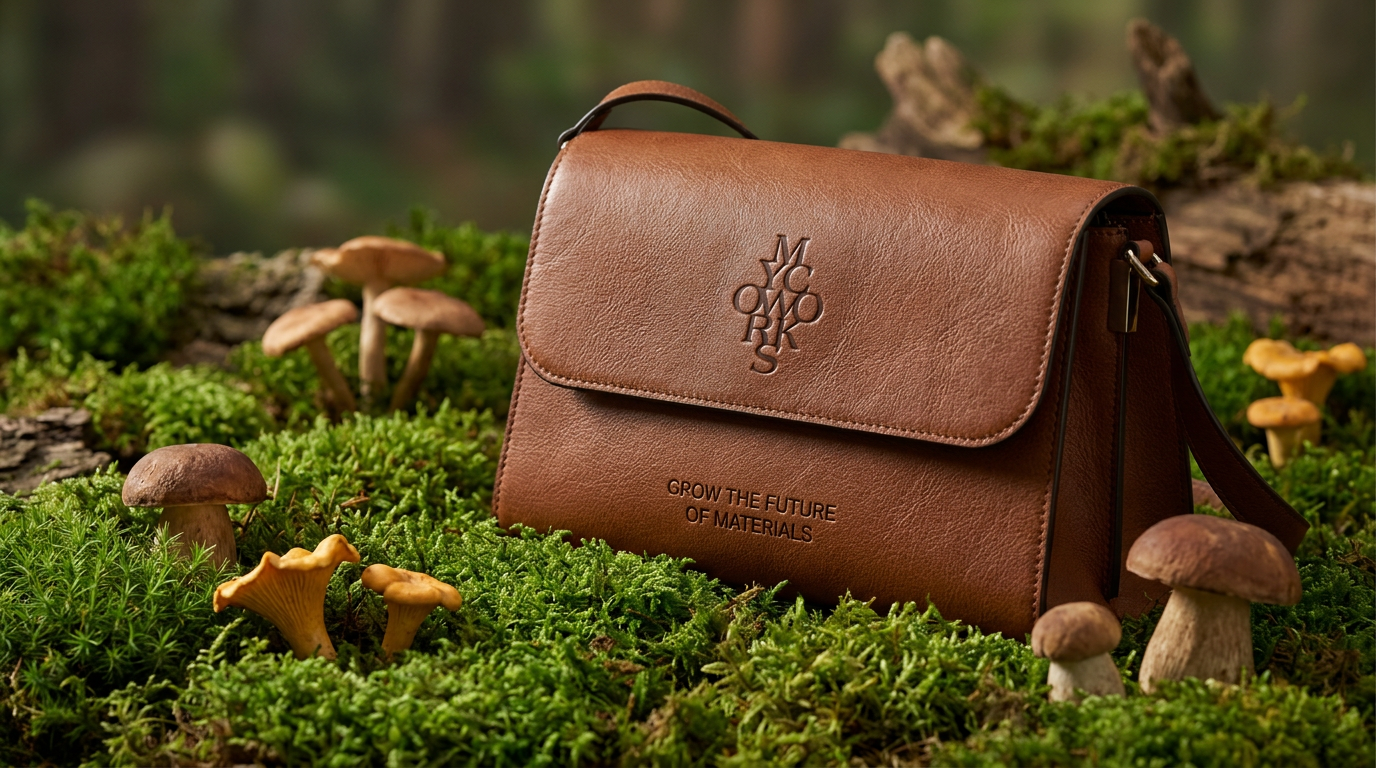
In 2026, a genuine third option has finally breached the commercial threshold. Next-generation biomaterials, specifically mycelium leather, have graduated from science-fair curiosities and limited-edition prototypes into scalable, runway-ready textiles. By harnessing the root structures of fungi, biotech startups are brewing materials that mimic the exact feel, drape, and durability of premium calfskin, without the grim costs to nature from exploiting animals or extracting fossil fuels.[1][2]
The shift represents a foundational transformation in how apparel is manufactured. Rather than extracting materials from the earth or synthesizing them in petrochemical plants, the next era of fashion relies on biofabrication—growing materials from the ground up. And after years of venture capital investment and pilot testing, the infrastructure to produce these fungal fabrics at scale is finally coming online.[7][8]
To understand why mycelium is uniquely suited to replace leather, one must look at its biological structure. Mycelium is the branching, underground network that fungi use to feed and communicate. In a natural forest, it acts as the ecosystem's recycling mechanism, breaking down organic matter. In a controlled biotech facility, this same network can be engineered to grow into dense, interwoven mats of cellular tissue.[1][4]

The production process is remarkably efficient. Innovators feed the fungal spores a diet of agricultural waste—such as sawdust, hemp hurds, or corn stalks. Housed in vertical trays within climate-controlled environments, the mycelium is given precise amounts of humidity and darkness. Within seven to fourteen days, the fungi knit themselves into a thick, flexible sheet.[1][4]
Once harvested, the mycelium mat is dried and treated using green chemistry—often employing plant-based dyes and natural tanning agents rather than the heavy metals and chromium used in conventional leather processing. The resulting material is entirely plastic-free, 100 percent vegan, and fully compostable at the end of its lifecycle.[1][6]
The environmental math heavily favors this biofabricated approach. Producing a square meter of mycelium leather requires up to 99 percent less water than bovine leather and generates a fraction of the greenhouse gas emissions. Furthermore, because the material is grown to the exact dimensions required by designers, it virtually eliminates the cutting-floor waste that plagues traditional hide processing.[1][4]
The environmental math heavily favors this biofabricated approach.
But environmental benefits alone do not change global supply chains; scale and performance do. For years, the primary bottleneck for biomaterials was the inability to produce them in commercial quantities. That barrier is now falling. Leading biotech firms like MycoWorks, Bolt Threads, and Ecovative have collectively raised hundreds of millions of dollars to transition from laboratory cultivation to industrial manufacturing.[2][5]

A prime example is MycoWorks, which recently opened a 136,000-square-foot commercial facility in South Carolina. This plant is dedicated to producing "Fine Mycelium" at a volume that can reliably supply major fashion houses. Similarly, Ecovative has developed proprietary automated cultivation systems across facilities in the United States and Europe, driving down production costs and enhancing manufacturing efficiency.[2][3]
The luxury sector has been the crucial first adopter, providing the capital and cultural cachet needed to validate the material. Hermès, a brand synonymous with heritage leather craftsmanship, shocked the industry when it partnered with MycoWorks to release a mycelium version of its classic Victoria bag. Stella McCartney, a long-time pioneer in cruelty-free fashion, has integrated Bolt Threads' "Mylo" material into commercial handbag lines and apparel.[1][5]
The adoption curve is now moving beyond high-fashion accessories. Automotive giants are testing mycelium panels for luxury car interiors, seeking lightweight, sustainable alternatives to petroleum-based foams and animal hides. Athletic brands like Lululemon and Adidas are experimenting with fungal materials for footwear, a category that demands extreme durability and flex resistance.[2][5]
A major catalyst accelerating this transition is incoming European legislation. The European Union's Ecodesign for Sustainable Products Regulation, which includes the rollout of the Digital Product Passport (DPP) starting in 2026 and 2027, will force brands to disclose the exact material composition and lifecycle footprint of their garments.[3][8]

Under this new regulatory framework, brands can no longer hide behind vague "eco-friendly" marketing. The DPP will expose the heavy plastic content of traditional vegan leathers and the carbon footprint of bovine hides. Mycelium, with its transparent, low-impact supply chain and biodegradable end-of-life, offers fashion conglomerates a verifiable way to meet these stringent new compliance standards.[3][6]
Despite the rapid progress, the industry still faces significant hurdles before mycelium can fully democratize. The most pressing challenge is cost. Currently, high-quality mushroom leather remains two to four times more expensive than conventional animal leather. This confines its use primarily to the luxury and premium markets, leaving fast-fashion and mid-tier brands reliant on cheaper synthetic alternatives.[1][3]
Technical challenges also persist in the finishing stages. Achieving the vibrant, consistent color palettes demanded by designers without resorting to toxic chemical dyes requires ongoing research and development. Additionally, while current facilities are impressive, scaling production from thousands of square meters to the millions required to dent the $360 billion global leather market will take years of sustained capital investment.[1][3]

Yet, industry analysts remain highly optimistic. As production volumes increase and cultivation technologies become more automated, the cost of mycelium leather is projected to drop steadily, with some estimates suggesting price parity with premium animal leather by the end of the decade. The global market for mushroom-derived leather is expanding at a compound annual growth rate of over 15 percent, signaling robust commercial confidence.[3][5]
The rise of mycelium leather represents more than just a new fabric; it is a proof of concept for the broader bioeconomy. It demonstrates that humanity can partner with nature's oldest organisms to manufacture high-performance goods without extraction or pollution. As these fungal fabrics move from the runway to the mainstream, they offer a tangible blueprint for a truly circular fashion industry.[7][8]
How we got here
2016
Biotech firm Bolt Threads introduces early biomaterial prototypes to designers like Stella McCartney.
2021
Hermès unveils a prototype Victoria bag made with MycoWorks' mycelium technology, signaling luxury interest.
2023
MycoWorks opens a 136,000-square-foot commercial-scale facility in South Carolina to mass-produce Fine Mycelium.
2025
Major luxury brands launch their first fully commercial lines of mycelium-based handbags and apparel.
2026
The EU prepares its Digital Product Passport rollout, accelerating brand adoption of traceable, low-impact biomaterials.
Viewpoints in depth
Biotech Innovators
Startups and material scientists focused on scaling biofabrication to replace extractive industries.
This camp views mycelium not just as a niche luxury material, but as the foundational textile of the 21st century. They argue that with sufficient capital investment in vertical farming infrastructure, biofabricated materials can eventually undercut the price of animal agriculture. Their primary focus is optimizing growth cycles, improving automated harvesting, and proving to massive fashion conglomerates that biology can manufacture goods more efficiently than petrochemical plants.
Luxury Fashion Houses
High-end brands seeking to align their heritage craftsmanship with incoming sustainability mandates.
For legacy luxury brands, the appeal of mycelium lies in its premium texture and compelling narrative. These houses are under immense pressure from both younger, eco-conscious consumers and incoming European Union regulations to decarbonize their supply chains. They view biomaterials as a way to maintain their high price points and aura of exclusivity without the reputational risks associated with deforestation, toxic tanning, or plastic pollution.
Environmental Advocates
Sustainability experts pushing for a complete transition away from both animal agriculture and plastic-based synthetics.
Environmental groups champion mycelium as the first true solution to the 'vegan leather' paradox. For years, they have warned that marketing polyurethane and PVC as 'eco-friendly' was a form of greenwashing that simply traded animal cruelty for microplastic pollution. They argue that true sustainability requires fully circular, biodegradable materials, and they are pressuring mid-tier brands to abandon fossil-fuel-derived synthetics in favor of these next-generation biological alternatives.
What we don't know
- Exactly when mycelium leather will reach price parity with mid-tier synthetic leathers.
- How quickly the technology can scale to meet the demands of fast-fashion volumes.
- Whether natural, non-toxic dyes can eventually match the full color spectrum of chemical tanning.
Key terms
- Mycelium
- The root-like, branching underground network of fungi, which can be grown into dense mats to create textiles.
- Polyurethane (PU)
- A synthetic plastic polymer commonly used to coat traditional 'vegan leathers,' which sheds microplastics and does not biodegrade.
- Digital Product Passport (DPP)
- An upcoming EU regulation requiring brands to disclose the exact environmental footprint and material composition of their products.
- Biofabrication
- The process of manufacturing materials by growing living organisms, such as bacteria, yeast, or fungi, rather than extracting or synthesizing them.
Frequently asked
Is mushroom leather as durable as real animal leather?
Yes. Leading mycelium materials meet or exceed traditional furniture and footwear industry benchmarks for abrasion resistance, flexibility, and aging.
Is 'vegan leather' the same thing as mushroom leather?
No. Most traditional vegan leather is made from polyurethane (PU) or PVC plastics, which do not biodegrade and shed microplastics. Mushroom leather is entirely plastic-free.
Why is mushroom leather currently so expensive?
The technology is still scaling from pilot facilities to commercial factories. As production volumes increase, prices are projected to reach parity with premium animal leather by the end of the decade.
Sources
Source coverage
8 outlets
4 viewpoints surfaced







[1]TrellisBiotech Innovators
Fungus-focused biotech startups want the world to consider a third option
Read on Trellis →[2]Persistence Market ResearchBiotech Innovators
Mycelium Leather Market Size, Share, and Growth Forecast, 2026 - 2033
Read on Persistence Market Research →[3]FashionbiFashion Industry Strategists
Sustainable Fashion Materials 2025: Innovations Reshaping the Industry
Read on Fashionbi →[4]FaunalyticsEnvironmental Advocates
Fungi Fashion: The Sustainable Appeal Of Mycelium Leather
Read on Faunalytics →[5]Data InteloBiotech Innovators
Mushroom Derived Leather Market by Application Segment
Read on Data Intelo →[6]No More NobodyEnvironmental Advocates
Plant Based 'Next Gen' Leathers: Hype or Real Change?
Read on No More Nobody →[7]Factlen Editorial TeamIndependent Analysts
Synthesis by Factlen editorial team
Read on Factlen Editorial Team →[8]Smart Fashion NewsFashion Industry Strategists
A Global Update (2025): Biomaterials in Fashion
Read on Smart Fashion News →

Every angle. Every day.
Get lifestyle stories with full source coverage and perspective breakdowns delivered to your inbox.