
Heat Pump vs. Vented Dryers: Which Should You Buy in 2026?
Heat pump dryers offer massive energy savings and ventless installation, but traditional vented models still win on upfront cost and cycle speed.
By Factlen Editorial Team
- Efficiency & Climate Advocates
- Focuses on the massive reduction in energy consumption and carbon footprint.
- High-Volume Families
- Prioritizes cycle speed and keeping large amounts of laundry moving quickly.
- Upfront Budget Shoppers
- Prioritizes low initial purchase price and proven, cheap repairability.
- Apartment & Condo Dwellers
- Values ventless installation and space-saving 110-volt combo units.
What's not represented
- · Commercial laundromat operators
- · Appliance manufacturers of traditional vented models
Why this matters
As energy costs rise and climate regulations tighten, choosing the right dryer is no longer just about laundry—it is a decision that impacts your monthly utility bills, your home's carbon footprint, and the lifespan of your clothing.
Key points
- Heat pump dryers use a closed-loop system to recycle heat, cutting energy use by 50-70%.
- The technology eliminates the need for exterior venting, allowing installation anywhere in a home.
- Heat pump models cost an average of $650 more upfront than traditional vented dryers.
- Drying cycles take 15 to 40 minutes longer due to the lower, fabric-safe operating temperatures.
- Annual energy savings of $130 to $170 can offset the initial purchase premium within four to five years.
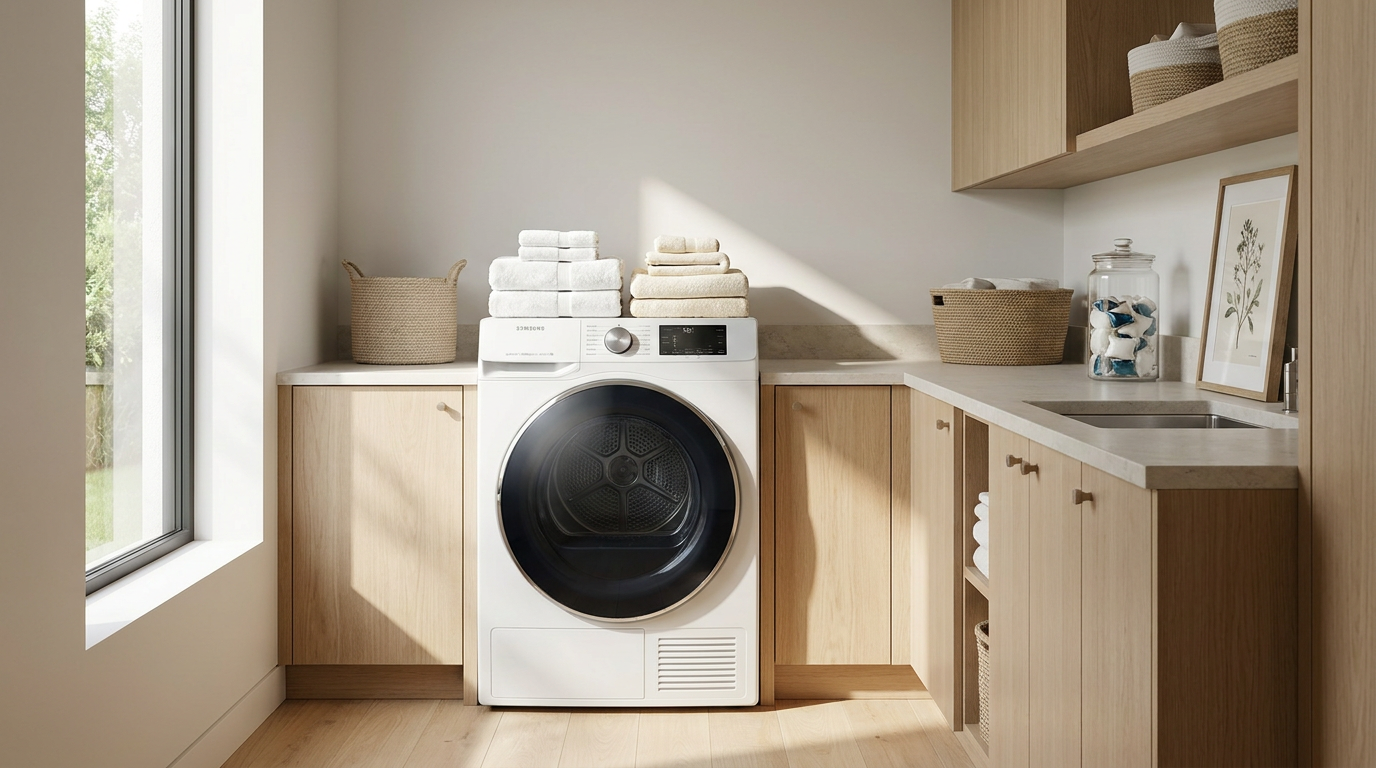
For decades, the laundry room has been dominated by a simple, brute-force appliance: the vented tumble dryer. It pulls in ambient air, blasts it with a high-wattage heating element, tumbles the clothes, and exhausts the hot, damp air outside through a wall duct. But in 2026, a fundamental shift is underway. Driven by stricter energy regulations—including the European Union's outright ban on new vented dryers—and a global push toward home electrification, the heat pump dryer has moved from a niche European import to a mainstream household staple.[5][7]
Understanding the difference requires looking at how each machine handles moisture. A traditional vented dryer operates as an open system, constantly drawing in conditioned air from your home, heating it, and pumping it outdoors. This not only uses massive amounts of electricity to generate heat but also forces your home’s HVAC system to work harder to replace the expelled air. In contrast, a heat pump dryer is a closed-loop system. It acts essentially like a refrigerator running in reverse, using a compressor and refrigerant to heat the air, absorb moisture from the laundry, and then cool the air to condense the water out before reheating and recirculating that exact same air.[1][3]
The primary argument for adopting heat pump technology is its staggering energy efficiency. Because it recycles its own heat rather than generating it from scratch and venting it away, a heat pump dryer uses between fifty and seventy percent less electricity than a conventional vented model. For households that run multiple loads a week, this translates to a dramatic reduction in utility bills. Industry analysts calculate that these energy savings can amount to roughly one hundred and thirty to one hundred and seventy dollars annually, depending on local electricity rates and usage frequency.[4][5]
However, this efficiency comes with a significant upfront financial barrier. The initial purchase price of a heat pump dryer remains noticeably higher than its vented counterpart. On average, consumers can expect to pay a premium of about six hundred and fifty dollars for a standard heat pump model. While traditional vented dryers often retail between seven hundred and twelve hundred dollars, heat pump variants typically range from fourteen hundred to over two thousand dollars. Buyers must calculate their personal return on investment; for a high-usage family, the premium pays for itself in four to five years, but for a single person doing laundry once a week, the payback period stretches much longer.[1][4]

Beyond the financial calculus, heat pump dryers offer a major installation advantage: they are entirely ventless. Because they extract moisture into a condenser tank or pump it directly into a standard washing machine drain, they do not require an exterior wall exhaust. This flexibility allows homeowners and apartment dwellers to place their laundry setup anywhere—in a hallway closet, under a kitchen counter, or in a bathroom—without worrying about ductwork. Furthermore, eliminating the vent removes a common fire hazard associated with lint buildup in traditional exhaust pipes.[2][3]
Beyond the financial calculus, heat pump dryers offer a major installation advantage: they are entirely ventless.
The most common criticism of heat pump dryers, and the primary reason some consumers hesitate, is the extended drying time. Because they operate at significantly lower temperatures than vented dryers, the moisture extraction process is slower. Users can expect a standard load of laundry to take fifteen to forty minutes longer to dry completely. For busy households accustomed to a rapid forty-five-minute blast of high heat, the adjustment to a ninety-minute or two-hour cycle requires a shift in laundry habits and scheduling.[1][6]
Yet, that slower, cooler drying cycle provides a hidden benefit: superior fabric care. The intense heat of a traditional vented dryer is notoriously harsh on textiles, baking the fibers, accelerating wear, and contributing to shrinkage. Heat pump dryers gently coax moisture out of the fabric at lower temperatures. This gentler treatment extends the lifespan of clothing, towels, and bed linens, and significantly reduces the shedding of microplastics into the environment. Over the lifespan of the appliance, the savings from replacing worn-out clothes less frequently can quietly add up.[2][5]

The rise of heat pump technology has also enabled the popularization of the all-in-one washer-dryer combo. Because heat pumps can run on standard 110-volt outlets and require no venting, manufacturers have successfully combined both functions into a single drum. Users can load dirty clothes in the morning and return home to clean, dry laundry without ever transferring the load. While these combo units are expensive and have even longer total cycle times, their space-saving convenience has made them a favorite for urban condos and smaller homes.[1][7]
Maintenance routines also differ between the two technologies. Vented dryers require periodic, and sometimes professional, cleaning of the exterior exhaust duct to prevent dangerous lint blockages. Heat pump dryers eliminate the duct but introduce their own upkeep requirements. Users must regularly empty the condensed water tank if it is not plumbed into a drain, and crucially, they must clean a secondary condenser filter in addition to the standard lint trap. Neglecting this secondary filter severely degrades the machine's efficiency and can lead to costly compressor failures.[4][6]
For those evaluating the trade-offs, the traditional vented dryer still holds ground in specific scenarios. Its proven, simple mechanical design makes it cheaper to purchase and generally easier and less expensive to repair. If a home already has clear, safe ductwork installed, and the household prioritizes rapid cycle times above all else, a vented dryer remains a highly effective tool. It is the brute-force champion of speed, even if it is the least efficient appliance in the modern home.[1][3]
Ultimately, the decision comes down to a clear set of conditions. A heat pump dryer fits well when a household runs laundry frequently enough to recoup the higher upfront cost through energy savings, when exterior venting is impossible or unsafe, or when preserving the quality of expensive fabrics is a priority. It is the definitive choice for environmentally conscious consumers looking to reduce their carbon footprint and lower their home's overall energy demand.[2][7]

Conversely, a heat pump dryer does not fit well when the upfront budget is strictly limited to under a thousand dollars, or when a household relies on doing multiple back-to-back loads of laundry in a single afternoon and cannot tolerate extended cycle times. It is also less ideal for users who are unwilling to perform the necessary secondary filter maintenance. However, as energy costs rise and climate regulations tighten, the era of the vented dryer is slowly drawing to a close, making the heat pump the inevitable future of laundry.[4][7]
How we got here
1938
The first electric vented tumble dryer is introduced to the consumer market.
1997
Early heat pump dryers debut in Europe, catering to homes with strict energy efficiency standards.
2024
Major appliance brands introduce full-size, 110-volt heat pump combo units to the North American market.
Jan 2025
The European Union implements a ban on the production of new vented dryers to reduce carbon emissions.
Viewpoints in depth
Efficiency & Climate Advocates
Focuses on the massive reduction in energy consumption and carbon footprint.
For environmental advocates and energy-conscious homeowners, the heat pump dryer represents a critical step in home electrification. By cutting electricity usage by up to 70% and eliminating the need to exhaust climate-controlled indoor air outside, these appliances drastically lower a home's carbon footprint. This camp argues that the higher upfront cost is a necessary and easily recoverable investment in a sustainable future, pointing to European regulations that have already phased out inefficient vented models.
High-Volume Families
Prioritizes cycle speed and keeping large amounts of laundry moving.
Households that process multiple loads of laundry daily often view the heat pump dryer's extended cycle times as a logistical bottleneck. When a single load takes up to two hours to dry, back-to-back laundry days become difficult to manage. For this demographic, the brute-force speed of a traditional vented dryer remains highly appealing, as the time saved often outweighs the incremental savings on their monthly utility bill.
Apartment & Condo Dwellers
Values ventless installation and space-saving combo units.
Urban residents and those living in older buildings frequently lack the exterior wall access required for a vented dryer. For this group, heat pump technology is a game-changer. The ability to install a dryer in a hallway closet or under a kitchen counter without drilling exhaust holes offers unprecedented flexibility. Furthermore, the rise of 110-volt heat pump combo units allows renters to have in-unit laundry without needing specialized electrical wiring.
What we don't know
- Whether North American regulators will follow the EU in outright banning vented dryers in the near future.
- How the long-term reliability of complex heat pump combo units will compare to simple vented dryers over a 15-year lifespan.
Key terms
- Closed-loop system
- A system that recycles its own air and heat rather than expelling it outside.
- Condenser tank
- A removable drawer in ventless dryers that collects extracted water from wet clothes.
- HVAC strain
- The extra work a home's heating and cooling system must do to replace indoor air blown outside by a vented dryer.
Frequently asked
Do heat pump dryers need an exhaust vent?
No. They are completely ventless and extract moisture into a removable tank or pump it directly down a standard washing machine drain.
Can I plug a heat pump dryer into a normal outlet?
Yes, many modern heat pump dryers and all-in-one combo units run on a standard 110-volt outlet, unlike traditional electric dryers that require a dedicated 220-volt connection.
Do heat pump dryers shrink clothes?
They are much less likely to shrink or damage clothes than vented dryers because they operate at significantly lower temperatures.
Sources
Source coverage
7 outlets
4 viewpoints surfaced







[1]Yale ApplianceHigh-Volume Families
Vented vs Condenser vs Heat Pump Dryers (2025): Real Costs, Pros & Trade-Offs
Read on Yale Appliance →[2]PalmettoEfficiency & Climate Advocates
Heat Pump Dryer Pros and Cons
Read on Palmetto →[3]TCLApartment & Condo Dwellers
Making the Decision: Heat Pump vs Vented Dryer
Read on TCL →[4]Nika Appliance RepairUpfront Budget Shoppers
When Heat Pump ROI Justifies Early Replacement
Read on Nika Appliance Repair →[5]JoycesEfficiency & Climate Advocates
Choosing the Right Dryer for Your Home in Ireland
Read on Joyces →[6]FoldersHigh-Volume Families
Condenser vs Heat Pump Models
Read on Folders →[7]Factlen Editorial TeamApartment & Condo Dwellers
Synthesis by Factlen editorial team
Read on Factlen Editorial Team →

More in shopping
See all 7 stories →Carry-On Luggage
Hardside vs. Softside Luggage: The 2026 Durability and Trade-Off Analysis
6 sources
Premium TVs
OLED vs. Mini-LED in 2026: How to Choose the Right Premium TV for Your Room
7 sources

Auto Market
EV vs. PHEV: The Ultimate 2026 Buyer's Guide to Electrified Cars
7 sources

Display Tech
OLED vs. Mini-LED: The 2026 TV Buyer's Guide
5 sources

Every angle. Every day.
Get shopping stories with full source coverage and perspective breakdowns delivered to your inbox.