
Beyond the Pitch: How Global Football is Engineering the Climate-Ready Stadium
As the carbon footprint of mega-events comes under scrutiny, football clubs worldwide are turning to engineered wood, super-batteries, and kinetic energy to build the next generation of sustainable stadiums.
By Xia Wu

Share this story
The roar of the crowd, the blinding floodlights, the massive video boards—matchday at a top-tier football stadium is a sensory marvel. But behind the spectacle lies a staggering environmental cost. For decades, the world's largest sporting venues were built as concrete monoliths that sat empty for most of the week, only to drain massive amounts of power and water on the weekend. Now, as the global sports industry faces mounting pressure to decarbonize, a quiet revolution is taking place in stadium architecture.[4]
The scale of the challenge is immense. A single event at a large stadium can consume between 20,000 and 30,000 kilowatt-hours of electricity—equivalent to the monthly energy use of 3,000 homes. The demand spikes dramatically due to broadcast lighting, commercial kitchens, and high-capacity cooling systems. Water usage also surges; during the 2022 World Cup, tournament water consumption reached the daily equivalent of a city of 640,000 people. To combat this, architects are moving away from treating sustainability as an afterthought and are instead embracing "carbon-led design."[2]
Carbon-led design fundamentally changes how a venue is conceived. Instead of relying heavily on high-carbon materials like steel and concrete, modern arenas are utilizing innovative alternatives. France's Allianz Riviera is frequently cited as a pioneering example in Europe. The stadium utilizes a massive three-dimensional glulam—engineered wood—structure for its stands, which drastically reduces the embodied carbon of the building while maintaining structural integrity.[2][4]
Similarly, San Mamés in Bilbao, home to Athletic Club, became the first European stadium to achieve LEED certification. The venue was designed with a focus on low-impact materials, rainwater harvesting, and seamless integration into the urban plot, proving that world-class football infrastructure can coexist responsibly with its surrounding environment.[3]
But building with greener materials is only half the battle; powering the venue is the other. In Amsterdam, the Johan Cruijff ArenA has transformed its roof into a localized power plant. More than 4,200 solar panels generate renewable electricity for the stadium's daily operations. Crucially, the venue solves the intermittency problem of solar power by utilizing a "super battery" system constructed from new and repurposed electric-vehicle batteries.[2][3]
This advanced energy storage allows the ArenA to operate on clean power even during evening Champions League fixtures when the sun isn't shining. Furthermore, the stadium acts as a micro-grid, feeding excess stored energy back into the local Amsterdam network during peak demand periods, effectively turning a massive sports venue into a stabilizing asset for the city.[2]
Across the Atlantic, existing venues are proving that retrofitting can be just as impactful as new construction. In Texas, the Houston Dynamo and the NWSL's Houston Dash have set an aggressive target to reduce the carbon footprint of Shell Energy Stadium by 50 percent by 2026. Rather than tearing down and starting over, the clubs are overhauling the stadium's internal operations, optimizing cooling systems, and transitioning to renewable energy providers.
This operational overhaul is critical as the stadium prepares to host international crowds. By establishing a clear baseline and tracking their progress, the Houston clubs are demonstrating that mid-lifecycle stadiums can still achieve ambitious decarbonization targets, providing a blueprint for hundreds of aging venues worldwide.[4]
Innovation is also reaching the grassroots and experimental levels. At the Morro da Mineira pitch in Rio de Janeiro, the very movement of the players generates power. The facility features more than 200 kinetic tiles installed beneath the turf, which capture the energy from players' footsteps and convert it into electricity to power the floodlights—a literal translation of athletic energy into sustainable infrastructure.[3]
Despite these engineering triumphs, the broader football ecosystem faces significant pushback from environmental watchdogs. Critics argue that while individual stadiums may achieve net-zero status, the expanding scale of mega-events inherently drives up global emissions. The 2026 World Cup, expanded to 48 teams and 104 matches across North America, is projected to release over 9 million tons of CO2, largely driven by the massive increase in international and domestic fan air travel.
Local communities are also raising their voices against the extractive nature of mega-event development. In Mexico, residents near renovated stadiums in Mexico City and Guadalajara have protested the socio-environmental impacts of these upgrades. Concerns center on the strain placed on local aquifers and the potential gentrification of surrounding neighborhoods, highlighting that true sustainability must protect local ecosystems and human rights, not just reduce carbon tallies.[4]
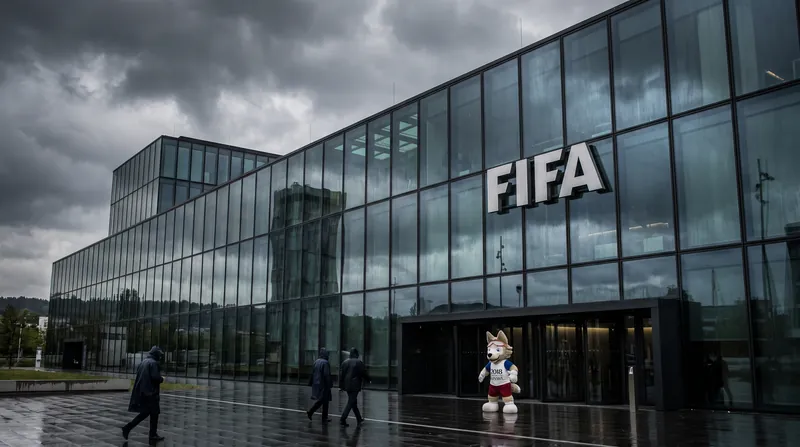
Recognizing these complex challenges, FIFA's updated stadium guidelines now urge developers to ask a fundamental question before breaking ground: is a new stadium truly necessary? If construction proceeds, the guidelines mandate a balanced approach, prioritizing compact thermal envelopes, zero-waste material passports, and on-site renewable energy generation to minimize the burden on local grids.[1]
The era of the stadium as an isolated, energy-hungry fortress is ending. The climate-ready venues of the future are being designed as resilient urban hubs that reshape local mobility, manage water responsibly, and generate their own power. As football looks toward the next decade, the most impressive engineering feats may no longer be the goals scored on the pitch, but the invisible, sustainable systems powering the stadium around it.[2][4]
Key points
- Large stadiums can consume up to 30,000 kWh of electricity per event, driving a push for carbon-led architectural design.
- Venues like France's Allianz Riviera are using engineered wood instead of steel to lower embodied carbon.
- Amsterdam's Johan Cruijff ArenA uses a 'super battery' of repurposed EV batteries to store solar energy and support the local grid.
- Existing venues, such as Houston's Shell Energy Stadium, are targeting 50% carbon footprint reductions through operational retrofits.
- Watchdogs warn that expanding global tournaments increases air travel emissions, potentially offsetting stadium-level environmental gains.
How we got here
2014
San Mamés in Bilbao opens, later becoming the first European stadium to achieve LEED certification.
2018
The Johan Cruijff ArenA activates its 3-megawatt 'super battery' energy storage system.
2022
The Qatar World Cup highlights the massive resource drain of mega-events, consuming the daily water equivalent of 640,000 people.
2023
Houston Dynamo and Dash partner with Shell Energy to begin a comprehensive decarbonization retrofit.
June 2026
Clubs worldwide accelerate their 2026 carbon reduction targets amid heightened scrutiny of the upcoming 104-match World Cup.
- Sustainable Architecture Advocates
- Argue that carbon-led design, renewable micro-grids, and engineered timber are essential to future-proofing sports infrastructure.
- Sports Governing Bodies
- Focus on setting top-down sustainability guidelines and using the global platform of football to inspire environmental best practices.
- Community & Environmental Watchdogs
- Warn against greenwashing, emphasizing that true sustainability must account for fan travel emissions and the socio-economic impact on local neighborhoods.
Perspectives this story doesn't cover
- Lower-league clubs struggling to afford green infrastructure
- Municipal grid operators managing the energy spikes of matchdays
Sources
Source coverage
4 outlets
3 viewpoints surfaced




- [1]FIFASports Governing Bodies
FIFA Stadium Guidelines: Environmental Sustainability
Read on FIFA → - [2]TrivandiSustainable Architecture Advocates
Carbon-led design and the future of climate-ready venues
Read on Trivandi → - [3]Athletic ClubSustainable Architecture Advocates
San Mamés: a sustainable stadium
Read on Athletic Club → - [4]Factlen Editorial TeamCommunity & Environmental Watchdogs
Synthesis by Factlen editorial team
Read on Factlen Editorial Team →
More in Sports
See all →Executive Compensation
US Filings Reveal Undisclosed $1.76 Million World Cup Payment to FIFA President
4 sources

Pitch Geometry
Enforcing Law 14's 9.15-Metre Buffer: Why Soccer's Penalty Arc Extends Four Yards Beyond the Box
4 sources

Nations League
Can Turkey Finally Break Their Winless Curse Against Italy in Nations League Clash?
6 sources

Nations League
France and Belgium Face Early Nations League Test Without Mbappé and Courtois
5 sources
Comments
Every angle. Every day.
Get Sports stories with full source coverage and perspective breakdowns, free every day.