
The Rise of Data Cooperatives: How Communities Are Reclaiming AI Ownership
As AI models consume vast amounts of public data, a new movement of 'data cooperatives' is allowing communities to pool their information, govern its use, and share in the economic benefits of AI development.
By Factlen Editorial Team
- Data Cooperative Advocates
- Argue that individuals must pool their data to negotiate fair compensation and ethical use.
- Open Source AI Community
- Focus on the need for complete transparency in AI training data, weights, and code.
- Commercial AI Developers
- Prioritize access to high-quality, legally cleared human data to prevent model degradation.
What's not represented
- · Regulators and Policymakers
- · Traditional Tech Monopolies
Why this matters
Instead of surrendering personal data to tech giants for free, individuals can join cooperatives to negotiate licensing terms, ensure ethical AI training, and receive compensation, fundamentally shifting the balance of power in the digital economy.
Key points
- AI models have historically relied on uncompensated data extraction from billions of internet users.
- Data cooperatives allow communities to pool their digital footprints and collectively negotiate licensing terms.
- Privacy technologies like federated learning enable models to train on community data without exposing raw personal information.
- The United Nations' 2025 International Year of Cooperatives has catalyzed global interest in applying the model to the digital economy.
The rapid advancement of artificial intelligence has been fueled by a massive, uncompensated extraction of human knowledge. For years, the foundational models powering modern chatbots, image generators, and predictive algorithms have been trained on the accumulated digital exhaust of billions of internet users—forum posts, product reviews, digital art, and social media interactions. This dynamic has created a stark power imbalance in the digital economy, where a handful of technology giants sit on a goldmine of collective human intelligence while the individuals who generated that data receive nothing in return [6][7]. As AI scales, the competitive battleground is shifting from algorithmic design to the control of high-quality, diverse training data [6].[6][7]
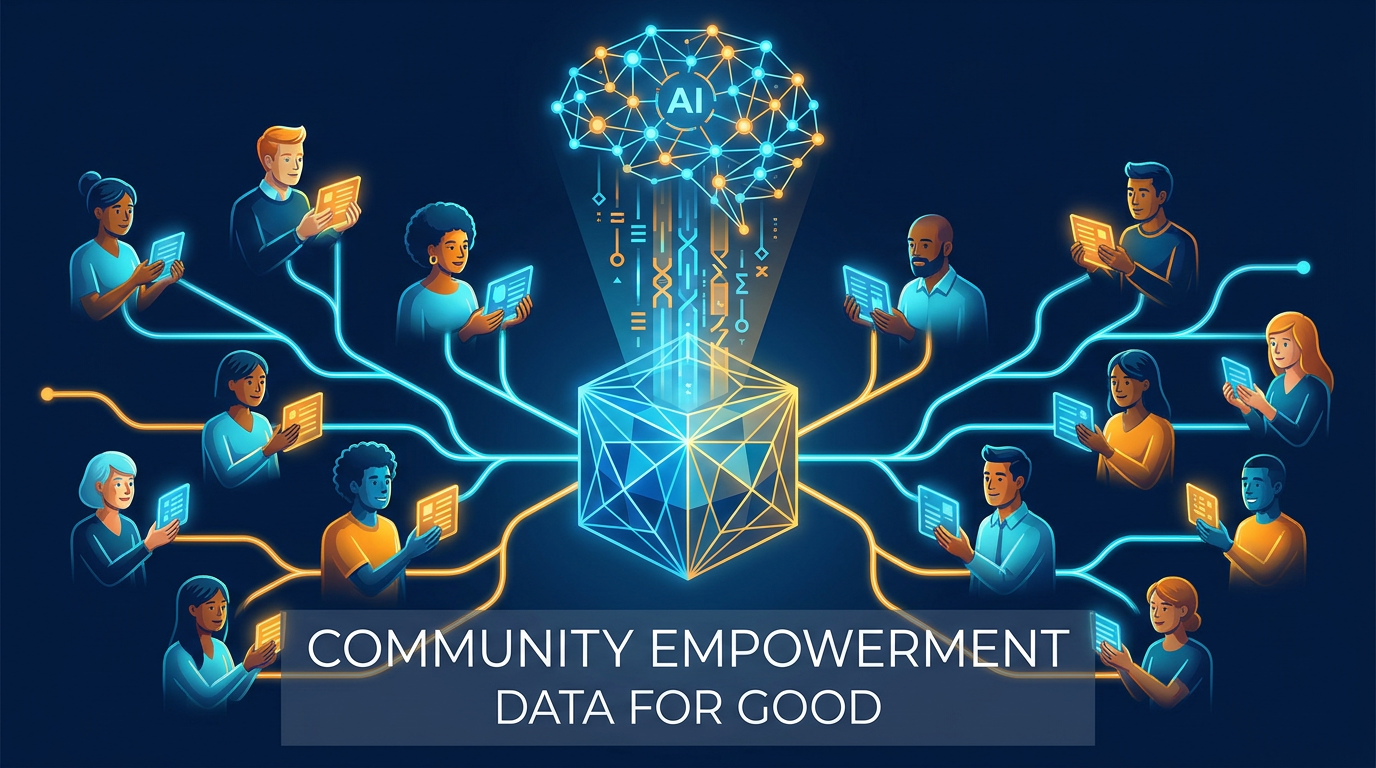
In response to this extractive model, a counter-movement is gaining significant momentum: the rise of "data cooperatives." These member-owned organizations allow individuals and communities to pool their personal and collective data, govern its use democratically, and share in the economic benefits it generates [4][7]. By inserting an accountable intermediary between internet users and AI platforms, data cooperatives aim to shift users from passive subjects of data harvesting to active, compensated co-owners of the AI ecosystem [2][7].[2][4][7]
The concept of a cooperative is not new; worker-owned and agricultural cooperatives have a rich global history of distributing control and capital [4]. However, applying this model to the digital realm represents a profound shift in how we conceptualize data ownership. Rather than relying solely on individual privacy regulations—which often place the burden of consent on overwhelmed users—data cooperatives treat data as a collective resource [2]. Because the true value of data emerges when it is aggregated, collective governance models offer a more scalable and powerful alternative to individualized consent frameworks [1].[1][2][4]

The push for data cooperatives has been catalyzed by the United Nations designating 2025 as the International Year of Cooperatives [1]. In conjunction with this milestone, organizations like the Project Liberty Institute and the Decentralization Research Center have laid the groundwork for scaling these models, arguing that cooperatives can return power, value, and voice to people in the digital economy [1]. Their research highlights that cooperatives grow through networks rather than monopolies, allowing for decentralized, context-driven governance that reflects the localized nature of data [1].[1]
How does a data cooperative actually function? At its core, it forms a new technical and institutional layer between data producers and data consumers [2]. Members voluntarily join the cooperative and use secure applications to gather their digital footprint—ranging from health metrics and browsing habits to creative writing and local language patterns [6]. The cooperative then acts as a fiduciary, negotiating licensing terms with AI developers who need high-quality, legally cleared data to train their models [4][6].[2][4][6]
Crucially, the cooperative model aligns with the technical needs of the next generation of AI. As the internet becomes flooded with synthetic, AI-generated content, developers are increasingly desperate for verified, human-generated data to prevent model degradation [4]. Data cooperatives incentivize the production of high-quality, trustworthy data because the shared ownership structure ensures that contributors directly benefit from the value they create [1]. This creates a symbiotic relationship: AI companies get the premium data they need, and communities get compensated for their contributions [4].[1][4]

The governance of these organizations relies on established cooperative principles, primarily democratic member control. Members vote on which datasets get shared, with whom, and for what specific purposes [6]. For instance, a cooperative might license its data to academic researchers or healthcare nonprofits for free, while charging commercial rates to large technology companies [5]. This differential access ensures that the community's values dictate the deployment of their data, preventing single commercial entities from extracting value without explicit, collective consent [6].[5][6]
The governance of these organizations relies on established cooperative principles, primarily democratic member control.
Real-world implementations of this model are already taking root, particularly in communities that have been historically marginalized or underrepresented in mainstream AI datasets. At UC Berkeley, researchers are partnering with the Mozilla Data Collective to develop co-created datasets governed by a data cooperative [3]. Their goal is to fine-tune AI models so they more accurately reflect diverse lived experiences, ensuring that the technology serves the public good rather than just commercial interests [3].[3]
Similarly, the "Uli" project in India demonstrates how data cooperatives can address specific community needs. Designed to detect gendered abuse in Indian languages, the project relies on crowdsourced data annotated by activists and researchers [5]. By pooling this highly contextual data, the community was able to train a specialized machine learning model that compensates for the lack of attention big tech platforms give to non-anglophone languages [5]. The project's leaders are now exploring differential licensing models to balance economic sustainability with the creation of a public good [5].[5]

The technological infrastructure required to make data cooperatives viable is finally catching up to the vision. Historically, pooling data meant creating massive, centralized honeypots vulnerable to breaches. Today, privacy-preserving technologies like federated learning, differential privacy, and homomorphic encryption allow cooperatives to share the insights from their data without exposing the underlying raw information [2]. This means an AI model can learn from a community's collective intelligence without ever accessing an individual's private messages or health records [2][7].[2][7]
The intersection of data cooperatives and the open-source AI movement is particularly potent. The Open Source Initiative (OSI) recently released its official Open Source Artificial Intelligence Definition, emphasizing the need for transparency in training data, source code, and model parameters [5]. While open-source models offer a pathway to transparency and auditability, they still require massive datasets to function [5]. Data cooperatives provide a mechanism to ethically source this data, ensuring that "open" AI does not simply mean "uncompensated extraction" [5][7].[5][7]
Furthermore, the cooperative model is expanding beyond just data to encompass the physical infrastructure of AI. Advocates are exploring the concept of cooperatively-run data centers, which would ensure that the economic value of computing power stays within local communities rather than flowing to foreign owners [7]. By prioritizing local businesses and educational initiatives for compute capacity, these infrastructure cooperatives could democratize access to the hardware necessary to run advanced AI models [7].[7]

Despite the immense potential of this model, the path forward for data cooperatives is not without significant hurdles. Establishing these organizations requires initial capital to build secure infrastructure, and navigating the complex regulatory landscape of personally identifiable information across different global jurisdictions is a formidable challenge [7]. Furthermore, creating seamless technical interoperability between various independent cooperatives and the bespoke systems of commercial AI developers will require robust, standardized protocols that have yet to be universally adopted [7].[7]
Yet, the momentum behind this shift is undeniable and accelerating. As regulatory pressure mounts on AI companies—particularly in the European Union—to definitively prove the provenance and copyright status of their training data, the demand for ethically sourced, legally cleared datasets will only grow [5]. Data cooperatives offer a highly practical, market-based solution to this looming regulatory challenge, providing a clean, auditable supply chain for AI development that mitigates legal risk for enterprise developers [7].[5][7]
Ultimately, the rise of data cooperatives represents a fundamental reimagining of the digital social contract that has defined the internet for two decades. It directly challenges the entrenched assumption that our digital lives are merely exhaust to be harvested by the highest bidder. By embracing collective governance, advanced privacy technologies, and shared ownership, these communities are proving that the future of artificial intelligence can be built on a foundation of equity, transparency, and mutual economic benefit [1][7].[1][7]
How we got here
2019
The Business Roundtable pledges corporate responsibility, sparking skepticism and a search for alternative data governance structures.
2024
The Open Source Initiative releases its official Open Source AI Definition, highlighting the necessity of data transparency.
2025
The UN International Year of Cooperatives catalyzes the global push for digital data co-ops.
2026
Community-owned AI datasets, such as UC Berkeley's initiatives, begin fine-tuning models globally to reflect diverse lived experiences.
Viewpoints in depth
Data Cooperative Advocates
Argue that individuals must pool their data to negotiate fair compensation and ethical use.
Proponents of the cooperative model view data as a product of collective human labor rather than digital exhaust. They argue that individualized consent frameworks, like GDPR, fail to address the economic power imbalance between tech giants and everyday users. By forming cooperatives, communities can leverage collective bargaining to demand financial dividends, enforce strict privacy standards, and ensure their data is not used to train harmful or biased AI systems.
Open Source AI Community
Focus on the need for complete transparency in AI training data, weights, and code.
The open-source community emphasizes that true AI democratization requires more than just accessible models; it requires inspectable foundations. They argue that proprietary, 'black-box' models hide biases and copyright infringements. For this camp, data cooperatives are a vital mechanism for ethically sourcing the massive datasets needed to train open-source models, ensuring that transparency does not come at the cost of uncompensated data extraction.
Commercial AI Developers
Prioritize access to high-quality, legally cleared human data to prevent model degradation.
As the internet becomes saturated with synthetic, AI-generated content, commercial developers are facing a 'data wall' where the quality of training material is degrading. This camp views data cooperatives not necessarily as an ideological crusade, but as a practical, market-based solution. Cooperatives offer a clean, auditable supply chain of verified human data, which is essential for building reliable enterprise AI systems and navigating an increasingly strict global regulatory environment.
What we don't know
- How global tax authorities will classify and tax the financial dividends paid out by data cooperatives to their members.
- Whether major tech monopolies will voluntarily engage with cooperatives or attempt to bypass them using synthetic data.
- How interoperability standards will evolve to allow different data cooperatives to seamlessly share insights across borders.
Key terms
- Data Cooperative
- A member-owned organization that pools personal data to negotiate its use and share economic benefits collectively.
- Federated Learning
- A privacy technique that trains AI models across multiple decentralized devices holding local data samples, without exchanging them.
- Differential Privacy
- A mathematical approach to sharing information about a dataset while withholding information about individual entries.
- Open Source AI
- AI systems where the source code, training data, and model weights are publicly available for inspection and modification.
Frequently asked
What is a data cooperative?
It is a member-owned group that pools individual data to collectively negotiate how it is used by AI companies, ensuring members get compensated.
How does a cooperative protect my privacy?
Co-ops use technologies like federated learning to extract insights from data without exposing your raw, personal information to outside companies.
Can I actually make money from my data?
Yes, by licensing high-quality, verified data to AI developers, cooperatives can distribute the financial returns back to their members as dividends.
Why do AI companies want cooperative data?
As the internet fills with AI-generated content, developers desperately need verified, high-quality human data to keep their models accurate and legally compliant.
Sources
Source coverage
7 outlets
3 viewpoints surfaced







[1]Project Liberty InstituteData Cooperative Advocates
How Can Data Cooperatives Help Build a Fair Data Economy?
Read on Project Liberty Institute →[2]Stanford UniversityData Cooperative Advocates
Data cooperatives could enable co-ownership over technology platforms
Read on Stanford University →[3]UC BerkeleyOpen Source AI Community
Data cooperatives & AI for the public good
Read on UC Berkeley →[4]Harvard UniversityCommercial AI Developers
Data Cooperatives and Alternative AI Governance
Read on Harvard University →[5]Open Source InitiativeOpen Source AI Community
Deep Dive: Defining Open Source AI and Data Cooperatives
Read on Open Source Initiative →[6]Crowdsourcing WeekData Cooperative Advocates
Compensating the Crowd: New Models for Training Data
Read on Crowdsourcing Week →[7]Factlen Editorial TeamCommercial AI Developers
Synthesis by Factlen editorial team
Read on Factlen Editorial Team →

More in meta
See all 5 stories →Bridging Algorithms
How Bridging Algorithms Are Replacing Traditional Fact-Checkers
7 sources

Open-Weight AI
How Open-Weight AI Works: Inside the Architecture Powering Meta's Llama 4
7 sources

Prediction Science
The Science of Superforecasting: How Prediction Markets and Trained Forecasters Out-Predict the Experts
9 sources

Every angle. Every day.
Get meta stories with full source coverage and perspective breakdowns delivered to your inbox.