
Trump Administration Restarts Asylum and Immigration Processing Following Federal Court Order
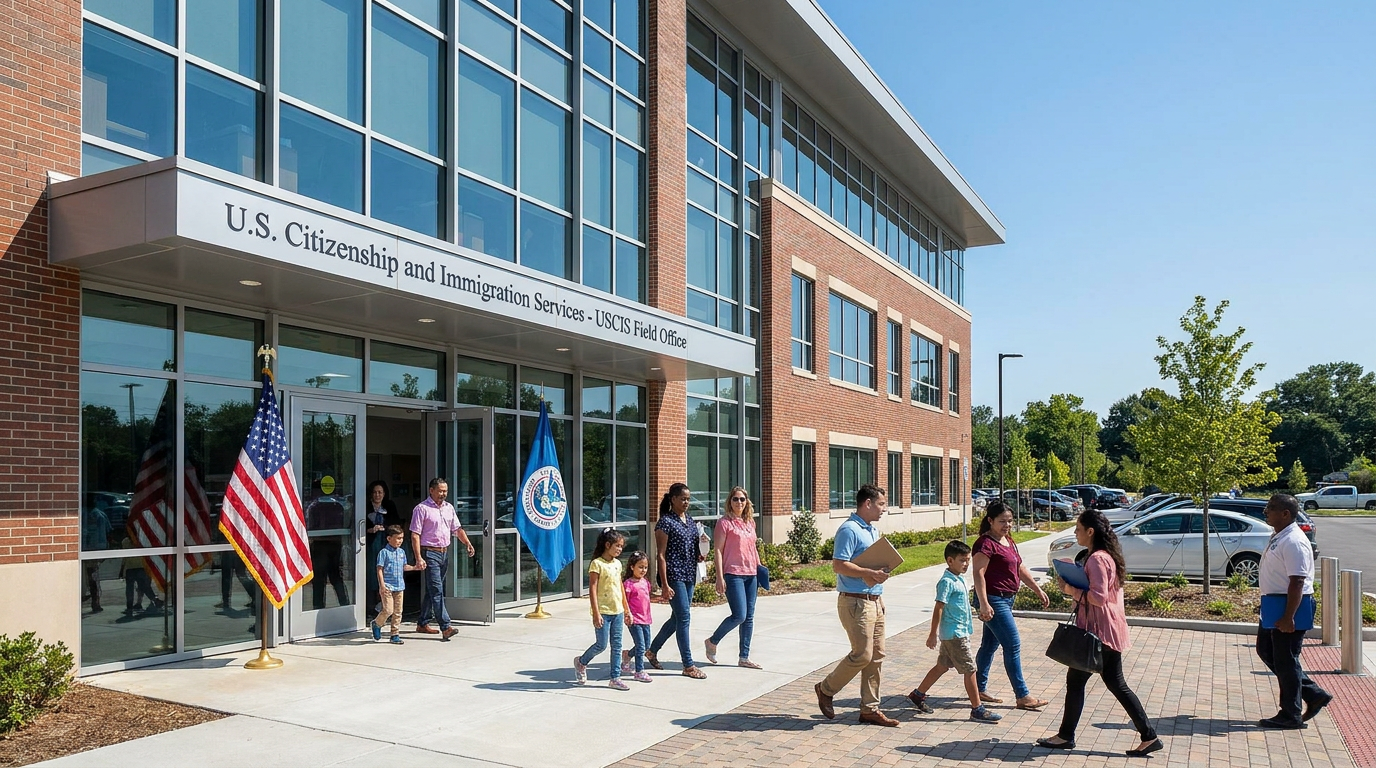
U.S. Citizenship and Immigration Services will resume processing hundreds of thousands of frozen applications after a federal judge ruled the administration's seven-month suspension unlawful.
By Factlen Editorial Team
- Immigrant Rights Advocates
- Argue that the blanket freeze was a discriminatory and unlawful overreach that punished hundreds of thousands of legal applicants for the actions of one individual.
- Homeland Security Officials
- Maintain that the pause was a necessary and lawful exercise of executive authority to protect national security following a fatal attack.
- Legal & Immigration Professionals
- Focus on the procedural chaos caused by the freeze and warn applicants that the window to advance their cases may be short-lived if an appellate court grants a stay.
What's not represented
- · Applicants currently waiting in the USCIS backlog
- · National Guard representatives
Why this matters
The resumption of processing directly impacts hundreds of thousands of immigrants who have been unable to obtain work permits, green cards, or asylum decisions for the past seven months. The outcome of the impending appeals process will determine whether the executive branch can unilaterally freeze domestic immigration benefits in the name of national security.
Key points
- USCIS will resume processing affirmative asylum and immigration benefit applications.
- A federal judge ruled the administration's December 2025 processing freeze unlawful.
- The freeze affected nationals of 39 countries covered by the expanded travel ban.
- The Justice Department has appealed the ruling and plans to seek an emergency stay.
- DHS officials defended the pause as a necessary national security measure.
The Trump administration announced late Friday that it will resume processing hundreds of thousands of frozen asylum and immigration applications, bowing to a federal court order that declared its sweeping suspension unlawful.[1][2]
The reversal by U.S. Citizenship and Immigration Services (USCIS) comes after a blistering rebuke from Chief Judge John J. McConnell Jr. of the U.S. District Court in Rhode Island, who chided the administration for failing to immediately comply with his initial June 5 ruling.[1][2][8]
"There is no excuse this time," McConnell wrote in a follow-up order on Thursday, demanding a status report within 24 hours on the specific steps the agency was taking to lift the freeze.[2]
The legal battle stems from a broad policy implemented by USCIS in December 2025. Following a tragic incident in November where an Afghan national who had been granted asylum shot two National Guard members in Washington, D.C., the administration abruptly halted adjudications.[2][6]

The freeze was twofold: it placed a nationwide hold on all affirmative asylum applications, and it indefinitely suspended the processing of green cards, work permits, and naturalization requests for nationals of 39 countries covered by President Trump's expanded travel ban.[3][6][7]
The Department of Homeland Security defended the pause as a necessary national security measure, arguing that the system required a comprehensive re-review to ensure maximum vetting of high-risk cases before any further benefits were granted.[2][4]
However, a coalition of labor unions and immigrant rights groups, led by the Dorcas International Institute of Rhode Island, sued the administration, arguing the blanket freeze exceeded the agency's statutory authority and violated the Administrative Procedure Act.[4][8]
In his 135-page ruling, Judge McConnell agreed with the plaintiffs, stating that the administration had "placed the lives of countless individuals on hold — solely by virtue of their countries of birth."[2][3][8]
McConnell noted that the applicants had followed all legal procedures, paid their filing fees, and submitted to background checks, only to be left in an "indeterminate legal limbo" due to the happenstance of their nationality rather than any individual wrongdoing.[3][5][8]

While USCIS stated Friday that it "strongly disagrees" with the ruling, Deputy Director Angelica Alfonso-Royals confirmed the agency is instructing personnel to resume processing and ensuring internal systems no longer block the applications.[1][2]
The Justice Department has already appealed the decision to the 1st U.S. Circuit Court of Appeals and plans to seek an emergency stay to halt the resumption of processing while the case is litigated.[1][2]
DHS officials expressed sharp frustration with the judicial intervention. A department spokesperson characterized the lawsuits as "sabotage dressed in legal clothing," accusing left-leaning groups of using the courts to systematically undermine the administration's immigration agenda.[2][4]
For the hundreds of thousands of immigrants caught in the backlog, the resumption offers a narrow window of hope. Immigration attorneys are advising clients to urgently update their evidence and check their case statuses before any potential appellate court stay is granted.[5][7]

The freeze has had severe practical consequences over the past seven months. Without work authorization or adjusted status, many applicants lost their jobs, faced expiring student visas, or were unable to make long-term plans for their families or careers.[5][6]
Legal experts emphasize that the ruling does not automatically grant any applications; it merely forces USCIS to return to its standard adjudication process, evaluating each case on its individual merits rather than applying a blanket nationality-based hold.[7]
How we got here
Nov 2025
An Afghan national who had received asylum shoots two National Guard members in Washington, D.C.
Dec 2025
USCIS implements a sweeping freeze on affirmative asylum cases and immigration benefits for nationals of 39 countries.
Mar 2026
A coalition of immigrant rights groups sues the administration over the processing pause.
Jun 5, 2026
A federal judge rules the USCIS freeze unlawful and orders the agency to resume adjudications.
Jun 11, 2026
The judge issues a sharp rebuke to the administration for failing to immediately comply with the order.
Jun 12, 2026
USCIS announces it will resume processing, while the Justice Department files an appeal.
Viewpoints in depth
Immigrant Rights Advocates
Argue that the blanket freeze was a discriminatory and unlawful overreach that punished hundreds of thousands of legal applicants for the actions of one individual.
Advocacy groups and labor unions contend that the administration weaponized a tragic incident to advance a broader anti-immigration agenda. They emphasize that the applicants caught in the freeze had followed all legal procedures, paid substantial fees, and submitted to background checks. By halting processing based solely on nationality, advocates argue the government violated the Administrative Procedure Act and inflicted profound harm on individuals who were left unable to work, study, or plan their futures.
Homeland Security Officials
Maintain that the pause was a necessary and lawful exercise of executive authority to protect national security.
DHS officials argue that following the fatal shooting of a National Guard member by an asylum recipient, a comprehensive re-review of vetting procedures for high-risk countries was a basic public safety requirement. They assert that the executive branch has broad authority to regulate immigration benefits in the interest of national security. Officials view the lawsuits as partisan interference, characterizing the legal challenges as an attempt by left-leaning groups to systematically sabotage the administration's immigration policies.
Legal & Immigration Professionals
Focus on the procedural chaos caused by the freeze and the subsequent ruling.
Immigration attorneys and industry analysts highlight the massive logistical backlog created by seven months of suspended adjudications. They warn that even with the court order, USCIS will likely face significant delays in processing the accumulated cases. Furthermore, legal professionals are advising applicants to act with extreme urgency, noting that the window to advance their cases may be short-lived if the 1st U.S. Circuit Court of Appeals grants the government's request for an emergency stay.
What we don't know
- Whether the 1st U.S. Circuit Court of Appeals will grant an emergency stay to halt processing again.
- How quickly USCIS can clear the massive seven-month backlog of frozen applications.
- If the administration will introduce alternative vetting requirements that could further delay approvals.
Key terms
- USCIS
- U.S. Citizenship and Immigration Services, the federal agency that oversees lawful immigration to the United States.
- Affirmative Asylum
- A process where individuals physically present in the U.S. apply for asylum directly with USCIS, rather than defending against deportation in immigration court.
- Adjustment of Status
- The process of applying for lawful permanent resident status (a Green Card) while already present in the United States.
- Administrative Procedure Act (APA)
- A federal law that governs how administrative agencies can propose and establish regulations, often used to challenge sudden policy shifts.
Frequently asked
What exactly did the judge order?
The judge ordered USCIS to resume processing asylum and immigration benefit applications that were frozen in December 2025, ruling the blanket suspension unlawful.
Does this mean the applications are approved?
No. The ruling only requires USCIS to process the applications and make a decision based on standard legal criteria, rather than holding them indefinitely.
Why did the administration freeze the applications?
The administration cited national security concerns after an Afghan asylum recipient shot two National Guard members in November 2025.
Can the government stop the processing again?
Yes, the Justice Department has appealed to the 1st Circuit Court of Appeals and is seeking an emergency stay, which could pause processing again if granted.
Sources
Source coverage
8 outlets
3 viewpoints surfaced








[1]The New York TimesImmigrant Rights Advocates
Trump Administration Says It Will Restart Asylum and Immigration Processing
Read on The New York Times →[2]The Washington PostHomeland Security Officials
Trump officials agree to resume asylum processing after being scolded by judge
Read on The Washington Post →[3]The GuardianImmigrant Rights Advocates
US judge rules against Trump policies targeting immigrants from 39 travel-ban countries
Read on The Guardian →[4]Santa Clarita Valley SignalHomeland Security Officials
Judge orders Trump administration to restart asylum claims
Read on Santa Clarita Valley Signal →[5]The PIE NewsLegal & Immigration Professionals
Judge overturns Trump policies targeting travel ban nationals
Read on The PIE News →[6]Envoy GlobalLegal & Immigration Professionals
Federal Court Invalidates USCIS Asylum Pause for Certain Applicants
Read on Envoy Global →[7]Modern Law GroupLegal & Immigration Professionals
Federal Court Blocks Trump Pause on Green Cards, Naturalization & Work Permits: What Resumes Now
Read on Modern Law Group →[8]U.S. District Court for the District of Rhode IslandLegal & Immigration Professionals
Dorcas International Institute of Rhode Island v. USCIS
Read on U.S. District Court for the District of Rhode Island →

More in news politics
See all 154 stories →Media Consolidation
DOJ Approves $111 Billion Paramount-Warner Bros. Merger, Reshaping Media Landscape
9 sources

Tren de Aragua
U.S. Military Strike in Venezuela Kills Tren de Aragua Leader Niño Guerrero
7 sources

Tren de Aragua
U.S. Military Strike in Venezuela Kills Tren de Aragua Leader Niño Guerrero
7 sources

Information Integrity
The 'Mind Vaccine': How Prebunking is Winning the War Against Misinformation
6 sources

Every angle. Every day.
Get news politics stories with full source coverage and perspective breakdowns delivered to your inbox.