
Toyota Takes Majority Stake in New Joint Venture with Joby to Mass-Produce eVTOL Aircraft
Toyota and Joby Aviation have formed a new joint venture to mass-produce electric air taxis, combining Silicon Valley aviation technology with Japanese automotive manufacturing expertise. Toyota will hold a 51 percent stake in the entity, aiming to solve the historic scaling challenges of aerospace startups.
By Noor Saidi

Share this story
For nearly a decade, the promise of electric air taxis has hovered just over the horizon, constrained by the immense difficulty of transitioning from prototype to mass production. That barrier shifted significantly this week when Toyota Motor Corporation and California-based Joby Aviation announced the formation of a formal joint venture to manufacture electric vertical takeoff and landing (eVTOL) aircraft. The new entity, named the Joby Toyota Aero Manufacturing Preparation Company, represents a critical milestone in the race to commercialize urban air mobility.
The joint venture is designed to combine Joby’s pioneering electric aviation technology with Toyota’s globally recognized expertise in high-volume production systems. Under the agreement, Toyota will hold a 51 percent majority stake, while Joby retains 49 percent. This structure gives the Japanese automaker operational control over the manufacturing process, a move that industry analysts view as a massive de-risking event for the aerospace startup.[1]
While designing and certifying a novel aircraft presents steep regulatory hurdles, manufacturing these vehicles at scale with automotive-style efficiency is an entirely different challenge. Aerospace startups historically struggle with the transition to mass production, often facing supply chain bottlenecks and quality control issues. By securing a majority-stake commitment from Toyota, Joby gains direct access to the legendary Toyota Production System, which emphasizes continuous improvement, defect reduction, and lean manufacturing.[2]
The financial mechanics of the joint venture itself are relatively modest, with Toyota purchasing 1.02 million shares for $1.02 million and Joby buying 980,000 shares for $980,000. However, this nominal capital belies the massive financial engine behind the partnership. The joint venture is the culmination of years of investment, with Toyota having injected approximately $894 million into Joby since 2017, making it the startup's largest institutional shareholder with a roughly 13 percent overall holding.[1][2]
Governance of the new manufacturing company reflects Toyota's controlling interest. The five-member board of directors will feature three members designated by Toyota and two by Joby. Major strategic actions will require approval from both parent companies, but critical financial decisions regarding debt and dividends will rest firmly in Toyota's hands. This setup ensures that the automaker can enforce its rigorous financial and operational discipline as the facility scales.[1]
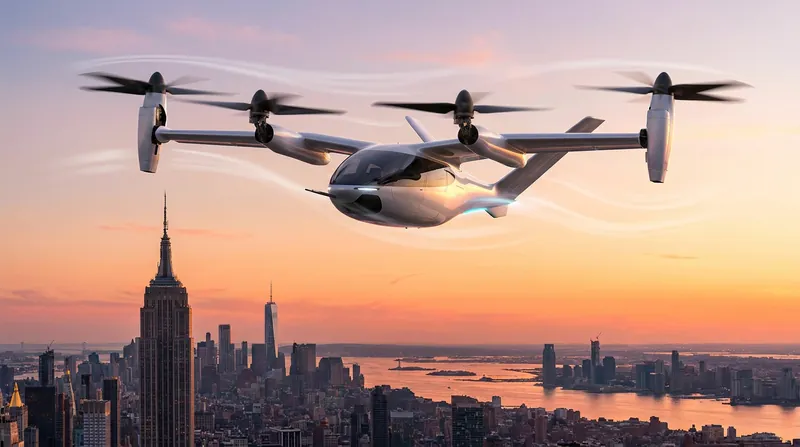
The focal point of this manufacturing alliance is Joby’s S4 Series eVTOL. The aircraft is a marvel of modern engineering, featuring six tilting propellers that allow it to take off and land vertically like a helicopter, before transitioning to forward flight like a traditional airplane. Designed to carry four passengers and a pilot, the all-electric vehicle boasts a top speed of 200 miles per hour and operates with a fraction of the noise produced by conventional helicopters.[3]
To build the S4 at the scale required for a global air taxi network, the joint venture will rely on a complex intellectual property sharing agreement. Joby will license its proprietary aircraft-related intellectual property to the joint venture on a royalty-free basis. In exchange, Toyota will license its manufacturing-related intellectual property to the venture, which includes certain royalty-bearing rights. This symbiotic exchange ensures that the factory floor has the legal and technical clearance to optimize every step of the assembly line.[1]
The collaboration between the two companies is not new. Toyota engineers have been working side-by-side with Joby’s team in California for years, providing hands-on assistance in developing aircraft production technologies. This deep integration has allowed Toyota to understand the unique material and safety requirements of aerospace manufacturing, while teaching Joby’s engineers how to design components that are easier and cheaper to mass-produce.
Currently, Joby operates a pilot production line in Marina, California, and a facility for manufacturing propeller blades in Dayton, Ohio. The newly formed joint venture will initially focus on establishing the groundwork for commercial production at these sites, with a particular emphasis on improving productivity, quality, and cost efficiency. As demand grows, the alliance plans to develop a global manufacturing footprint that could include additional high-rate production facilities.[2]
Despite the manufacturing breakthrough, significant regulatory hurdles remain before the S4 can begin ferrying passengers across city skylines. Joby has secured its air carrier operator certificate from the U.S. Federal Aviation Administration (FAA), but it is still in the concluding stages of earning its aircraft type and production certificates. The joint venture is explicitly designed to support this certification process by proving to regulators that the aircraft can be built consistently and safely at scale.[2]
The urgency to finalize production capabilities is driven by an intensifying global race for airspace. Joby faces stiff competition from rivals like Archer Aviation, which is also aggressively pursuing FAA certification and scaling its own manufacturing operations. The stakes are high, as the first companies to market will have a significant advantage in securing lucrative routes and establishing consumer trust in a completely new mode of transportation.
Joby’s ambitions extend far beyond the United States. The company recently announced a partnership with Uber to launch an on-demand air taxi service in the United Arab Emirates, aiming to begin operations later this year. Because the UAE often aligns its aviation approvals with FAA guidelines, achieving U.S. certification and demonstrating robust manufacturing capabilities through the Toyota joint venture will be critical to unlocking these international markets.
Ultimately, the Joby-Toyota alliance represents a paradigm shift in how aircraft are built. By treating an eVTOL more like a high-end automobile than a bespoke aerospace project, the joint venture aims to drive down costs and increase accessibility. If successful, this fusion of Silicon Valley aviation innovation and Japanese manufacturing discipline could finally transform the long-held dream of everyday aerial mobility into a commercial reality.[3]
Key points
- Toyota and Joby Aviation have formed a joint venture to mass-produce the S4 eVTOL aircraft.
- Toyota holds a 51% majority stake and will control three of the five board seats.
- The alliance aims to apply the Toyota Production System to aerospace manufacturing.
- Joby will license aircraft IP, while Toyota will license manufacturing IP to the venture.
Open questions
- When exactly the FAA will grant Joby its final type and production certificates.
- The specific locations of future high-rate global manufacturing facilities beyond the initial pilot plants.
- How quickly the joint venture can scale production to meet the anticipated demand for global air taxi networks.
Timeline
2017
Toyota begins backing Joby Aviation, providing early-stage financial and technical support.
2020
Toyota leads a major funding round, investing nearly $400 million into the eVTOL startup.
2023
The two companies sign a long-term supply agreement for Toyota to provide key S4 components.
Late 2024
Toyota makes a direct $500 million investment to fund aircraft certification and early production.
June 2026
Joby and Toyota officially establish the Joby Toyota Aero Manufacturing Preparation Company joint venture.
- Financial & Industry Analysts
- Focuses on the financial structure, Toyota's 51% control, and the de-risking of the manufacturing process.
- Manufacturing Optimists
- Focuses on applying the Toyota Production System to aerospace to solve historical scaling challenges.
- Urban Mobility Advocates
- Focuses on the aircraft's capabilities, the race to market, and the promise of everyday air taxis.
Perspectives this story doesn't cover
- Local residents near proposed vertiports concerned about noise and visual pollution.
- Traditional helicopter operators facing disruption from quieter, cheaper electric alternatives.
Sources
Source coverage
3 outlets
3 viewpoints surfaced



- [1]BenzingaFinancial & Industry Analysts
Toyota Takes Majority Stake In Manufacturing JV
Read on Benzinga → - [2]The ConveyorFinancial & Industry Analysts
Toyota takes 51% of a new JV to build Joby's air taxi
Read on The Conveyor → - [3]Men's JournalUrban Mobility Advocates
Joby S4 eVTOL to Enter Mass Production with Toyota Partnership
Read on Men's Journal →
More in Automotive & Transportation
See all →Aviation Safety
FAA Restores Boeing's Authority to Issue Airworthiness Certificates for 737 MAX and 787
5 sources
Urban Air Mobility
How eVTOL Air Taxis Are Making the Leap From Concept to Commercial Flight in 2026
2 sources
Urban Air Mobility
How Electric Air Taxis Are Finally Moving From Science Fiction to Commercial Reality
3 sources
Advanced Air Mobility
The 2026 eVTOL Breakthrough: How Air Taxis Work and When You Can Ride One
5 sources
Comments
Every angle. Every day.
Get Automotive & Transportation stories with full source coverage and perspective breakdowns, free every day.