
The Viral Rise of 'Slow Content' and the Migration to the Cozy Web
Exhausted by hyper-stimulating algorithms, millions of users are embracing silent vlogs and retreating to private digital spaces to reclaim their attention.
By Factlen Editorial Team
- Digital Wellness Advocates
- Mental health professionals who view low-stimulation media as a necessary neurological reset for an overstimulated generation.
- Content Creators
- Video makers who embrace silent vlogs to escape the exhausting pressure of maintaining a hyper-energetic, always-on persona.
- Digital Strategists
- Marketers and trend analysts tracking the migration from public algorithmic feeds to private, high-trust digital spaces.
What's not represented
- · Legacy social media executives facing declining engagement metrics.
- · Advertisers struggling to reach audiences in private, ad-free digital spaces.
Why this matters
As digital fatigue reaches epidemic levels, the shift toward low-stimulation content offers a practical blueprint for reclaiming our attention spans and protecting our mental health in an increasingly noisy world.
Key points
- Millions of users are rejecting hyper-stimulating algorithms in favor of 'slow content' and silent vlogs.
- Low-stimulation videos act as a neurological reset, soothing the prefrontal cortex and combating digital fatigue.
- Gen Z is leading a migration to the 'cozy web,' favoring private, high-trust digital spaces over public feeds.
- 83% of Gen Z users report actively limiting their screen time to protect their mental well-being.
- Creators are embracing silent formats to escape the emotional labor and burnout of traditional influencer performance.
For years, the internet's unwritten rule was simple and universally understood: louder is always better. Content creators and massive digital platforms engaged in a relentless arms race for human attention, weaponizing fast cuts, blaring trending music, and hyper-kinetic editing styles to stop the endless scroll. The goal was to maximize engagement at all costs, creating an ecosystem where the most extreme, highly stimulating content naturally floated to the top of every feed. This high-velocity environment became the default state of the modern web, training an entire generation to consume media in frantic, bite-sized bursts.[5]
But as we move deeper into 2026, the digital pendulum is swinging violently in the opposite direction. A quiet but powerful counterculture is taking over the internet, driven primarily by a generation that is fundamentally exhausted by the very algorithms they grew up with. Rather than seeking out more noise, users are actively hunting for digital sanctuaries. This shift represents a profound rejection of the attention economy's core mechanics, signaling that the era of hyper-stimulation may finally be reaching its breaking point.[4]
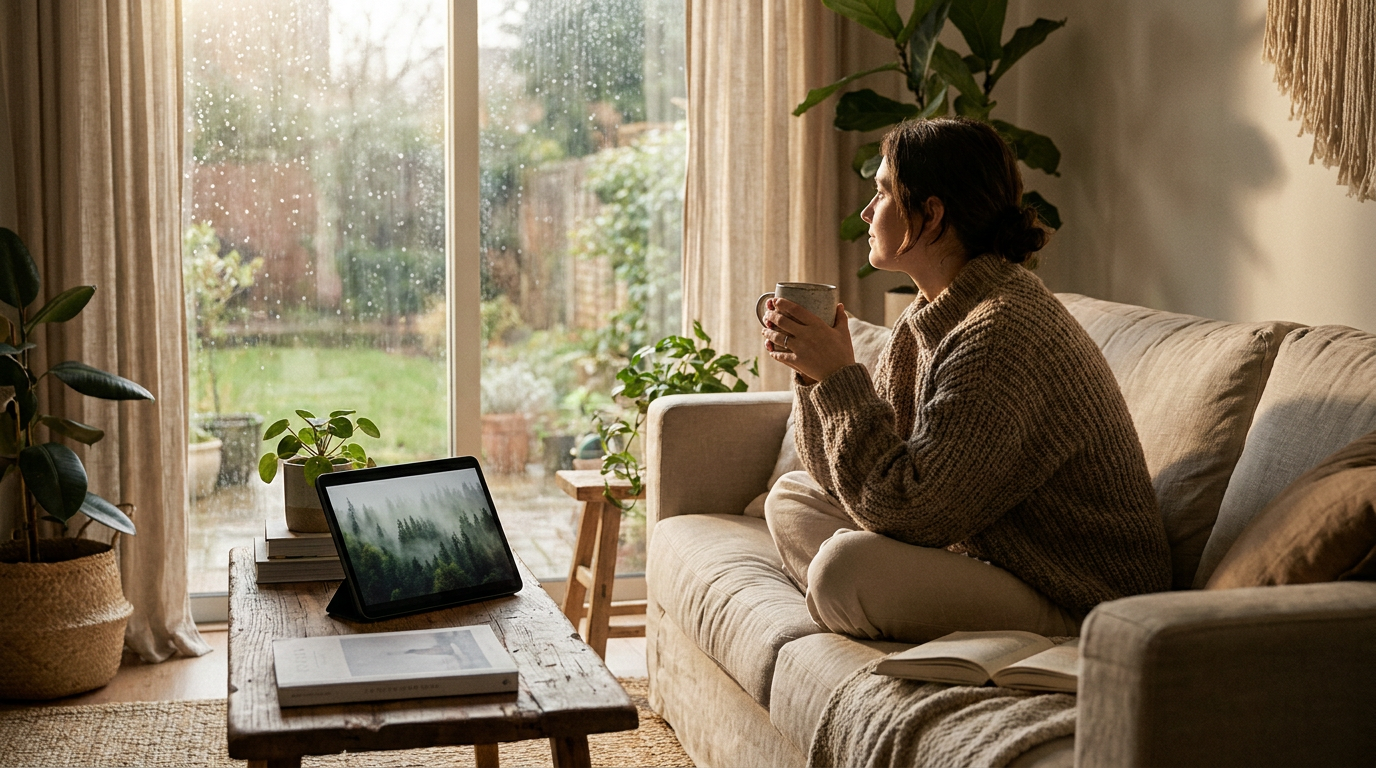
Welcome to the era of "slow content" and the rapidly expanding "cozy web." Across major platforms like YouTube, TikTok, and Instagram, the fastest-growing aesthetic is no longer chaotic entertainment, but intentional silence. Millions of viewers are tuning in daily to watch creators do absolutely nothing extraordinary—folding laundry in a sunlit room, brewing a slow cup of morning coffee, or simply staring out a window while rain falls. It is a radical departure from the traditional internet, replacing the frantic energy of viral challenges with the soothing rhythm of everyday life.[3][6]
This phenomenon is most visible in the meteoric rise of "silent vlogs," a format that has completely upended the traditional rules of online video. Unlike conventional vlogs, which rely heavily on charismatic hosts speaking directly to the camera to build a parasocial relationship, silent vlogs strip away the performance entirely. There are no energetic introductions, no pleas to like and subscribe, and no manufactured drama to keep the viewer hooked. The creator's personality takes a back seat to the atmosphere they are able to cultivate.[3]

Instead of dialogue, these videos rely entirely on high-quality ambient sound and deliberate visual pacing. Viewers are treated to the crisp clinking of a ceramic mug on a wooden table, the soft rustle of book pages turning, and the gentle hum of background appliances. The camera lingers on mundane details for extended periods, refusing to rush the narrative. This slow, methodical approach transforms ordinary household chores into a deeply meditative experience, offering viewers a temporary escape from the relentless speed of their own lives.[3]
For the creators themselves, the silent vlog format offers a profound and much-needed sense of relief. The traditional influencer model is notoriously grueling, demanding constant emotional labor and a flawless public persona. Creators are expected to always be "on," entertaining their audience, and projecting an idealized version of their lives. This relentless pressure to perform has led to unprecedented rates of burnout across the creator economy, forcing many to rethink how they engage with their audiences.[3]
Silent vlogs allow these video makers to share their lives and monetize their content without the exhausting pressure of maintaining a hyper-energetic persona. The format transforms mundane, everyday tasks into compelling content, not because the actions themselves are particularly special, but because the format itself creates a profound sense of calm. By removing the need to speak, creators can protect their own mental energy while simultaneously providing a valuable service to an audience desperate for a moment of peace.[3]
Silent vlogs allow these video makers to share their lives and monetize their content without the exhausting pressure of maintaining a hyper-energetic persona.
But the appeal of low-stimulation content goes far beyond mere aesthetics; it is deeply rooted in human neuroscience. Today's young adults and teenagers have grown up in a constant, inescapable sensory storm. From the moment they wake up, they are bombarded by 24/7 push notifications, algorithm-driven feeds, and a never-ending cycle of breaking news. This environment forces the brain into a state of perpetual high alert, constantly scanning for the next piece of vital information or social validation.[2]

Clinical psychologists and digital wellness experts note that this relentless stream of high-velocity information severely taxes the prefrontal cortex, the brain region responsible for sustained attention, decision-making, and executive function. The human brain simply did not evolve to process the sheer volume of context-switching demanded by modern social media. When the nervous system is perpetually overstimulated for years on end, it eventually reaches a breaking point and demands a physiological shutdown to recover.[2]
In this context, low-stimulation videos act as a vital neurological reset. By removing the aggressive psychological hooks, loud audio cues, and rapid visual cuts of standard social media, these videos allow the brain to safely downshift. They do not demand an immediate emotional reaction, nor do they trigger the pervasive anxiety of missing out. Instead, they provide a safe, predictable sensory environment where the viewer's nervous system can finally relax and recalibrate after a long day of digital bombardment.[2][7]
This widespread desire for digital peace is driving a broader structural migration across the internet, a phenomenon digital theorists have dubbed the "cozy web." The term describes a mass, coordinated retreat from massive, public, algorithm-driven platforms that have dominated the last decade of online life. Users are realizing that the open internet, once celebrated as a global town square, has become too toxic, too commercialized, and simply too exhausting to navigate on a daily basis.[6]
As a result, users are increasingly abandoning the "public square" of legacy social media in favor of smaller, high-trust, semi-private digital spaces. Discord servers, intimate group chats, niche Substack newsletters, and private story lists are replacing the public newsfeed. In these sheltered environments, the metrics of success are fundamentally different. Visibility and viral reach are no longer the goal; instead, users prioritize authenticity, emotional safety, and the depth of ongoing conversations with like-minded peers.[6]
The data supporting this mass migration is striking. Industry reports from 2026 indicate that an overwhelming 83% of Gen Z users are now actively limiting their daily screen time in a conscious effort to protect their mental health. Furthermore, nearly 40% of these young users report having permanently deleted at least one major social media application from their phones in the past twelve months. These numbers represent a staggering shift in consumer behavior that tech giants are struggling to address.[1]

Crucially, these users are not logging off the internet entirely; rather, they are demanding a fundamentally better social contract from the platforms they use. They are actively seeking out digital environments where their attention is respected rather than exploited. By retreating to the cozy web, they are reclaiming their autonomy, choosing to engage only with content and communities that add genuine value to their lives rather than simply draining their cognitive resources.[1]
The cultural shift has even spawned new, counter-intuitive trends like the "boredom challenge" on platforms like TikTok. In these videos, users film themselves doing absolutely nothing for extended periods—staring at a wall or sitting quietly in a park—in an effort to build a tolerance for offline time. For a generation raised on constant digital stimulation, experiencing true boredom is a novel concept. It is no longer seen as a failure of productivity, but as a highly valuable space for independent thought and reflection.[4]
Brands, marketers, and platform executives are now scrambling to adapt to this quiet revolution. The old digital playbook of intrusive, high-frequency advertising and loud, attention-grabbing stunts is increasingly backfiring. Users are actively utilizing ad-blockers, muting notifications, and ignoring brands that fail to respect their digital boundaries. To survive in this new landscape, companies are having to learn the art of subtlety, focusing on long-term trust and community building rather than short-term viral spikes.[5]
Ultimately, the meteoric rise of slow content and the migration to the cozy web is not just a passing aesthetic fad; it represents a fundamental rewiring of modern digital consumption habits. After years of being pushed to the brink of cognitive exhaustion, users are finally taking back control of their digital diets. In a world defined by overwhelming, inescapable noise, the ultimate luxury—and the most powerful cultural statement one can make—is the intentional embrace of silence.[8]
How we got here
Early 2010s
The rise of algorithmic feeds prioritizes high-engagement, fast-paced content to maximize user attention.
2020–2021
Pandemic lockdowns accelerate digital fatigue, sparking initial interest in ASMR and ambient video formats.
2023–2024
The 'bed rotting' trend goes viral, highlighting widespread burnout and exhaustion among Gen Z users.
2025–2026
Silent vlogs and 'slow content' become mainstream counter-cultural movements, driving users toward the 'cozy web.'
Viewpoints in depth
The Psychological Reset
Mental health experts emphasize the biological need for low-stimulation environments.
For years, psychologists have warned about the cognitive toll of the attention economy. The human prefrontal cortex was not evolved to handle the rapid context-switching demanded by modern algorithmic feeds. Digital wellness advocates argue that the pivot toward 'slow content' is not merely an aesthetic preference, but a biological imperative. By engaging with media that does not demand an immediate emotional or cognitive reaction, users are actively down-regulating their nervous systems and combating chronic digital fatigue.
The Creator Rebellion
Influencers are rejecting the traditional, high-energy performance model.
The traditional influencer economy is built on parasocial performance—creators must constantly entertain, speak directly to their audience, and manufacture excitement to retain viewership. This dynamic has led to unprecedented rates of creator burnout. For many video makers, the 'silent vlog' format represents a rebellion against this emotional labor. By removing the need to speak or perform, creators can monetize their everyday routines without sacrificing their mental health, transforming mundane chores into a sustainable art form.
The Cozy Web Migration
Strategists note a structural shift away from the public digital square.
Trend analysts point out that the rise of slow content is part of a broader structural migration known as the 'cozy web.' As public platforms become increasingly saturated with sponsored content and algorithmic noise, users are retreating to smaller, gated communities like Discord servers and niche group chats. In these spaces, the metric of success shifts from viral reach to the depth of conversation. Strategists warn that brands relying solely on loud, interruptive marketing will struggle to reach consumers who are actively seeking digital sanctuaries.
What we don't know
- Whether the 'cozy web' will eventually be monetized and corrupted by the same algorithmic pressures that ruined public platforms.
- How legacy social media giants will alter their core algorithms to retain users who are actively seeking low-stimulation environments.
Key terms
- Silent Vlog
- A video format featuring everyday routines without spoken commentary, relying instead on ambient sound and visual storytelling.
- The Cozy Web
- Smaller, intimate digital spaces that prioritize high-trust community and authentic connection over public algorithmic reach.
- Digital Fatigue
- A state of cognitive and emotional exhaustion caused by prolonged exposure to hyper-stimulating, fast-paced digital media.
- Algorithm Fatigue
- The exhaustion users feel when their social media feeds are engineered for emotional velocity and engagement rather than personal value.
Frequently asked
What exactly is a silent vlog?
A silent vlog is a video that documents a creator's daily life—such as cooking, cleaning, or studying—without any talking or voiceover. It relies on natural ambient sounds and slow pacing to create a relaxing viewing experience.
Why are people watching low-stimulation videos?
Many viewers use low-stimulation videos to combat digital fatigue and anxiety. The slow pacing and lack of aggressive hooks allow the nervous system to reset, offering a break from the constant overstimulation of traditional social media.
What does the term 'cozy web' mean?
The 'cozy web' refers to a shift away from large, public social media platforms toward smaller, more private digital spaces like group chats, Discord servers, and niche newsletters where users feel less pressure to perform.
Are young people actually leaving social media?
While they aren't abandoning the internet entirely, data shows that a significant portion of Gen Z is actively limiting their screen time and deleting major apps in favor of more intentional, private digital experiences.
Sources
Source coverage
8 outlets
3 viewpoints surfaced








[1]TrustGridDigital Wellness Advocates
From Scroll To Soul: Why Gen Z Is Abandoning Big Social For The Cozy Web
Read on TrustGrid →[2]Rowan Center for Behavioral MedicineDigital Wellness Advocates
The mental health meaning behind Gen Z 'bed rot' and digital fatigue
Read on Rowan Center for Behavioral Medicine →[3]SkinnedcartreeContent Creators
What Are Silent Vlogs? The Calming YouTube Trend Taking Over in 2026
Read on Skinnedcartree →[4]SubstackContent Creators
The Quiet Rebellion of Doing Nothing
Read on Substack →[5]MediumDigital Strategists
7 Quiet Trends That Will Shape Consumer Behavior in 2026
Read on Medium →[6]Beauty IndependentDigital Strategists
Finding Digital Coziness in an Overstimulating Online World
Read on Beauty Independent →[7]KOL.idDigital Strategists
Mengapa Low Stimulation Content Menjadi Relevan?
Read on KOL.id →[8]Factlen Editorial TeamDigital Strategists
Synthesis by Factlen editorial team
Read on Factlen Editorial Team →

Every angle. Every day.
Get entertainment stories with full source coverage and perspective breakdowns delivered to your inbox.