
The Ultimate EV Road Trip Explainer: Navigating the 2026 Charging Network
With over 288,000 public chargers and a unified plug standard, taking an electric vehicle cross-country has transitioned from a logistical puzzle to a predictable routine.
By Factlen Editorial Team
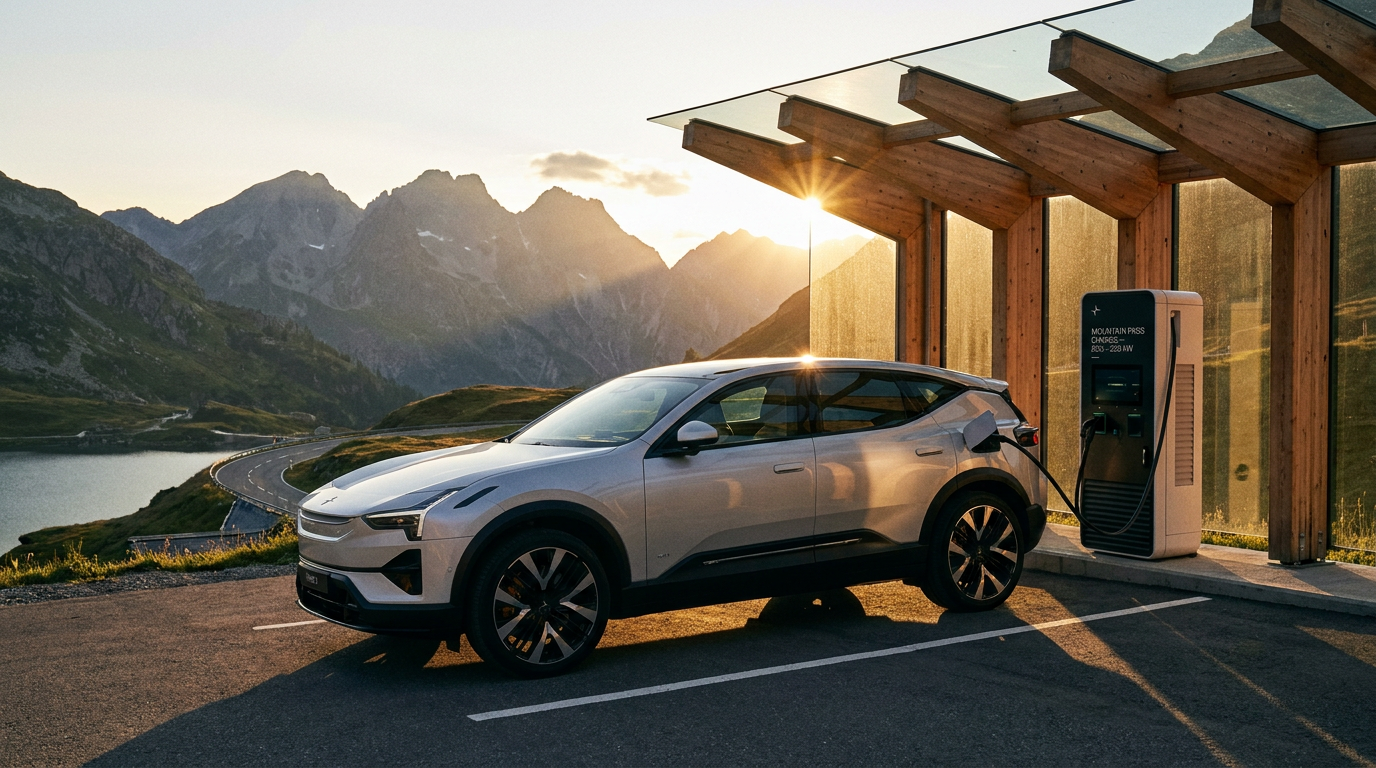
- Casual / New EV Drivers
- Value simplicity, seamless factory integration of NACS, and reliable built-in navigation to eliminate range anxiety.
- EV Early Adopters & Enthusiasts
- Focus on the technical optimization of trips, utilizing OBD2 data and hyper-efficient routing to minimize travel time.
- Infrastructure Planners
- Prioritize the rollout of standardized, universally accessible charging networks along major corridors and rural destinations.
What's not represented
- · Rural drivers without home charging access
- · Gas station operators transitioning to EV infrastructure
Why this matters
As electric vehicles reach mass adoption, understanding the mechanics of route planning, charging curves, and plug standards is essential for anyone looking to travel long distances without the stress of range anxiety.
Key points
- The US public charging network has expanded to over 288,000 ports, making cross-country EV travel highly accessible.
- The North American Charging Standard (NACS) has unified the industry, allowing most EVs to use the same plugs and stations.
- Drivers should follow the 20–80% charging rule, as fast-charging speeds drop significantly once the battery reaches 80% capacity.
- Dedicated route planners like ABRP factor in elevation, weather, and live battery data to provide accurate charging stops.
- Destination charging at hotels allows drivers to charge overnight, eliminating the need for a morning highway charging stop.
The great American road trip has been electrified. In 2026, the lingering specter of "range anxiety" has largely been engineered out of existence for prepared drivers. With over 288,000 public charging ports now active across the United States, taking an electric vehicle cross-country is no longer a pioneering gamble—it is a predictable, and often more relaxing, routine.[1][7]

The shift is driven by a convergence of three factors: batteries that can legitimately cross the 400-mile threshold, highly sophisticated route-planning software, and the rapid standardization of charging hardware. For drivers accustomed to the "drive until the needle hits E, then find a gas station" mentality, the EV road trip requires a slight psychological pivot. It is less about maximizing distance and more about optimizing stops.[5][6][7]
The most significant friction point of early EV travel—arriving at a charger only to find your plug doesn't fit—has been resolved by the North American Charging Standard (NACS). Originally developed by Tesla and now formalized by the engineering community as SAE J3400, NACS has become the undisputed unified plug of 2026.[2][3]
The elegance of the NACS connector lies in its ability to handle both Level 2 alternating current (AC) for overnight charging and direct current (DC) fast charging through a single, lightweight port. For drivers of 2025 and 2026 model-year vehicles from brands like Hyundai, Kia, Rivian, and GM, this port is increasingly built into the car straight from the factory.[3]

For those driving older EVs equipped with the legacy Combined Charging System (CCS) port, the transition has been remarkably smooth. Automakers have distributed NACS-to-CCS adapters, instantly granting these vehicles access to the vast Tesla Supercharger network. This single hardware shift has effectively doubled the viable route options for non-Tesla drivers overnight.[2][7]
But hardware is only half the equation. The physics of lithium-ion batteries dictate a specific rhythm to an EV road trip, governed by what industry veterans call the "20–80% rule." Unlike a gas tank, which fills at a constant rate from empty to full, an EV battery charges on a curve.[4][7]
When a battery is nearly empty (around 10% to 20%), it can accept a massive influx of electricity—often adding 100 to 150 miles of range in just 15 minutes at a DC fast charger. However, as the battery fills, internal resistance increases. To prevent overheating and cellular degradation, the vehicle's software intentionally throttles the charging speed.[1][4][7]
However, as the battery fills, internal resistance increases.
Once a battery reaches 80% capacity, the charging rate slows to a crawl. The final 20% can take as long to fill as the first 80%. Therefore, the most efficient way to cover long distances is not to charge to 100% and drive until empty, but to "hop" between chargers, arriving at 15% and unplugging at 80%. Two 20-minute stops are vastly faster than one 60-minute stop.[4][7]

Understanding this curve also requires understanding the difference between a vehicle's official EPA range and its real-world highway range. The EPA figure is an average of mixed city and highway driving in mild weather. On a road trip, three variables conspire to reduce that number: speed, elevation, and temperature.[5][7]
Aerodynamic drag increases exponentially with speed. Cruising at 80 mph rather than 65 mph can easily shave 20% off an EV's effective range. Similarly, climbing a mountain pass requires immense energy, though EVs uniquely recover a significant portion of that energy on the downhill descent through regenerative braking—using the electric motor as a generator to slow the car and recharge the battery simultaneously.[4][5][7]
Extreme temperatures also play a role. Blistering heat requires energy-intensive air conditioning, while freezing temperatures slow battery chemistry and demand cabin heating, which can reduce range by 15% to 25%. Newer EVs equipped with heat pumps mitigate this loss, but it remains a factor that drivers must calculate.[4][5][7]
Fortunately, drivers no longer have to do this math in their heads. The era of the "Guess-o-Meter"—the notoriously inaccurate dashboard range estimator—has been superseded by advanced software. Applications like A Better Routeplanner (ABRP) have become the gold standard for EV navigation.[4]
Unlike generic mapping apps on a smartphone, dedicated EV planners connect directly to the vehicle's computer via an OBD2 dongle or cloud API to read the exact state of charge. You input your destination, and the software calculates the optimal route, factoring in your specific vehicle model, the current weather, wind speed, and the exact elevation changes along the highway.[4]

The software tells you exactly where to stop, which charging network to use, and precisely how many minutes to stay plugged in to reach your next destination with a safe 15% buffer. Drivers often pair this routing with apps like PlugShare, a crowdsourced database that verifies whether a specific public charger is currently operational before they arrive.[4][7]
The final piece of the 2026 road trip puzzle is destination charging. The National Electric Vehicle Infrastructure (NEVI) program has pushed charging ports beyond the interstate corridors and into rural areas, including major National Parks.[1]
Savvy travelers now prioritize hotels and lodgings that offer Level 2 AC chargers. While these chargers are too slow for a quick highway pit stop—adding perhaps 25 to 40 miles of range per hour—they are perfect for overnight stays. Arriving at a hotel with a nearly depleted battery and waking up to a 100% charge essentially eliminates the first charging stop of the next day, saving both time and money.[1][6]
Ultimately, the 2026 EV road trip is less about overcoming technological limitations and more about embracing a new cadence of travel. The forced 20-minute breaks align naturally with the need to stretch, eat, and rest, reducing driver fatigue. With a unified plug, intelligent software, and a rapidly expanding network, the electric highway is fully open for business.[6][7]
How we got here
2022
Tesla opens its proprietary charging connector design to the public, renaming it the North American Charging Standard (NACS).
2023–2024
Major automakers including Ford, GM, Rivian, and Hyundai announce they will adopt the NACS port for future vehicles.
June 2024
SAE International formally standardizes the NACS connector as SAE J3400, cementing its industry-wide legitimacy.
2025
The first wave of non-Tesla EVs with native NACS ports begins rolling off assembly lines.
2026
The US public charging network surpasses 288,000 ports, with NACS serving as the unified standard for new models.
Viewpoints in depth
EV Early Adopters & Enthusiasts
Focus on the technical optimization of trips, utilizing OBD2 data and hyper-efficient routing to minimize travel time.
For veteran EV drivers, a road trip is an exercise in data-driven efficiency. This camp relies heavily on direct vehicle telemetry—using OBD2 dongles to feed real-time battery data into advanced routing software like A Better Routeplanner. By precisely calculating the impact of headwinds, elevation changes, and rolling resistance, these drivers aim to arrive at chargers with single-digit battery percentages, maximizing the fastest portion of the charging curve and minimizing total trip time.
Casual / New EV Drivers
Value simplicity, seamless factory integration of NACS, and reliable built-in navigation to eliminate range anxiety.
The rapidly growing demographic of mainstream EV buyers has little interest in hyper-optimizing charging curves or managing third-party apps. This group values the seamless, "plug and play" experience that the NACS standardization has enabled. They rely on the vehicle's built-in navigation to automatically route them to compatible chargers and prefer the peace of mind that comes with a unified network, ensuring that taking an EV on vacation requires no more technical knowledge than driving a traditional gas car.
Infrastructure Planners
Prioritize the rollout of standardized, universally accessible charging networks along major corridors and rural destinations.
Policymakers and charging network operators view the road trip experience through the lens of grid capacity and geographic equity. Driven by initiatives like the NEVI program, this camp focuses on ensuring that fast chargers are reliably spaced along interstate corridors and that destination chargers are available in rural areas and National Parks. Their goal is to eliminate charging "deserts" and ensure that the infrastructure can handle peak holiday travel volumes without widespread queuing.
What we don't know
- How well the unified charging network will handle peak holiday travel volumes as EV adoption continues to scale rapidly.
- The exact timeline for when all legacy CCS chargers will be fully retrofitted or replaced with native NACS hardware.
Key terms
- NACS (North American Charging Standard)
- The unified charging plug design, originally developed by Tesla, now adopted by most major automakers for both AC and DC charging.
- DC Fast Charging
- High-power charging used on road trips that bypasses the car's onboard converter to deliver electricity directly to the battery, adding hundreds of miles of range in minutes.
- Level 2 Charging
- Slower AC charging typically found at homes, hotels, and workplaces, adding 20 to 40 miles of range per hour.
- Regenerative Braking
- A system that uses the electric motor to slow the vehicle, converting kinetic energy back into stored battery power, especially useful on downhill routes.
- State of Charge (SoC)
- The real-time percentage of energy remaining in an electric vehicle's battery.
Frequently asked
Do I need a NACS port to take an EV road trip?
No. Older vehicles equipped with CCS ports can use adapters to access NACS stations, and thousands of dedicated CCS chargers remain active across the country.
Why shouldn't I charge my EV to 100% at a fast charger?
Charging speeds slow down dramatically after the battery reaches 80% to protect the cells from overheating. It is usually much faster to make two short stops than one long stop.
How much does cold weather affect EV range?
Extreme cold can reduce an EV's range by 15% to 25% due to slower battery chemistry and the energy required to heat the cabin, though modern heat pumps help mitigate this.
Can I use regular smartphone maps for EV routing?
While generic maps offer basic routing, they do not read your car's live battery data or account for wind and elevation. Dedicated EV planners like A Better Routeplanner (ABRP) are highly recommended.
Sources
Source coverage
7 outlets
3 viewpoints surfaced







[1]EV ConnectInfrastructure Planners
Planning a Road Trip? Here's What You Need to Know About Charging on the Go
Read on EV Connect →[2]GreenCarsCasual / New EV Drivers
The Charging Plug Conversation Finally Gets Practical
Read on GreenCars →[3]SimpleSwitchInfrastructure Planners
Which EVs have NACS charging ports in 2026?
Read on SimpleSwitch →[4]HealVannaEV Early Adopters & Enthusiasts
The Best EV Route Planners for 2026
Read on HealVanna →[5]One EV GroupEV Early Adopters & Enthusiasts
What '400 Miles' Really Means in 2026
Read on One EV Group →[6]Unsustainable MagazineCasual / New EV Drivers
How to Deal with Range Anxiety and Drive More Sustainably
Read on Unsustainable Magazine →[7]Factlen Editorial TeamInfrastructure Planners
Synthesis by Factlen editorial team
Read on Factlen Editorial Team →
Every angle. Every day.
Get automotive stories with full source coverage and perspective breakdowns delivered to your inbox.