
The Three-Factor Model: How Esports Sponsorship Valuation Is Calculated Using Reach, Engagement, and Sentiment
As esports sponsorship matures beyond vanity metrics, brands are adopting a three-factor model to calculate true media value. By combining raw reach, active engagement rates, and sentiment analysis, sponsors can finally quantify their return on investment across fragmented digital platforms.
By Xia Wu

- Valuation Analysts
- Focus on standardizing metrics across fragmented digital platforms to prove concrete media value.
- Brand Sponsors
- Prioritize active engagement and positive community sentiment over raw viewership numbers.
- Esports Organizations
- Rely on robust valuation models to justify premium pricing for broadcast integrations and secure long-term revenue.
Perspectives this story doesn't cover
- Independent Co-streamers
- Esports Fans and Viewers
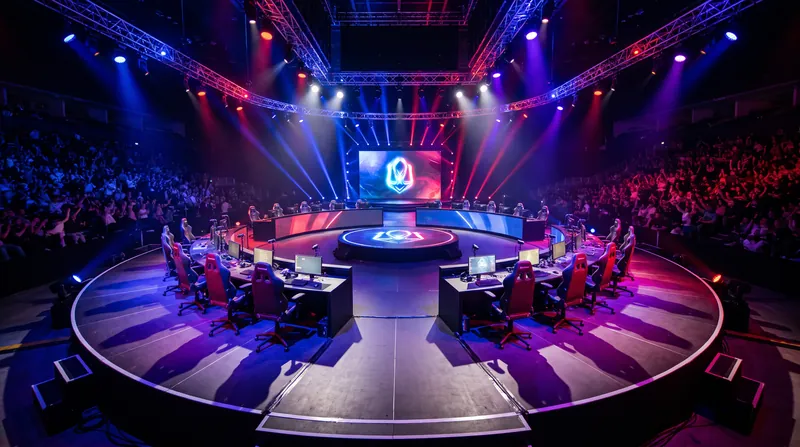
In traditional sports broadcasting, a brand buying a jersey patch or a stadium billboard knows exactly what they are paying for: a fixed camera angle, a predictable Nielsen rating, and a captive linear audience. Esports sponsorship operates in the same currency of attention, but the delivery mechanism is shattered across a dozen different surfaces. A single tournament broadcast might be co-streamed by 50 independent creators, clipped 10,000 times on TikTok, and debated in live Twitch chats. To capture that fragmented value, the industry has abandoned the old billboard math in favor of the Three-Factor Model: a valuation framework that calculates return on investment through reach, engagement, and sentiment.
The stakes for getting this math right are existential for competitive gaming. Sponsorship is not a supplementary income stream; it is the primary engine of the industry. According to industry analyses, over 40% of all esports revenue is generated by brand partnerships, far outpacing media rights or ticket sales. In the first half of 2026 alone, the on-screen media value for just the top 10 esports events exceeded $203 million. Yet, historically, much of this has been a black box. "Esports doesn't have a budget problem. It has a measurement problem," writes Benedikt Becker, Vice President of Growth Marketing at Shikenso. "Despite rapid growth, 90% of esports sponsorship spend isn't properly tracked."[2][1]
The first pillar of the new model is Reach, but redefined for the digital age. Reach measures the total number of unique individuals exposed to a brand's message, targeting a global audience that exceeded 680 million viewers in 2025. A brand's logo on a player's jersey might appear on the official Twitch stream, but its true reach includes the YouTube VODs and the Twitter highlight reels. Valuation platforms now consolidate these scattered surfaces into a single media value, estimating what that exact exposure would have cost if purchased as traditional paid advertising.[1]
However, reach alone is a vanity metric if the audience is asleep at the keyboard. This is where the second factor, Engagement, separates esports from traditional television. The real return on investment is not just how many people saw the logo, but how many interacted with it. Esports audiences are highly interactive, participating in live chats and redeeming promo codes in real-time. A well-orchestrated esports campaign can achieve an engagement rate of 4.5% on social media, significantly outperforming the 1% to 2% standard for traditional brand campaigns.[3]
However, reach alone is a vanity metric if the audience is asleep at the keyboard.
The most valuable inventory in modern esports sponsorship capitalizes directly on this engagement through "sponsor-moment activation." Instead of static logos, brands are increasingly buying the emotional peaks of a match. These AI-triggered moments turn the highest-tension seconds of a broadcast into sellable inventory, driving massive spikes in chat interaction. Furthermore, non-endemic brands that activate properly are seeing massive returns; in Germany, non-gaming brands achieved a 53% recall rate compared to just 43% for endemic gaming sponsors.[1]
The final, and most complex, pillar is Sentiment. It is not enough to know that a million fans saw a brand and 10,000 clicked a link; sponsors need to know how the community felt about the integration. Sentiment analysis uses natural language processing to scan Twitch chats and Reddit threads during a sponsored segment. If a brand activation is perceived as authentic, the sentiment score acts as a multiplier on the overall valuation. Conversely, an intrusive integration that triggers a wave of negative chat spam will actively devalue the campaign.
By combining these three factors, organizations can finally calculate a true Return on Sponsorship Investment (ROSI). This comprehensive metric divides the net profit—including direct sales, brand value increases, and customer lifetime value—by the total expenditure of the sponsorship campaign. As teams push aggressively for sustainable profitability, the Three-Factor Model provides the empirical proof that brands require to underwrite the ecosystem. The next threshold for the industry will be standardizing how sentiment scores are financially weighted, a move that would finally allow a perfectly timed chat reaction to be priced as accurately as a prime-time television commercial.
The implementation of these advanced tracking tools is already reshaping how contracts are negotiated. Instead of flat-fee agreements based on projected viewership, modern esports sponsorships increasingly feature performance-based tiers. If a team's deep tournament run generates higher-than-expected engagement and overwhelmingly positive sentiment, the final payout scales accordingly. This shift aligns the financial incentives of the team, the tournament organizer, and the sponsor, ensuring that all parties are working toward creating the most compelling broadcast possible.
Key points
- Esports sponsorship accounts for over 40% of industry revenue, making accurate valuation an existential priority for teams and organizers.
- The Three-Factor Model replaces traditional billboard math by combining reach, engagement, and sentiment to calculate true media value.
- Reach in esports must account for fragmented viewership across official streams, co-streamers, and social media clips.
- High engagement rates, which can reach 4.5% in esports compared to 1-2% in traditional campaigns, are the primary draw for non-endemic brands.
- Sentiment analysis uses natural language processing to ensure brand integrations are perceived authentically by the highly vocal gaming community.
Why this matters
With brand partnerships driving over 40% of all esports revenue, the survival of competitive gaming relies on proving its financial worth to advertisers. This valuation model gives non-endemic brands the empirical confidence they need to invest millions into the ecosystem.
Key terms
- Media Value
- The estimated financial cost of achieving a specific level of brand exposure if it had been purchased through traditional paid advertising channels.
- Non-Endemic Brand
- A company that sponsors an esports event but does not produce products directly related to gaming or technology, such as a fast-food chain or an insurance provider.
- Return on Sponsorship Investment (ROSI)
- A financial metric that divides the net profit generated by a sponsorship—including direct sales and brand lift—by the total cost of the campaign.
- Co-streaming
- A practice where independent content creators broadcast a live esports tournament on their own channels, adding their own commentary and expanding the event's total reach.
Frequently asked
What is the Three-Factor Model in esports?
It is a valuation framework that calculates the return on sponsorship investment by measuring three key metrics: the total reach of the campaign, the active engagement of the audience, and the overall sentiment of the community.
Why is traditional TV measurement insufficient for esports?
Esports viewership is highly fragmented. A single event is watched across official broadcasts, independent co-streams, and social media clips, making traditional single-channel Nielsen ratings inadequate for capturing true media value.
What is a sponsor-moment activation?
It is a dynamic sponsorship format where a brand's logo or message is triggered by specific high-tension events in a match, such as a clutch play or a victory, driving higher engagement than static banners.
How is sentiment measured in a live broadcast?
Valuation platforms use natural language processing (NLP) to analyze live chat feeds, Reddit threads, and social media replies in real-time, scoring the community's reaction to a brand integration as positive, neutral, or negative.
Sources
Source coverage
4 outlets
3 viewpoints surfaced




- [1]ShikensoValuation Analysts
Sponsorship Measurement: The Complete Guide to Impact & ROI
Read on Shikenso → - [2]Esports ChartsValuation Analysts
Esports Sponsorship Benchmark H1 2026: Top Events by Media Value
Read on Esports Charts → - [3]Arka AllianceBrand Sponsors
The Real ROI of Sponsorship Is Not Reach - It's Engagement!
Read on Arka Alliance → - [4]Factlen Editorial TeamEsports Organizations
Synthesis by Factlen editorial team
Read on Factlen Editorial Team →
Comments

More in Gaming & Esports
See all →Game AI
The Sequence, Selector, and Decorator Nodes: How Behavior Trees Architect Complex Game AI
5 sources

Team Finances
The 80% to 120% Range: How Player Salaries Dictate the Operating Margin of a Franchised Esports Team
5 sources
Physics Engines
The GJK and EPA Algorithms: How Minkowski Difference and the Simplex Determine Collision
8 sources

Cloud Gaming
Take-Two CEO Predicts Cloud Gaming Will 10x Installed Base in Three Years
7 sources

Every angle. Every day.
Get Gaming & Esports stories with full source coverage and perspective breakdowns delivered to your inbox.