
The 'Silver Tsunami' of Retiring Founders is Fueling an Employee Ownership Boom
As millions of baby boomer business owners approach retirement, a growing number are rejecting traditional buyouts in favor of selling their companies directly to their staff.
By Factlen Editorial Team
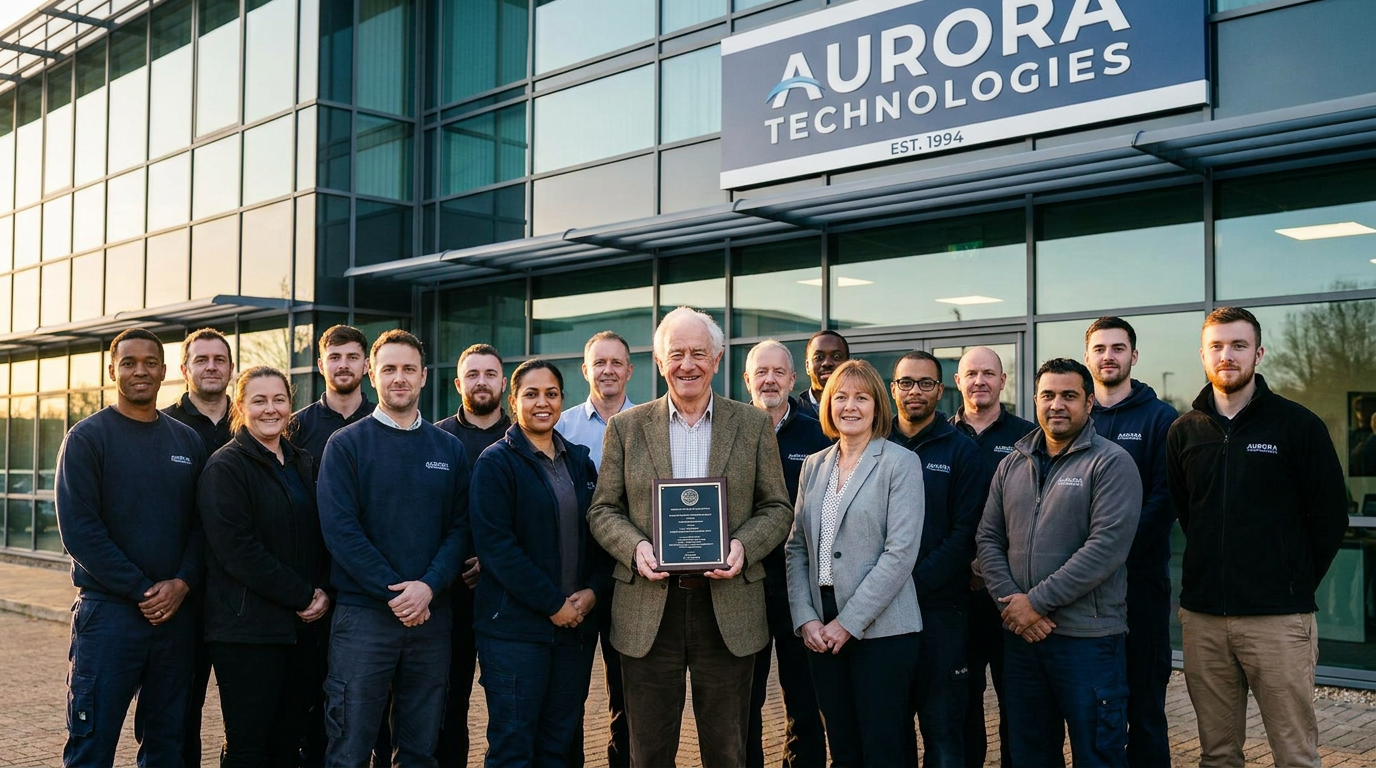
- Labor Economists
- View employee ownership as a proven structural tool to reduce wealth inequality, improve job quality, and build worker assets.
- Retiring Founders
- Prioritize legacy preservation, community stability, and tax advantages over maximizing immediate payouts from private equity.
- Financial Regulators
- Focus on the strict legal compliance, fiduciary duties, and financial viability required to protect workers' retirement assets in these complex transactions.
What's not represented
- · Private Equity Firms
- · Local Tax Authorities
Why this matters
Employee ownership models secure the legacy of retiring founders while creating significant wealth-building opportunities for workers, potentially narrowing the wealth gap and keeping local businesses rooted in their communities.
Key points
- Approximately six million US business owners are expected to retire by 2035, prompting a massive transfer of corporate assets.
- Instead of selling to competitors or private equity, a growing number of founders are utilizing ESOPs to sell their companies to their staff.
- ESOPs allow employees to acquire ownership stakes without personal capital, as the buyout is financed by a loan repaid through company profits.
- Retiring owners receive significant tax advantages, including the ability to defer capital gains taxes indefinitely under certain conditions.
- Research shows employee-owned firms often boast higher wages, better retirement savings, and lower turnover rates than traditional companies.
- The transition requires high upfront legal and administrative costs, making it most suitable for mature businesses with stable cash flows.
The American business landscape is standing on the precipice of a massive demographic shift. Over the next decade, approximately six million business owners are slated to enter retirement, a phenomenon economists have dubbed the 'Silver Tsunami.' For decades, the traditional exit strategy for a successful founder was straightforward: pass the company down to the next generation, sell to a larger competitor, or accept a lucrative buyout from a private equity firm. However, a quiet but profound shift is altering the trajectory of Main Street successions.[1][7]
Faced with the reality that their children may not want to take over the family business, and wary of private equity firms that might strip assets or lay off long-time staff, a growing cohort of founders is choosing a different path. They are selling their life's work directly to the people who helped build it: their employees. This transition is not merely a feel-good gesture; it is a highly structured financial transaction that fundamentally alters the wealth distribution within a company.[1][5]

The most common vehicle for this transition in the United States is the Employee Stock Ownership Plan, or ESOP. While the concept has existed since the 1970s, it is experiencing a modern renaissance. Currently, over 14 million Americans participate in these plans, holding a collective wealth that exceeds $1.7 trillion. The mechanism is elegant but complex, designed to allow workers to acquire a company without needing to pool their own personal savings or take out second mortgages on their homes.[2][6]
In a typical leveraged ESOP transaction, the company itself sets up a trust on behalf of its employees. The trust then borrows money—often from a bank, or sometimes financed directly by the retiring owner—to purchase the owner's shares. As the company continues to operate and generate revenue, it uses a portion of its profits to repay the loan. With each loan payment, a corresponding number of shares is released into the individual retirement accounts of the employees, usually allocated based on salary or tenure.[2][4]

From the perspective of the retiring founder, the financial incentives are highly compelling. The federal government actively encourages employee ownership through significant tax advantages. Under specific conditions, a business owner who sells at least 30 percent of their C-corporation to an ESOP can defer capital gains taxes indefinitely by reinvesting the proceeds into other domestic securities. This provision, known as a 1042 rollover, allows founders to secure their retirement wealth while ensuring their business remains intact.[4][7]
From the perspective of the retiring founder, the financial incentives are highly compelling.
Beyond the tax benefits, the emotional and cultural dividends are often the deciding factor for founders. Selling to an ESOP guarantees that the company's name stays on the door, the headquarters remains in the local community, and the workforce is protected from the aggressive restructuring that frequently follows a corporate acquisition. For entrepreneurs who view their staff as extended family, this legacy preservation is invaluable.[1][5]
For the employees, the impact can be life-changing. Research indicates that workers in employee-owned companies experience significantly better financial outcomes than their peers in traditionally structured firms. They tend to earn higher median wages, enjoy greater job security during economic downturns, and accumulate substantially larger retirement accounts. Because the shares are granted as a benefit rather than purchased out of pocket, ESOPs serve as a powerful engine for wealth creation, particularly for lower- and middle-income workers who might otherwise struggle to invest in the stock market.[3][5]

The benefits also extend to the operational health of the business itself. When workers have a literal stake in the company's success, corporate culture often shifts toward greater transparency and collaboration. Employees are more likely to identify inefficiencies, suggest operational improvements, and hold one another accountable. This 'ownership culture' frequently translates into lower turnover rates and higher productivity, creating a virtuous cycle that helps the company generate the profits needed to pay down the initial buyout loan.[2][3]
However, the transition to employee ownership is not without its hurdles. Establishing an ESOP is a highly regulated, legally intensive process that requires specialized valuation experts, trustees, and legal counsel. The upfront costs can easily reach hundreds of thousands of dollars, making it impractical for very small businesses. Furthermore, the ongoing administrative burden of managing the trust and complying with Department of Labor regulations requires dedicated internal resources.[4][6]
The financial structure also demands a specific type of business profile. Because the buyout is typically financed through debt, the company must have a history of stable, predictable cash flow. A business that is struggling, highly cyclical, or requires massive ongoing capital investments may not be able to shoulder the debt burden of an ESOP loan while simultaneously funding its daily operations. It is a strategy designed for healthy, mature companies, not a rescue mechanism for failing enterprises.[2][7]

Despite these complexities, the momentum behind employee ownership is accelerating. Bipartisan support is growing at both the state and federal levels, with lawmakers recognizing the model's potential to anchor jobs locally and reduce wealth inequality. Several states have recently launched centers for employee ownership to provide education and technical assistance to retiring founders, aiming to demystify the process and lower the barriers to entry.[1][3]
As the Silver Tsunami continues to crest, the choices made by retiring baby boomers will reshape the American economy. By choosing to pass the torch to their staff, these founders are doing more than just cashing out; they are democratizing capital. In doing so, they are proving that a business can be both highly competitive in the marketplace and deeply committed to the prosperity of the people who make it run.[1][5][7]
How we got here
1974
The Employee Retirement Income Security Act (ERISA) is passed, formally establishing the legal framework for ESOPs in the United States.
1984
Congress introduces the 1042 tax rollover provision, heavily incentivizing retiring owners to sell to their employees.
2022
The WORK Act is signed into law, providing federal funding to states to establish employee ownership centers and educate business owners.
2026
The 'Silver Tsunami' accelerates, driving a record number of business successions toward employee ownership models.
Viewpoints in depth
Retiring Founders
Founders view employee ownership as the ultimate tool for legacy preservation and community loyalty.
For entrepreneurs who have spent decades building a business, the exit strategy is often fraught with emotional weight. Selling to a competitor or a private equity firm frequently results in the dismantling of the company's culture, relocation of headquarters, or aggressive layoffs to maximize short-term margins. Retiring founders who choose the ESOP route argue that the model allows them to secure their own financial future through tax-advantaged buyouts while rewarding the staff who built the company. They view it as a mechanism to ensure their life's work outlasts them in a form they recognize, keeping the economic engine rooted in their local community.
Labor Economists
Economists study employee ownership as a structural remedy for wealth inequality and wage stagnation.
Academic researchers and labor economists point to decades of data showing that employee ownership fundamentally alters the financial trajectory of the working class. Unlike traditional wage labor, where the benefits of capital appreciation flow exclusively to external shareholders or private owners, ESOPs distribute equity directly to the workforce. Economists argue this model builds substantial retirement wealth for lower- and middle-income workers, reduces racial and gender wealth gaps, and creates more resilient local economies because the profits generated by the business remain in the hands of the people who live in the community.
Financial Regulators
Regulators emphasize the severe compliance risks and the necessity of protecting workers from taking on unsustainable corporate debt.
While the outcomes of successful ESOPs are widely praised, financial regulators and legal experts caution that the mechanism is inherently risky if mismanaged. Because a leveraged ESOP involves the company taking on significant debt to buy out the founder, regulators stress that the business must have rock-solid cash flow to service that debt without compromising operational stability. Furthermore, because the ESOP acts as a retirement plan, trustees have a strict fiduciary duty under federal law to ensure the company is not overvalued during the sale. Regulators focus heavily on enforcing these valuation standards to prevent founders from cashing out at inflated prices, which would leave employees holding the bag on unsustainable debt.
What we don't know
- Whether the current infrastructure of valuation experts and trustees can scale to meet the demand of millions of retiring boomers.
- How employee-owned firms will navigate severe economic recessions if their debt burdens from the initial buyout remain high.
- If state-level educational initiatives will successfully convince smaller, less-resourced businesses to adopt the complex ESOP model.
Key terms
- Employee Stock Ownership Plan (ESOP)
- A qualified retirement plan that invests primarily in the stock of the sponsoring employer, allowing workers to gain ownership stakes over time.
- Silver Tsunami
- A demographic trend referring to the massive wave of baby boomer business owners who are reaching retirement age simultaneously.
- 1042 Rollover
- A tax provision that allows business owners to defer capital gains taxes when selling their company to an ESOP, provided they reinvest the proceeds in domestic securities.
Frequently asked
Do employees have to buy the shares with their own money?
No. In a typical ESOP, the company borrows money to buy the shares on behalf of the employees, and the loan is repaid using the company's future profits.
What happens to the shares if an employee leaves the company?
When an employee retires or leaves, the company is legally obligated to buy back their vested shares at fair market value, providing the employee with a cash retirement benefit.
Can any business become employee-owned?
While any business can technically transition, the model works best for consistently profitable companies with strong cash flow, as the business needs to be able to pay off the buyout loan.
Sources
Source coverage
7 outlets
3 viewpoints surfaced







[1]BBCRetiring Founders
As more US business owners retire many are selling up to their staff
Read on BBC →[2]National Center for Employee OwnershipLabor Economists
Employee Ownership by the Numbers
Read on National Center for Employee Ownership →[3]Rutgers School of Management and Labor RelationsLabor Economists
Institute for the Study of Employee Ownership and Profit Sharing
Read on Rutgers School of Management and Labor Relations →[4]U.S. Small Business AdministrationRetiring Founders
Close or sell your business
Read on U.S. Small Business Administration →[5]Harvard Business ReviewLabor Economists
The Case for Employee Ownership
Read on Harvard Business Review →[6]U.S. Department of LaborFinancial Regulators
Types of Retirement Plans
Read on U.S. Department of Labor →[7]Factlen Editorial TeamFinancial Regulators
Synthesis by Factlen editorial team
Read on Factlen Editorial Team →
More in business
See all 5 stories →AI Infrastructure
SpaceX Raises Record $85.7 Billion in Historic IPO to Fund Orbital AI Infrastructure
7 sources

AI Economics
The Compute-First Era: How AI is Rewriting the Rules of Venture Capital
6 sources

Fed Watch
Federal Reserve Holds Rates Steady as New Chair Kevin Warsh Signals Hawkish Pivot
8 sources
Every angle. Every day.
Get business stories with full source coverage and perspective breakdowns delivered to your inbox.