
The Science of Space: How Neuroaesthetics is Turning Interior Design into Preventive Healthcare
Neuroscientists are using fMRI scans to prove that interior design is a biological imperative, not just a matter of taste. By measuring how room shapes, lighting, and textures affect the brain, the emerging field of neuroaesthetics is transforming how we build spaces for mental health.
By Factlen Editorial Team
- Cognitive Neuroscientists
- Researchers focused on mapping the brain's hardwired responses to spatial stimuli.
- Evidence-Based Designers
- Architects and interior designers translating biological data into practical building strategies.
- Public Health & Environmental Researchers
- Professionals pushing for neuroaesthetic principles to be applied equitably across all demographics.
What's not represented
- · Low-income housing developers
- · Traditional decorators
Why this matters
For decades, interior design was dismissed as a luxury or a superficial matter of taste. The biological proof that our physical surroundings actively regulate our nervous systems means that how we design our homes, offices, and hospitals is a critical component of public health.
Key points
- Neuroaesthetics uses brain-scanning technology to prove that interior design directly impacts human biology.
- Poorly designed spaces can trigger the sympathetic nervous system, causing chronic stress and cortisol release.
- Environments with natural light, curved lines, and biophilic elements activate the brain's pleasure centers.
- Researchers have identified coherence, fascination, and hominess as the three key psychological dimensions of interior space.
- The design industry is shifting to view architecture as a form of preventive mental healthcare.
Have you ever walked into a room, dropped your keys, and felt an immediate, involuntary exhale? Conversely, have you ever entered a space that instantly made your shoulders tense and your mind buzz with low-grade anxiety? For decades, interior designers and architects have intuitively understood that our physical surroundings shape our moods. But when asked to explain why a room felt "right" or "wrong," the industry largely relied on subjective concepts like taste, style, or aesthetic preference.[5]
That conversation is undergoing a radical, science-driven transformation. Thanks to advancements in brain-scanning technology, researchers are proving that our reaction to a room is not merely a matter of opinion—it is a measurable biological imperative. This is the foundation of neuroaesthetics, an emerging field that bridges cognitive neuroscience and design to study exactly how our brains and bodies respond to the built environment.[2][6]
At its core, neuroaesthetics reveals that human beings do not simply occupy spaces; we biologically interact with them. When we cross the threshold of a room, our sensory-motor systems and knowledge-meaning networks immediately begin processing the environment. This rapid assessment dictates whether our autonomic nervous system shifts into a state of stress or a state of restoration.[2]
The autonomic nervous system is divided into two main branches. The sympathetic nervous system controls our "fight, flight, or freeze" response. When a room features harsh lighting, chaotic layouts, or unpredictable acoustics, the brain perceives a subtle threat. It triggers the release of cortisol and adrenaline, elevating the heart rate and keeping the body in a state of low-level, chronic stress.[2]

Conversely, thoughtfully designed spaces activate the parasympathetic nervous system—the "rest and digest" mode. In this state, the brain releases a cascade of positive neurotransmitters, including serotonin, dopamine, and oxytocin. Heart rates slow, blood pressure drops, and the mind achieves a sense of clarity and expansion. What we traditionally called "beauty" is, neurologically speaking, the biological reward for finding a safe, harmonious environment.[2][6]
To understand exactly which architectural features trigger these rewards, researchers at the University of Pennsylvania's Center for Neuroaesthetics have placed subjects inside functional magnetic resonance imaging (fMRI) machines while showing them hundreds of interior spaces. The results demonstrate that the visual brain harbors hidden, hardwired sensitivities to specific design elements.[1]
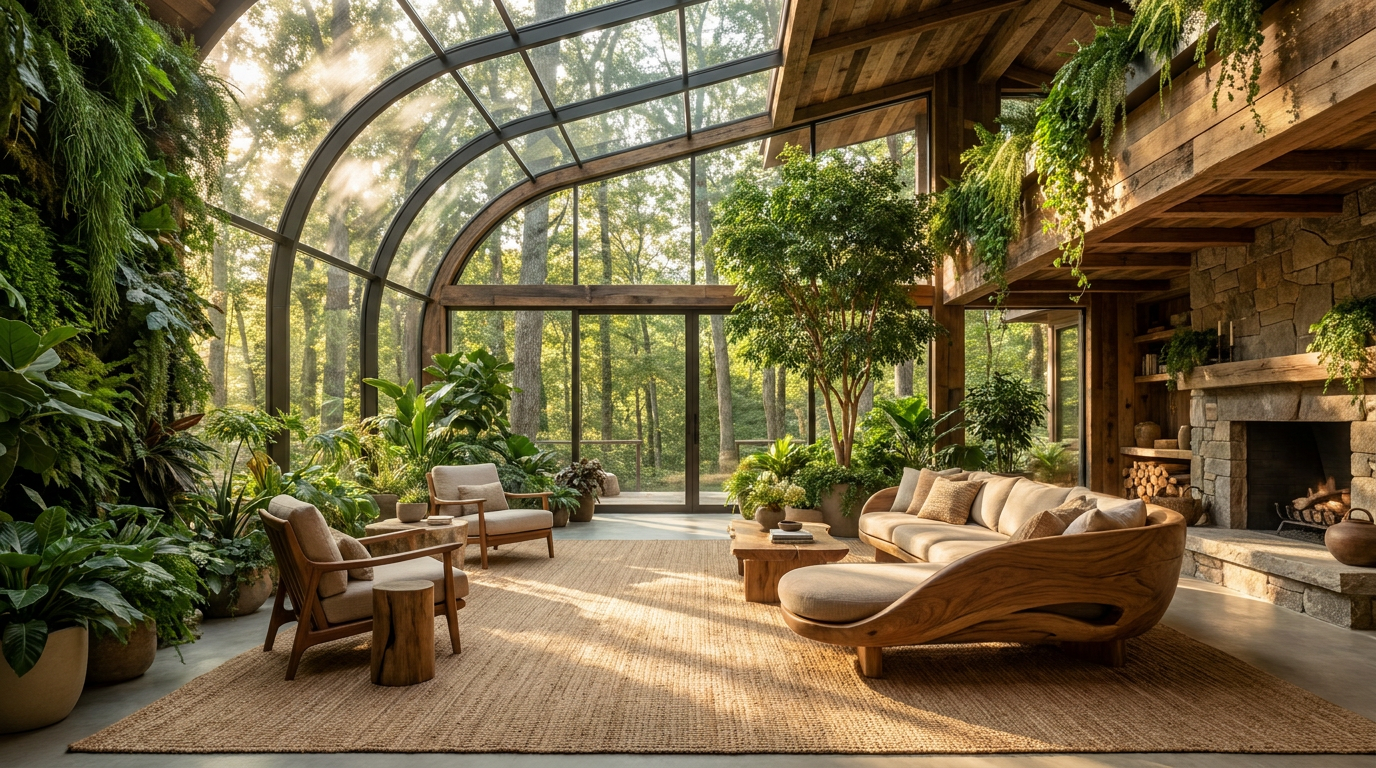
The Penn researchers discovered that participants consistently found spaces with high ceilings, rounded shapes, and expansive windows to be the most beautiful. More importantly, viewing these specific features activated the ventromedial prefrontal cortex and the orbitofrontal cortex—regions of the brain heavily involved in emotional regulation, decision-making, and the processing of pleasure.[1][6]
The Penn researchers discovered that participants consistently found spaces with high ceilings, rounded shapes, and expansive windows to be the most beautiful.
Through psychometric network analysis, scientists have distilled our aesthetic responses to interiors down to three primary psychological dimensions: coherence, fascination, and hominess. Coherence refers to the ease with which our brains can organize and comprehend a scene. A room with clear sightlines and balanced proportions requires less cognitive load to process, making it inherently calming.[1]

Fascination, the second dimension, relates to informational richness and generated interest. A space needs enough texture, art, or architectural detail to engage the mind without overwhelming it. In fMRI studies, the degree of fascination a person felt directly covaried with neural activity in the right lingual gyrus, a region linked to visual processing and logical analysis.[1]
The third dimension, hominess, is entirely unique to architectural interiors. It represents a profound sense of personal ease, comfort, and refuge. When participants evaluated spaces for hominess, researchers observed distinct neural activity in the left cuneus, particularly when subjects were deciding whether they wanted to approach or avoid a space.[1]
One of the most reliable ways to trigger these positive neural responses is through biophilic design—the practice of incorporating nature and natural analogs into the built environment. Evolutionary psychology suggests that our nervous systems evolved in the natural world, not in enclosed, gray boxes. Consequently, our brains are hardwired to feel secure when surrounded by cues that signal the availability of resources and shelter.[5]
The biological benefits of biophilia are staggering. Studies consistently demonstrate that incorporating natural elements—such as indoor plants, water features, and fractal patterns found in nature—can reduce stress hormones by 15 to 20 percent. Furthermore, employees working in biophilic offices report a 15 percent increase in productivity and significantly lower rates of cognitive fatigue.[2]

Light and color play equally critical roles in neuroaesthetic design. Exposure to natural daylight regulates our circadian rhythms and boosts serotonin production, directly impacting sleep quality and daytime alertness. When natural light is scarce, color psychology can manipulate the brain's response: cool hues like blues and greens activate parasympathetic relaxation, while warmer tones like terracotta or yellow stimulate sympathetic alertness and vitality.[2][7]
The tactile and acoustic environments are the final pieces of the neuroaesthetic puzzle. Humans tend to feel more welcomed around natural materials like wood or woven fabrics, which stimulate the somatosensory cortex and evoke an unconscious sense of belonging. Meanwhile, mitigating unpredictable noise through acoustic panels or soft furnishings prevents the sudden cortisol spikes associated with auditory chaos.[2]
As the evidence mounts, the conversation around neuroaesthetics is shifting from luxury to equity. Organizations like the Business and Institutional Furniture Manufacturer's Association (BIFMA) are advocating for human-centered design in public spaces. Research shows that students in classrooms with dynamic daylighting and warm wooden finishes exhibit enhanced concentration, while hospital patients with access to natural views heal faster and require less pain medication.[3][4]

Ultimately, neuroaesthetics challenges the notion that interior design is a superficial pursuit. By proving that our environments actively shape our brain chemistry, the field elevates architecture and design to the realm of preventive mental healthcare. We are not separate from the spaces we inhabit; by designing them with empathy and scientific rigor, we can build environments that actively heal us.[3][5]
How we got here
1999
The term 'neuroaesthetics' is first coined by neurobiologist Semir Zeki to describe the neural basis of visual art.
2010s
Advancements in fMRI technology allow researchers to measure real-time brain activity in response to architectural and interior spaces.
2022
Neuroaesthetics is formally recognized as a distinct field bridging cognitive neuroscience and the built environment.
Viewpoints in depth
Cognitive Neuroscientists
Researchers focused on mapping the brain's hardwired responses to spatial stimuli.
For neuroscientists, the built environment is a massive, untapped variable in human biology. By placing subjects in fMRI machines and tracking eye movement, heart rate, and galvanic skin response, this camp seeks to eliminate the subjectivity of 'taste.' They argue that our preference for natural light, fractal patterns, and curved lines is an evolutionary hangover—our brains are simply rewarding us with dopamine for finding environments that historically signaled safety, shelter, and resources.
Evidence-Based Designers
Architects and interior designers translating biological data into practical building strategies.
This group views neuroaesthetics as the ultimate validation of their profession. Rather than pitching a client on a color palette because it 'looks nice,' evidence-based designers use scientific literature to justify their choices. They focus on the practical application of the science: sourcing acoustic dampening materials to prevent cortisol spikes, utilizing circadian lighting systems to regulate sleep, and integrating biophilic textures to lower blood pressure in high-stress corporate or healthcare settings.
Public Health Advocates
Professionals pushing for neuroaesthetic principles to be applied equitably across all demographics.
Public health experts warn that the benefits of neuroaesthetics are currently siloed in luxury real estate and high-end corporate offices. They argue that if interior design is a form of preventive healthcare, it must be treated as a public health imperative. This camp lobbies for updated building codes and increased funding to ensure that affordable housing, public schools, and community hospitals are designed with the same stress-reducing, biologically supportive principles as a billionaire's wellness retreat.
What we don't know
- How long the biological benefits of a neuroaesthetic space last once a person leaves the environment.
- The exact degree to which individual cultural backgrounds override hardwired evolutionary design preferences.
Key terms
- Neuroaesthetics
- The scientific study of the neural consequences of experiencing beauty, art, and architectural spaces.
- Autonomic Nervous System
- The part of the nervous system responsible for control of bodily functions not consciously directed, such as breathing, heartbeat, and digestive processes.
- Parasympathetic State
- The 'rest and digest' mode of the nervous system, characterized by a slower heart rate and a sense of calm.
- Biophilia
- The innate human instinct to connect with nature and other living beings.
- fMRI (Functional Magnetic Resonance Imaging)
- A technique for measuring and mapping brain activity that detects changes associated with blood flow.
- Somatosensory Cortex
- The region of the brain responsible for processing tactile information like touch, temperature, and texture.
Frequently asked
What exactly is neuroaesthetics?
Neuroaesthetics is the scientific study of how our brains and bodies respond to beauty, art, and our physical environments, using tools like fMRI scans to measure biological reactions.
How does a room lower my stress?
Spaces with natural light, organic shapes, and natural textures activate the parasympathetic nervous system, which lowers heart rate, reduces cortisol (the stress hormone), and increases serotonin.
What is biophilic design?
Biophilic design is the practice of incorporating nature into the built environment through indoor plants, water features, natural wood, and fractal patterns to mimic the outdoors.
Do I need a total remodel to see benefits?
No. Small changes like maximizing natural light, adding indoor plants, reducing harsh noises with soft furnishings, and using calming paint colors can measurably improve your biological response to a room.
Sources
Source coverage
7 outlets
3 viewpoints surfaced







[1]University of PennsylvaniaCognitive Neuroscientists
The visual brain harbours hidden sensitivities to architectural interiors
Read on University of Pennsylvania →[2]Science in DesignEvidence-Based Designers
Neuroaesthetics: The Convergence of Neuroscience and Aesthetics
Read on Science in Design →[3]BIFMAEvidence-Based Designers
A New Frontier in Design Thinking: Neuroaesthetics
Read on BIFMA →[4]Building and Environment JournalPublic Health & Environmental Researchers
Clever classrooms: Summary report of the HEAD project
Read on Building and Environment Journal →[5]Factlen Editorial TeamEvidence-Based Designers
Synthesis by Factlen editorial team
Read on Factlen Editorial Team →[6]Trends in Cognitive SciencesCognitive Neuroscientists
Neuroaesthetics
Read on Trends in Cognitive Sciences →[7]Journal of Clinical Sleep MedicinePublic Health & Environmental Researchers
Impact of windows and daylight exposure on overall health and sleep quality of office workers
Read on Journal of Clinical Sleep Medicine →

Every angle. Every day.
Get lifestyle stories with full source coverage and perspective breakdowns delivered to your inbox.