
The Science of 'Awe Walks': How Micro-Moments of Wonder Rewire the Brain
Neuroscientists have discovered that brief, intentional moments of everyday awe can deactivate the brain's rumination centers, lower inflammation, and act as a powerful antidote to modern anxiety.
By Factlen Editorial Team

- Clinical Neuroscientists
- Researchers who focus on how awe physically rewires the brain and immune system.
- Public Health Advocates
- Experts who view awe as a highly scalable, zero-cost tool for combating the loneliness epidemic and chronic stress.
- Mindfulness Practitioners
- Advocates who emphasize the experiential shift of the 'small self' and connection to the present moment.
What's not represented
- · Urban Planners
- · Corporate Wellness Directors
Why this matters
Chronic stress and rumination are primary drivers of modern burnout. Understanding how to trigger the biological 'awe response' gives anyone a free, scientifically validated tool to instantly calm their nervous system and gain perspective.
Key points
- Awe is a measurable biological state that pulls the nervous system out of 'fight-or-flight' mode.
- Experiencing awe quiets the brain's Default Mode Network, reducing rumination and anxiety.
- A UCSF study found that 15-minute weekly 'awe walks' significantly boosted positive emotions in older adults.
- Awe lowers interleukin-6, a key biomarker associated with systemic inflammation.
- The 'small self' effect makes personal worries feel less significant while increasing feelings of connection to others.
Modern life is defined by a relentless inward focus. We track our daily steps, monitor our heart rates, and listen to a constant inner monologue of anxieties, social comparisons, and endless to-do lists. To combat this chronic stress, the wellness industry often prescribes complex routines, expensive supplements, or rigorous meditation retreats.[7]
But over the past decade, neuroscientists and psychologists have uncovered a far simpler, zero-cost intervention that requires no equipment and takes only minutes a day. It is the deliberate cultivation of a specific, deeply human emotion: awe.[1][7]
For most of modern psychology's history, awe was considered too poetic or spiritual to measure in a laboratory. That changed when researchers like Dacher Keltner at UC Berkeley began mapping its precise biological and cognitive signatures. Science now defines awe as the feeling of encountering something vast that transcends our current understanding of the world, forcing us to adjust our mental models.[1][5]
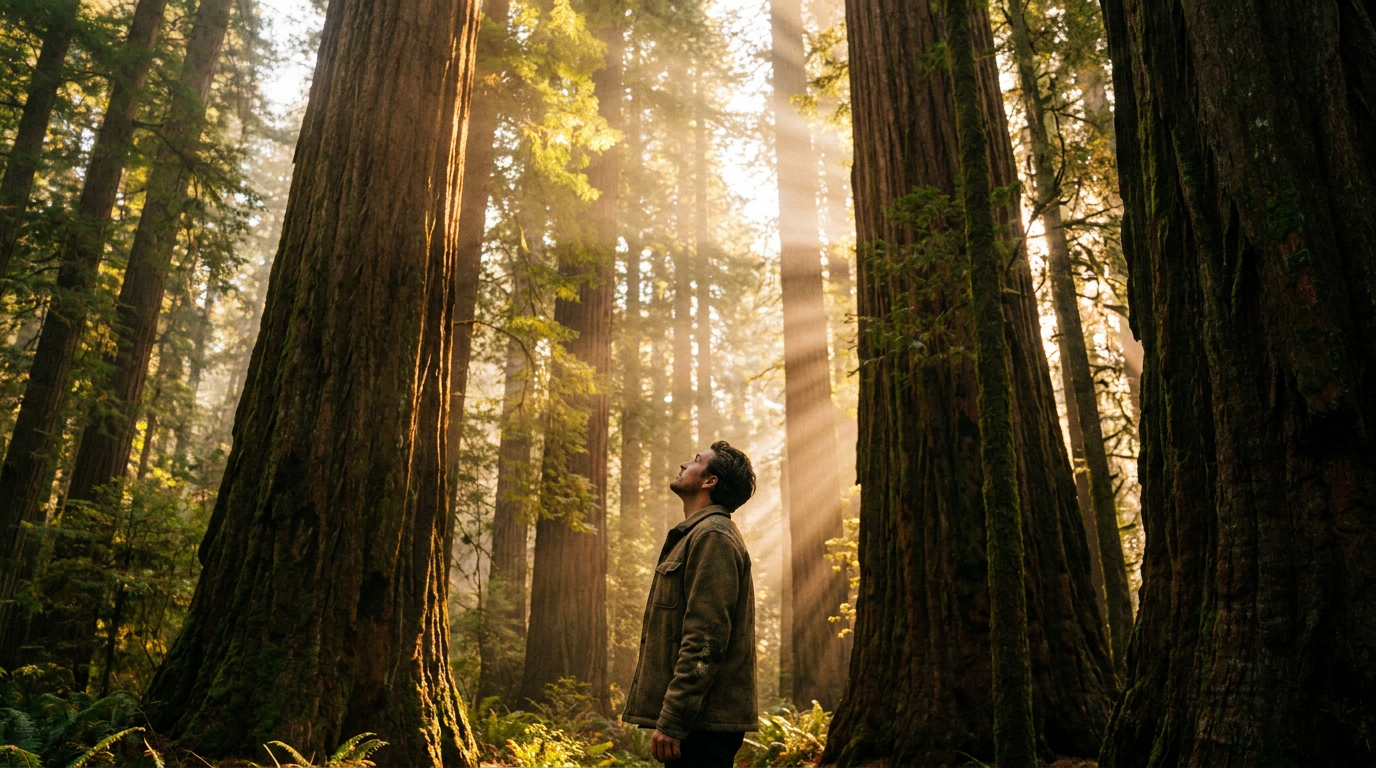
While we traditionally associate awe with grand, once-in-a-lifetime experiences—standing at the rim of the Grand Canyon or witnessing a total solar eclipse—researchers are increasingly focused on "everyday awe" or "micro-awe." This is the wonder found in the mundane: the intricate geometry of a frost-covered leaf, the soaring acoustics of a choir, or the moral beauty of a stranger's kindness.[4][5]

To test the clinical viability of everyday awe, researchers at the UC San Francisco Memory and Aging Center partnered with Keltner to design a remarkably simple intervention. They recruited a group of older adults and asked them to take a 15-minute outdoor walk once a week for eight weeks.[2][3]
Half the group was instructed to take a standard walk. The other half was coached to take an "awe walk." They were asked to tap into a childlike sense of wonder, to actively seek out the unexpected, and to shift their attention outward to the vastness of their surroundings.[3]
The results, published in the journal Emotion, were striking. The awe-walk group reported significant boosts in positive, prosocial emotions like compassion and gratitude, alongside measurable drops in daily distress. But the most fascinating data point came from the participants' smartphones.[2][3]
The results, published in the journal Emotion, were striking.
Researchers had asked the participants to take a few selfies during each walk. Over the eight weeks, the photos taken by the awe group underwent a literal shift in perspective. The subjects physically took up less and less of the frame, allowing the background—the trees, the sky, the architecture—to dominate the image. Their smiles also grew measurably broader.[2][3]

Psychologists call this the "small self" effect. When we experience awe, our ego recedes. The brain's Default Mode Network (DMN)—the neural hub responsible for self-referential thought, rumination, and the inner critic—quiets down. In the presence of something vast, our personal grievances and daily irritations suddenly feel less significant.[1][5]
This psychological shift triggers a cascade of physiological benefits. Awe activates the parasympathetic nervous system, increasing vagal tone and pulling the body out of the chronic "fight-or-flight" state that characterizes modern anxiety. Heart rates slow, and cortisol levels drop.[1][5]
The benefits even extend to the immune system. Studies have shown that people who regularly experience awe have significantly lower levels of interleukin-6, a key biomarker for systemic inflammation. Because chronic inflammation is linked to a host of ailments from depression to cardiovascular disease, awe acts as a protective biological buffer.[4][5]

Awe also fundamentally alters our perception of time. In a culture where everyone feels chronically rushed, experiments have shown that inducing awe makes people feel like they have more time available. They become less impatient, more willing to volunteer their time to help others, and report greater overall life satisfaction.[4]
This points to awe's evolutionary purpose. It is not just a private aesthetic experience; it is a profound social glue. By shrinking the ego and expanding our perspective, awe nudges us into a "tend-and-befriend" mindset. It shifts us from competitive individualism to a recognition of our interdependence.[1][6]

Cultivating this mindset does not require a plane ticket or a dramatic life change. It simply requires a shift in attention. By putting away our phones, looking up at the sky, and allowing ourselves to be surprised by the ordinary world, we can access a powerful biological reset that is always freely available.[4][7]
How we got here
2003
Psychologists Dacher Keltner and Jonathan Haidt publish a foundational paper defining awe as a distinct emotion involving vastness and accommodation.
2015
Research links the experience of awe to lower levels of inflammatory cytokines, specifically interleukin-6.
2020
UCSF and UC Berkeley researchers publish the results of the 'awe walk' study, demonstrating its benefits for older adults.
2023
A 22-day diary study reveals that on days people experience awe, they report 20 percent less stress and greater overall well-being.
Viewpoints in depth
The Clinical Neuroscience View
Researchers focus on how awe physically rewires the brain and immune system.
For neuroscientists, awe is not a poetic concept but a measurable physiological state. When a person experiences awe, functional MRI scans show a distinct deactivation of the Default Mode Network (DMN)—the brain's center for rumination and self-referential thought. Simultaneously, awe increases vagal tone, shifting the nervous system out of 'fight-or-flight' and into 'rest-and-digest.' Researchers are particularly interested in awe's ability to lower interleukin-6, a biomarker associated with systemic inflammation, suggesting that regular moments of wonder could serve as a protective buffer against chronic stress-related diseases.
The Public Health View
Advocates see awe as a highly scalable, zero-cost tool for combating the loneliness epidemic.
Public health experts are increasingly looking for interventions that don't require expensive therapy or pharmaceuticals, particularly for aging populations facing isolation. The 'awe walk' fits this mandate perfectly. Because awe naturally diminishes the ego and increases feelings of interconnectedness, it acts as a powerful antidote to loneliness. By prescribing 15 minutes of intentional wonder, health professionals hope to foster 'tend-and-befriend' behaviors, encouraging people to engage more generously with their communities and reducing the societal burden of chronic distress.
What we don't know
- Whether the physiological benefits of an awe walk degrade over time if the same route is taken repeatedly.
- Exactly how long the anti-inflammatory effects of a single awe experience last in the body.
- How effectively digital or virtual reality experiences of awe replicate the biological benefits of real-world wonder.
Key terms
- Awe
- The emotional response to encountering something vast that transcends your current understanding of the world, requiring you to adjust your mental models.
- Default Mode Network (DMN)
- A network of interacting brain regions that is highly active when a person is not focused on the outside world, often associated with daydreaming, rumination, and the 'inner critic'.
- Interleukin-6
- A protein produced by the body that acts as a biomarker for systemic inflammation; lower levels are generally associated with better health.
- Vagal Tone
- An indicator of the health of the vagus nerve, which controls the parasympathetic nervous system's ability to calm the body after stress.
- Prosocial Emotions
- Feelings such as compassion, gratitude, and generosity that encourage individuals to connect with and help others.
Frequently asked
What exactly is an 'awe walk'?
An awe walk is a 15-minute stroll taken with the specific intention of shifting your attention outward. Instead of listening to a podcast or ruminating on your to-do list, you actively look for things that are vast, unexpected, or inspiring.
Do I need to go to a national park to experience awe?
No. Researchers emphasize 'everyday awe' or 'micro-awe.' This can be triggered by noticing the intricate veins of a leaf, watching clouds move, or listening to a complex piece of music.
How does awe affect the body?
Awe activates the parasympathetic nervous system, which calms the body. It has been shown to lower heart rate, reduce cortisol, and decrease levels of interleukin-6, a marker of systemic inflammation.
What is the 'small self' effect?
The 'small self' is a psychological shift where your ego and personal worries recede. When confronted with something vast, your own problems feel less overwhelming, and you feel more connected to humanity as a whole.
Sources
Source coverage
7 outlets
3 viewpoints surfaced







[1]National GeographicClinical Neuroscientists
The science of awe and how it can alter your physiology
Read on National Geographic →[2]EmotionPublic Health Advocates
Big smile, small self: Awe walks promote prosocial positive emotions in older adults
Read on Emotion →[3]Global Brain Health InstitutePublic Health Advocates
'Awe Walks' Boost Emotional Well-Being
Read on Global Brain Health Institute →[4]Psychology TodayMindfulness Practitioners
Experiencing More Everyday Awe
Read on Psychology Today →[5]Greater Good Science CenterClinical Neuroscientists
The Science of Awe
Read on Greater Good Science Center →[6]Wharton SchoolMindfulness Practitioners
Strengthen Your Leadership with the Science of Awe
Read on Wharton School →[7]Factlen Editorial Team
Synthesis by Factlen editorial team
Read on Factlen Editorial Team →
Every angle. Every day.
Get lifestyle stories with full source coverage and perspective breakdowns delivered to your inbox.