
The Science of Allulose: How a 'Rare Sugar' is Rewriting the Rules of Baking
Allulose behaves exactly like sugar in the oven, browning and caramelizing without the calories. But mastering this hyper-reactive sweetener requires a lesson in kitchen chemistry.
By Factlen Editorial Team
- Food Scientists & Formulators
- Focused on the functional chemistry of allulose in commercial applications.
- Metabolic Health Advocates
- Focused on the physiological benefits of a zero-glycemic sugar.
- Culinary Professionals
- Focused on taste, texture, and the sensory experience of baking.
What's not represented
- · Corn farmers and agricultural processors who supply the raw fructose used to enzymatically manufacture commercial allulose.
- · Traditional sugar industry lobbyists facing market share erosion from rare sugars.
Why this matters
For decades, diabetics and health-conscious bakers had to choose between the metabolic spikes of real sugar or the chemical aftertastes and pale textures of artificial substitutes. Allulose breaks that compromise, offering a true culinary replacement that is permanently altering how commercial and home desserts are formulated.
Key points
- Allulose is a rare sugar that tastes and behaves like traditional sucrose but is not metabolized for energy by the body.
- It contains only 0.4 calories per gram and does not spike blood glucose or insulin levels.
- Unlike sugar alcohols, allulose participates in the Maillard reaction, allowing it to brown and caramelize in the oven.
- Because it caramelizes at a much lower temperature than regular sugar, bakers must lower oven temperatures to prevent burning.
- It is highly hygroscopic, making baked goods soft and moist, and is often blended with erythritol to achieve a crisp texture.
For decades, the holy grail of health-conscious baking has been a zero-calorie sweetener that actually behaves like sugar in an oven.[6]
Traditional substitutes like stevia and monk fruit provide sweetness but lack structural bulk. Sugar alcohols like erythritol provide the necessary volume, but they refuse to brown under heat and often leave a distinct, minty "cooling" sensation on the palate that clashes with warm flavor profiles.[5]
Enter allulose. Over the past few years, this "rare sugar" has quietly revolutionized commercial food formulation and home baking, offering a chemical profile that mimics traditional table sugar almost perfectly, but without the metabolic consequences.[1][6]
Scientifically known as D-psicose, allulose is a naturally occurring monosaccharide found in trace amounts in figs, raisins, and maple syrup.[4]

Because of its specific molecular structure, the human body processes allulose differently than traditional sucrose. Roughly 70% of consumed allulose is absorbed into the bloodstream, but the body lacks the enzymes to metabolize it for energy, eventually excreting it intact via urine.[4][5]
The result is a sweetener that delivers just 0.4 calories per gram—one-tenth the caloric density of table sugar—and registers a glycemic index of zero, meaning it does not trigger an insulin spike.[1][4]
The commercial floodgates for allulose opened following a landmark regulatory decision. In 2019, the U.S. Food and Drug Administration (FDA) issued guidance allowing manufacturers to exclude allulose from the "Total Sugars" and "Added Sugars" lines on nutrition labels, recognizing that it does not act like a traditional carbohydrate in the body.[1][4]
But the true magic of allulose lies in its kitchen chemistry. Unlike erythritol, allulose is a "reducing sugar," meaning it possesses a free aldehyde or ketone group that allows it to participate fully in the Maillard reaction.[2][3]
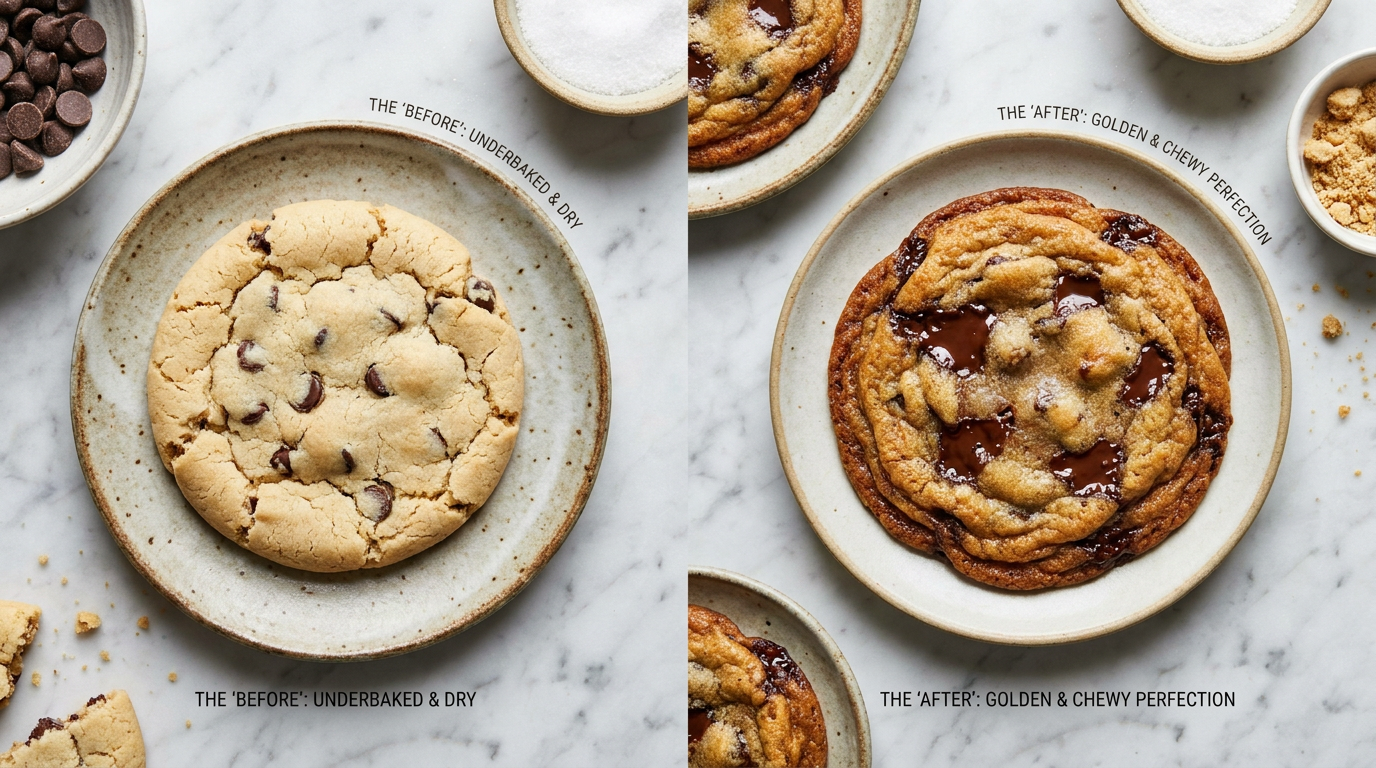
The Maillard reaction is the complex chemical cascade between amino acids and reducing sugars that gives browned food its distinctive flavor—from seared steak to the golden crust of a chocolate chip cookie.[2]
Because allulose engages eagerly in this reaction, it produces the rich, caramel notes and golden-brown aesthetics that bakers expect, a feat entirely impossible with sugar alcohols.[2][5]
However, this chemical eagerness is a double-edged sword. Food scientists refer to allulose as highly reactive; it begins to caramelize at approximately 110°C (230°F), which is a full 50°C lower than the caramelization point of traditional sucrose.[2][5]

In a standard 350°F oven, an allulose-sweetened batter will brown rapidly. If a baker is not careful, a cake can turn dark brown and develop bitter, burnt flavor compounds before the center has even set.[2]
This hyper-reactivity is amplified by alkaline environments. Recipes that rely heavily on baking soda (which raises the pH of the batter) accelerate the Maillard kinetics, pushing the allulose to brown even faster.[2]
To tame the burn, culinary experts recommend lowering baking temperatures by 10 to 20 degrees Celsius and extending the baking time to ensure an even, golden finish without the bitter edge.[2][5]

Beyond browning, allulose is highly hygroscopic, meaning it aggressively attracts and retains moisture from its environment.[5]
In applications like ice cream, caramels, and soft-baked goods, this moisture retention is a massive advantage, preventing crystallization and keeping textures soft and chewy for days.[2][5]
But in recipes that demand a crisp snap—like shortbread or thin cookies—100% allulose can leave the final product soft or even soggy over time.[5]
The industry solution is strategic blending. Formulators frequently combine allulose with erythritol in a 50/50 ratio. The allulose provides the browning, moisture, and clean sweetness, while the erythritol provides structural crystallization and dries out the crumb.[5]

How we got here
2015
Tate & Lyle submits a petition to the FDA requesting that allulose be exempt from added sugar labeling.
April 2019
The FDA issues draft guidance allowing allulose to be excluded from "Total Sugars" and "Added Sugars" on nutrition labels.
October 2020
The FDA finalizes its guidance, officially clearing the regulatory pathway for widespread commercial use of allulose.
2023–2026
Allulose sees massive adoption in the keto and diabetic baking markets, heavily replacing erythritol as the preferred structural sweetener.
Viewpoints in depth
Food Scientists & Formulators
Focused on the functional chemistry of allulose in commercial applications.
For food scientists, allulose is a structural miracle that solves the "bulk" problem of zero-calorie sweeteners. Because it depresses the freezing point of liquids and holds onto moisture, it allows for the creation of keto-friendly ice creams that don't turn into ice blocks, and protein bars that remain soft on the shelf. However, formulators must actively manage its hyper-reactivity by buffering pH levels and blending it with polyols to prevent premature browning during high-heat processing.
Metabolic Health Advocates
Focused on the physiological benefits of a zero-glycemic sugar.
Diabetic educators and keto advocates champion allulose because it breaks the compromise between metabolic health and culinary enjoyment. Unlike maltitol or other sugar alcohols that can still trigger mild insulin responses, allulose registers a true zero on the glycemic index. Furthermore, early clinical trials suggest it may even proactively suppress postprandial glucose spikes when consumed alongside other carbohydrates, making it an active tool for metabolic flexibility rather than just a passive substitute.
Culinary Professionals
Focused on taste, texture, and the sensory experience of baking.
Pastry chefs and home bakers appreciate allulose because it eliminates the metallic aftertaste of stevia and the minty "cooling effect" of erythritol. It allows them to make authentic caramels, glazes, and chewy cookies. However, culinary purists note that it requires a steep learning curve. Bakers must recalibrate their oven temperatures, adjust their leavening agents, and accept that 100% allulose recipes will yield softer, cake-like textures rather than the crisp snap of traditional sucrose baking.
What we don't know
- Long-term effects of consuming highly concentrated doses of rare sugars on the diversity of the human gut microbiome.
- Whether the FDA's labeling exemption will eventually be expanded to other rare sugars currently under petition, such as D-tagatose.
Key terms
- Allulose (D-psicose)
- A naturally occurring "rare sugar" that provides the bulk and browning of regular sugar but is not metabolized for energy by the human body.
- Maillard Reaction
- A chemical reaction between amino acids and reducing sugars that gives browned food its distinctive flavor and color.
- Reducing Sugar
- A sugar that can act as a reducing agent, allowing it to participate in browning reactions when exposed to heat and proteins.
- Hygroscopic
- The tendency of a substance to attract and hold onto water molecules from its surrounding environment.
- Sugar Alcohol (Polyol)
- A type of carbohydrate used as a low-calorie sweetener (like erythritol) that provides bulk but does not brown and often leaves a cooling sensation in the mouth.
Frequently asked
Does allulose cause digestive issues like sugar alcohols?
While everyone's microbiome is different, allulose is generally much better tolerated than sugar alcohols like erythritol or maltitol. It does not ferment in the gut in the same way, though consuming massive quantities can still cause mild bloating.
Can I substitute allulose 1:1 for regular sugar?
Yes, it measures cup-for-cup like sugar, but it is only 70% as sweet. You may need to add a few drops of stevia or monk fruit if you want the exact same level of sweetness, and you must lower your oven temperature by 25°F.
Why did my allulose cake turn bitter?
Allulose browns much faster than regular sugar. If baked at traditional temperatures, especially with alkaline ingredients like baking soda, it can over-caramelize and develop burnt, bitter flavor compounds before the cake is fully baked.
Is allulose safe for a keto diet?
Absolutely. Because it is not metabolized for energy and has a glycemic index of zero, it does not impact blood sugar levels or kick the body out of ketosis.
Sources
Source coverage
6 outlets
3 viewpoints surfaced






[1]U.S. Food and Drug AdministrationMetabolic Health Advocates
Guidance for Industry: The Declaration of Allulose and Calories from Allulose on Nutrition and Supplement Facts Labels
Read on U.S. Food and Drug Administration →[2]Icon FoodsFood Scientists & Formulators
Taming the Burn: Controlling Allulose's Quick Browning
Read on Icon Foods →[3]Journal of Food ScienceFood Scientists & Formulators
Maillard reaction products of D-psicose (allulose)
Read on Journal of Food Science →[4]Calorie Control CouncilMetabolic Health Advocates
FDA Exempts Allulose from Added Sugar Labeling Requirements
Read on Calorie Control Council →[5]Smart TreatsCulinary Professionals
Erythritol vs Allulose for Baking: Which Is Better?
Read on Smart Treats →[6]Factlen Editorial TeamCulinary Professionals
Synthesis by Factlen editorial team
Read on Factlen Editorial Team →

More in food drink
See all 25 stories →Culinary Science
The Science of the Maillard Reaction: How to Achieve Perfect Browning at Home
7 sources
Food Tech
The Cow-Free Dairy Revolution: How Precision Fermentation is Brewing the Future of Milk
8 sources
Zero-Waste Tech
AI and Smart Recycling Tech Propel the Restaurant Industry Toward a Zero-Waste Future
8 sources

Precision Fermentation
How Precision Fermentation is Brewing the Future of Animal-Free Dairy
8 sources

Every angle. Every day.
Get food drink stories with full source coverage and perspective breakdowns delivered to your inbox.