
The Cow-Free Dairy Revolution: How Precision Fermentation is Brewing the Future of Milk
By programming microbes to brew authentic whey and casein, biotech startups are decoupling dairy from animals. As regulatory approvals mount in 2026, the technology promises massive environmental savings—if it can scale its energy needs sustainably.
By Factlen Editorial Team
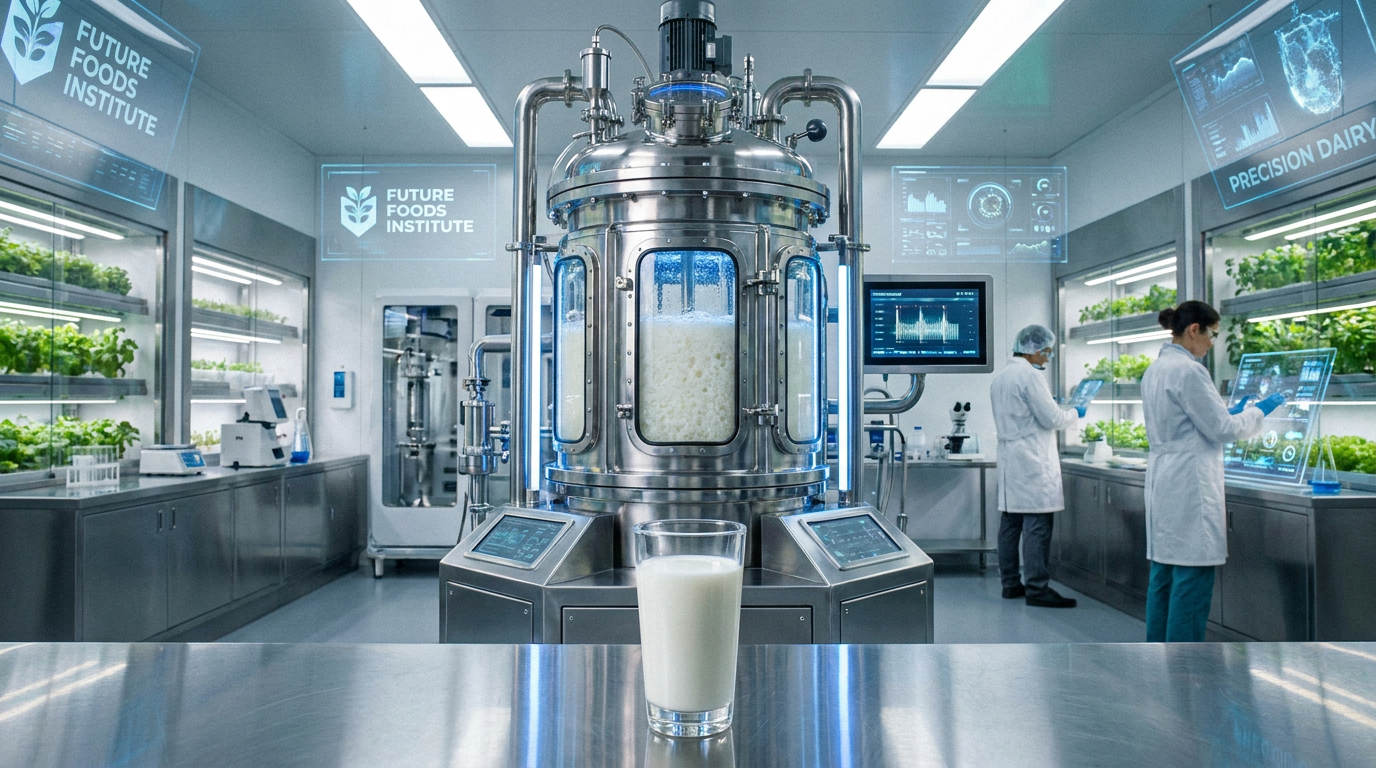
- Biotech Innovators
- Argue that precision fermentation is a necessary evolution to decouple protein production from the inefficiencies and climate impacts of animal agriculture.
- Environmental Analysts
- Acknowledge the massive land and water savings but caution that the technology's true climate benefit depends entirely on using renewable energy and sustainable sugar crops.
- Food Regulators & Analysts
- Focus on ensuring the safety, purity, and economic integration of these novel ingredients into the existing global food supply chain.
What's not represented
- · Traditional dairy farmers facing economic disruption
- · Consumer advocacy groups monitoring novel food labeling
Why this matters
Dairy production is highly resource-intensive, yet global demand continues to rise. Precision fermentation offers a way to produce the exact proteins that make cheese melt and milk nutritious, drastically reducing land and water use while insulating the food supply from climate shocks.
Key points
- Precision fermentation uses programmed microbes to brew dairy proteins like whey and casein without cows.
- The resulting proteins are molecularly identical to animal dairy but are naturally lactose-free and cholesterol-free.
- Multiple startups secured FDA 'No Questions' approvals in 2025 and 2026, clearing the way for commercial launches.
- The process uses up to 99% less land and 81% less water than traditional dairy farming.
- Environmental analysts warn that the technology's carbon footprint remains high unless powered by renewable energy.
- The technology threatens to disrupt the lucrative B2B dairy ingredient market, which accounts for 35% of milk use.
The dairy aisle is undergoing a quiet but profound transformation. For millennia, humanity has relied on the cow as a biological factory to convert grass and water into nutrient-dense milk. But as global demand surges, the environmental toll of industrial animal agriculture has reached an inflection point, prompting food scientists to look for a more efficient engine.[8]
Enter precision fermentation. Rather than relying on a 1,500-pound animal to produce a liquid that is nearly 90 percent water, biotechnologists are turning to microscopic organisms. By leveraging the same fundamental brewing processes used for centuries to make beer, wine, or yogurt, companies are now producing authentic dairy proteins entirely without the cow.[7][8]
The stakes for the global food system are massive. Solid proteins, primarily casein and whey, account for just 3.3 percent of cow's milk by volume, yet they are the commercially valuable building blocks that give cheese its stretch, yogurt its texture, and protein powders their nutritional punch. If innovators can efficiently replicate that 3.3 percent, they can theoretically replace the functional foundation of the entire dairy industry.[6]
The mechanism behind this feat is a marvel of modern engineering biology. It begins with a genetic blueprint. Scientists isolate the specific DNA sequence responsible for producing a target dairy protein in cows. This genetic instruction is then inserted into the DNA of a host microorganism, typically a food-grade yeast strain like Saccharomyces cerevisiae or a bacteria like E. coli.[7]

Once programmed, these microbes act as microscopic cell factories. They are placed into massive stainless-steel fermentation tanks—known as bioreactors—and fed a steady diet of water, nutrients, and carbon feedstocks, usually in the form of plant sugars. As the microbes consume the sugar, they metabolize it and express the target dairy protein.[5][7]
The final step is harvest and purification. The liquid is filtered to separate the newly minted dairy proteins from the host microbes. The resulting ingredient is a pure protein powder that is molecularly identical to its animal-derived counterpart. Crucially, because the final product is highly purified, it contains no living genetically modified organisms, no lactose, and no cholesterol.[4][7]

This technology is rapidly moving from the laboratory to the supermarket, fueled by a wave of recent regulatory green lights. In late 2025, French biotechnology firm Verley secured a coveted "No Questions" letter from the U.S. Food and Drug Administration (FDA) for its precision-fermented whey proteins, clearing the path for a 2026 commercial launch in the American market.[1][2]
This technology is rapidly moving from the laboratory to the supermarket, fueled by a wave of recent regulatory green lights.
Verley's flagship ingredients, including a heat-stable whey designed for ready-to-drink beverages, demonstrate the functional superiority these engineered proteins can achieve. Because they are synthesized from scratch, manufacturers can tailor them for specific performance metrics, such as enhanced muscle recovery or improved solubility, without the biological variability inherent in cow's milk.[1][2]
Other startups are tackling even more complex dairy components. German food-tech company Formo recently achieved self-affirmed Generally Recognized as Safe (GRAS) status in the U.S. for its precision-fermented alpha-S1-casein. Casein is considered the holy grail of alternative dairy; it is the protein responsible for the stretch, melt, and tang of traditional cheese—qualities that plant-based alternatives have historically struggled to replicate.[4]
Beyond bulk proteins, precision fermentation is democratizing access to rare, high-value dairy compounds. In April 2026, Australian startup All G earned FDA clearance for its cow-free lactoferrin. Naturally present in only trace amounts in cow's milk, lactoferrin is prized for its immunity-boosting and iron-regulating properties. Extracting a single kilogram traditionally requires 10,000 liters of milk, driving prices up to $2,000 per kilogram. Fermentation promises to collapse that cost curve.[3]

The environmental promise of this shift is staggering. Life-cycle assessments indicate that precision-fermented dairy can drastically undercut the ecological footprint of conventional farming. Verley's peer-reviewed data suggests its process emits 72 percent fewer greenhouse gases, consumes 81 percent less water, and requires 99 percent less arable land than traditional dairy production.[1]
By moving production indoors to compact industrial facilities, precision fermentation eliminates the methane emissions associated with cattle digestion and frees up vast tracts of pastureland for potential ecological restoration. It also insulates the food supply chain from climate-driven weather shocks, droughts, and the spread of zoonotic diseases.[6][8]

However, independent environmental analysts caution that the technology is not a silver bullet. The microbes require substantial amounts of sugar to grow, meaning the industry remains tethered to agricultural supply chains for feedstocks like corn or cane sugar. Heavy fertilizer use for these crops can lead to freshwater eutrophication, shifting the environmental burden rather than eliminating it entirely.[5]
Furthermore, maintaining optimal temperatures and running industrial bioreactors is highly energy-intensive. Anticipatory life-cycle studies show that if a fermentation facility relies on a fossil-fuel-heavy electrical grid, its carbon footprint can approach that of traditional dairy. The true sustainability of precision fermentation will ultimately depend on pairing these facilities with renewable energy sources and sustainable sugar crops.[5]
As the technology scales, it faces a complex economic landscape. While some analysts predict that precision fermentation will severely disrupt the traditional dairy industry by capturing the lucrative B2B ingredient market—which accounts for roughly 35 percent of all milk consumption—others foresee a collaborative future. Major dairy cooperatives are already partnering with biotech startups, blending fermented proteins with traditional milk to lower their overall carbon footprint while meeting surging global demand.[6][8]
How we got here
2020
The first animal-free dairy products made via precision fermentation hit the consumer market in limited releases.
Dec 2024
German startup Formo self-affirms GRAS status for its precision-fermented casein, the crucial protein for cheese.
Oct 2025
French firm Verley receives an FDA 'No Questions' letter for its whey proteins, clearing them for the U.S. market.
Apr 2026
Australian startup All G earns FDA clearance for its cow-free lactoferrin, a high-value nutritional protein.
Viewpoints in depth
FoodTech Innovators
Argue that precision fermentation is a necessary evolution to decouple protein production from the inefficiencies of animal agriculture.
Biotech startups and their investors view the cow as an outdated, highly inefficient technology for producing protein. By shifting production to controlled bioreactors, they argue humanity can guarantee food security regardless of climate shocks, droughts, or land scarcity. They emphasize that because the proteins are built from scratch, they can be optimized for better nutritional profiles, superior functionality in recipes, and complete elimination of unwanted components like lactose and cholesterol.
Environmental Life-Cycle Analysts
Acknowledge the massive land and water savings but caution that the technology's true climate benefit depends on its energy sources.
While life-cycle assessments confirm that precision fermentation virtually eliminates the land use and methane emissions associated with cattle, environmental scientists warn against treating it as a flawless solution. Industrial bioreactors require constant temperature control and massive amounts of electricity. If a fermentation plant is powered by a coal-heavy electrical grid, its carbon emissions can rival those of traditional dairy. Furthermore, the microbes require vast quantities of sugar to grow, meaning the industry is still reliant on intensive agriculture—and the associated fertilizer runoff—to produce its feedstocks.
Traditional Dairy Industry
Faces a dual reality of existential disruption and new collaborative opportunities.
The traditional dairy sector is approaching precision fermentation with a mix of defensive skepticism and strategic investment. Some agricultural economists warn that because 35 percent of milk is sold as a bulk ingredient for baking and processed foods, losing that B2B market to cheaper fermented proteins could trigger a collapse in milk prices and bankrupt conventional farms. Conversely, major global dairy cooperatives are actively investing in the technology, viewing it as a way to supplement their supply chains, reduce their corporate carbon footprints, and meet rising global demand without expanding their physical herds.
What we don't know
- Whether consumer acceptance of 'lab-brewed' dairy will match the enthusiasm of regulators and investors.
- How quickly the industry can scale bioreactor capacity to achieve true price parity with subsidized conventional dairy.
- The long-term economic impact on rural farming communities if the bulk dairy ingredient market shifts to urban fermentation facilities.
Key terms
- Precision Fermentation
- A biotechnological process that programs microorganisms, such as yeast or bacteria, to produce specific complex molecules like proteins or fats.
- Recombinant Protein
- A protein created by inserting the genetic code for that protein into a host organism, prompting the host to manufacture it.
- Bioreactor
- A large, controlled industrial tank where microorganisms are grown and fermented under optimal conditions.
- Casein
- The primary family of proteins in cow's milk, responsible for the unique stretching and melting properties of cheese.
- Lactoferrin
- A highly valuable, iron-binding protein found in trace amounts in milk, known for its immune-boosting and antimicrobial properties.
- Eutrophication
- The excessive richness of nutrients in a body of water, frequently due to runoff from agricultural fertilizers, which causes dense plant growth and death of animal life from lack of oxygen.
Frequently asked
Is precision-fermented dairy considered vegan?
Yes. Because no animals are used in the production process, the ingredients are animal-free and suitable for vegans. However, because the proteins are molecularly identical to cow's milk, they still trigger dairy allergies.
Do these products contain lactose?
No. Lactose is a specific sugar found in cow's milk. Precision fermentation targets only the proteins (like whey and casein), meaning the resulting products are naturally lactose-free.
Are there live genetically modified microbes in the food?
No. While genetically engineered microbes are used as the "factories" to produce the protein, the final step of the process rigorously filters and purifies the liquid. The end ingredient contains only the pure protein, with no living microbes remaining.
Sources
Source coverage
8 outlets
3 viewpoints surfaced








[1]VerleyBiotech Innovators
Sustainable, nutritious, and innovative dairy alternatives
Read on Verley →[2]Cultivated XBiotech Innovators
Verley's Precision-Fermented Dairy Proteins Cleared by FDA for US Market
Read on Cultivated X →[3]Green QueenBiotech Innovators
Exclusive: All G Earns FDA Approval to Sell Cow-Free Lactoferrin Protein in US
Read on Green Queen →[4]MycoStoriesBiotech Innovators
A German Startup Targets the US Protein Ingredient Market
Read on MycoStories →[5]Sustainable Nutrition InitiativeEnvironmental Analysts
Do the environmental impacts of fermentation-produced protein outweigh those of conventional protein sources?
Read on Sustainable Nutrition Initiative →[6]RethinkXFood Regulators & Analysts
Precision Fermentation will disrupt the industrial livestock model of production
Read on RethinkX →[7]Food Standards AgencyFood Regulators & Analysts
Precision fermentation explained: how it works & why it matters
Read on Food Standards Agency →[8]Factlen Editorial TeamFood Regulators & Analysts
Synthesis by Factlen editorial team
Read on Factlen Editorial Team →

More in food drink
See all 25 stories →Culinary Science
The Science of the Maillard Reaction: How to Achieve Perfect Browning at Home
7 sources
Rare Sugars
The Science of Allulose: How a 'Rare Sugar' is Rewriting the Rules of Baking
6 sources
Zero-Waste Tech
AI and Smart Recycling Tech Propel the Restaurant Industry Toward a Zero-Waste Future
8 sources

Precision Fermentation
How Precision Fermentation is Brewing the Future of Animal-Free Dairy
8 sources

Every angle. Every day.
Get food drink stories with full source coverage and perspective breakdowns delivered to your inbox.