
The Science Behind the Digicam Revival: Why Gen Z is Trading Smartphones for 20-Year-Old Sensors
Driven by a desire for raw, unedited aesthetics, a massive cultural shift is reviving early 2000s digital cameras. The trend has reignited a decades-old debate over the unique color science of obsolete CCD sensors versus modern CMOS technology.
By Factlen Editorial Team
- Vintage Enthusiasts
- Value the raw, unedited, nostalgic aesthetic and the tactile experience of single-purpose devices over technical perfection.
- Photography Technologists
- Argue that modern CMOS sensors are objectively superior, attributing the 'vintage look' to early color science and harsh flashes rather than CCD magic.
- Market Analysts
- View the trend as a cultural reaction against smartphone computational photography, driving up prices for obsolete tech.
What's not represented
- · Camera Manufacturers
- · Smartphone Engineers
Why this matters
Understanding the shift from CMOS back to CCD aesthetics reveals how computational perfection has alienated casual photographers. It highlights a growing cultural desire for digital friction, authenticity, and hardware that captures a moment rather than artificially enhancing it.
Key points
- Gen Z and millennials are driving a massive resurgence in early 2000s point-and-shoot digital cameras.
- Enthusiasts seek the raw, unedited aesthetic of older CCD sensors as a rejection of modern smartphone AI processing.
- CCD sensors transfer light charges to a single amplifier, creating highly uniform, saturated colors.
- The industry abandoned CCDs for CMOS sensors, which process pixels individually to save power and increase speed.
- Technologists argue the 'vintage look' is actually a mix of early digital color science and harsh xenon flashes.
- The trend has caused second-hand prices for obsolete cameras to skyrocket into the hundreds of dollars.
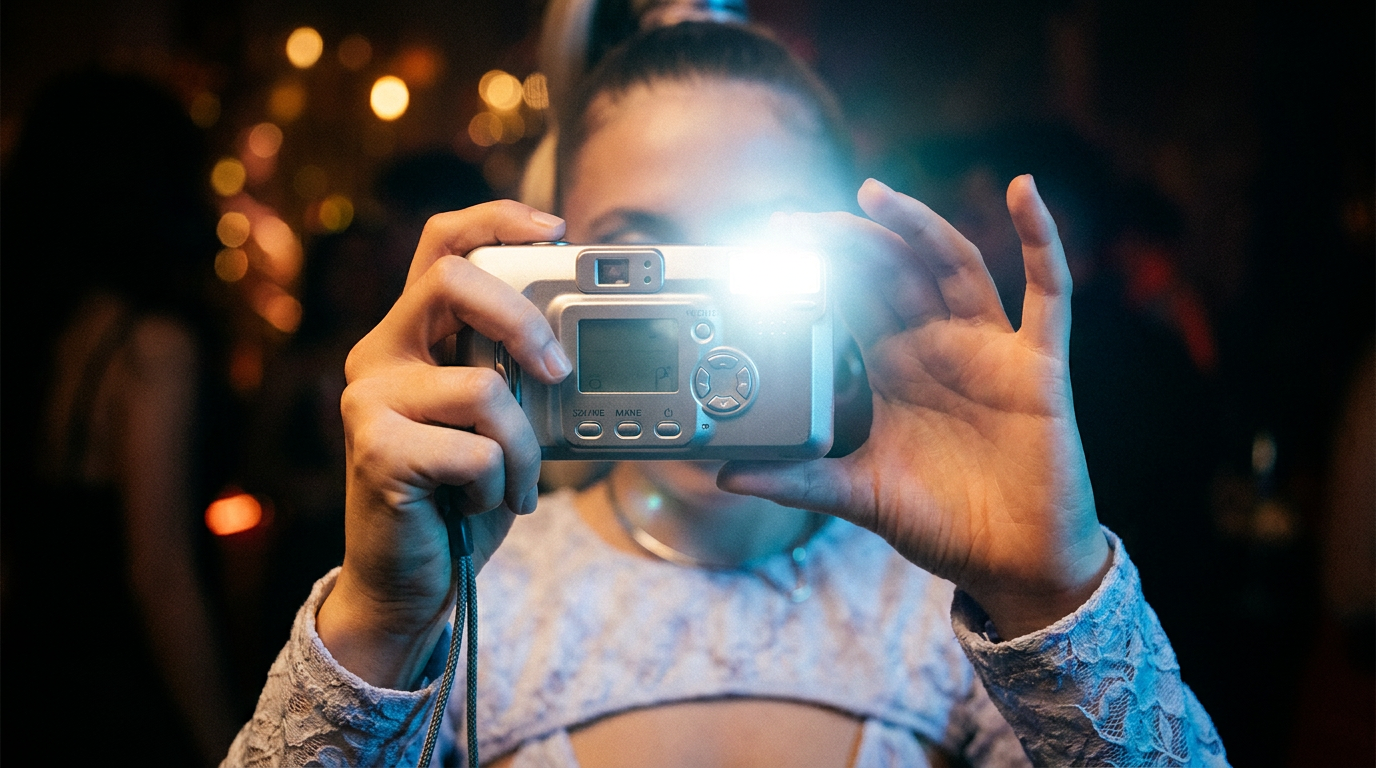
At concerts, parties, and dimly lit cafes, a distinct flash of bright, harsh light is piercing through the crowds. It is not coming from the latest multi-lens smartphone, but from chunky, metallic point-and-shoot cameras that were manufactured when today's teenagers were barely born. The early 2000s digital camera—affectionately dubbed the "digicam"—has returned from the depths of junk drawers to become one of the most sought-after pieces of consumer technology in 2026.[1][5]
This resurgence is visually jarring in an era where modern smartphones boast 48-megapixel sensors, artificial intelligence sharpening, and advanced low-light algorithms. Yet, the very perfection of modern computational photography is exactly what is driving users away. The digicam revival represents a cultural rejection of the "clinical" aesthetic of modern devices, where high dynamic range (HDR) processing automatically lifts every shadow and smooths every skin tone into an uncanny, hyper-real plasticity.[5][6]
But the trend is not merely driven by a vague sense of Y2K nostalgia; it is anchored in a specific, obsolete piece of hardware. Enthusiasts argue that the unique, film-like look of these vintage cameras stems from their use of CCD (Charge-Coupled Device) sensors, a technology that has been almost entirely eradicated from modern consumer electronics in favor of CMOS (Complementary Metal-Oxide-Semiconductor) sensors.[2][6]
To understand the difference, one must look at how digital cameras capture light. At their core, both CCD and CMOS sensors rely on the photoelectric effect. When photons of light pass through the camera's lens and hit the silicon sensor, they knock electrons loose, creating a tiny electrical charge. The camera's job is to measure that charge at every single pixel and convert it into a digital image. The divergence between the two technologies lies entirely in how they read and move those electrical charges.[2][3]
In a CCD sensor, the charge is transferred across the chip sequentially, moving from pixel to pixel like buckets of water being passed down a fire brigade line. All of the charges are eventually dumped into a single, centralized amplifier located at the corner of the chip, which converts them into a voltage. Because every single pixel is read by the exact same amplifier, CCD sensors are renowned for their incredible uniformity. They produce smooth, natural tonal transitions and highly saturated, pure colors that many photographers compare to analog film.[2][3][4]

However, this "bucket brigade" method came with severe technical limitations. Moving charges across an entire sensor requires a massive amount of power, which is why early digital cameras devoured AA batteries at an alarming rate. Furthermore, the sequential readout process is inherently slow. As consumers demanded cameras that could shoot rapid bursts of photos and record high-definition video, the CCD architecture hit a functional bottleneck.[2][4]
Enter the CMOS sensor. In a CMOS design, every individual pixel is equipped with its own microscopic amplifier and analog-to-digital converter. Instead of passing charges down a line, a CMOS sensor reads the voltage of every pixel simultaneously. This parallel processing revolutionized digital imaging. It allowed cameras to capture images at blistering speeds, enabled the recording of 4K and 8K video, and drastically reduced power consumption.[2][3][4]
In a CMOS design, every individual pixel is equipped with its own microscopic amplifier and analog-to-digital converter.
The efficiency of CMOS technology is the sole reason high-quality cameras can exist inside ultra-thin smartphones today. By the early 2010s, the industry had almost universally abandoned CCDs. Today, CMOS sensors hold a commanding 73.6 percent market share across all compact cameras, while CCDs have been relegated to highly specialized scientific and industrial niches where absolute pixel uniformity is required.[4][6]
Yet, the triumph of CMOS came with an aesthetic trade-off. Because each pixel on a CMOS sensor uses its own amplifier, microscopic variations between those amplifiers can introduce fixed-pattern noise into the image. To compensate for this, and to squeeze maximum performance out of the tiny sensors used in smartphones, manufacturers turned to heavy computational processing. Modern phones take dozens of hidden photos the moment the app is opened, merging them instantly to eliminate noise, balance exposure, and sharpen edges.[2][6]

This computational heavy-handedness is precisely what the digicam community is rebelling against. A photograph taken on a 2005 Canon PowerShot or a Sony Cyber-shot is a single, unadulterated exposure. If the background is dark, it stays dark. If the harsh, built-in xenon flash blows out the subject's face, the highlight remains blown out. The resulting images feature deep, crushed shadows and glowing highlights that feel raw, moody, and authentic.[1][5]
Photography purists and technologists often debate whether the "magic" of these vintage cameras truly lies in the CCD sensor itself. Many experts argue that modern CMOS sensors are objectively superior in every measurable metric, including dynamic range, resolution, and low-light sensitivity. They suggest that the beloved "CCD look" is actually a byproduct of early digital color science—the specific, proprietary algorithms companies like Fujifilm and Canon used to process JPEGs twenty years ago.[2][6]
Furthermore, the physical design of early digicams plays a massive role in their aesthetic output. The lenses were often softer, lacking the razor-sharp precision of modern optics. More importantly, almost all of them featured powerful, direct xenon flashes located mere inches from the lens. This specific lighting setup creates the high-contrast, "paparazzi-style" look that has become synonymous with the Y2K aesthetic, a look that the weak LED flashes on modern smartphones simply cannot replicate.[1][6]

Regardless of whether the charm comes from the silicon sensor or the xenon flash, the market has spoken. The demand for these obsolete devices has skyrocketed, transforming thrift-store castoffs into premium commodities. Models like the Sony RX100 series or the Canon PowerShot G series, which could be found for pennies a few years ago, now frequently command prices between $200 and $400 on second-hand marketplaces.[1][6]
Beyond the aesthetic, the appeal of the digicam is deeply rooted in the user experience. Using a dedicated camera introduces a layer of deliberate friction into the act of taking a photo. There are no notifications popping up on the screen, no immediate urge to edit the photo in an app, and no instant connection to social media. The limited capacity of older SD cards forces users to be intentional with their shots, treating digital space with the same reverence once reserved for a 36-exposure roll of film.[5][6]
In a digital landscape defined by endless scrolling and algorithmic perfection, the resurgence of the CCD digicam offers a refreshing counter-narrative. It proves that technological advancement does not always equate to artistic superiority. For a growing generation of photographers, the flaws of early digital technology are not bugs to be fixed, but character to be celebrated.[5][6]
How we got here
Late 1990s - Early 2000s
CCD sensors dominate the consumer digital camera market, offering high color uniformity.
Late 2000s
The industry shifts toward CMOS sensors to accommodate video recording, faster shooting, and lower power consumption.
2010s
Smartphones equipped with tiny CMOS sensors and computational photography algorithms decimate the point-and-shoot market.
2023 - 2026
A cultural backlash against AI-enhanced smartphone photos drives a massive resurgence in demand for vintage CCD cameras.
Viewpoints in depth
Vintage Enthusiasts
A growing demographic that values the raw, unedited aesthetic of single-purpose devices.
For this camp, the appeal of the digicam is entirely about friction and authenticity. They argue that modern smartphones, with their automatic HDR processing and AI-driven skin smoothing, create images that feel sterile and hyper-real. By returning to 15-year-old hardware, they reclaim the ability to take a 'bad' photo—one with crushed shadows, blown-out highlights, and digital grain. The limitations of the device, including small SD cards and the inability to instantly upload to social media, are viewed as features that force the user to be present in the moment.
Photography Technologists
Experts who focus on the objective hardware metrics and the evolution of sensor design.
Technologists are quick to point out that the romanticization of the CCD sensor is largely misplaced. They argue that modern CMOS sensors are objectively superior in every measurable way, offering vastly wider dynamic range, better low-light performance, and faster readout speeds. From an engineering perspective, they attribute the beloved 'vintage look' not to the inherent magic of CCD silicon, but to the specific JPEG processing algorithms used by early manufacturers, combined with the harsh, direct lighting of built-in xenon flashes.
What we don't know
- Whether major camera manufacturers will release new point-and-shoot models specifically designed to mimic the flaws of early CCD sensors.
- How long the second-hand supply of functional 20-year-old digital cameras can sustain the current market demand before hardware failure becomes widespread.
Key terms
- CCD (Charge-Coupled Device)
- An older image sensor technology that transfers electrical charge sequentially across the chip to a single output node, known for uniform color but high power consumption.
- CMOS (Complementary Metal-Oxide-Semiconductor)
- The dominant modern image sensor technology where each pixel amplifies its own signal, allowing for faster processing, video recording, and better low-light performance.
- Computational Photography
- Digital image capture techniques that use algorithms—often found in modern smartphones—to automatically enhance lighting, sharpness, and color by merging multiple hidden exposures.
- Dynamic Range
- The ratio between the brightest highlights and darkest shadows that a camera sensor can capture in a single image without losing detail.
Frequently asked
Why are old digital cameras so expensive now?
Driven by social media trends and Gen Z nostalgia, demand has drastically outpaced the limited second-hand supply. Cameras that once sat in thrift stores for a few dollars now frequently sell for hundreds.
Is a CCD sensor actually better than a modern smartphone camera?
Technically, no. Modern CMOS sensors have vastly superior resolution, dynamic range, and low-light capability. However, CCD sensors produce a specific, highly saturated color profile that many find aesthetically pleasing.
Can I get the 'digicam look' on my phone?
While apps and filters can simulate grain and color shifts, it is difficult to perfectly replicate the physical combination of a CCD sensor's color science, an optical lens, and a harsh built-in xenon flash.
Sources
Source coverage
6 outlets
3 viewpoints surfaced






[1]PCMagVintage Enthusiasts
Y2K Legends Reloaded: Old-School Digital Cameras Worth Buying Used
Read on PCMag →[2]PetaPixelPhotography Technologists
CCD vs CMOS: The Science Behind Camera Sensors
Read on PetaPixel →[3]VA ImagingPhotography Technologists
CCD vs. CMOS Sensors: Key Differences Explained
Read on VA Imaging →[4]BaslerPhotography Technologists
CCD vs. CMOS: What is the difference?
Read on Basler →[5]ITPVintage Enthusiasts
The nostalgia of point-and-shoot cameras is back
Read on ITP →[6]Factlen Editorial TeamMarket Analysts
Synthesis by Factlen editorial team
Read on Factlen Editorial Team →

Every angle. Every day.
Get culture stories with full source coverage and perspective breakdowns delivered to your inbox.