
The Rise of Regenerative Food Tourism: How Travelers Are Restoring Ecosystems
A new 'soil-to-soul' travel movement is transforming culinary tourism, as visitors actively fund habitat protection and heirloom crop revival through guided foraging and agricultural deep-dives.
By Factlen Editorial Team
- Indigenous & Rural Cooks
- Focus on preserving ancestral knowledge, heirloom biodiversity, and local economic sovereignty.
- Conservationists & Mycologists
- Focus on ecosystem health, spore dispersal, and the necessity of strict harvest limits.
- Culinary Travelers
- Seek intellectual satisfaction, cultural immersion, and a deeper connection to the origins of their food.
- Tourism Regulators
- Emphasize the need for mandatory certification, safety protocols, and preventing over-extraction.
What's not represented
- · Industrial Agriculture Producers
- · Mass-Market Tour Operators
Why this matters
As global tourism rebounds, the shift from extractive sightseeing to regenerative travel offers a scalable financial model to protect endangered ecosystems and preserve indigenous agricultural knowledge.
Key points
- Regenerative food tourism has shifted the industry focus from passive 'farm-to-table' dining to active 'soil-to-soul' ecological stewardship.
- Professional-guided foraging tourism has grown 420% since 2019, drawing over 1.1 million participants annually.
- Sustainable foraging practices, such as harvesting only 10-15% of a mushroom patch, actively aid in spore dispersal and improve future yields.
- In Oaxaca, Mexico, culinary tourists are providing the financial backing necessary to preserve 35 distinct landraces of endangered heirloom corn.
- Mandatory certification programs for foraging guides have reduced wild-food poison control incidents by 92% in regulated regions.
For decades, the pinnacle of culinary travel was the "farm-to-table" experience—a passive appreciation of local agriculture served on a white tablecloth. But a profound shift is underway in how travelers interact with the food systems they visit. Driven by a desire for deeper ecological connection and intellectual satisfaction, the industry is moving toward a "soil-to-soul" paradigm. This evolution marks the rise of regenerative food tourism, a movement where visitors actively participate in the restoration of local landscapes and the preservation of ancestral culinary knowledge.[5]
Unlike traditional sustainable tourism, which merely aims to minimize a visitor's carbon footprint and do no harm, regenerative tourism demands a net-positive impact. The core philosophy is that tourism should function as a living ecosystem, strengthening the cultural, ecological, and economic frameworks upon which a destination relies. In the culinary sphere, this means travelers are no longer just consumers; they become temporary stewards of the land, funding habitat protection and creating economic incentives to keep indigenous foodways alive.[1][7]
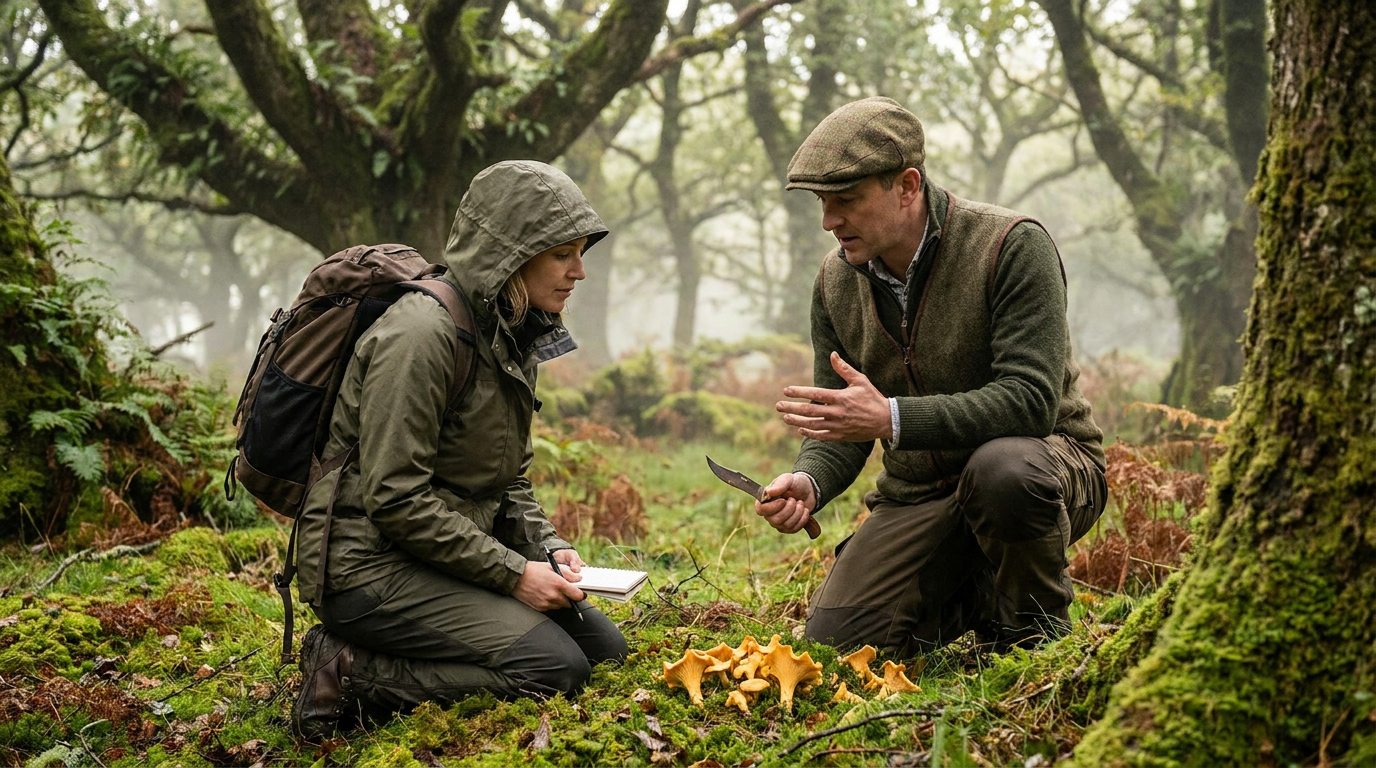
Nowhere is this shift more visible than in the explosive growth of professional-guided foraging tourism. Since 2019, participation in wild food experiences has surged by 420 percent, with an estimated 1.1 million travelers embarking on foraging expeditions in 2025 alone. Rather than booking standard cooking classes, these tourists are seeking out expert mycologists and botanists to lead them through forests, coastal wetlands, and alpine meadows to identify and harvest wild edibles.[6]
The economic implications for rural communities are staggering. In the Nordic countries—long considered the vanguard of the modern foraging movement, heavily popularized by Copenhagen's Michelin-starred Noma—foraging tourism now attracts 68,000 international visitors annually. This influx generates roughly €180 million for remote communities, transforming untouched wilderness into highly valued, economically productive landscapes without the need for industrial agriculture or mass infrastructure.[6][8]

Counterintuitively, this surge in wild harvesting is not depleting natural resources; when managed correctly, it actively improves ecosystem health. Academic researchers and expert guides emphasize that sustainable foraging relies on strict ecological principles. For instance, removing no more than 10 to 15 percent of a wild mushroom patch ensures that the underlying mycelial networks remain intact. Furthermore, studies indicate that the physical act of properly managed foraging can actually increase future fungal yields by up to 25 percent, as foragers inadvertently aid in the widespread dispersal of spores across the forest floor.[2][6]
However, the line between regenerative harvesting and ecological damage is entirely dependent on education. The expertise gap in wild food identification is vast. Professional guides boast a 99.97 percent identification accuracy rate, whereas amateur foragers face error rates exceeding 40 percent, often confusing prized edibles like chanterelles with toxic lookalikes. By mandating certification programs for guides, regions have not only protected their ecosystems but also dropped foraging-related poison control incidents by 92 percent, proving that structured tourism is safer than unregulated exploration.[6]
However, the line between regenerative harvesting and ecological damage is entirely dependent on education.
Beyond the wild forests of Europe, the regenerative food movement is also transforming agricultural tourism, particularly through the revival of endangered heirloom crops. In regions where industrial monocultures threaten biodiversity, culinary travelers are providing the financial backing necessary to keep ancient, labor-intensive farming practices viable. This dynamic is turning rural farmers and traditional cooks into celebrated educators and guardians of genetic diversity.[1]
The epicenter of this agricultural renaissance is Oaxaca, Mexico. Widely celebrated as the country's "cradle of diversity," the mountainous state boasts Mexico's greatest biodiversity, including 522 edible herbs and 35 distinct landraces of native corn. Here, local female chefs and traditional cooks have taken on roles that are equal parts botanist and anthropologist, guiding visitors through the complex layering of pre-Hispanic Indigenous foodways and colonial-Spanish influences.[4]

Travelers in Oaxaca are bypassing standard restaurant tours in favor of immersive, multi-day workshops focused entirely on Maíz Criollo (heirloom corn). In vibrant village markets and rural farmsteads, visitors encounter over 200 hyper-local varieties of corn, learning the ancient Mesoamerican science of nixtamalization—the alkaline steeping process that unlocks the grain's nutritional value. By paying premium rates to learn these techniques directly from Zapotec and Mixtec families, tourists ensure that cultivating low-yield, high-quality heirloom corn remains more profitable than switching to commercial, genetically modified seeds.[4][9]
This localized economic feedback loop is the ultimate goal of regenerative tourism. When a traveler pays to learn how to grind heirloom corn on a traditional stone metate, or helps harvest invasive species to protect a native watershed, their vacation budget directly subsidizes conservation. Many of the world's premier foraging and agricultural experiences now mandate that a portion of their revenue—sometimes up to 22 percent—is diverted directly into old-growth forest preservation or indigenous land trusts.[1][6]
The ripple effects of this travel trend are reshaping the broader global food industry. As travelers return home with a heightened appreciation for terroir and biodiversity, consumer demand for wild and regeneratively farmed ingredients skyrockets. The global wild mushroom market alone reached a valuation of $7.4 billion recently, driven largely by high-end restaurants and specialty grocers catering to a public whose palates were expanded through travel.[8]
Despite its overwhelming benefits, the regenerative food tourism sector faces significant, looming uncertainties. Climate change is rapidly altering the very ecosystems these tours rely upon. Rising global temperatures and erratic rainfall patterns are shifting traditional mushroom fruiting seasons by 12 to 18 days per decade, forcing guides to constantly adapt their schedules and threatening the reliability of wild harvests.[6]

Additionally, as the trend mainstreams, the risk of "poaching" by unregulated, uneducated operators grows. If destinations fail to implement strict licensing for foraging guides or allow mass-market tour buses to overwhelm delicate agricultural communities, the regenerative model could quickly devolve into the very extractive tourism it sought to replace. Maintaining the delicate balance requires rigorous oversight and a commitment to keeping group sizes small and intimately connected to the land.[2][7]
Ultimately, the rise of regenerative food tourism represents a profound maturation in how we travel. It challenges the long-held assumption that tourism is inherently extractive, offering a blueprint for how global mobility can be harnessed to heal the planet. By transforming the simple act of eating into an exercise in ecological stewardship and cultural preservation, this movement ensures that the destinations we visit are left richer, wilder, and more resilient than when we arrived.[1][7]
How we got here
Pre-2020
Wild food foraging remains a niche hobby and a specialized pursuit for high-end restaurant chefs.
2020-2022
Pandemic-era outdoor exploration and social media influencers spark mainstream interest in local foraging and plant identification.
2023
The global wild mushroom market reaches $7.4 billion as consumer demand for terroir-driven, regeneratively sourced ingredients surges.
2025
Professional-guided foraging tourism hits 1.1 million annual participants, prompting regions to implement mandatory guide certifications.
Viewpoints in depth
Conservationists and Mycologists
This group views guided foraging as a vital tool for environmental education and ecosystem monitoring.
They argue that when managed correctly, human interaction with wild spaces is beneficial rather than destructive. By adhering to the 10-15 percent harvest rule, foragers actively aid in spore dispersal, which can increase future fungal yields. Furthermore, they emphasize that turning tourists into educated stewards creates a powerful constituency that will advocate—and pay—for the preservation of old-growth forests and delicate habitats.
Indigenous and Rural Cooks
Local culinary leaders see regenerative tourism as a mechanism to protect ancestral knowledge and genetic diversity.
For communities in regions like Oaxaca, the influx of specialized culinary tourists provides the financial leverage needed to resist the pressures of industrial agriculture. By monetizing the education around heirloom crops and ancient techniques like nixtamalization, these traditional cooks can ensure that cultivating low-yield, high-quality native varieties remains economically viable for the next generation, preserving both their culture and their local biodiversity.
Tourism Regulators
Authorities focus on the critical need for certification and oversight to prevent the movement from becoming extractive.
While supportive of the economic benefits, regulators warn that the rapid mainstreaming of wild food tourism carries significant risks. They point to the stark difference in identification accuracy between certified guides and amateurs, noting that unregulated foraging can lead to ecological damage and public health crises. Their primary objective is implementing mandatory licensing programs to ensure that the surge in visitor interest does not overwhelm fragile ecosystems or local infrastructure.
What we don't know
- How severely climate change and shifting seasons will disrupt the reliability of wild food harvests for the tourism sector over the next decade.
- Whether international regulatory bodies will establish a unified, global certification standard for regenerative foraging guides.
- How traditional agricultural communities will balance the influx of high-paying culinary tourists with the need to maintain their daily way of life.
Key terms
- Regenerative Tourism
- A travel model that goes beyond sustainability (doing no harm) to actively improve and restore the ecological and cultural systems of a destination.
- Nixtamalization
- An ancient Mesoamerican process of preparing maize by soaking and cooking it in an alkaline solution, which increases nutritional value and forms the basis of traditional masa.
- Mycelial Network
- The underground, root-like structure of fungi that supports forest health and from which mushrooms fruit.
- Landrace
- A locally adapted, traditional variety of a domesticated plant or animal species that has developed over time through natural and cultural processes.
- Terroir
- The complete natural environment in which a particular food is produced, including factors such as the soil, topography, and climate.
Frequently asked
How is regenerative food tourism different from sustainable tourism?
Sustainable tourism aims to minimize negative impacts and maintain the status quo. Regenerative tourism actively seeks to leave the destination better than it was, such as by funding habitat restoration or reviving endangered heirloom crops.
Is foraging tourism safe for beginners?
Yes, provided it is led by certified professionals. Expert guides achieve a 99.97% identification accuracy, whereas amateur foragers face error rates exceeding 40%, making professional instruction essential.
Does foraging damage local ecosystems?
When done correctly, it can actually benefit the ecosystem. Studies show that properly managed mushroom foraging, which removes no more than 10-15% of a patch, can increase future yields by up to 25% through spore dispersal.
Why is Oaxaca central to this movement?
Oaxaca is Mexico's most biodiverse state and home to 35 unique landraces of heirloom corn. It has become a global hub for travelers wanting to learn ancient, sustainable agricultural techniques directly from Indigenous communities.
Sources
Source coverage
9 outlets
4 viewpoints surfaced









[1]Factlen Editorial TeamTourism Regulators
Synthesis by Factlen editorial team
Read on Factlen Editorial Team →[2]Journal of Sustainable TourismConservationists & Mycologists
Foraging tourism: critical moments in sustainable consumption
Read on Journal of Sustainable Tourism →[3]Outside OnlineCulinary Travelers
Foraging Tours Are the New Way to Travel
Read on Outside Online →[4]Atlas ObscuraIndigenous & Rural Cooks
Gastro Obscura's 10 Essential Places to Eat and Drink in Oaxaca
Read on Atlas Obscura →[5]France UncoveredCulinary Travelers
Travel Trends 2025: Regenerative Food Tourism
Read on France Uncovered →[6]GetExperienceTourism Regulators
Foraging Tours 2025: Wild Food Experiences with Expert Mycologists
Read on GetExperience →[7]ResearchGateTourism Regulators
Regenerative tourism: a state of the art
Read on ResearchGate →[8]SolarPunk CitiesConservationists & Mycologists
Foraging: A Journey from Survival to Solarpunk
Read on SolarPunk Cities →[9]TourHQIndigenous & Rural Cooks
A food lover's guide to Oaxaca
Read on TourHQ →
Every angle. Every day.
Get travel stories with full source coverage and perspective breakdowns delivered to your inbox.