
The Rise of Local AI: How Running Powerful Models On-Device Became the New Standard
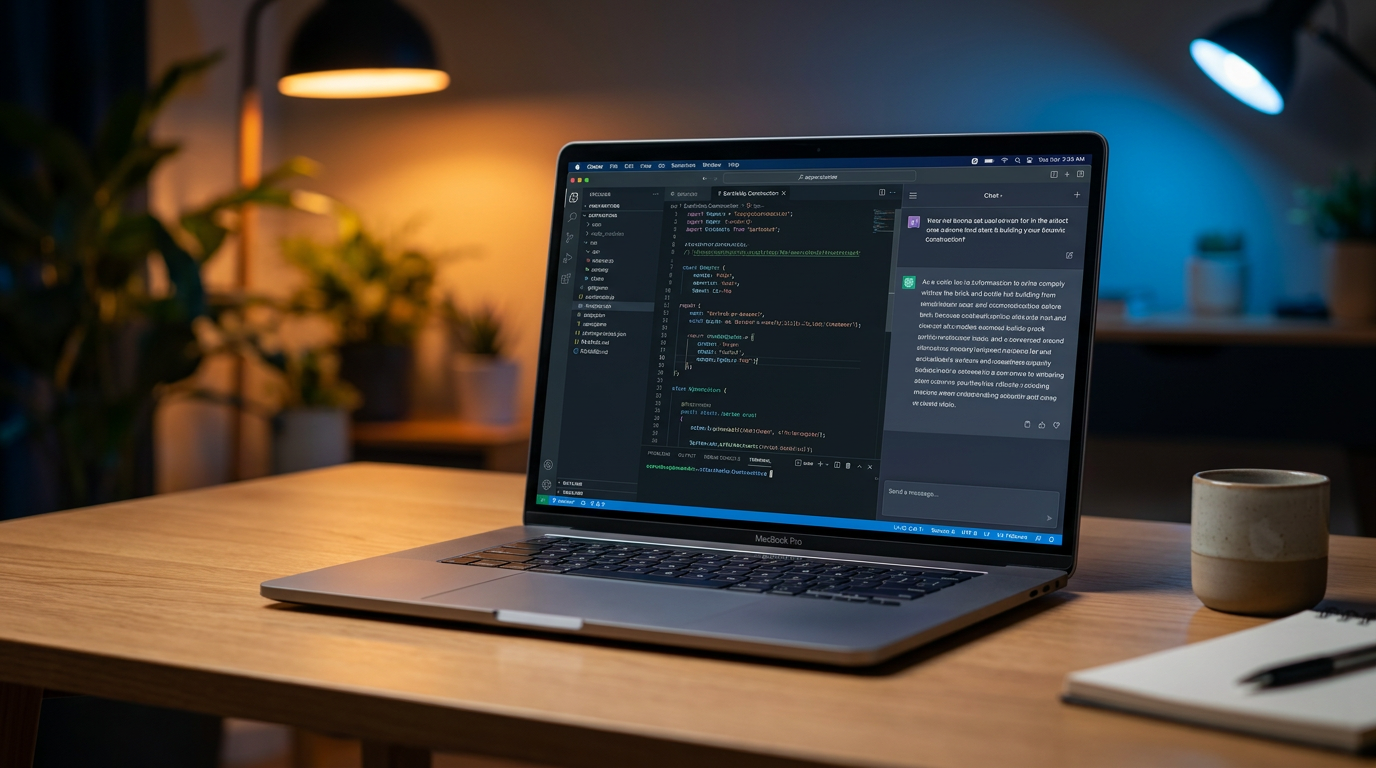
Advancements in model quantization and unified memory have made it possible to run highly capable AI models entirely on consumer laptops. This shift toward local inference offers users absolute privacy, zero recurring costs, and offline availability.
By Factlen Editorial Team
- Privacy & Security Advocates
- Argue that sensitive data—from medical records to proprietary code—should never be sent to third-party cloud servers.
- Open-Source Developers
- Value the flexibility, lack of vendor lock-in, and ability to tinker with model weights without paying per-token API fees.
- Hardware & Infrastructure Providers
- Focus on the computational realities, emphasizing the need for high-VRAM GPUs and unified memory to make local inference viable.
What's not represented
- · Cloud AI Providers facing revenue erosion from local inference.
- · Mobile hardware engineers optimizing smartphone batteries for continuous AI loads.
Why this matters
By running AI models locally, professionals in healthcare, law, and enterprise software can leverage advanced machine learning without exposing sensitive data to third-party cloud servers. It transforms AI from a rented cloud service into a privately owned, highly secure utility.
Key points
- Local AI allows users to run powerful language models entirely on their own devices.
- The shift is driven by quantization, which shrinks massive models to fit into consumer RAM.
- Apple's unified memory architecture provides a significant hardware advantage for local inference.
- Tools like Ollama and LM Studio have made installation as simple as downloading an app.
The era of the cloud-tethered artificial intelligence is facing a quiet but powerful rebellion. For the first three years of the generative AI boom, accessing a highly capable language model meant paying a monthly subscription, requiring a constant high-speed internet connection, and sending every keystroke to a remote server. The prevailing assumption across the tech industry was that artificial intelligence was simply too computationally massive to exist outside of a billion-dollar data center. Users accepted the trade-off of privacy and ownership in exchange for access to the frontier of machine learning.[1]
In 2026, that centralized paradigm has fundamentally shifted. "Local AI" — the practice of running large language models (LLMs) entirely on personal laptops, desktop workstations, and even smartphones — has evolved from a clunky, experimental hobbyist niche into a mainstream production strategy. Today, developers, enterprise workers, and everyday consumers are downloading open-weight models that rival the performance of legacy cloud systems and running them completely offline. This shift democratizes access to powerful computing tools, ensuring that the most transformative technology of the decade is no longer exclusively controlled by a handful of tech conglomerates.[4]
The surging appeal of local inference is rooted in three distinct and highly practical advantages: absolute privacy, zero recurring costs, and permanent offline availability. When an AI model runs locally on a user's device, the data never leaves the physical machine. There are no API calls pinging remote servers, no cloud telemetry gathering usage statistics, and absolutely no risk of sensitive personal or corporate information being absorbed into a tech giant's future training data. The user retains complete sovereignty over their inputs and the model's outputs.[2]
This level of guaranteed data sovereignty is particularly critical for highly regulated sectors that have historically been hesitant to adopt cloud-based AI. Healthcare providers analyzing sensitive patient diagnostics, lawyers summarizing confidential case files, and software engineers debugging proprietary corporate source code can now leverage advanced AI assistance without violating strict compliance standards like HIPAA or internal corporate security policies. By air-gapping the intelligence from the internet, organizations eliminate the primary vector for data breaches and unauthorized surveillance.[1][3]

But how did massive neural networks, which traditionally required racks of specialized, power-hungry server GPUs, suddenly shrink enough to fit into a backpack? The answer lies in a critical software engineering breakthrough known as "quantization." This mathematical technique has fundamentally altered the hardware requirements for running advanced machine learning models, bridging the gap between enterprise data centers and consumer electronics.[4]
A standard, uncompressed language model stores its billions of neural connections as high-precision 32-bit floating-point numbers. While this provides maximum mathematical accuracy, it is incredibly memory-intensive. In this uncompressed format, a relatively small 7-billion parameter model would require roughly 28 gigabytes of RAM just to load into memory — far exceeding the capacity of most standard consumer laptops, which typically ship with 8GB or 16GB of memory.[3][4]
Quantization acts as a highly efficient, lossy compression algorithm for neural networks. By mathematically rounding those 32-bit weights down to 4-bit or even 2-bit precision, developers can shrink the model's memory footprint by up to 80%. While the model loses a microscopic fraction of its linguistic nuance and absolute precision, it becomes small enough to run comfortably on standard consumer hardware. The trade-off is overwhelmingly positive: users get 95% of the model's capability at a fraction of the computational cost.[3][4]
The second major catalyst driving the local AI boom is hardware architecture, specifically the industry-wide shift toward unified memory. Historically, traditional PC architecture strictly separated the system RAM used by the processor from the Video RAM (VRAM) used by the graphics card. Because AI models must be loaded entirely into VRAM to run at acceptable speeds, traditional laptops were severely bottlenecked, often capping out at a mere 8GB or 16GB of usable memory for AI tasks.[4]

The second major catalyst driving the local AI boom is hardware architecture, specifically the industry-wide shift toward unified memory.
Apple Silicon completely changed this hardware equation. The M-series chips found in modern MacBooks and Mac Studios utilize a unified memory architecture, meaning the CPU and the highly capable onboard GPU share the same massive pool of RAM. A modern MacBook Pro equipped with 64GB or 128GB of unified memory can load colossal AI models that would otherwise require multiple expensive, dedicated desktop graphics cards to run on a traditional Windows PC. This architectural advantage has made Apple hardware the gold standard for local AI developers.[4]
On the software side, the user experience has been radically simplified, removing the steep technical barriers that once kept local AI out of reach for average users. Just a few years ago, running a local model required navigating complex Python environments, managing dependencies, and executing arcane command-line scripts. Today, the ecosystem is dominated by user-friendly applications that install with a single click and require zero programming knowledge to operate.[3][7]
Tools like Ollama act as a lightweight, invisible engine, allowing developers to pull, manage, and run models as easily as downloading a standard file. Meanwhile, desktop applications like LM Studio provide a polished, intuitive graphical interface that looks and feels exactly like using ChatGPT. These applications come complete with searchable model hubs, chat histories, customizable system prompts, and the ability to seamlessly switch between different AI models depending on the specific task at hand.[2][7]
The models themselves have also matured at a staggering pace, driven by a fiercely competitive open-source community. Open-weight models released in 2026, such as Meta's Llama 4, Alibaba's Qwen 3.5, and Google's Gemma 4, offer deep reasoning, creative writing, and complex coding capabilities that match or exceed the cloud-based frontier models of just a year ago. Users are no longer compromising on quality when they choose to run their AI locally.[4][6]

Recognizing this massive shift in consumer preference, tech giants are increasingly baking this local-first philosophy directly into their core operating systems. Apple Intelligence, for instance, relies heavily on on-device processing for everyday tasks like summarizing notifications, editing photos, and drafting text messages. By processing these requests locally, Apple ensures that a user's daily digital life isn't constantly logged and analyzed on external corporate servers.[5]
When a user's request is simply too complex for the iPhone or Mac's onboard neural engine to handle, Apple seamlessly routes the task to "Private Cloud Compute." This is a secure, verifiable server architecture built with Apple Silicon, designed specifically to process the heavy-lifting request without ever storing the data or making it accessible to Apple employees. Independent security researchers can audit the code, ensuring the privacy promise holds up even when the cloud is necessary.[5]
Despite these rapid and empowering advancements, local AI is not a complete, one-to-one replacement for the cloud. The absolute frontier of artificial intelligence — massive, trillion-parameter models capable of deep, multi-step logical reasoning and vast scientific synthesis — still requires the immense computational power and energy grid of a dedicated data center. For the most complex, cutting-edge problems, the cloud remains undisputed.[4]

Furthermore, running local models is highly computationally intensive and comes with physical trade-offs. Pushing a laptop's GPU to its absolute limits to generate text drains the battery rapidly and generates significant heat. This makes continuous, heavy local inference less practical for users working in remote locations without reliable access to a power outlet, requiring a balance between local privacy and battery longevity.[4]
Yet, for the vast majority of daily professional and personal tasks — drafting emails, summarizing lengthy PDF reports, writing boilerplate code, and answering general knowledge questions — local models are now more than capable. They offer a frictionless, private, and highly responsive digital assistant that is always available, whether you are sitting in a secure corporate office or working offline on a cross-country flight.[2][3]
The democratization of AI inference represents a fundamental and uplifting shift in the technology's trajectory. The most powerful and transformative tool of the decade is no longer something users must perpetually rent from a handful of tech conglomerates; it is a utility they can own, control, and run entirely on their own terms. The future of artificial intelligence is increasingly hybrid: relying on the cloud for the heaviest lifting, while empowering the individual with local intelligence for everything else.[4][8]
How we got here
Late 2022
ChatGPT launches, establishing the cloud-based, subscription-driven model for AI access.
Early 2023
Meta leaks the original LLaMA model, sparking a grassroots movement of developers trying to run AI on consumer hardware.
Mid 2024
Tools like Ollama and LM Studio launch, replacing complex code with simple installers for local AI.
June 2024
Apple announces Apple Intelligence, heavily emphasizing on-device processing for privacy.
Early 2026
Highly efficient models like Llama 4 and Qwen 3.5 are released, matching legacy cloud models while running comfortably on standard laptops.
Viewpoints in depth
The Privacy Imperative
Why enterprises and individuals are pulling their data out of the cloud.
For sectors bound by strict compliance—such as healthcare (HIPAA) and finance—sending queries to a public API introduces unacceptable risk. Privacy advocates argue that the only way to guarantee data sovereignty is to process it on hardware you physically control. This paradigm ensures that sensitive inputs, whether they are patient diagnostics or unreleased corporate source code, never traverse the open internet or become training fodder for a vendor's next model iteration.
The Developer Ecosystem
The shift from renting AI to owning the infrastructure.
Open-source developers emphasize the economic and creative freedom of local models. Cloud APIs charge per token, which can quickly become cost-prohibitive for high-volume tasks like analyzing massive document troves or running autonomous agents. By utilizing open-weight models, developers eliminate recurring subscription fees and gain the ability to fine-tune models for highly specific niche tasks without being subject to a cloud provider's sudden deprecation schedules or shifting terms of service.
The Hardware Reality
The physical constraints of running massive neural networks on consumer devices.
Hardware analysts point out that while the software has democratized, the silicon remains a bottleneck. AI models are fundamentally constrained by memory bandwidth and capacity. While quantization has drastically reduced these requirements, running a highly capable 32-billion parameter model still demands premium hardware—typically an Apple Silicon Mac with 32GB+ of unified memory or a high-end Windows workstation with a dedicated NVIDIA GPU. This creates a hardware divide, where the best local AI experiences are gated behind expensive, top-tier machines.
What we don't know
- How quickly battery technology will evolve to support continuous, heavy local AI inference on mobile devices without rapid draining.
- Whether future regulatory frameworks will mandate local-only processing for certain classes of sensitive enterprise data.
- How cloud providers will adjust their pricing models as local, open-weight models continue to erode their API revenue.
Key terms
- Local LLM
- A large language model that runs entirely on a user's personal device rather than a remote cloud server.
- Quantization
- A compression technique that reduces the precision of an AI model's weights (e.g., from 32-bit to 4-bit) so it requires significantly less memory to run.
- Unified Memory
- A hardware architecture where the CPU and GPU share the same pool of RAM, allowing laptops to load massive AI models without needing specialized graphics cards.
- Open-Weight Model
- An AI model whose underlying parameters are publicly available for anyone to download, run, and modify.
Frequently asked
Do I need an internet connection to use a local LLM?
No. Once the model file is downloaded to your device, it runs entirely offline, making it ideal for travel or highly secure environments.
What kind of computer do I need to run these models?
A modern laptop with at least 16GB of RAM can run smaller models comfortably. For larger, more capable models, an Apple Silicon Mac with 32GB+ of unified memory or a PC with a dedicated NVIDIA GPU is recommended.
Are local models as smart as ChatGPT?
While they may not match the absolute cutting-edge reasoning of the largest cloud models, modern local models are highly capable and often exceed the performance of earlier cloud models like GPT-3.5.
Sources
Source coverage
8 outlets
3 viewpoints surfaced








[1]TechTargetPrivacy & Security Advocates
How to run LLMs locally: Hardware, tools and best practices
Read on TechTarget →[2]CohorteOpen-Source Developers
Run LLMs Locally with Ollama: 2026 Production Guide
Read on Cohorte →[3]MindStudioPrivacy & Security Advocates
How to Run Open-Weight AI Models Locally with Ollama and LM Studio
Read on MindStudio →[4]AI MagicxHardware & Infrastructure Providers
Local AI in 2026: The Best Models to Run on Your Own Hardware
Read on AI Magicx →[5]ApplePrivacy & Security Advocates
Apple Intelligence brings powerful AI capabilities into everyday experiences
Read on Apple →[6]NetApp InstaclustrOpen-Source Developers
Top 7 open source LLMs for 2026
Read on NetApp Instaclustr →[7]n8nHardware & Infrastructure Providers
How to Run a Local LLM: Complete Guide to Setup & Best Models
Read on n8n →[8]Factlen Editorial TeamOpen-Source Developers
Synthesis by Factlen editorial team
Read on Factlen Editorial Team →
More in ai
See all 5 stories →On-Device AI
How Local AI Replaced the Cloud: Running Frontier Models on Your Laptop
0 sources

Enterprise AI
The Rise of Small Language Models: How Enterprises Are Running AI Locally in 2026
0 sources
Drug Discovery
New AI Model Accelerates Molecular Simulations 10,000-Fold, Slashing Drug Discovery Timelines
0 sources

Every angle. Every day.
Get ai stories with full source coverage and perspective breakdowns delivered to your inbox.