
The Physics of the Clean and Jerk: How the Human Body Generates Half a Ton of Force
Olympic weightlifting's signature movement relies on leverage, timing, and the stretch-shortening cycle rather than raw upper-body strength. A biomechanical breakdown reveals how elite lifters manipulate physics to elevate more than triple their body weight overhead.

To the uninitiated, the clean and jerk appears to be a test of brute upper-body strength. When an elite super-heavyweight hoists more than 260 kilograms over their head, the sheer mass defies intuition. Yet, Olympic weightlifting is less about arm strength and more about the precise manipulation of physics, leverage, and timing. It is a choreographed explosion where the human body acts as a biological lever system, designed to generate massive vertical force and then rapidly reposition itself beneath a falling object.[1][3]
The movement is divided into two distinct lifts—the clean, which brings the barbell from the floor to the shoulders, and the jerk, which drives it overhead. Biomechanists have long studied this sequence because it produces some of the highest peak power outputs ever recorded in human athletic performance. While a heavy deadlift might require immense absolute strength, it is performed slowly. The clean and jerk, by contrast, requires the lifter to accelerate the barbell to velocities exceeding two meters per second, demanding a unique blend of strength and speed.[2]
The illusion begins the moment the barbell leaves the floor. Novices often attempt to "pull" the weight up with their arms and back. Elite lifters, however, treat the first pull as a leg press. Their arms remain straight, acting merely as cables connecting the weight to their shoulders. By driving their feet into the platform, they utilize ground reaction force, relying on the massive musculature of the quadriceps and glutes to overcome the barbell's resting inertia.[1]
As the bar passes the knees, the lifter initiates the transition phase, often called the "double knee bend" or the "scoop." The knees rebend slightly, and the hips shift forward, bringing the lifter's center of mass directly under the barbell. This subtle repositioning is crucial. It stretches the Achilles tendons and the patellar tendons, storing elastic energy that is about to be violently released. The body is effectively coiling like a spring.[2][4]
What follows is the second pull, the most explosive movement in all of sports. In a fraction of a second, the lifter simultaneously extends their hips, knees, and ankles—a mechanic known as "triple extension." This violent upward drive transfers the stored elastic energy and muscular force directly into the barbell. During this phase, elite male lifters can generate peak power outputs exceeding 5,500 watts, while elite female lifters routinely surpass 3,500 watts.[3]
At the apex of the second pull, the barbell achieves maximum velocity and becomes momentarily weightless. This is where the true mastery of Olympic weightlifting reveals itself. The lifter does not continue pulling the bar up; instead, they use the bar's upward momentum to pull themselves down. In approximately 0.15 seconds, the lifter aggressively drops into a deep front squat, catching the barbell on their anterior deltoids just as gravity begins to pull it back to earth.[1][2]
Catching a massive weight in a deep squat requires extraordinary mobility in the ankles, hips, and thoracic spine. But it also relies on the stretch-shortening cycle. As the lifter absorbs the downward force of the barbell, their leg muscles eccentrically lengthen before immediately contracting concentrically to stand up. This "bounce" out of the bottom position utilizes the elastic properties of the muscles and tendons, making the recovery significantly easier than a strict, paused squat.[4]
Once the lifter stands up with the weight, the clean is complete, but the lift is only half over. The jerk requires driving the barbell from the shoulders to a fully locked-out position overhead. Again, the arms are not the primary movers. The lifter initiates a short, sharp dip, bending the knees to store energy, followed by a violent upward drive. This leg drive propels the barbell off the shoulders, creating a window of opportunity.[6]
While the bar is traveling upward, the lifter must quickly drop their center of mass to catch it with straight arms. The vast majority of elite lifters use the "split jerk," throwing one foot forward and the other backward. This split stance serves two critical biomechanical functions.
First, it allows the lifter to drop their hips significantly lower than a push jerk, meaning the barbell doesn't need to be driven as high. Second, it creates a wide base of support, maximizing anterior-posterior stability to prevent the weight from shifting forward or backward.[2][3][6]
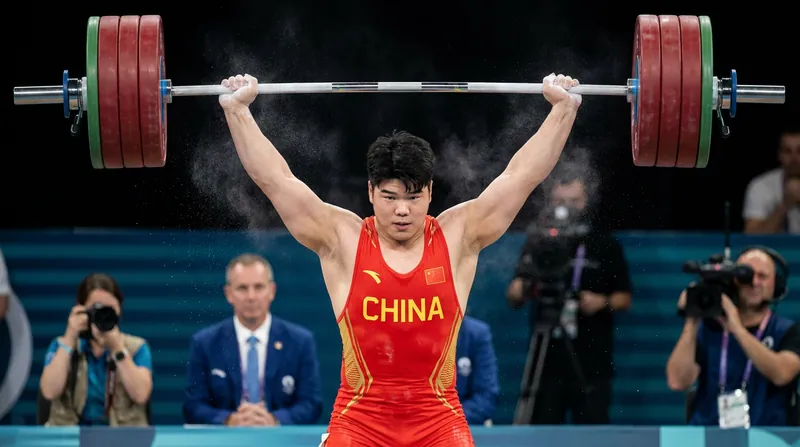
The final catch overhead relies on skeletal alignment rather than muscular endurance. The lifter locks their elbows and aligns the barbell directly over their ears, shoulders, hips, and mid-foot. In this stacked position, the massive load is supported primarily by the compressive strength of the bones. The muscles of the upper back and shoulders work merely as stabilizers to keep the skeletal structure rigid until the referee signals a successful lift.[1][3]
The physiological adaptations required to perform these movements are profound. Olympic weightlifting trains the central nervous system to recruit motor units synchronously, meaning the brain learns to fire all available muscle fibers at the exact same millisecond. This neuromuscular efficiency is why weightlifters can jump incredibly high and sprint exceptionally fast over short distances, despite their often stocky frames.[4]
Beyond athletic performance, the extreme mechanical loading of the clean and jerk triggers significant biological responses. When bones are subjected to the compressive forces of heavy weightlifting, they adapt by increasing their mineral density. Studies consistently show that competitive weightlifters possess some of the highest bone mineral densities of any athletic population, making the sport a powerful, albeit extreme, model for osteoporosis prevention.[5]
Because of its unparalleled ability to develop explosive power, the clean and jerk—and its variations, like the power clean—have become foundational in strength and conditioning programs worldwide. NFL linemen, Olympic sprinters, and elite rugby players utilize these movements to improve their rate of force development. The ability to move heavy loads quickly translates directly to tackling an opponent or accelerating out of starting blocks.[1]
Historically, the complexity of the Olympic lifts restricted them to specialized gyms with expert coaches. However, the rise of open-source kinematic AI and smartphone applications is democratizing the sport. Modern athletes can now record their lifts and receive instant biomechanical feedback, tracking bar path trajectory, peak velocity, and power output without the need for expensive laboratory equipment.[1][2]
Ultimately, the clean and jerk is a triumph of human biomechanics. It transforms the body into a highly efficient machine capable of overcoming extraordinary gravitational resistance. By mastering the physics of leverage, the elasticity of tendons, and the precise timing of muscular contraction, weightlifters continue to push the absolute limits of human power.[3][6]
Key points
- The clean and jerk relies on leverage and ground reaction force rather than isolated arm strength.
- The 'second pull' generates some of the highest peak power outputs in all of human athletics.
- Lifters use the upward momentum of the bar to pull themselves down into a deep squat in fractions of a second.
- Heavy mechanical loading from Olympic weightlifting significantly increases bone mineral density.
How we got here
1896
Weightlifting is included in the first modern Olympic Games in Athens.
1928
The clean and jerk is officially standardized as one of the Olympic lifts.
2000
Women's weightlifting makes its official debut at the Sydney Olympic Games.
2021
Lasha Talakhadze sets the all-time world record clean and jerk at 267 kg.
- Sports Biomechanists
- Focus on the kinematic efficiency, bar path trajectory, and mechanical force production of the lifts.
- Strength and Conditioning Coaches
- Value the lifts primarily for their athletic carryover, specifically the rate of force development applied to field sports.
- Medical Professionals
- Examine the physiological adaptations to heavy loading, particularly improvements in bone mineral density and neuromuscular health.
Perspectives this story doesn't cover
- Novice amateur lifters
Sources
Source coverage
6 outlets
3 viewpoints surfaced






- [1]Factlen Editorial TeamStrength and Conditioning Coaches
Synthesis by Factlen editorial team
Read on Factlen Editorial Team → - [2]Sports BiomechanicsSports Biomechanists
Barbell Trajectory and Velocity Profiles During the Clean and Jerk
Read on Sports Biomechanics → - [3]International Weightlifting Federation
Technical Rules and Historical Records of Olympic Weightlifting
Read on International Weightlifting Federation → - [4]Frontiers in PhysiologyStrength and Conditioning Coaches
Neuromuscular Adaptations to High-Velocity Resistance Training
Read on Frontiers in Physiology → - [5]American College of Sports MedicineMedical Professionals
The Impact of Heavy Resistance Training on Bone Mineral Density
Read on American College of Sports Medicine → - [6]Journal of Applied BiomechanicsSports Biomechanists
Center of Mass Displacement During the Split Jerk
Read on Journal of Applied Biomechanics →
More in Sports
See all →Injury
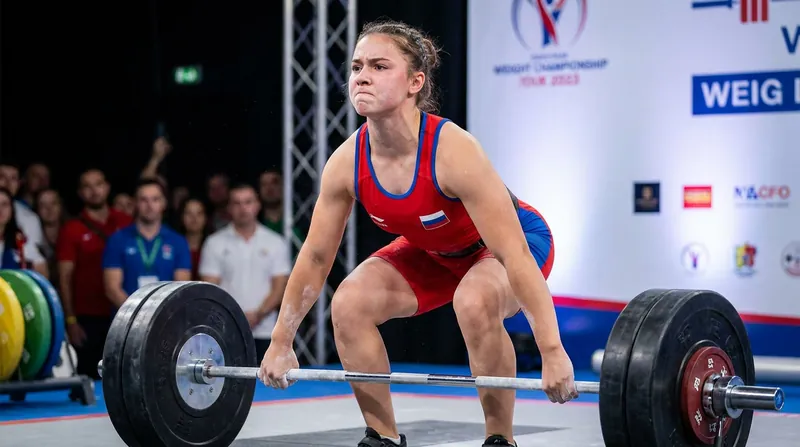
Global Weightlifting Injury Report: Chanu Cleared for Glasgow as Talakhadze and El-Bakh Target Ningbo Comebacks
6 sources
Standings
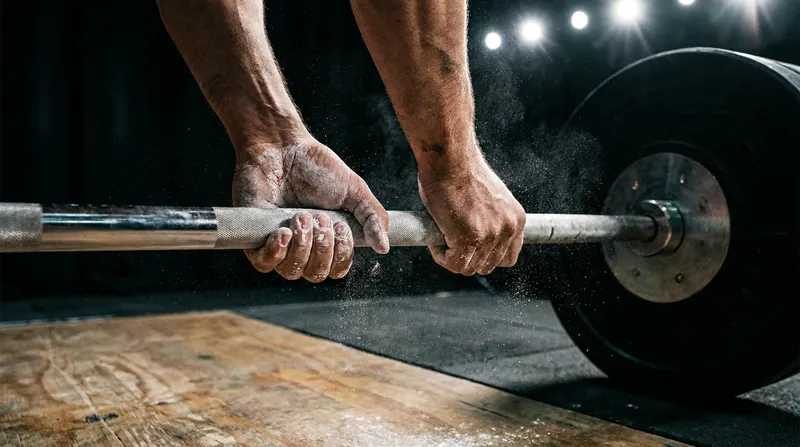
The Race to Ningbo: Women's 71kg Global Standings Tighten as Reeves, Liao, and Palacios Vie for the Top Seed
2 sources
Injury
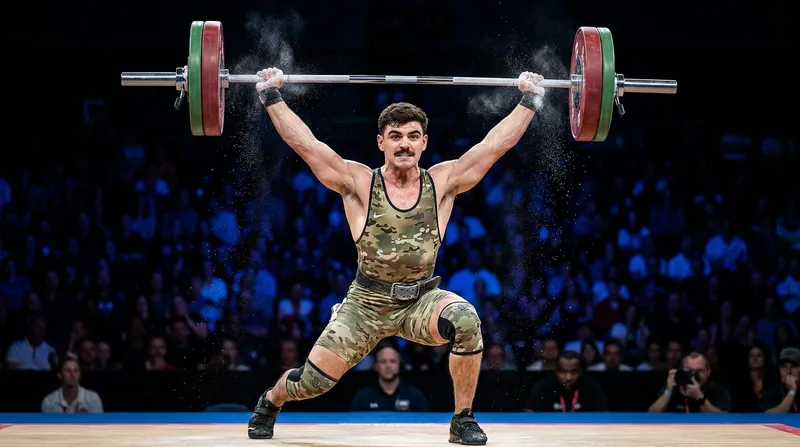
Latvian Weightlifter Rebeka Ibrahima Mounts Second Comeback Following Double Meniscus Surgery
4 sources
Standings
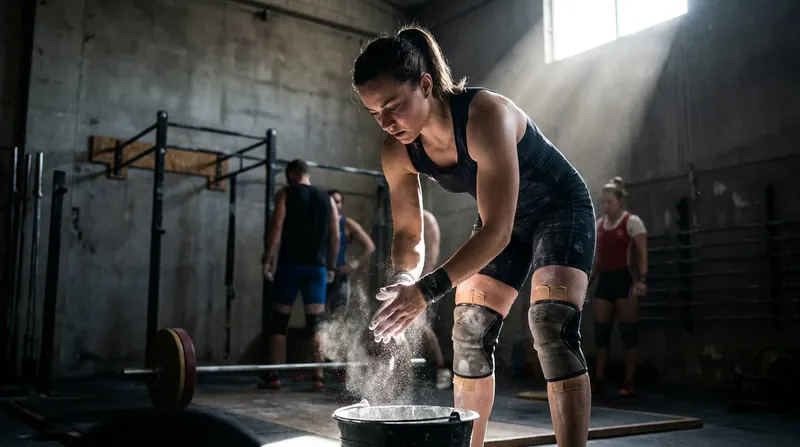
The Race to Ningbo: Men's 102kg Global Standings Heat Up Ahead of the 2026 World Championships
5 sources
Comments
Every angle. Every day.
Get Sports stories with full source coverage and perspective breakdowns, free every day.