
Explainer: How Generative AI is Replacing Static Dialogue Trees with 'Living' NPCs
Game developers are abandoning decades-old scripted dialogue trees in favor of generative AI engines that give non-playable characters real-time memory, emotion, and unscripted conversational abilities.
By Factlen Editorial Team
- Narrative Designers
- Advocate for strict human control over story beats to prevent AI from generating aimless 'slop.'
- Hardware Providers
- Focus on pushing AI processing to local devices to eliminate latency and server costs.
- Indie Developers
- View generative AI as a democratizing tool that allows small teams to build massive, reactive worlds.
What's not represented
- · Voice Actors Guilds
- · Game Localization Teams
Why this matters
For players, this marks the end of repetitive, robotic interactions and the dawn of truly immersive, personalized game worlds. For indie developers, it democratizes the creation of massive, narrative-rich games that once required armies of writers and voice actors.
Key points
- Game studios are replacing static dialogue trees with generative AI engines.
- NPCs can now remember past interactions and react dynamically to player choices.
- Retrieval-Augmented Generation (RAG) grounds characters in the game's specific lore.
- NVIDIA's new SDKs allow these AI models to run locally on the player's hardware.
- Developers are using 'hybrid AI' to prevent characters from breaking quest logic.
- The technology democratizes massive world-building for solo indie developers.
For decades, interacting with a video game's non-playable characters (NPCs) has been a predictable exercise. A player walks up to a digital shopkeeper or guard, presses a button, and selects from a rigid menu of pre-written dialogue options. Once the character exhausts their three or four recorded lines, they repeat them endlessly, creating the infamous 'arrow to the knee' phenomenon where the illusion of a living world instantly shatters.[7]
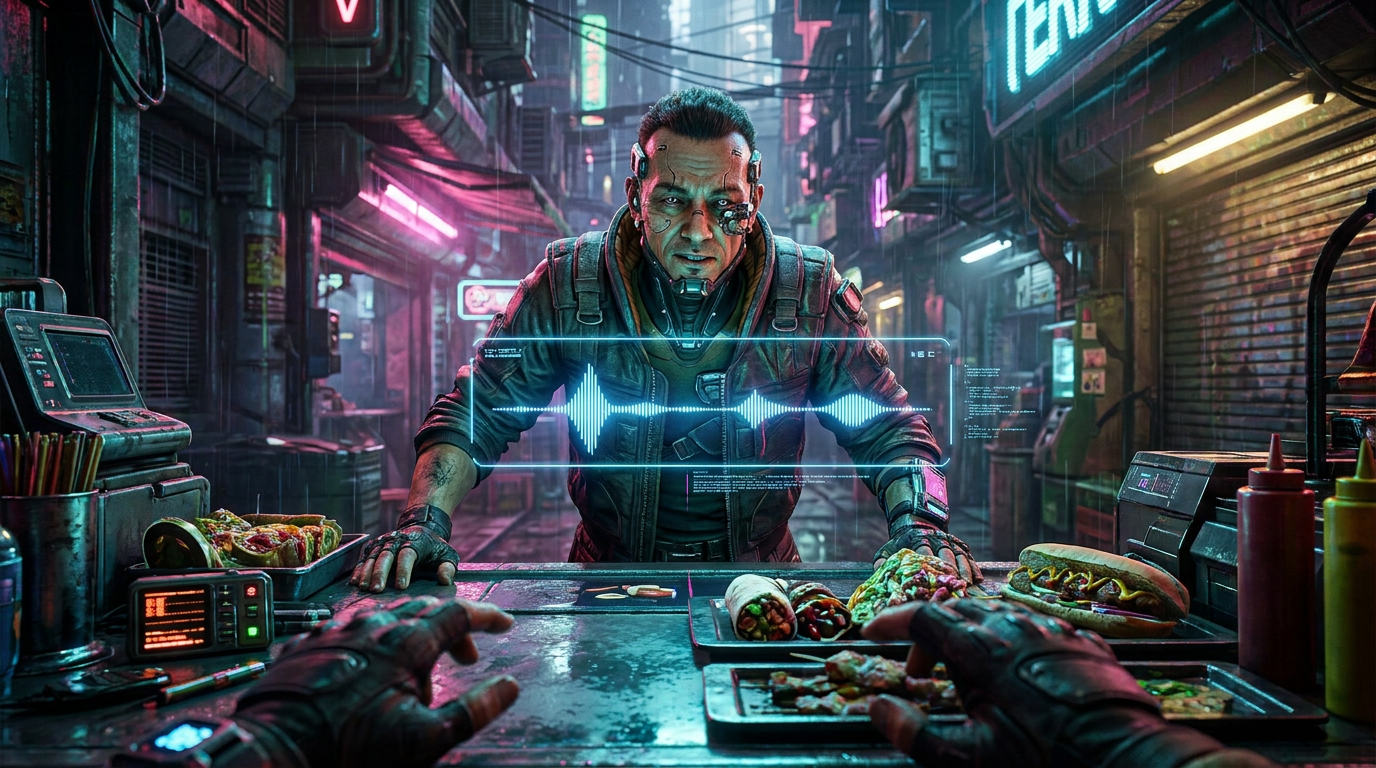
But in 2026, the static dialogue tree is being actively dismantled. Game developers are increasingly abandoning hard-coded scripts in favor of generative AI engines that give characters a 'mind' of their own. By leveraging large language models (LLMs) and real-time voice synthesis, studios are creating NPCs capable of unscripted, context-aware conversations that remember past interactions and react dynamically to the player's behavior.[3][5]
Building a believable AI character requires a complex, multi-step pipeline that must execute in the blink of an eye. The process begins with the NPC's 'brain.' Platforms like Inworld AI and Convai provide cognitive engines where developers define a character's personality, emotional boundaries, and deep backstory. Instead of writing every possible line of dialogue, writers craft a psychological profile and let the AI generate the exact phrasing on the fly.[3][5]
To prevent these characters from hallucinating or breaking the game's lore, developers utilize Retrieval-Augmented Generation (RAG). When a player speaks into their microphone, the AI instantly queries the game's internal database—checking the player's inventory, recent quest outcomes, and the world's history—before formulating a response. This ensures a fantasy blacksmith doesn't suddenly start talking about modern sports, but instead accurately comments on the specific sword the player just forged.[1][4]

Once the brain formulates a response, the 'body' must deliver it. This is where technologies like NVIDIA's Avatar Cloud Engine (ACE) step in. ACE takes the generated text, converts it into highly realistic synthesized speech, and uses tools like Audio2Face to instantly animate the character's 3D facial muscles and lip movements to match the audio perfectly, all in real time.[1][3]
The greatest technical hurdle in this pipeline has been latency. Human conversation feels unnatural if there is a delay of more than a few hundred milliseconds before a response. Early iterations of AI NPCs relied on cloud servers to process the LLM and voice generation, which often resulted in awkward pauses that ruined immersion.[4]
The greatest technical hurdle in this pipeline has been latency.
To solve this, the industry is aggressively pushing AI processing directly onto the player's hardware. At Unreal Fest in June 2026, NVIDIA unveiled the ACE Game Agent SDK Beta, an open-source toolkit designed to run AI companions entirely on local RTX graphics cards and Neural Processing Units (NPUs). By eliminating the round-trip to a cloud server, developers can achieve instantaneous conversational latency.[1][4]
This shift to local processing, however, raises the hardware floor for gamers. Running a sophisticated LLM alongside a modern game's rendering engine requires serious compute power. Industry benchmarks suggest that smooth, on-device NPC interactions require hardware capable of 45 to 50 Tera Operations Per Second (TOPS), accelerating the adoption of AI-specific silicon in consumer gaming PCs and consoles.[1]
Major AAA studios are already experimenting with the technology's narrative potential. Ubisoft's 'NEO NPCs' research initiative recently showcased prototypes where characters display real-time emotion, collaborative decision-making, and long-term memory. In these environments, players can organically interrogate a detective or strategize with a squadmate without ever looking at a dialogue wheel.[2]

Yet, the most profound impact is being felt in the indie development scene. Historically, creating a massive, narrative-rich role-playing game required armies of writers and millions of dollars for voice acting. Now, solo developers and small teams can populate entire cities with unique, conversational inhabitants, democratizing a scale of world-building that was previously locked behind AAA budgets.[5][7]
Despite the enthusiasm, developers are highly cautious about the 'slop' problem. Pure, unconstrained generative AI can easily ruin a game. If an NPC is too agreeable, they become a boring 'yes man'; if they are too erratic, they can break quest logic or refuse to give the player necessary information to progress.[3][7]
To combat this, studios are adopting a 'hybrid AI' or 'authored AI' approach. Narrative designers still strictly control the core story beats, quest triggers, and critical information. The generative AI is used merely as the connective tissue—providing dynamic flavor text, ambient reactions, and personalized greetings that wrap around the hard-coded game logic.[2][5]

Player demand for this technology is already overwhelming. Recent industry surveys indicate that over 80% of gamers would be willing to pay a premium for titles featuring advanced AI characters. The modding community has already proven this appetite, retrofitting decade-old games like Skyrim with custom LLM plugins just to experience a world where the guards finally have something new to say.[6][7]
As these tools become deeply integrated into standard game engines like Unreal and Unity, the era of the cardboard-cutout NPC is rapidly drawing to a close. The next generation of digital worlds will not just be visually stunning; they will be populated by characters who can listen, remember, and truly converse.[1][5]
How we got here
Mid-2023
Modders begin integrating early ChatGPT APIs into older games like Skyrim to generate dynamic text responses.
Nov 2023
Microsoft Xbox announces a multi-year partnership with Inworld AI to build generative AI dialogue tools for developers.
Mar 2024
Ubisoft unveils its 'NEO NPCs' prototype at GDC, showcasing unscripted dialogue and real-time emotion.
June 2026
NVIDIA releases the ACE Game Agent SDK Beta, allowing developers to run complex AI NPCs entirely on local hardware.
Viewpoints in depth
Narrative Designers
Writers focused on maintaining story integrity and pacing.
For traditional game writers, generative AI is both a powerful tool and a potential threat to pacing. Narrative designers argue that pure, unconstrained AI leads to 'slop'—aimless, rambling conversations that dilute the game's core themes. They advocate for 'authored AI,' where writers strictly define the narrative boundaries, quest triggers, and critical lore, using the LLM only to generate the connective tissue and ambient dialogue that surrounds those hard-coded beats.
Hardware Providers
Companies building the silicon required to run local AI models.
Silicon manufacturers like NVIDIA and AMD view AI NPCs as the ultimate use case for local Neural Processing Units (NPUs) and high-end GPUs. They argue that relying on cloud servers for NPC dialogue introduces unacceptable latency and ongoing server costs for developers. By pushing the processing to the player's local hardware, they ensure instantaneous responses and total privacy, while simultaneously driving consumer demand for more powerful gaming rigs.
Indie Developers
Solo creators and small studios building ambitious games.
For the indie community, generative AI is a massive equalizer. Small teams lack the millions of dollars required to hire writers and voice actors to populate a sprawling open world. Indie developers view AI character engines as a way to punch above their weight, allowing a solo creator to build a vibrant, reactive town full of unique personalities—a feat that previously required a AAA studio budget.
What we don't know
- How the widespread use of local AI models will impact the performance and frame rates of highly demanding AAA games.
- Whether players will ultimately prefer the unpredictability of AI dialogue over the tightly crafted pacing of human-written scripts.
- How platform holders like Sony and Microsoft will regulate AI-generated content to prevent characters from generating inappropriate dialogue.
Key terms
- Dialogue Tree
- A traditional game design system where players select pre-written responses from a menu to navigate a conversation.
- Retrieval-Augmented Generation (RAG)
- An AI technique that allows a language model to search a specific database—like a game's lore or player inventory—before answering.
- NPU (Neural Processing Unit)
- A specialized hardware chip designed specifically to accelerate artificial intelligence tasks efficiently.
- Audio2Face
- A technology that analyzes an audio file of speech and instantly generates the corresponding 3D facial animations and lip sync.
- Authored AI
- A hybrid design approach where human writers dictate the core story beats, but AI generates the dynamic phrasing and ambient reactions.
Frequently asked
Will AI NPCs require an internet connection?
Early versions did, but new tools released in 2026 allow the AI models to run entirely locally on the player's hardware, removing the need for a constant connection.
Can an AI NPC break the game's story?
If left unconstrained, yes. However, developers use 'hybrid AI' systems that place strict guardrails on the character, ensuring they still deliver critical quest information.
Will this replace human voice actors?
It shifts the role. While AI generates the real-time dialogue, the underlying voice models are typically trained on performances by human actors who license their voices to the studios.
Do I need a high-end PC to play games with AI NPCs?
Running these models locally requires modern hardware, typically a dedicated NPU or a recent graphics card capable of handling the AI workload alongside the game's graphics.
Sources
Source coverage
7 outlets
3 viewpoints surfaced







[1]NVIDIAHardware Providers
NVIDIA ACE Game Agent SDK Beta Announced at Unreal Fest 2026
Read on NVIDIA →[2]UbisoftNarrative Designers
Ubisoft NEO NPCs: Exploring the Possibilities of GenAI in Games
Read on Ubisoft →[3]Naavik
How AI NPCs Are Transforming Game Design
Read on Naavik →[4]CSS NinjaHardware Providers
NVIDIA Rolls Out Fresh Tools for Smarter AI Characters
Read on CSS Ninja →[5]Agentic Game DevelopmentIndie Developers
Best AI NPC & Character Behavior Tools for Games
Read on Agentic Game Development →[6]InvestGame
The Future of NPCs: Gamer Survey on Advanced AI
Read on InvestGame →[7]MediumIndie Developers
How AI NPCs are Changing Open-World Games
Read on Medium →

More in ai
See all 6 stories →AI Copyright Law
US Appeals Court Establishes the 'Two-Phase' AI Copyright Rule in Landmark Fair Use Decision
6 sources

World Models
Explainer: How 'World Models' Are Teaching AI the Intuitive Physics of Reality
7 sources

Synthetic Data
Explainer: How 'Synthetic Data' is Curing AI's Looming Data Exhaustion
6 sources

Accessibility Tech
How AI is Finally Cracking Real-Time Sign Language Translation
6 sources

Every angle. Every day.
Get ai stories with full source coverage and perspective breakdowns delivered to your inbox.