
The Road Back: How Triathlon's Biggest Stars Are Rewriting the Injury Playbook
From Reese Vannerson's miraculous six-week collarbone recovery to Roksana Slupek's emotional return at WTCS Alghero, the 2026 triathlon season is being defined by resilience and smart rehabilitation.
By Factlen Editorial Team
- Elite Athletes
- Focus on trusting the grueling rehab process, managing the mental toll of being sidelined, and safely rebuilding race-day confidence.
- Sports Medicine Professionals
- Advocate for early MRI scans, meticulously phased returns, and avoiding full fractures through immediate, conservative intervention.
- Coaches and Federations
- Balance the need for athletes to score Olympic or Series points with the risk of re-injury, prioritizing long-term health over short-term gains.
What's not represented
- · Physical therapists specializing in endurance sports
- · Sports psychologists helping athletes overcome crash trauma
Why this matters
In a sport that pushes the human body to its absolute limits, the way elite triathletes manage injuries is evolving. Their shift toward early detection and meticulously phased comebacks offers a blueprint for endurance athletes at every level to recover smarter and stronger.
Key points
- Reese Vannerson returned to elite racing just six weeks after breaking his collarbone in a bike crash.
- Roksana Slupek overcame a 10-month absence and a broken scapula to finish 18th at WTCS Alghero with an elite run split.
- Leo Bergere successfully completed the T100 San Francisco after battling nerve and knee issues for nearly a year.
- Jelle Geens caught a femoral stress reaction early, avoiding a full fracture and preserving his swim and bike training.
- Elite triathletes are increasingly treating rehabilitation as a dedicated training discipline rather than just a pause in their season.
The 2026 triathlon season has been a masterclass in human resilience. While the grueling demands of swimming, cycling, and running at the elite level inevitably take a toll, a wave of high-profile athletes is proving that a major injury does not have to be a season-ending sentence. Across the World Triathlon Championship Series (WTCS) and the T100 Triathlon World Tour, the narrative has shifted from the despair of being sidelined to the triumph of the return.[1][2]
Athletes and their medical teams are utilizing advanced diagnostics and conservative rehab strategies to get back to the start line faster—and safer—than ever before. Perhaps no return has been as staggering as that of USA Triathlon National Team member Reese Vannerson. During a bike crash in Haikou, China, Vannerson suffered a broken collarbone, a notoriously difficult injury for triathletes due to the overhead mobility required for the swim.[1]
Yet, just six weeks later, Vannerson was back on the elite start line. He made his return at the World Triathlon Cup Chengdu on May 9, followed immediately by a start at WTCS Yokohama. While he finished 29th and 31st respectively, the mere fact that he was racing at the highest level so soon after a fracture was hailed by his coaching staff as a medical marvel.[1]
Vannerson’s recovery required a meticulously phased approach. Running returned first, followed by cycling, with the pool coming last as his shoulder slowly regained its range of motion. His ability to maintain cardiovascular fitness while letting the bone heal underscores a broader trend in endurance sports medicine, where complete rest is increasingly replaced by targeted, low-impact cross-training.[1]

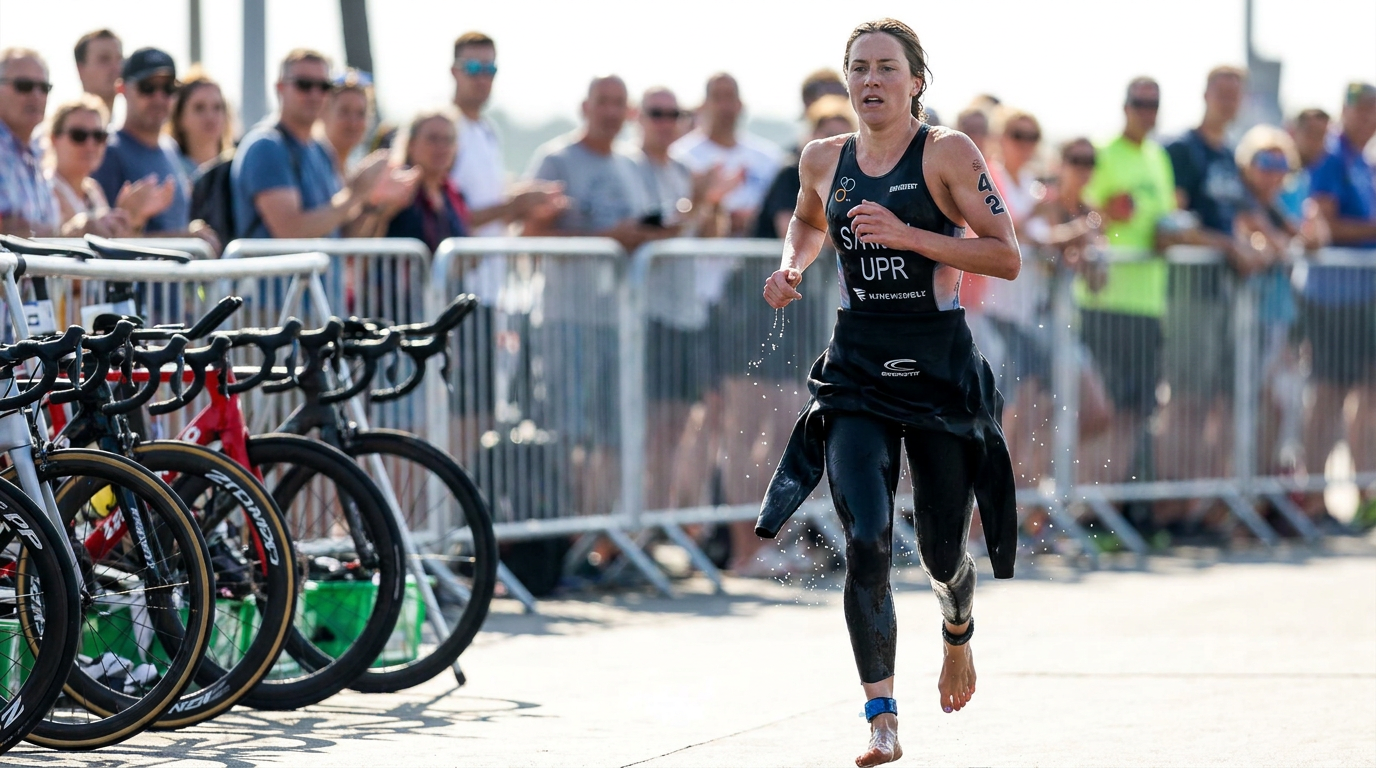
A similar story of grit unfolded at WTCS Alghero, where Poland’s Roksana Slupek made a highly anticipated return. Slupek had been absent from elite racing for ten months following a brutal bike crash at WTCS Hamburg last summer that left her with a broken scapula. The mental scars of the crash were as challenging as the physical ones, with Slupek admitting to pre-race anxiety and doubts about her readiness to mix it up in a tight peloton.[2]
A similar story of grit unfolded at WTCS Alghero, where Poland’s Roksana Slupek made a highly anticipated return.
However, she silenced those doubts on the Sardinian coast, securing an impressive 18th-place finish against a world-class field. Most encouragingly, Slupek clocked a 34:36 in the 10km run—the tied seventh-best split of the day. Her performance proved that the long, frustrating winter of restricted indoor training had preserved her elite foot speed, setting her up as a dangerous contender for the rest of the season.[2]
Meanwhile, the T100 San Francisco race saw the return of 2022 World Champion Leo Bergere. The Frenchman had been plagued by a benign tumor on his sciatic nerve and lingering knee issues that kept him off the start line for nearly a year. Bergere’s return to the grueling 100km format was a major milestone in his career.[5][6]

Despite receiving a drafting penalty on the bike, Bergere pushed through the 18km run alongside the world's best. For Bergere, simply completing the race pain-free was the primary goal, laying a foundation of consistent health for the back half of the 2026 calendar and proving that patience during a long rehab block eventually pays dividends.[3][6]
Even for athletes currently sidelined, the focus has shifted to smart, early intervention. Belgium’s Jelle Geens, a two-time IRONMAN 70.3 World Champion, recently withdrew from T100 San Francisco after a scan revealed a Grade 2 femoral shaft stress reaction. Rather than pushing through the pain and risking a catastrophic break, Geens and his team caught the injury early.[4]
By stopping his run volume immediately, Geens avoided a full fracture, allowing him to continue swimming and cycling while the bone heals. He remains optimistic about a quick return to the circuit, a testament to the power of listening to one's body. Similarly, British star Sam Dickinson is currently navigating a Grade 4 bone stress in his foot, which forced him out of WTCS London.[4][7]

Dickinson’s public vow to "rehab as hard as I normally train" encapsulates the modern elite mindset: recovery is not a pause in training, but a different discipline altogether. As the Olympic qualification window intensifies and the T100 series marches on, these athletes are proving that setbacks are merely setups. By prioritizing long-term health and trusting the rehab process, triathlon's biggest stars are returning to the course stronger, wiser, and more resilient.[2][7]
How we got here
July 2025
Roksana Slupek suffers a broken scapula in a severe bike crash at WTCS Hamburg.
March 2026
Reese Vannerson breaks his collarbone during a bike crash in Haikou, China.
May 9, 2026
Vannerson makes a triumphant return to elite racing at the World Triathlon Cup Chengdu.
May 30, 2026
Slupek returns to the WTCS circuit in Alghero, clocking the seventh-best run split.
June 6, 2026
Leo Bergere returns to the T100 series in San Francisco after nearly a year battling nerve and knee issues.
Viewpoints in depth
The Athletes' Mindset
Navigating the mental hurdles of injury and the risk-versus-reward calculus of returning to competition.
For elite triathletes, the physical pain of an injury is often eclipsed by the psychological toll of being sidelined. Athletes like Roksana Slupek have spoken candidly about the anxiety of returning to the peloton after a traumatic crash, highlighting the unseen mental battles that accompany physical rehab. The modern athlete must constantly weigh the 'risk vs. reward' of toeing the start line, balancing the intense desire to compete with the patience required to let the body fully heal.
Sports Medicine Perspective
The shift toward early detection and maintaining active, low-impact fitness during the healing process.
Endurance sports medicine has moved away from the traditional model of complete rest. Medical teams now prioritize early MRI scans to catch stress reactions before they become full fractures, as seen with Jelle Geens. By identifying the exact nature of the injury, doctors can prescribe a phased return that allows athletes to maintain cardiovascular fitness—such as swimming or cycling—while protecting the compromised bone or tendon, drastically reducing overall recovery times.
National Federations' View
Managing team rosters and Olympic qualification points amidst unpredictable injury timelines.
National governing bodies face a complex logistical puzzle when their top athletes go down. With Olympic qualification windows and series standings on the line, federations must support their athletes' long-term health while still fielding competitive teams for crucial mixed relay events. Coaches are increasingly relying on deep talent pools and encouraging athletes not to rush their comebacks, knowing that a fully healthy athlete in the late season is far more valuable than a compromised one racing early.
What we don't know
- Whether Jelle Geens will recover in time to secure his qualification for the IRONMAN World Championship in Kona.
- How the lingering effects of these injuries will impact athletes' performances during the grueling late-season championship races.
Key terms
- WTCS
- The World Triathlon Championship Series, the highest tier of short-course elite triathlon racing.
- T100 Triathlon World Tour
- A global series of 100-kilometer races featuring the world's top middle-distance triathletes.
- Stress Reaction
- A precursor to a stress fracture, characterized by bone inflammation and pain due to repetitive loading.
- Blue Card
- A penalty in triathlon, often given for drafting on the bike course, which requires the athlete to serve a time penalty.
Frequently asked
What is a Grade 2 femoral stress reaction?
It is an overuse injury where the thigh bone (femur) shows inflammation and micro-damage, but has not yet fully fractured. Catching it at Grade 2 allows athletes to recover without surgery.
Why do collarbone injuries take so long for triathletes to rehab?
While runners or cyclists can often train with a healing collarbone, triathletes require full overhead shoulder mobility for the swim, making the pool the final and most difficult phase of recovery.
How does the Olympic qualification window impact injury timelines?
The pressure to secure qualification points often forces athletes to weigh the 'risk vs. reward' of returning early, though many are now prioritizing long-term health to ensure they peak for the Games.
Sources
Source coverage
7 outlets
3 viewpoints surfaced






[1]USA TriathlonElite Athletes
Vannerson Returns to Elite Racing Six Weeks After Collarbone Break
Read on USA Triathlon →[2]World TriathlonElite Athletes
Roksana Slupek looking to overcome doubts in Alghero
Read on World Triathlon →[3]TriathleteCoaches and Federations
2026 San Francisco T100 Men's Results
Read on Triathlete →[4]TRI247Sports Medicine Professionals
Kona dream in the balance after injury setback for Jelle Geens
Read on TRI247 →[5]SlowtwitchSports Medicine Professionals
Bogen Dominates T100 San Francisco
Read on Slowtwitch →[6]Triathlon MagazineCoaches and Federations
Leo Bergere returns at T100 San Francisco
Read on Triathlon Magazine →Injury blow rules Brit star out of home WTCS race and T100 San Francisco
Read on TRI247 →
More in sports
See all 17 stories →Standings
Grand Chess Tour Race: Keymer Vaults Into Top Three as Caruana Maintains Lead
6 sources
Injury
Global Netball Injury Report: Key Returns and Replacements Reshape Domestic Leagues
7 sources
Standings
Standings Watch: Southern Steel Break Drought as West Coast Fever Surge in Global Netball Playoffs
6 sources

Injury
AFL Injury Updates: Weitering, Day, and Key Defenders Headline Mid-Season Returns
6 sources
Every angle. Every day.
Get sports stories with full source coverage and perspective breakdowns delivered to your inbox.