
UN Demands AI Industry Disclose Environmental Footprint and Commit to 2030 Renewables Goal
The United Nations has launched a landmark initiative requiring major AI developers to transparently report their energy and water consumption, setting a strict 2030 target for 100% renewable operations. The framework aims to curb the exploding climate impact of generative AI data centers.
By Harper Lane

Share this story
The United Nations has formally intervened in the escalating environmental cost of artificial intelligence, launching a sweeping global initiative that demands tech giants disclose their exact energy and water footprints. Announced at the UN headquarters in Geneva, the "Global Framework for Sustainable AI" represents the first coordinated international effort to rein in the physical resource consumption of generative AI. The framework establishes a strict 2030 deadline for major compute providers to transition their AI operations entirely to renewable energy.[1]
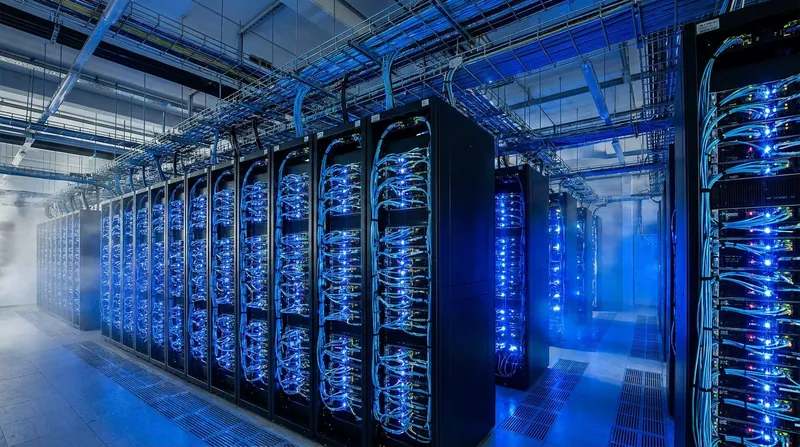
For the past three years, the generative AI boom has operated in a state of environmental opacity. While models have grown exponentially in capability, the data centers required to train and run them have quietly become some of the most resource-intensive facilities on Earth. The UN's intervention shifts the global conversation from theoretical AI safety risks to immediate, measurable planetary boundaries, demanding that the digital economy account for its physical toll.[3]
The core of the UN's evidence pack rests on the sheer trajectory of AI's energy demands. According to the International Energy Agency and recent peer-reviewed environmental models, global electricity consumption dedicated to AI has surged past 130 terawatt-hours annually—roughly equivalent to the energy demand of the Netherlands. The UN framework argues that without immediate intervention, this trajectory will derail the Paris Agreement targets and overwhelm global grid infrastructure.[4]
The primary claim driving the UN's transparency mandate is that tech companies are currently obscuring the true cost of their models. Because companies treat model architecture and compute scale as trade secrets, independent climate scientists have been forced to estimate emissions using proxy data. The new framework demands mandatory, standardized reporting of Scope 1, 2, and 3 emissions specifically isolated to AI workloads, stripping away the corporate averages that currently mask data center impacts.[3][4]
The evidence regarding AI's water consumption is particularly stark and forms the second pillar of the UN's demands. High-density server racks required for AI training generate immense heat, necessitating evaporative cooling systems. Recent academic studies cited by the UN estimate that an average conversational AI query consumes roughly 4.2 liters of fresh water per 100 interactions, a figure that scales to billions of gallons annually when deployed globally.[4]
This water usage has already triggered localized conflicts. In regions from the American Southwest to parts of Latin America, hyperscale data centers are competing directly with agricultural and residential needs for municipal water supplies. The UN framework demands that AI providers not only report their water usage but commit to "water-positive" operations by 2030, replenishing more water than they consume in water-stressed regions.[3]
The most contested element of the UN initiative is the 2030 renewable energy mandate. The framework requires AI giants to achieve 24/7 carbon-free energy matching for their data centers within four years. This means facilities must be powered by local, clean energy on an hourly basis, rather than relying on annual renewable energy credits or offsets purchased in different geographic regions to balance out fossil fuel consumption.[2]
Industry pushback on the 2030 timeline has been swift, rooted in the physical realities of grid infrastructure. Hyperscale cloud providers argue that while they are the largest corporate buyers of renewable energy in the world, the grid simply cannot add wind, solar, and nuclear capacity fast enough to meet the gigawatt-scale demands of new AI data centers. They warn that strict enforcement could halt AI development entirely.[2]
The tech industry's counter-claim is that AI will ultimately serve as a net-positive force for the climate. Industry representatives point to recent breakthroughs where AI models have optimized national power grids, accelerated the discovery of new battery materials, and improved weather forecasting. Throttling AI development to meet arbitrary energy quotas, they argue, could delay the very technologies needed to solve the broader climate crisis.[5]
However, the UN's evidence pack challenges this "net-positive" narrative as currently unproven. Environmental economists note that while AI's climate applications are promising, the vast majority of current compute cycles are dedicated to commercial applications, advertising optimization, and consumer chatbots. The UN argues that future hypothetical climate solutions cannot justify present-day emissions spikes that are actively warming the planet.
A significant vulnerability in the UN's framework is the open-source AI ecosystem. Because open-weight models can be downloaded and run on decentralized hardware globally, tracking their aggregate environmental footprint is nearly impossible. To address this, the UN is targeting the infrastructure layer, placing the reporting burden on the cloud providers—Amazon Web Services, Microsoft Azure, and Google Cloud—rather than the software developers who write the code.[5]
The ultimate effectiveness of the UN initiative remains highly uncertain because the body lacks direct regulatory authority. The framework serves as a model policy, relying on member states to codify its demands into national law. While the European Union has signaled intent to integrate these metrics into its existing AI Act enforcement, the United States has historically resisted binding international climate mandates on its domestic tech sector.[1][3]
Despite this enforcement gap, the framework establishes a critical new baseline for corporate accountability. By standardizing how AI's environmental impact is measured, the UN has provided institutional investors, climate activists, and national regulators with the exact metrics needed to pressure tech companies. The era of treating compute as an infinite, invisible resource is officially ending, forcing the AI industry to reconcile its digital ambitions with physical realities.[1]
Key points
- The UN has launched a global framework demanding tech giants disclose the energy and water footprints of their AI models.
- The initiative sets a strict 2030 deadline for major compute providers to transition to 24/7 carbon-free energy.
- AI data center energy use has doubled over the past three years, threatening global climate targets.
- Tech companies argue the 2030 timeline is physically impossible due to grid constraints.
What we don’t know
- Whether the United States will adopt the UN's reporting standards for domestic tech companies.
- How the framework will account for the energy used by decentralized, open-source AI models running on personal devices.
- If the tech industry can physically procure enough clean energy to meet the 2030 mandate without cannibalizing renewables meant for residential grids.
How we got here
Nov 2022
The launch of ChatGPT triggers a global generative AI arms race, massively increasing compute demand.
2024
Major tech companies report rising Scope 3 emissions, missing interim climate targets due to AI expansion.
Early 2026
The International Energy Agency reports that AI data center energy use has doubled since 2023.
June 2026
The UN launches the Global Framework for Sustainable AI to force transparency and renewable commitments.
- Climate & Policy Advocates
- Argue that AI must operate within planetary boundaries and that transparency is non-negotiable.
- Hyperscale Cloud Providers
- Emphasize their commitment to green energy but warn that grid realities make the 2030 timeline physically impossible.
- Energy & Infrastructure Analysts
- Focus on the logistical and economic challenges of powering gigawatt-scale data centers with intermittent renewables.
Perspectives this story doesn't cover
- Local municipalities facing water shortages due to data centers
- Grid operators struggling to balance new AI energy loads
Sources
Source coverage
5 outlets
3 viewpoints surfaced





- [1]ReutersEnergy & Infrastructure Analysts
UN launches global AI climate transparency initiative
Read on Reuters → - [2]BloombergHyperscale Cloud Providers
Tech Giants Face UN Pressure Over Data Center Emissions
Read on Bloomberg → - [3]The GuardianClimate & Policy Advocates
UK climate activists fear case delays could cost them right to jury trial
Read on The Guardian → - [4]NatureClimate & Policy Advocates
Light-induced quantum friction of carbon nanotubes in water
Read on Nature → - [5]TechCrunchHyperscale Cloud Providers
Truecaller clashes with India’s telecom regulator over anti-spam rules
Read on TechCrunch →

More in Artificial Intelligence
See all →Synthetic IP Law
UK Law Grants AI Outputs 50-Year Copyright While US and EU Demand Human Authorship
9 sources

AI Regulation
Article 43 Limits Notified Body Audits to Biometrics, Leaving Most High-Risk AI to Internal Self-Assessment
6 sources
Algorithmic Fairness
Unequal Base Rates Make Calibration and Equalized Odds Mutually Exclusive in AI Audits
5 sources

Automated Decisions
Why Rubber-Stamp Human Review Fails to Bypass GDPR Article 22 AI Bans
7 sources

Comments
Every angle. Every day.
Get Artificial Intelligence stories with full source coverage and perspective breakdowns, free every day.