
Explainer: How the 'NO FAKES Act' Creates a Federal Property Right for Voice and Likeness
A unanimous Senate committee vote has advanced landmark legislation granting individuals a federal intellectual property right over their digital replicas. The bill aims to protect creators and everyday citizens from unauthorized AI voice and likeness cloning while balancing First Amendment protections.
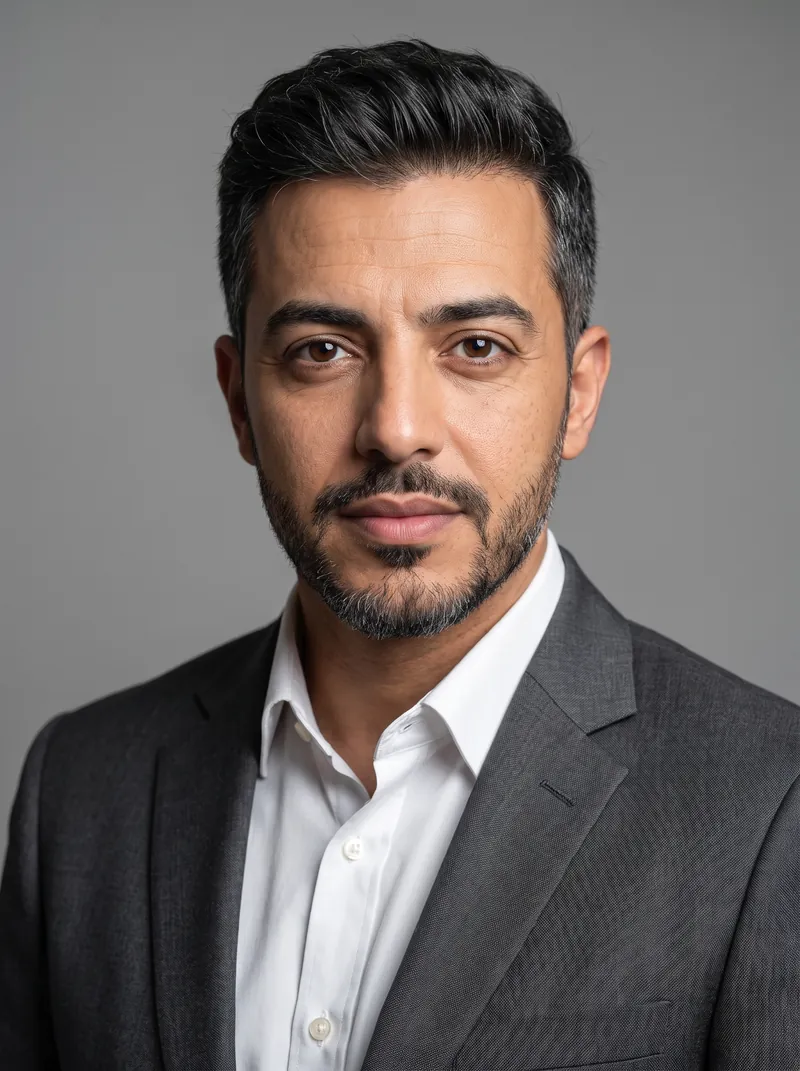
In a rare display of bipartisan unity, the Senate Judiciary Committee has unanimously advanced the Nurture Originals, Foster Art, and Keep Entertainment Safe (NO FAKES) Act. The landmark legislation establishes a sweeping new federal intellectual property right, granting every individual explicit ownership over their own voice and visual likeness in the age of generative artificial intelligence.[1][2]
For decades, the legal right to control one's image—known as the "right of publicity"—has been a fragmented patchwork of state laws. While celebrities in California or New York enjoyed robust protections, residents of many other states had little to no legal recourse if their face or voice was used commercially without permission. The NO FAKES Act eliminates this geographic lottery, federalizing the right for all Americans.[2]
The catalyst for this legislative push was the explosive proliferation of highly realistic AI voice cloning and deepfake video technology. Over the past three years, the internet has been flooded with unauthorized synthetic media, ranging from viral AI-generated songs mimicking chart-topping artists to malicious deepfakes targeting everyday citizens and high school students.
Under the newly advanced framework, a "digital replica" is defined as a newly created, computer-generated, highly realistic electronic representation that is readily identifiable as the voice or visual likeness of a specific individual. Crucially, the law does not just protect the famous. It explicitly applies to every living person, ensuring that a local teacher or small business owner has the exact same federal property rights as a Hollywood A-lister.[2]
The legislation also establishes a post-mortem right, meaning the protection extends beyond death. Families and estates will retain control over a deceased individual's digital replica for a baseline period of 70 years, preventing studios or tech companies from resurrecting deceased actors or musicians without explicit, negotiated consent from their heirs.[2]
The enforcement mechanism of the NO FAKES Act is two-pronged. First, it creates direct liability for anyone who produces an unauthorized digital replica. If a user prompts an AI model to generate a fake audio clip of a politician or a neighbor, that user can be sued for statutory damages. This establishes a clear deterrent against the creation of non-consensual synthetic media.[1]
Second, and more controversially for the tech industry, the bill introduces liability for the platforms and services that host or distribute these replicas. However, to avoid breaking the fundamental architecture of the internet, the committee included a "safe harbor" provision. Platforms are only liable if they have "actual knowledge" that the material is an unauthorized digital replica and fail to remove it, mirroring the notice-and-takedown mechanics of the Digital Millennium Copyright Act (DMCA).
This liability framework forces generative AI startups and established tech giants to rethink their product architectures. Companies providing text-to-speech or image-generation APIs will likely need to implement stricter guardrails, audio watermarking, and robust reporting systems to quickly process takedown requests and avoid crippling statutory damages.
The most heavily debated aspect of the NO FAKES Act during the committee markup was the tension between this new property right and the First Amendment. Lawmakers faced the complex task of banning harmful deepfakes without accidentally outlawing satire, biographical documentaries, or legitimate political commentary.
To thread this needle, the bill includes explicit, robust First Amendment carve-outs. A digital replica is legally permissible if it is used as part of a bona fide news broadcast, public affairs program, sports broadcast, or documentary. In these contexts, the public's right to information supersedes the individual's right to control their likeness.[2]
Furthermore, the legislation protects works of parody, satire, and criticism. A late-night comedy show using an AI-generated voice of a senator for a satirical sketch would be protected, as would a creator making a clearly labeled parody video. The legal test will often hinge on whether the replica is likely to genuinely deceive a reasonable viewer or listener.
The entertainment industry has hailed the committee's unanimous vote as a historic victory. The Recording Industry Association of America (RIAA) called the bill an "essential lifeline" for musicians whose livelihoods have been threatened by a flood of AI-generated soundalikes diluting the streaming ecosystem.
Similarly, the Screen Actors Guild-American Federation of Television and Radio Artists (SAG-AFTRA), which made AI protections a central pillar of its historic 2023 strike, celebrated the advancement. Union leadership emphasized that human performance is the core of the entertainment industry, and federal law must ensure that performers are compensated when their digital essence is utilized.
Civil liberties groups, while supportive of protecting individuals from non-consensual deepfakes, remain vigilant. Organizations like the Electronic Frontier Foundation have noted that while the First Amendment exceptions are strong on paper, the threat of litigation could still create a "chilling effect" on independent creators who lack the legal resources to defend their satirical works in federal court.
The unanimous committee vote signals overwhelming bipartisan momentum, a rarity in modern tech regulation. The bill now moves to the full Senate floor, where it is expected to pass before heading to the House of Representatives. If signed into law, it will mark the most significant expansion of intellectual property rights in the United States since the dawn of the digital age.[1][2]
By drawing a hard legal line around human identity, the NO FAKES Act attempts to ensure that the AI revolution augments human creativity rather than strip-mining it. It establishes a foundational rule for the 21st century: your voice and your face belong to you, and no algorithm has the right to take them without asking.[1]
Key points
- The Senate Judiciary Committee unanimously advanced the NO FAKES Act to establish a federal property right over voice and likeness.
- The law protects all Americans, not just celebrities, from unauthorized AI deepfakes and voice clones.
- Estates will retain control over an individual's digital replica for 70 years after their death.
- Internet platforms face liability if they knowingly host unauthorized replicas and fail to remove them.
Unanswered questions
- How quickly the full Senate and House will schedule floor votes for the legislation.
- How federal courts will interpret the boundary between a 'deceptive replica' and 'protected satire' in early test cases.
- Whether decentralized, open-source AI models hosted outside the US can effectively be regulated by this framework.
How we got here
Early 2023
Viral AI-generated songs mimicking artists like Drake and The Weeknd prompt music industry panic.
July 2023
SAG-AFTRA goes on strike, making protections against AI digital replicas a core demand of their labor dispute.
October 2023
A bipartisan group of senators releases the first discussion draft of the NO FAKES Act.
June 2026
The Senate Judiciary Committee unanimously advances the finalized bill, sending it to the full Senate.
- Creative Industries & Labor
- View the legislation as an existential necessity to protect human artists from being replaced or exploited by synthetic clones.
- Tech Platforms & AI Developers
- Support the premise of consent but worry that platform liability and takedown mechanics could be weaponized to stifle open-source AI development.
- First Amendment Advocates
- Scrutinize the bill's exceptions to ensure that the new property right does not inadvertently outlaw legitimate satire, criticism, or documentary filmmaking.
Perspectives this story doesn't cover
- Independent open-source AI developers
- International legal scholars
Sources
Source coverage
2 outlets
3 viewpoints surfaced


- [1]Reuters
Senate committee unanimously advances bill to ban unauthorized AI deepfakes
Read on Reuters → - [2]Congress.gov
S.4875 - NO FAKES Act of 2026
Read on Congress.gov →
More in Artificial Intelligence
See all →Indie Game Dev
How Solo Creators Are Using AI to Build Entire Video Games
3 sources
AI Filmmaking
How Indie Creators Are Building Entire Films With AI Video Workflows
4 sources
AI Filmmaking
The AI Indie Film Renaissance: How Generative Video is Democratizing Hollywood
3 sources
Model Architecture
The Arithmetic of Classifier-Free Guidance: Why Text Adherence Costs Sample Diversity in Diffusion Models
4 sources
Comments
Every angle. Every day.
Get Artificial Intelligence stories with full source coverage and perspective breakdowns, free every day.