
The Neurological and Physical Case for Martial Arts in Aging
Recent neurological research reveals that martial arts training—from Tai Chi to Brazilian Jiu-Jitsu—can significantly delay cognitive decline and improve functional fitness in older adults.

In short
- Martial arts training acts as a potent catalyst for neuroplasticity in older adults.
- Practicing complex movements increases Brain-Derived Neurotrophic Factor (BDNF), essential for memory.
- A 12-week Brazilian Jiu-Jitsu program improved mobility in elderly men by 13.6%.
The global population is aging rapidly, with over 900 million people worldwide over the age of 60. As lifespans extend, the medical and scientific communities are increasingly focused not just on lifespan, but on "healthspan"—the period of life spent free from chronic disease and cognitive decline.[2][6]
For decades, the standard prescription for aging adults has been gentle aerobic exercise and light resistance training. While beneficial, researchers are discovering that these conventional workouts may lack the complex cognitive demands necessary to stave off neurological decay.[4]
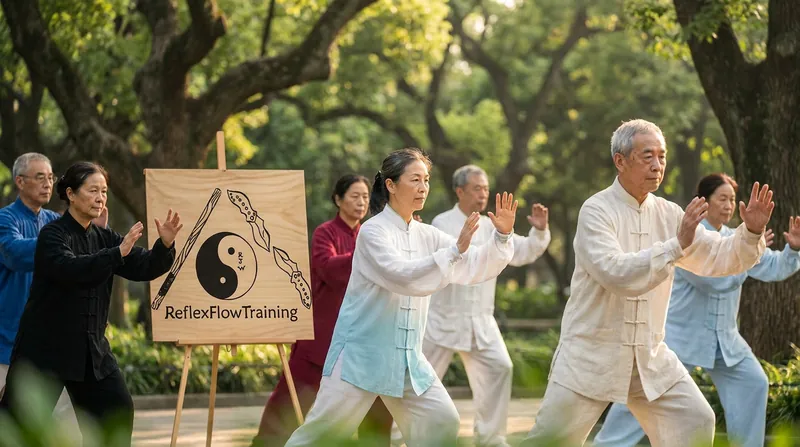
Enter martial arts. Once viewed as the exclusive domain of the young and athletic, disciplines ranging from the slow, deliberate movements of Tai Chi to the dynamic grappling of Brazilian Jiu-Jitsu (BJJ) are emerging as powerful interventions for the aging brain.[1]
The core mechanism driving this cognitive preservation is neuroplasticity—the brain's ability to form and reorganize synaptic connections. According to a comprehensive 2026 review, martial arts training acts as a potent catalyst for neuroplasticity, fundamentally rewiring the brain to adapt to complex new motor patterns.[1]
Central to this rewiring is Brain-Derived Neurotrophic Factor (BDNF), a protein often described by neuroscientists as "Miracle-Gro for the brain." BDNF levels naturally decline with age, contributing to memory loss and reduced executive function.[1]
However, studies show that martial arts participation significantly increases BDNF expression. The combination of aerobic exertion and intense cognitive focus required to learn a new technique triggers a surge in BDNF, facilitating synaptic growth and neuronal survival.[1][6]
This neurological boost is particularly evident in the prefrontal cortex and the hippocampus. The prefrontal cortex governs executive functions like decision-making and impulse control, while the hippocampus is the brain's primary center for memory storage.[5]
Functional brain imaging of older adults engaged in traditional martial arts has revealed measurable structural changes in these regions. Practitioners exhibit increased gray matter volume and enhanced neural connectivity compared to sedentary peers, translating to sharper short-term memory and faster processing speeds.[1][5]
The cognitive demands of martial arts are unique. In disciplines like Karate or Taekwondo, practitioners must memorize complex sequences of movements known as kata. This requires crossing the body's midline—coordinating the left arm with the right leg, for example—which forces the brain's two hemispheres to communicate rapidly.[4]
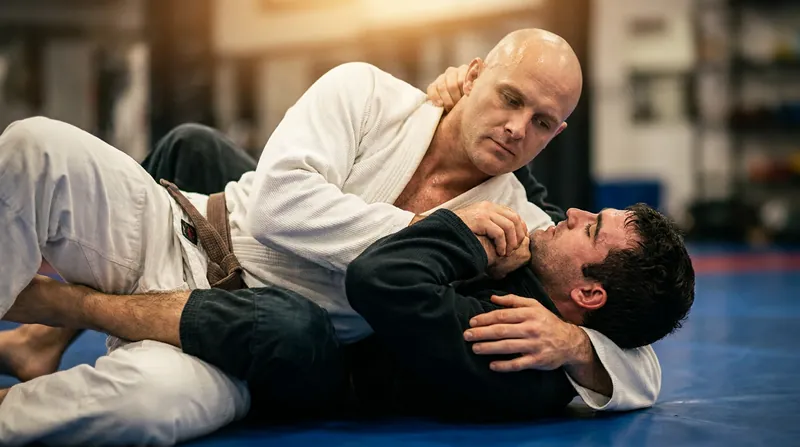
Similarly, Brazilian Jiu-Jitsu is frequently referred to as "physical chess." It requires practitioners to anticipate an opponent's movements, solve spatial puzzles under pressure, and adapt strategies in real-time. This continuous mental engagement builds a cognitive reserve that helps delay the onset of age-related dementia.[6]
Beyond the brain, the physical benefits of martial arts for older adults are striking. A landmark study published in Sport Sciences for Health tracked elderly men participating in a 12-week BJJ training program, yielding remarkable results.[2]
Researchers recorded a 13.6% improvement in overall mobility and a 13.4% increase in aerobic endurance. Even more surprisingly, participants saw upper body flexibility increase by over 52%, a critical metric for maintaining independence in daily tasks like reaching for shelves or dressing.[2][3]
Fall prevention is another major public health priority, as falls are a leading cause of injury and mortality among seniors. Martial arts inherently train balance, proprioception, and spatial awareness.[3]
Techniques like "breakfalls" in Judo and BJJ teach practitioners how to safely absorb impact and distribute their weight when falling. This translates directly to real-world resilience, significantly reducing the likelihood of catastrophic injury from a slip or trip.[6]
The scientific literature generally divides these practices into "hard" and "soft" martial arts. Soft arts, like Tai Chi, emphasize slow, flowing movements and deep breathing, making them highly accessible for individuals with existing mobility limitations or joint pain.[1][5]
Hard arts, including Karate, Taekwondo, and BJJ, involve more dynamic movements, resistance, and cardiovascular exertion. While they offer more robust improvements in muscle strength and aerobic capacity, they also carry a higher barrier to entry and require careful, age-appropriate instruction.[3]
Despite the overwhelming positive data, uncertainties remain. Researchers note that many existing studies feature small sample sizes or short intervention periods. Long-term, randomized controlled trials are still needed to determine the optimal "dosing"—how many hours per week and at what intensity older adults should train to maximize cognitive benefits without risking overtraining.[3][6]
Furthermore, the social component of martial arts cannot be ignored. Loneliness and social isolation are significant risk factors for cognitive decline. The dojo provides a structured, supportive community where older adults interact across generations, fostering a sense of belonging and shared achievement.[1]
This social engagement, combined with the physical exertion, triggers the release of neurotransmitters like dopamine and serotonin. These "happy hormones" regulate mood, reduce stress, and combat anxiety, providing a holistic boost to mental health.[6]
Key terms
- Neuroplasticity
- The brain's ability to reorganize itself by forming new neural connections in response to learning or experience.
- Brain-Derived Neurotrophic Factor (BDNF)
- A protein that promotes the survival of nerve cells and encourages the growth of new synapses, crucial for memory and learning.
- Prefrontal Cortex
- The area at the front of the brain responsible for complex cognitive behavior, decision making, and moderating social behavior.
- Hippocampus
- A complex brain structure embedded deep into the temporal lobe that has a major role in learning and memory.
- Kata
- A detailed choreographed pattern of martial arts movements practiced either solo or in pairs.
- Proprioception
- The body's ability to sense its location, movements, and actions in physical space.
Frequently asked
Is Brazilian Jiu-Jitsu safe for older adults?
Yes, when taught with age-appropriate modifications. Studies show that BJJ's emphasis on technique and leverage over brute strength makes it highly adaptable, though practitioners should consult a doctor before starting.
How does martial arts differ from regular gym workouts for the brain?
While standard aerobic exercise improves blood flow, martial arts require complex motor learning, spatial problem-solving, and rapid reaction times, which more actively stimulate neuroplasticity and cognitive reserve.
What is the difference between hard and soft martial arts?
Soft arts like Tai Chi focus on slow, flowing movements and balance, making them highly accessible. Hard arts like Karate and BJJ involve dynamic resistance, striking, or grappling, offering greater cardiovascular and strength gains.
Viewpoints in depth
Neuroscientists & Gerontologists
Researchers focused on the biochemical and structural brain changes that delay cognitive decline.
This camp views martial arts primarily as a neurological intervention. They emphasize that the combination of aerobic exercise and complex cognitive demands creates a 'perfect storm' for brain health. By forcing the brain to constantly solve spatial puzzles and cross the body's midline, martial arts trigger the release of BDNF and increase gray matter in the hippocampus. For these researchers, the physical fitness gains are almost secondary to the profound neuroprotective effects against dementia and Alzheimer's.
Public Health Advocates
Experts focused on population-level health outcomes, fall prevention, and healthcare costs.
Public health officials look at the macro impact of an aging population. With falls being a leading cause of fatal and non-fatal injuries among seniors, this group values martial arts for its direct translation to functional independence. Techniques that improve proprioception, balance, and safe falling mechanics (breakfalls) are seen as critical tools to reduce hospitalizations. They advocate for integrating modified martial arts programs into community senior centers to lower long-term healthcare burdens.
Martial Arts Instructors
Coaches and practitioners focused on technique, community, and practical application.
Instructors on the ground see the day-to-day transformation in older students. They argue that the benefits extend far beyond the physical or neurological, pointing to the profound impact of community and shared struggle. This camp emphasizes that martial arts provide a rare environment where older adults can safely engage in physical play and combat sports, rebuilding confidence that often erodes with age. They stress the importance of specialized coaching to mitigate injury risks while maximizing functional strength.
- Neuroscientists & Gerontologists
- Researchers focused on the biochemical and structural brain changes that delay cognitive decline.
- Public Health Advocates
- Experts focused on population-level health outcomes, fall prevention, and healthcare costs.
- Martial Arts Instructors
- Coaches and practitioners focused on technique, community, and practical application.
Perspectives this story doesn't cover
- General Practitioners
- Physical Therapists
Sources
Source coverage
6 outlets
3 viewpoints surfaced





- [1]Frontiers in PsychologyNeuroscientists & Gerontologists
Neural mechanisms and social support for mental health in old age by martial arts exercise
Read on Frontiers in Psychology → - [2]Sport Sciences for HealthMartial Arts Instructors
12 weeks of Brazilian jiu-jitsu training improves functional fitness in elderly men
Read on Sport Sciences for Health → - [3]BMC Public HealthPublic Health Advocates
Functional Benefits of Hard Martial Arts for Older Adults: A Scoping Review
Read on BMC Public Health → - [4]European Review of Aging and Physical ActivityNeuroscientists & Gerontologists
Can Martial Arts Prevent Cognitive Impairment as You Age?
Read on European Review of Aging and Physical Activity → - [5]Frontiers in Aging NeuroscienceNeuroscientists & Gerontologists
Martial Arts Such as Tai Chi May Help Improve Your Memory
Read on Frontiers in Aging Neuroscience → - [6]Factlen Editorial TeamMartial Arts Instructors
Synthesis by Factlen editorial team
Read on Factlen Editorial Team →
More in Fitness
See all →Brain Health
The Neurobiology of Martial Arts: How Combat Sports Rewire the Brain for Resilience
4 sources
Brain Health
How Brazilian Jiu-Jitsu Rewires the Brain for Resilience and Focus
4 sources
Neuroscience
New Integrative Theory Proposes Martial Arts Induce 'Quasicritical Brain States' to Optimize Brain Function
4 sources
Exercise Physiology
New Science Overturns Hypertrophy Dogma: Muscle Growth Achieved Without Continually Increasing Weight
6 sources
Comments
Every angle. Every day.
Get Fitness stories with full source coverage and perspective breakdowns, free every day.