
The Men's Longevity Gap: Why It Exists and How Science is Closing It
Men live an average of five years less than women globally, but researchers increasingly reject the idea that this gap is purely biological. New evidence highlights how targeted interventions in diet, stress regulation, and proactive screening can significantly extend male healthspan.
By Factlen Editorial Team

- Public Health Advocates
- Focus on systemic policy, early screening campaigns, and closing the global life expectancy gap through accessible care.
- Longevity & Fitness Experts
- Emphasize preserving the metabolic engine through targeted nutrition and resistance training to combat age-related decline.
- Wellness & Mental Health Practitioners
- Advocate for nervous system regulation, stress reduction, and social connection over extreme biohacking routines.
What's not represented
- · Indigenous Men's Health Advocates
- · Working-Class Men in Physically Demanding Jobs
Why this matters
Understanding the specific mechanisms behind male aging allows men to move past extreme biohacking trends and adopt sustainable, evidence-backed habits that add healthy years to their lives.
Key points
- The global male life expectancy is 71.5 years, trailing women by an average of five years.
- Public health officials emphasize that delayed healthcare seeking is a primary driver of premature male mortality.
- Dietitians recommend men over 40 consume 1.6 to 2.2 grams of protein per kilogram of body weight to preserve metabolic health.
- Experts are shifting away from extreme biohacking, advocating instead for nervous system regulation and resistance training.
Across the globe, a quiet demographic reality persists: men live, on average, five years less than women. The global male life expectancy currently sits at 71.5 years, and there is not a single country where men are expected to outlive their female counterparts.[4]
For decades, this disparity was largely dismissed as an inescapable biological fate. However, as longevity science matures in 2026, researchers and public health officials are aggressively challenging that assumption. The consensus is shifting from passive acceptance to proactive intervention, driven by a deeper understanding of how lifestyle, stress, and healthcare habits disproportionately affect male aging.[4]
The stakes are remarkably high. In the United Kingdom alone, one in five men dies before the age of 65. Medical professionals emphasize that many of these premature deaths are driven by non-communicable, preventable conditions like cardiovascular disease and type 2 diabetes.[1][4]
A primary driver of the longevity gap is behavioral rather than biological: men consistently delay seeking medical care. Recent public health data reveals that roughly 60 percent of men wait more than a week to see a doctor when experiencing concerning symptoms, and one in three will wait more than a month.[5]

Public health campaigns are increasingly using relatable analogies to break this stigma. As the Australian Department of Health recently noted during Men's Health Week, most men would never ignore a strange noise in their car's engine for a month, yet they routinely expect their bodies to wait. Normalizing early intervention is now viewed as the single most effective tool for extending male healthspan.[5]
Beyond behavioral shifts, scientists are mapping the specific physiological changes that occur in men during midlife. Beginning in their mid-thirties, men experience a natural testosterone decline of roughly 1 to 2 percent annually, alongside decreasing insulin sensitivity and changes in how the liver processes nutrients.[3]
These metabolic shifts mean that the diet and exercise routines that kept a man healthy in his twenties often stop working by his forties. To compensate, clinical dietitians are shifting their focus away from simple calorie restriction—which can accelerate age-related muscle loss—and toward targeted macronutrient thresholds.[3]
The latest nutritional research suggests that men over 40 need to consume between 1.6 and 2.2 grams of protein per kilogram of body weight daily. This elevated protein intake is essential to preserve the metabolic engine that regulates blood glucose and supports hormonal function as men age.[3]
The latest nutritional research suggests that men over 40 need to consume between 1.6 and 2.2 grams of protein per kilogram of body weight daily.
Protein must be paired with mechanical tension to be effective. After age 30, men begin to lose 3 to 8 percent of their muscle mass per decade, a condition known as sarcopenia that drastically increases the risk of frailty and early mortality.[3]
While cardiovascular exercise remains vital for heart health, experts warn that simply walking 10,000 steps a day is insufficient to prevent physical decline. The new clinical mantra for middle-aged men is "steps and reps," emphasizing that resistance training is non-negotiable for preserving resilience, bone density, and the ability to heal from injury.[3]

Yet physical interventions only address half the equation. Emerging longevity research points to chronic, unmanaged stress as a primary accelerator of male aging. Many men spend their days in a state of sympathetic nervous system dominance—a constant "fight-or-flight" mode that disrupts the production of restorative hormones.[7]
In recent years, the wellness industry attempted to solve this with "male optimization" and extreme biohacking, promoting rigid intermittent fasting and 4:00 AM ice baths. However, a significant shift is occurring in 2026 as experts recognize that adding high-stress protocols to an already demanding life often leads to burnout rather than longevity.[7]
The focus is now pivoting toward nervous system regulation and passive recovery. True longevity requires signaling to the body that it is safe enough to repair itself, prioritizing high-quality sleep and stress reduction over punishing optimization routines.[7]

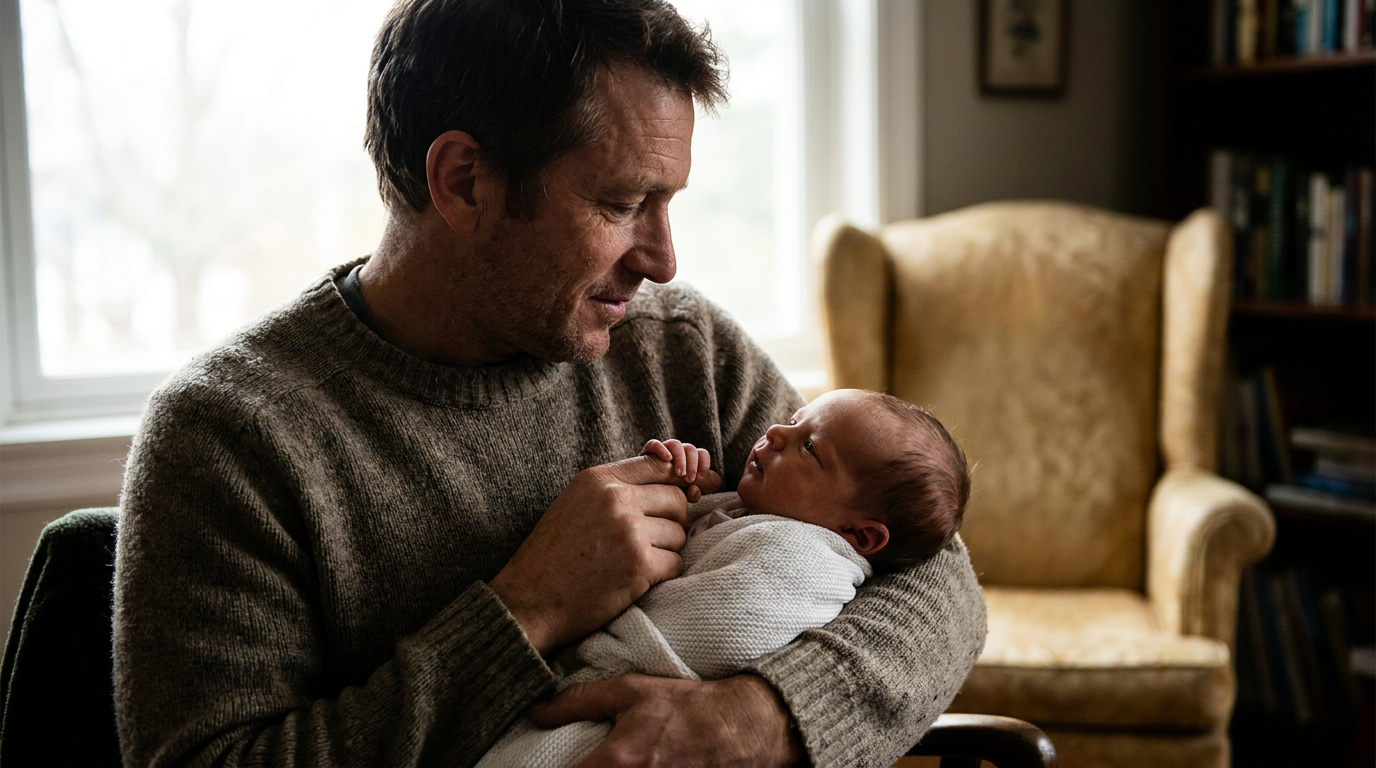
Social connection and family roles also play a surprisingly powerful role in male longevity. Recent neurological studies highlight that involved fathers actually experience beneficial changes in brain plasticity and hormonal profiles.[6]
Research consistently shows that fathers who actively participate in caregiving live longer and report fewer mental and physical health issues, including lower rates of high blood pressure and heart disease, compared to their less-involved peers.[6]
Despite these clear pathways to improvement, men's health remains a systemic blind spot. Global health advocates point out that men's health is routinely absent from major international policy agendas, and research into preventing male-specific health deterioration remains underfunded relative to the scale of the crisis.[4]

How we got here
1950
Global male life expectancy was roughly 46 years, heavily impacted by infectious diseases and lack of modern medicine.
2010s
The wellness industry sees a surge in 'male optimization,' popularizing extreme biohacking routines and rigid diets.
2023
Global life expectancy reaches an average of 73 years, but the five-year gap between men and women persists.
June 2026
Public health campaigns globally pivot to emphasize sustainable nervous system regulation, proactive screening, and 'steps and reps' to close the male longevity gap.
Viewpoints in depth
Public Health Advocates
Focus on systemic policy, early screening campaigns, and closing the global life expectancy gap through accessible care.
Public health organizations argue that the male longevity gap is primarily a failure of healthcare systems to engage men effectively. They point to data showing that men are far more likely to delay seeking treatment for concerning symptoms, often waiting until a minor issue becomes a chronic condition. Advocates stress that closing the five-year lifespan gap requires culturally safe, community-led programs that normalize medical visits and remove the stigma around men asking for help.
Longevity & Fitness Experts
Emphasize preserving the metabolic engine through targeted nutrition and resistance training to combat age-related decline.
Fitness and nutrition experts focus on the physiological realities of male aging, particularly the natural decline in testosterone and the onset of sarcopenia (muscle loss) after age 30. They argue that traditional advice, such as simply walking 10,000 steps or cutting calories, is insufficient and can even accelerate muscle loss. Instead, they advocate for a 'steps and reps' protocol, pairing high protein intake (1.6 to 2.2 grams per kilogram of body weight) with mandatory resistance training to preserve bone density, metabolic health, and resilience.
Wellness & Mental Health Practitioners
Advocate for nervous system regulation, stress reduction, and social connection over extreme biohacking routines.
Mental health professionals and wellness researchers warn that chronic, unmanaged stress is the true silent killer for men. They note that many men live in a constant state of 'fight-or-flight' sympathetic nervous system dominance, which disrupts restorative hormones. This camp is increasingly critical of the extreme biohacking trends (like 4:00 AM ice baths and rigid fasting) that dominated the early 2020s, arguing that adding high-stress protocols to an already exhausting life leads to burnout. They champion passive recovery, high-quality sleep, and deep social connections—such as active fatherhood—as the most sustainable paths to a longer life.
What we don't know
- Exactly how much of the lifespan gap is driven by irreversible genetics versus modifiable lifestyle factors.
- The long-term efficacy of emerging cellular reprogramming therapies currently in clinical trials for age-related diseases.
Key terms
- Healthspan
- The period of a person's life spent in good health, free from chronic diseases and disabilities of aging.
- Sarcopenia
- The age-related progressive loss of muscle mass and strength, which increases the risk of frailty and mortality.
- Sympathetic Nervous System Dominance
- A state of chronic 'fight-or-flight' stress that disrupts restorative hormones and accelerates aging.
- Parabiosis
- An area of longevity research experimenting with how shared blood and hormones affect the aging process.
- Geroscience
- An interdisciplinary field that aims to understand the relationship between aging and age-related diseases.
Frequently asked
Is the lifespan gap between men and women purely biological?
No. While there are biological factors, experts emphasize that behavioral differences—such as delayed healthcare seeking, higher stress, and lifestyle choices—play a massive role in the gap.
Why is resistance training so important for older men?
Men lose 3 to 8 percent of their muscle mass per decade after age 30. Resistance training preserves the metabolic engine, supports hormonal function, and prevents frailty.
Do extreme biohacking routines help men live longer?
Not necessarily. Emerging wellness research suggests that adding high-stress protocols to an already demanding life can lead to burnout, and that nervous system regulation and passive recovery are more sustainable.
How much protein do men over 40 need?
Clinical dietitians recommend that middle-aged men consume between 1.6 and 2.2 grams of protein per kilogram of body weight daily to maintain muscle mass and metabolic health.
Sources
Source coverage
7 outlets
3 viewpoints surfaced







[1]BBCPublic Health Advocates
How can we help our fathers live longer?
Read on BBC →[2]KTVU FOX 2Longevity & Fitness Experts
Men's Health Month spotlights preventive care, early screenings amid longevity gap
Read on KTVU FOX 2 →[3]The GuardianLongevity & Fitness Experts
Is my metabolism slowing with age? Medical, health and diet experts offer a midlife MOT
Read on The Guardian →[4]Health Policy WatchPublic Health Advocates
Launch event of the Global Action on Men's Health report underway
Read on Health Policy Watch →[5]Australian Department of HealthPublic Health Advocates
Men's Health Week 2026
Read on Australian Department of Health →[6]NPRWellness & Mental Health Practitioners
Recent studies show fathers' brains change after bringing home a new baby
Read on NPR →[7]Thera WellnessWellness & Mental Health Practitioners
Men's Health 2026: Closing the Lifespan Gap Without Extreme Biohacking
Read on Thera Wellness →
Every angle. Every day.
Get health stories with full source coverage and perspective breakdowns delivered to your inbox.