
The Mechanics of the Bond Market: How a 5.20% Treasury Yield Reshapes Finance and Insurance
The 30-year U.S. Treasury yield has surged past 5.20% for the first time since 2007. Here is how the bond market works, why yields are spiking, and what it means for savers, borrowers, and the insurance industry.
By Factlen Editorial Team
- Macro Analysts & Bond Traders
- This camp views the 5.20% yield as a necessary market correction to combat sticky inflation.
- Institutional Yield Seekers
- Insurance companies and pension funds see generational value in locking in 5%+ risk-free returns.
- Monetary Policymakers
- Central bankers believe current policy is sufficiently restrictive and welcome the bond market's tightening.
What's not represented
- · First-time Homebuyers
- · Corporate Treasurers
Why this matters
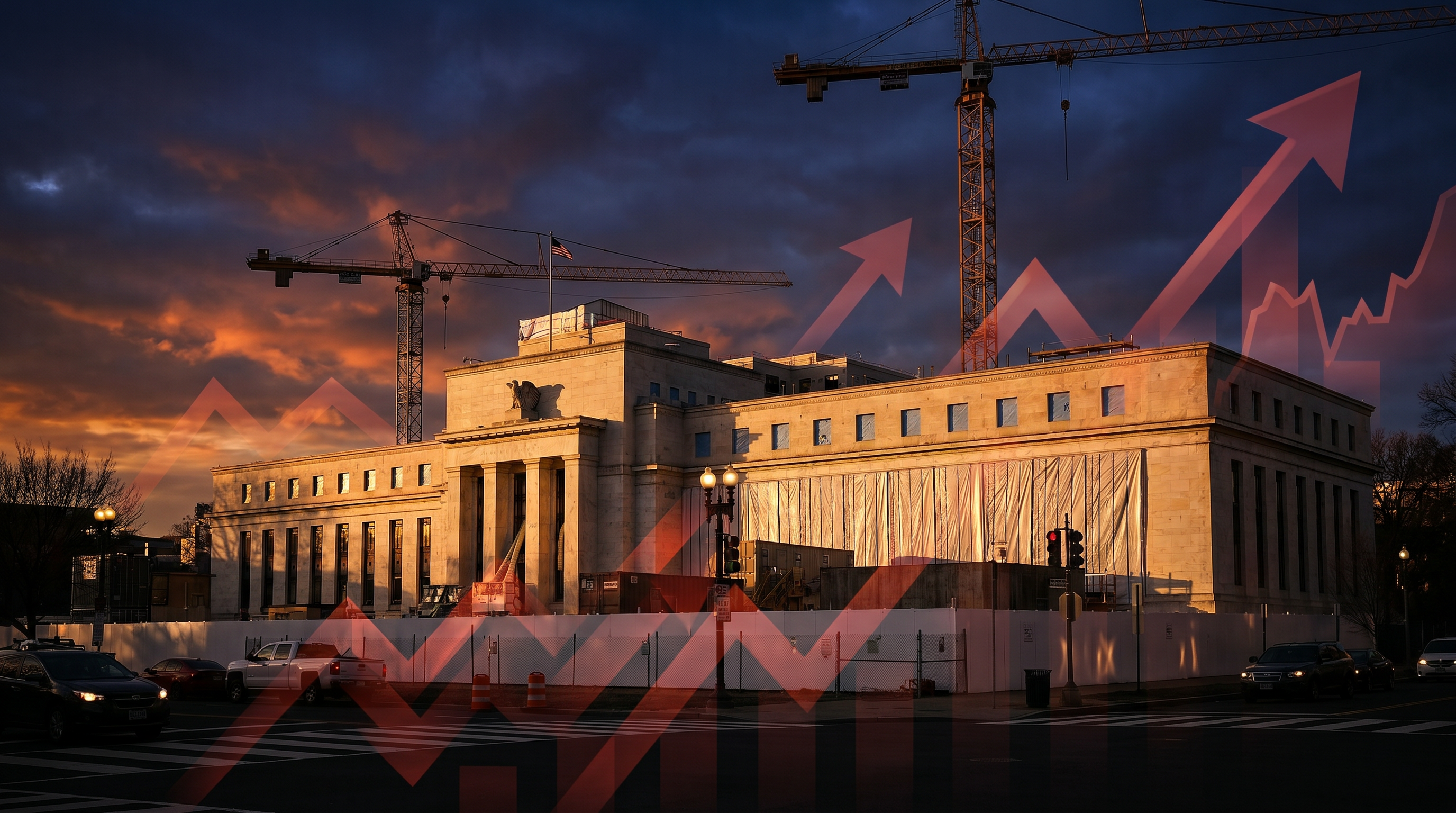
Treasury yields act as the gravitational pull for the entire financial system. A 5.20% long-term yield increases the cost of mortgages and national debt, but it also allows insurance companies to offer the highest guaranteed annuity payouts to retirees in nearly two decades.
Key points
- The 30-year U.S. Treasury yield surged past 5.20%, marking its highest level since July 2007.
- The spike occurred as the Federal Reserve held its benchmark interest rate steady at 3.5% to 3.75%.
- Bond investors are demanding higher yields to compensate for persistent inflation and rising energy prices.
- Higher yields increase borrowing costs for mortgages and the national debt, cooling economic activity.
- Life insurance companies benefit massively, using the 5.20% risk-free return to fund lucrative fixed annuities.
The 30-year U.S. Treasury yield has crossed a threshold not seen since the days before the 2008 financial crisis. During a highly anticipated Federal Reserve press conference, the yield on the government's longest-duration bond surged past 5.20%, hitting its highest mark since July 2007. This milestone represents a profound shift in the global financial landscape, signaling the definitive end of the cheap-money era that defined the last decade. For everyday consumers, corporate executives, and institutional money managers, the return of a 5% long bond fundamentally rewrites the rules of borrowing and saving.[1][2]
The spike occurred precisely as Federal Reserve Chair Kevin Warsh announced that the central bank would hold its benchmark interest rate steady at a range of 3.5% to 3.75%. While the Fed opted for inaction, the global bond market immediately took matters into its own hands. Disappointed by the lack of an active rate hike to combat sticky inflation, traders initiated a massive selloff of government debt, driving up the cost of long-term borrowing across the entire financial system in a matter of hours.[3][4]
To understand why this matters, it helps to understand the mechanics of a bond yield. When the U.S. government needs to borrow money to fund its operations, it issues Treasury bonds with a fixed face value and a set interest payment, known as a coupon. The yield is the effective annual return an investor actually earns based on the price they paid for the bond on the open market. Because the coupon payment is fixed, the bond's price and its yield must move in opposite directions.
This inverse relationship is the engine of the bond market. If investors demand a higher return to lend money to the government for 30 years, they will only buy those bonds at a steep discount. To push the 30-year yield up to 5.21%, institutional investors had to aggressively sell off existing Treasury bonds, driving their market prices down until the effective yield matched their new, higher demands. This repricing happens continuously, reflecting the collective real-time judgment of global capital.[2][4]
Why is the market demanding such high compensation right now? The primary driver is the threat of persistent, structural inflation. With global energy prices remaining elevated due to ongoing geopolitical tensions in the Middle East, investors fear that the purchasing power of their money will erode significantly over the next three decades. When inflation runs hot, the fixed payments of a long-term bond lose their real-world value, forcing buyers to demand a higher initial yield just to break even.[2][6]
If inflation averages 3% over the next thirty years, a bond yielding 4% offers very little real return after accounting for the loss of purchasing power. By pushing the yield above the 5.20% threshold, bond buyers are actively building in a 'term premium'—an extra layer of financial padding designed to protect against the risk that inflation will remain sticky and unpredictable. This premium compensates them for the inherent danger of locking their capital away until the year 2056, ensuring that their investment actually generates wealth rather than just treading water against rising consumer prices.[1][6]
This dynamic is often referred to by economists and market historians as the work of 'bond vigilantes.' When institutional investors believe a central bank is being too lenient on inflation by refusing to hike short-term rates, they will protest by aggressively selling off long-term bonds. This market-driven selloff effectively tightens broader financial conditions on its own, doing the central bank's job for it by making it more expensive for everyone in the economy to borrow money. The vigilantes ensure that policymakers cannot ignore underlying economic realities without facing immediate consequences in the debt markets.[2]
The vigilantes ensure that policymakers cannot ignore underlying economic realities without facing immediate consequences in the debt markets.
The ripple effects of this sovereign debt selloff extend far beyond the realm of government borrowing. The 10-year Treasury yield, which serves as the gravitational center for consumer finance, also spiked to 4.70% during the trading session. This specific duration is the vital anchor for the broader economy, acting as the baseline reference rate for trillions of dollars in private and commercial credit worldwide. When the 10-year yield moves, it instantly alters the financial calculus for households and businesses planning their next major investments.[1][4]

This 10-year benchmark is the direct foundation upon which commercial banks price 30-year fixed-rate mortgages, auto loans, and corporate debt. When the 10-year yield rises to 4.70%, the cost of financing a new home, buying a vehicle, or expanding a business facility becomes immediately more expensive for the end consumer. This naturally cools down economic activity, as families and corporate executives choose to delay large purchases rather than lock in long-term loans at multi-year high interest rates, effectively slowing the velocity of money.[3][6]
However, while higher yields create severe friction for borrowers, they represent a golden era for savers and the life insurance industry. Life insurers and pension funds are the structural, everyday buyers of 30-year Treasurys, relying heavily on these exact instruments to match their long-term liabilities. For these massive financial institutions, a high-yielding, risk-free government bond is the absolute perfect asset to guarantee the financial promises they make to their clients, turning a challenging macroeconomic environment into a highly profitable operational tailwind.[6]
An insurance company selling a life policy or a retirement annuity today is legally promising to make steady, reliable payouts twenty or thirty years in the future. To guarantee those future payments without taking on undue risk in volatile stock markets, the insurer takes the customer's upfront premium and invests it in the safest long-term asset available: U.S. government debt. The yield on that sovereign debt dictates exactly how generous the insurer can be with its customers, directly linking federal borrowing costs to the retirement security of millions of everyday citizens.
During the 2010s, when interest rates were artificially pinned near zero by central banks, insurers struggled mightily to generate meaningful returns on their massive bond portfolios. To compensate for the severe lack of yield, they were forced to charge higher premiums for life insurance and offer significantly lower monthly payouts on fixed annuities. The underlying math of a zero-interest-rate world simply did not support generous financial guarantees, leaving retirees with fewer safe options for generating income and forcing many to take unwanted risks in the stock market.

A 5.20% risk-free return fundamentally changes that actuarial equation overnight. Insurers can now lock in guaranteed, high-yielding cash flows for the next three decades with absolutely zero default risk. This newfound yield allows them to design highly attractive fixed annuities, offering retirees a safe, lucrative income stream that was mathematically impossible to provide just a few short years ago. For anyone currently entering retirement and seeking stable, predictable cash flow, the broader bond market selloff is actually a massive, generational victory.
The Treasury market is also absorbing a massive wave of corporate supply that is actively pushing yields even higher. Major technology companies are currently issuing billions of dollars in long-duration corporate bonds to finance the rapid, capital-intensive construction of artificial intelligence data centers. This flood of alternative, high-quality corporate debt gives institutional investors far more options for their capital, forcing the U.S. government to offer increasingly higher yields just to attract enough buyers to successfully auction off its own sovereign bonds.[6]
For the Treasury Department, this dynamic creates a compounding, long-term fiscal challenge. Every time an old bond matures, the government must refinance it at today's elevated 5.20% rate, dramatically increasing the amount of taxpayer money spent simply servicing the existing national debt. Higher interest costs inevitably lead to larger federal deficits, which in turn require even more borrowing. This puts even more bond supply on the open market, pushing yields higher still in a self-reinforcing loop that worries fiscal hawks and budget analysts alike.[2][5]
Ultimately, the global bond market is functioning exactly as it is designed to in a shifting macroeconomic environment. By pushing yields to a 19-year high, investors are rationally pricing in the reality of a higher-inflation, higher-capital-demand world where money is no longer free. For homebuyers, corporate borrowers, and the federal government, the era of cheap money is definitively over, requiring a painful and expensive adjustment. But for savers, retirees, and the global insurance industry, the return of real, substantial yield offers a sturdy, reliable foundation for long-term financial security.
How we got here
July 2007
The 30-year Treasury yield last trades consistently above the 5.20% threshold before the global financial crisis.
February 2020
The 30-year yield drops to roughly 1% during the pandemic, forcing insurers to navigate a zero-interest-rate environment.
April 2026
Inflation concerns and rising oil prices from Middle East tensions begin pushing long-term yields steadily higher.
July 29, 2026
The Federal Reserve holds rates steady, prompting a bond market selloff that spikes the 30-year yield to 5.21%.
Viewpoints in depth
Macro Analysts & Bond Traders
This camp views the 5.20% yield as a necessary market correction to combat sticky inflation.
Bond traders argue that the Federal Reserve has been too passive in the face of rising energy prices and persistent inflation. By aggressively selling off long-term Treasurys, these analysts believe the market is stepping in to do the Fed's job. They point to the 'term premium'—the extra yield required to lock up money for 30 years—as proof that investors no longer trust the central bank to quickly return inflation to its 2% target. In their view, yields must remain elevated until structural inflation is fully extinguished.
Institutional Yield Seekers
Insurance companies and pension funds see generational value in locking in 5%+ risk-free returns.
For managers of life insurance portfolios and pension funds, the return of the 5.20% Treasury yield is a massive tailwind. These institutions have long-term liabilities—payouts they owe to retirees decades from now. During the zero-interest-rate era, they were forced to take on riskier corporate debt just to generate sufficient returns. Now, they can buy risk-free U.S. government bonds at yields that easily cover their actuarial targets. This camp views the current market not as a crisis, but as a historic opportunity to secure their balance sheets and offer highly competitive fixed annuities to consumers.
Monetary Policymakers
Central bankers believe current policy is sufficiently restrictive and welcome the bond market's tightening.
From the perspective of the Federal Reserve, the surge in long-term yields is actually a feature, not a bug, of their current policy stance. By holding the federal funds rate steady at 3.5% to 3.75%, the Fed is allowing the bond market to naturally tighten broader financial conditions. Higher Treasury yields automatically translate to higher mortgage and corporate borrowing rates, which cools economic demand without requiring the central bank to actively hike short-term rates further. They view the 5.20% yield as a sign that the market is appropriately pricing in a 'higher for longer' economic reality.
What we don't know
- Whether the 30-year yield has peaked or if it will continue climbing toward 6% if inflation remains sticky.
- How long the Federal Reserve will maintain its current interest rate before considering a hike or a cut.
- The exact impact the higher yields will have on the housing market as mortgage rates adjust upward.
Key terms
- Treasury Yield
- The annualized return an investor receives for holding a U.S. government bond, which moves inversely to the bond's price.
- Duration Risk
- The risk that a bond's price will drop if interest rates rise, which is particularly high for long-term bonds like the 30-year Treasury.
- Fixed Annuity
- An insurance contract that guarantees a specific fixed payout to the buyer, heavily funded by the insurer's investments in long-term bonds.
- Yield Curve
- A graph showing the interest rates of bonds with equal credit quality but different maturity dates, typically sloping upward.
- Bond Vigilantes
- Investors who protest monetary or fiscal policies they consider inflationary by selling bonds, thus driving up yields and borrowing costs.
Frequently asked
Why do bond prices fall when yields rise?
Because new bonds are issued at the current higher interest rates, older bonds with lower rates become less attractive. Their prices must drop so their effective yield matches the new market rate.
How does this affect my mortgage?
Mortgage rates are closely tied to the 10-year Treasury yield. As that yield rises to 4.70%, banks increase the interest rates they charge for 30-year fixed mortgages.
Is a high Treasury yield good or bad?
It depends on your position. It is bad for borrowers and the government paying interest on debt, but excellent for savers, retirees, and insurance companies looking for safe, high-yielding investments.
What is the 'term premium'?
It is the extra compensation investors demand for the risk of locking their money away for a long period, protecting them against future inflation and interest rate changes.
Sources
Source coverage
7 outlets
3 viewpoints surfaced







[1]Seeking AlphaMacro Analysts & Bond Traders
Market to Fed: Act on inflation or we will. US30Y surges to 19-year high.
Read on Seeking Alpha →[2]MarketWatchMacro Analysts & Bond Traders
Bond market is calling Warsh’s bluff on inflation fight as yields surge
Read on MarketWatch →[3]Financial TimesMacro Analysts & Bond Traders
US borrowing costs hit the highest level since 2007 after the Federal Reserve held rates steady
Read on Financial Times →[4]DayTradersInstitutional Yield Seekers
The Fed held rates for a fifth straight meeting, but the 30-year Treasury surged to 5.21% as Warsh spoke.
Read on DayTraders →[5]CNBCMonetary Policymakers
30-year Treasury yield hits highest level since 2007 after Fed keeps rates unchanged
Read on CNBC →[6]MorningstarInstitutional Yield Seekers
Treasury yields log longest stretch above 5% in 19 years amid inflation fears
Read on Morningstar →[7]Live MintMonetary Policymakers
Gold, silver prices today: Comex gold and silver recover as Fed keeps rates unchanged, dollar weakens
Read on Live Mint →


Every angle. Every day.
Get finance stories with full source coverage and perspective breakdowns delivered to your inbox.