
Divided Fed Holds Rates Steady With 9-3 Vote, Sending Dow Tumbling 800 Points
The Federal Reserve kept its benchmark interest rate unchanged at 3.5% to 3.75% on Wednesday, though a rare three-member dissent and concerns over sticky inflation sent markets sharply lower.
- Policy Centrists
- Support the Fed's decision to hold rates steady and wait for more data.
- Inflation Hawks
- Argue that inflation remains too sticky and a rate hike is necessary now.
- Market Analysts
- Focus on the immediate volatility, evaporating crash cushions, and the impact of geopolitical shocks.
Perspectives this story doesn't cover
- Small business owners facing sustained high borrowing costs.
- First-time homebuyers priced out by elevated mortgage rates.
Summary
- The Federal Reserve held its benchmark interest rate steady at 3.5% to 3.75% for the fifth consecutive meeting.
- In a rare display of division, three regional Fed presidents dissented, favoring a quarter-point rate hike.
- The Dow Jones Industrial Average tumbled roughly 800 points as investors reacted to the hawkish dissent and lack of forward guidance.
- Fed Chair Kevin Warsh emphasized a 'resolute commitment' to restoring price stability but remained noncommittal on future rate moves.
- Surging oil prices tied to Middle East tensions have complicated the central bank's efforts to cool inflation.
The Federal Reserve opted to keep its benchmark interest rate unchanged on Wednesday, holding the federal funds rate in a target range of 3.5% to 3.75% for the fifth consecutive meeting. However, the decision was far from unanimous. In a rare display of internal division, three members of the Federal Open Market Committee (FOMC) dissented, arguing that the central bank should have raised rates by a quarter-percentage point to combat sticky inflation.[5][6]
The 9-3 vote marks the first time in a decade that three board members have formally opposed a policy decision, underscoring the growing complexity of the U.S. economic landscape. Federal Reserve Chair Kevin Warsh, presiding over his second meeting since taking the helm, acknowledged the animated debate among policymakers. Warsh described the deliberations as a "good family fight," emphasizing that the committee did not shy away from the difficult questions surrounding monetary policy and price stability.[3][4]
Financial markets reacted swiftly and negatively to the uncertainty. The Dow Jones Industrial Average tumbled roughly 800 points, while the S&P 500 and Nasdaq Composite also posted steep declines. Investors, who had initially anticipated a straightforward rate hold, grew anxious over the lack of clear forward guidance from Warsh and the growing chorus of hawkish voices within the central bank.[2]
The dissenting votes came from Cleveland Fed President Beth Hammack, Minneapolis Fed President Neel Kashkari, and Dallas Fed President Lorie Logan. All three have recently expressed concern that inflation remains too high and does not appear to be on a sustainable path back to the Fed's 2% target. Logan, in particular, had previously argued for modestly higher interest rates to better balance the risks to the Fed's dual mandate of maximum employment and price stability.[2][5]
Inflation has proven stubbornly persistent, complicating the Fed's calculus. While consumer price gains and job growth showed signs of cooling in June, a recent spike in energy prices has reignited fears of upward price pressures. The tenuous geopolitical situation in the Middle East, particularly the ongoing conflict involving Iran, has pushed crude oil futures significantly higher in July, threatening to bleed into broader consumer costs.[4]
Inflation has proven stubbornly persistent, complicating the Fed's calculus.
Warsh maintained a resolute tone during his post-meeting press conference, reiterating that the central bank has "no tolerance" for persistently elevated inflation. He stressed that the Fed remains committed to restoring price stability, though he declined to offer specific hints about the future direction of interest rates. When pressed on whether rate hikes were still on the table, Warsh noted that if inflation remains elevated, interest rates "could well be part of that solution."[3][5]
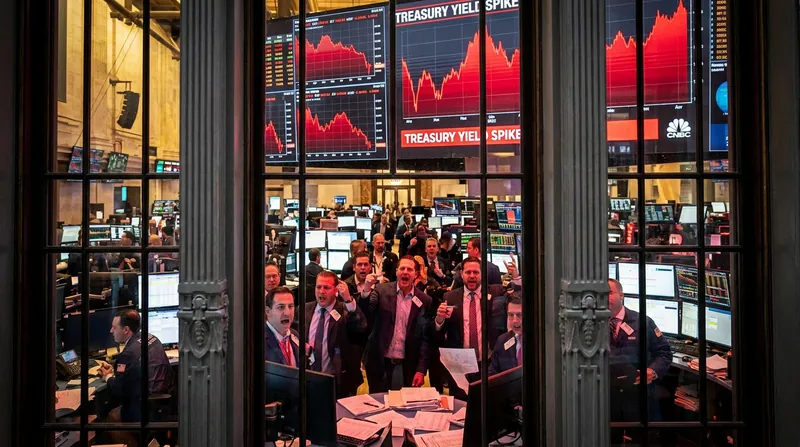
The bond market also experienced significant turbulence in the wake of the Fed's announcement. The yield on the 30-year Treasury bond surged to its highest level since 2007, reflecting investor bets that the central bank may be forced to tighten policy further later this year. Analysts noted that the traditional "crash cushion" provided by bonds during equity sell-offs appeared to be evaporating, leaving investors with fewer safe havens.[1][8]
Adding to the complex backdrop are renewed calls from political figures for lower interest rates. President Donald Trump has consistently pressured the central bank to ease borrowing costs, arguing that lower rates would stimulate economic growth. However, the Fed's statement noted that economic activity is already expanding at a "solid pace," suggesting that policymakers do not currently see a need for accommodative measures.[2]
Economists remain divided on the Fed's next move. Some argue that the central bank is correctly pausing to assess the impact of previous rate hikes and the temporary nature of supply shocks like the Iran conflict. Others warn that the Fed risks falling behind the curve if it ignores the underlying inflationary pressures driven by robust consumer demand, new tariffs, and heavy investment in artificial intelligence infrastructure.[2]
Looking ahead, the Fed's data-dependent approach means that the upcoming inflation and employment reports will be heavily scrutinized. The central bank will have two more months of data to digest before its next meeting in September. Until then, investors and consumers alike must navigate an environment characterized by elevated borrowing costs, geopolitical uncertainty, and a central bank that is increasingly divided on the best path forward.[7]
- 3.5–3.75%
- Federal funds target rate
- 9-3
- FOMC vote split
- 800 points
- Dow Jones drop
- 4.2%
- June unemployment rate
Significance
For the first time in a decade, the Federal Reserve is showing deep internal division over how to handle sticky inflation, signaling to investors that borrowing costs could remain elevated or even rise later this year. The resulting market volatility directly impacts retirement portfolios, mortgage rates, and the cost of corporate debt.
Sources
Source coverage
8 outlets
3 viewpoints surfaced







- [1]MarketWatchMarket Analysts
Stocks and bonds see wild 'Fed Day' swings as Wall Street's 'crash cushion' evaporates
Read on MarketWatch → - [2]The Washington PostInflation Hawks
Fed holds interest rates steady as inflation raises pressure for a hike
Read on The Washington Post → - [3]CBS NewsPolicy Centrists
Federal Reserve leaves benchmark interest rate unchanged
Read on CBS News → - [4]The GuardianMarket Analysts
Rates remain unchanged for fifth time since December as tenuous Iran peace deal pushes energy prices up again
Read on The Guardian → - [5]ForbesInflation Hawks
Fed Keeps Interest Rates Unchanged As Dissent Mounts
Read on Forbes → - [6]AxiosPolicy Centrists
Fed leaves rates steady, with internal dissent
Read on Axios → - [7]KiplingerMarket Analysts
Can the Fed chair avoid raising rates? Time will tell.
Read on Kiplinger → - [8]MarketWatchMarket Analysts
Bond market is calling Warsh's bluff on inflation fight as yields surge
Read on MarketWatch →
Comments
More in Finance
See all →Bond Valuation
The Iterative Process That Solves the Bond Price Formula for Yield-to-Maturity
6 sources
TIPS Mechanics
How the Principal of Treasury Inflation-Protected Securities (TIPS) Is Adjusted by the Consumer Price Index
6 sources
Macroeconomics
How GDP and GNP Measure Economic Output Through Borders Versus Ownership
7 sources
Market Structure
SEC Plans Regulatory Path for 24/7 Tokenized Stocks, Signaling Major Wall Street Structural Shift
6 sources
Every angle. Every day.
Get Finance stories with full source coverage and perspective breakdowns delivered to your inbox.