
Riot Games Bans Nearly 300,000 Accounts for Boosting in League of Legends and VALORANT
Riot Games has penalized over 296,000 accounts across League of Legends and VALORANT in a massive crackdown on rank manipulation. The Vanguard Anti-Boost system targeted boosting, smurfing, and hitchhiking, stripping millions of ranked points and catching high-profile streamers in the crossfire.

- Riot Games Anti-Cheat
- Focuses on maintaining strict competitive integrity by automating the detection of all rank manipulation.
- The General Player Base
- Supports the aggressive bans as a necessary measure to remove smurfs and boosters from everyday matches.
- High-Elo Content Creators
- Argues that the automated system unfairly punishes streamers who use alternate accounts to play with friends.
Perspectives this story doesn't cover
- Commercial Boosting Services
Why it matters
For millions of players who invest hours into climbing the competitive ladders of League of Legends and VALORANT, smurfs and boosted accounts ruin the fundamental fairness of the game. This massive enforcement wave proves that Riot's automated Vanguard system can actively detect and reverse rank manipulation at scale, restoring integrity to the matchmaking ecosystem.
Riot Games has penalized exactly 296,416 accounts across League of Legends and VALORANT for rank manipulation since late 2025, stripping millions of illicitly gained ranked points from the ecosystem. The massive enforcement wave, driven by the Vanguard Anti-Boost system, targeted players who bought accounts, hired boosters, or queued with high-ranked smurfs to artificially inflate their standing.[1][2][3]
The crackdown represents one of the largest competitive integrity sweeps in the publisher's history. By expanding the Vanguard Anti-Boost detection from League of Legends into VALORANT in July 2026, Riot effectively unified its policing of what it calls "rent-a-rank customers." The system flagged accounts where ranked progress was clearly siphoned from a better player rather than earned through legitimate play.[1][2]
The sheer scale of the rollback is staggering. According to Phillip Koskinas, Riot's head of anti-cheat, the system liquidated 105,718,655 League Points (LP) in League of Legends and removed 33,083,190 Rank Rating (RR) from VALORANT. The highest concentration of boosted accounts in VALORANT was found in the Platinum and Diamond tiers, where players desperately try to break into the upper echelons of the competitive ladder.[2][3]
Penalties scale based on the severity of the offense. While purchased accounts and those without a legitimate owner face permanent bans, most offenders are hit with temporary suspensions starting at three days. More importantly, Riot strips the accounts of their illicitly gained ranks and revokes any seasonal rewards tied to that inflated standing, dropping them back to their actual skill bracket.[1][3]
The enforcement net was cast so wide that it caught several high-profile streamers, sparking a public debate over where the line between playing with friends and outright boosting is drawn. Streamer Trainwreckstv revealed his League of Legends rank was reverted after he queued in Ranked Flex alongside professional players and veteran content creators like Tyler1, Yassuo, and Trick2g.[4][5]
Trick2g directly appealed his penalty, arguing that the group simply swapped to alternate accounts so they could queue with a lower-ranked friend, intending to return to their main accounts once everyone's ranks aligned. Riot's Director of Product Management, Drew Levin, initially responded that high-level players hopping on alternate accounts to elevate a lower-ranked friend is "basically the definition of boosting."[4][5]
Levin later apologized for the bluntness of his reply, but he held firm on the underlying policy. He confirmed that Riot's "stance on smurfing and boosting remains the same," though he acknowledged the company needs to establish clearer guidelines, noting that "how do I know when it's ok to play with friends is not something we've been clear enough on."[5]
Levin later apologized for the bluntness of his reply, but he held firm on the underlying policy.
The Vanguard system specifically targets three behaviors: traditional boosting, smurfing, and hitchhiking—where a player repeatedly queues with a booster to be dragged upward. Riot has made it clear that all three fall under the umbrella of cheating, emphasizing that the matchmaking ecosystem only functions when players are genuinely competing at their own skill level.[2][4]
The rollout of these penalties signals a shift in how developers handle competitive matchmaking. Rather than relying solely on manual reports, Vanguard's classification layer automatically detects when an account's performance metrics suddenly spike in a way that indicates a different, higher-rated player has taken the mouse.[1][2]
As the Anti-Boost system continues to ramp up, Riot plans to expand its enforcement actions in the coming months. The message to the player base is unambiguous: the automated detection net is fully operational, and the only way to keep a rank in League of Legends or VALORANT is to actually earn it.[1][3]
What to know
- Riot Games penalized 296,416 accounts across League of Legends and VALORANT for rank manipulation since late 2025.
- The Vanguard Anti-Boost system stripped 105 million League Points and 33 million Rank Rating from illicitly boosted accounts.
- Penalties include rank rollbacks, revoked seasonal rewards, temporary suspensions, and permanent bans for purchased accounts.
- Several high-profile streamers had their ranks reverted, sparking a debate over the line between playing with friends and boosting.
Where opinion splits
Riot Games' Anti-Cheat Division
Prioritizes competitive integrity and views any artificial rank inflation as cheating.
Riot's anti-cheat team, led by Phillip Koskinas, operates on the principle that the matchmaking ladder only works if every account accurately reflects the skill of the person currently playing on it. By classifying smurfing, boosting, and hitchhiking under the single umbrella of rank manipulation, the developer is drawing a hard line against the cottage industry of account selling and boosting services. Their automated Vanguard system removes the subjectivity from enforcement, flagging accounts based on sudden, unnatural spikes in performance metrics.
High-Elo Content Creators
Argues that playing with lower-ranked friends on alternate accounts is a social necessity, not malicious boosting.
For professional players and veteran streamers, the strict enforcement of anti-boosting rules creates a logistical nightmare when trying to play with friends. Figures like Trick2g and Trainwreckstv argue that swapping to alternate accounts is often the only way to bypass the game's strict rank-disparity limits in group queues. From their perspective, queuing together for content or social reasons lacks the malicious intent of commercial boosting, and they feel the automated system unfairly punishes legitimate friendships under a blanket definition of rank manipulation.
The General Player Base
Welcomes the ban wave as a necessary step to clean up ruined matchmaking experiences.
For the average player grinding through the metal ranks, smurfs and boosted accounts are a primary source of frustration. Facing an opponent who is clearly playing several tiers above their displayed rank, or having a teammate who bought a high-level account they cannot pilot, ruins the competitive balance of a 30-to-40 minute match. The broader community has largely cheered the massive rollback of 138 million combined ranked points, viewing the strict enforcement as a long-overdue restoration of competitive fairness.
Sources
Source coverage
5 outlets
3 viewpoints surfaced




- [1]DexertoRiot Games Anti-Cheat
Riot banned nearly 300000 Valorant and League of Legends players for rank manipulation
Read on Dexerto → - [2]Insider GamingRiot Games Anti-Cheat
Riot Penalizes 300000 League and VALORANT Accounts for 'Rank Manipulation'
Read on Insider Gaming → - [3]thespike.ggRiot Games Anti-Cheat
VALORANT reports massive ban wave targeting boosted accounts
Read on thespike.gg → - [4]NDTVHigh-Elo Content Creators
Riot Games Says Its Rank-Manipulation System Flagged Nearly 300,000 Accounts
Read on NDTV → - [5]SportskeedaHigh-Elo Content Creators
"Our stance on smurfing and boosting remains the same" - Drew Levin apologizes to Trick2g for his "off-the-cuff and incurious reply"
Read on Sportskeeda →
Comments
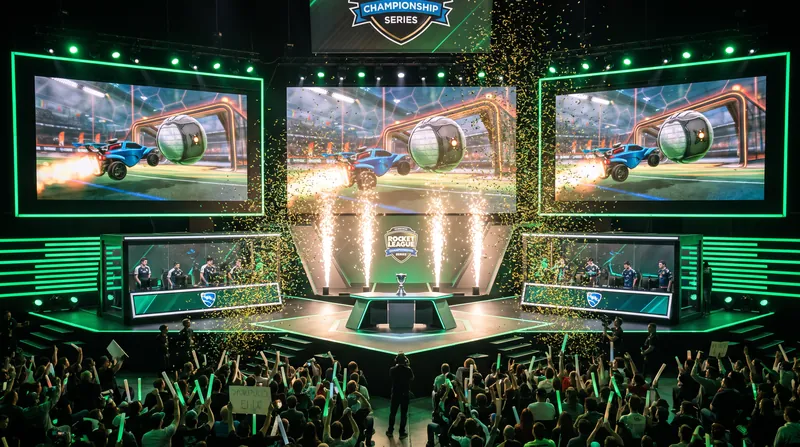
More in Gaming & Esports
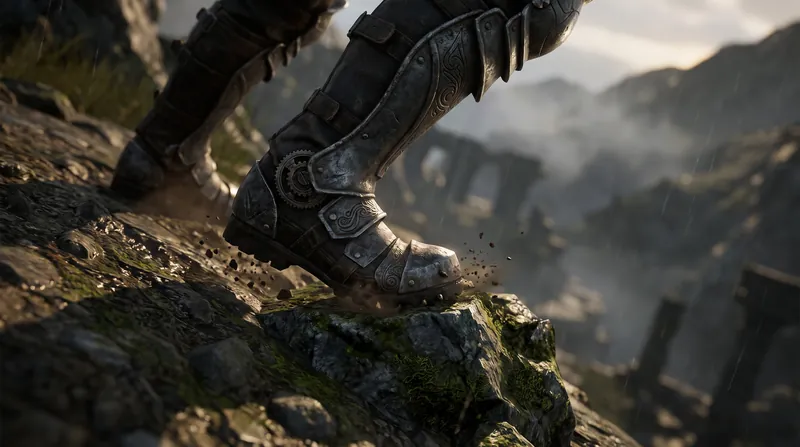
See all →Procedural Animation
The Inverse Kinematics (IK) Chain: How Game Engines Calculate Joint Angles to Place a Character's Foot on Uneven Terrain
6 sources
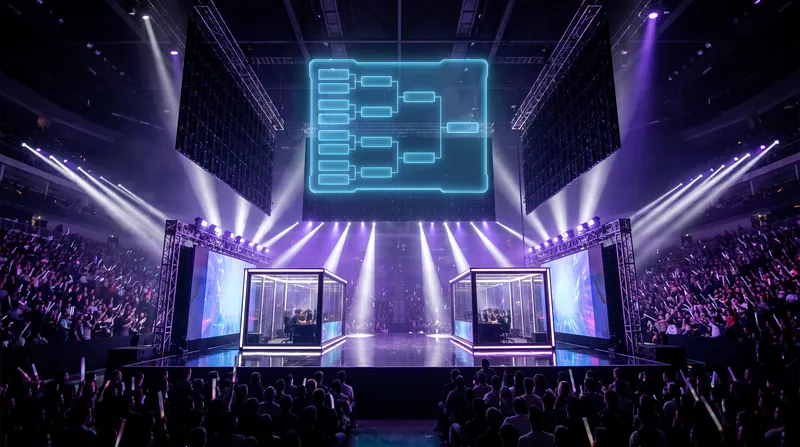
Tournament Formats
The Upper and Lower Bracket: How the Double Elimination Format Guarantees a True Finalist
5 sources
Netcode Architecture
The Server Reconciliation and Client-Side Correction Loop: How Client-Side Prediction Masks Latency in Online Games
6 sources
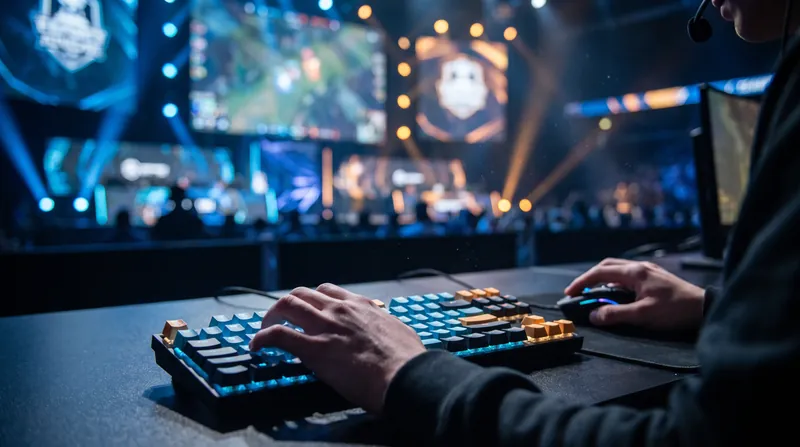
Esports Gear
ASUS ROG Unveils 'Ace Collection' Esports Hardware Line at Gamescom, Signs GamerLegion
3 sources

Every angle. Every day.
Get Gaming & Esports stories with full source coverage and perspective breakdowns delivered to your inbox.