
Supreme Court Overturns Humphrey's Executor: What the End of Agency Independence Means for Employers
A landmark Supreme Court ruling has expanded presidential power to remove leaders of independent agencies like the FTC and NLRB at will. For businesses and management, the decision signals a new era of rapid regulatory shifts and requires more agile compliance strategies.
By Factlen Editorial Team
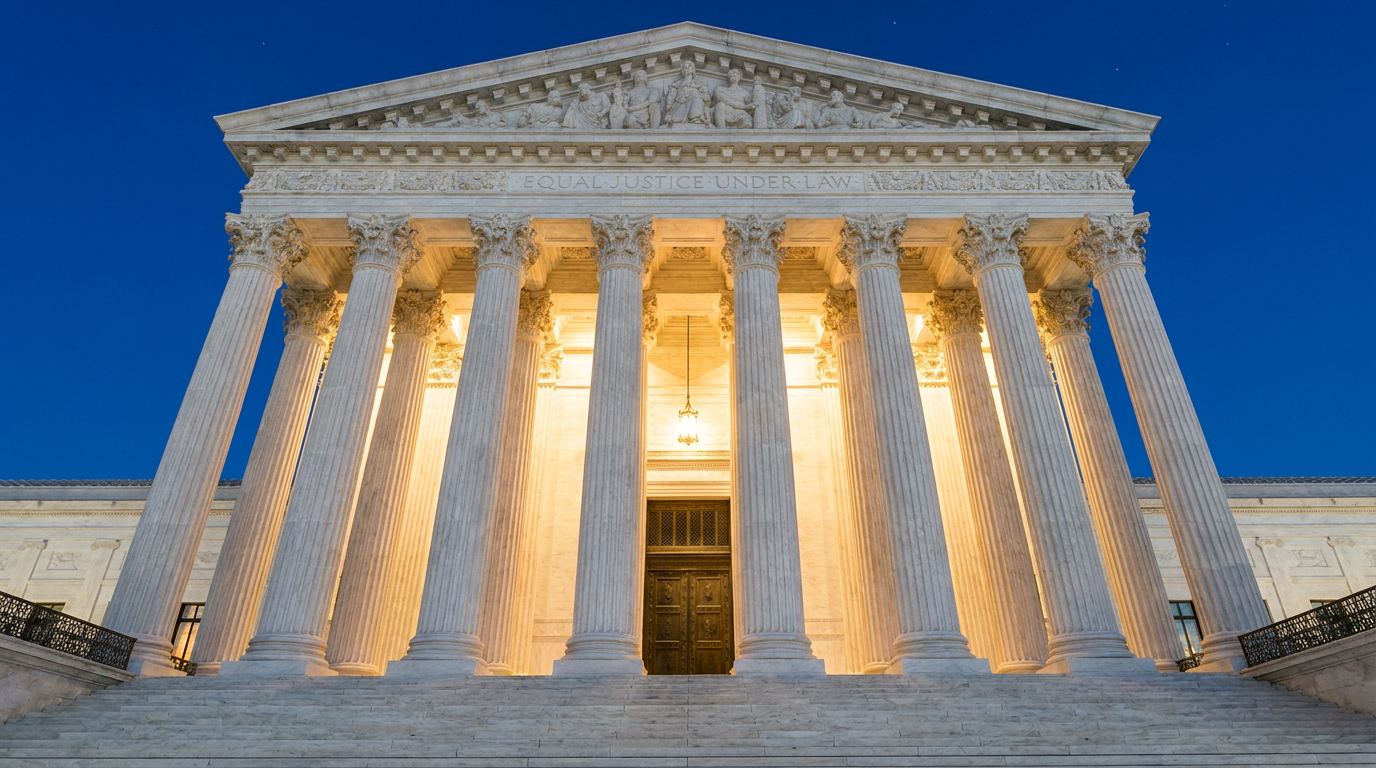
- Executive Power Advocates
- Argue that the Constitution vests all executive power in the President, requiring that agency heads remain directly accountable.
- Regulatory Stability Proponents
- Warn that removing agency independence will subject long-term economic and labor policies to whiplash every four years.
- Employer & Management Counsel
- Focus on the practical reality of compliance, advising businesses to build agile legal strategies to handle sudden shifts.
Why this matters
By eliminating the "for-cause" removal protections for agency heads, the Supreme Court has fundamentally altered how federal regulations are enforced. Employers must now prepare for labor, antitrust, and workplace policies to swing dramatically with each change in presidential administration, rather than evolving slowly over staggered board terms.
On June 29, 2026, the Supreme Court issued a landmark 6-3 decision in Trump v. Slaughter, fundamentally reshaping the federal administrative state and rewriting the rules for how businesses interact with government regulators. The ruling dismantled the long-standing legal architecture that shielded the leaders of independent federal agencies from direct presidential control.[1][4]
At the heart of the decision is the Court's conclusion that statutory "for-cause" removal protections for Federal Trade Commission (FTC) commissioners violate the separation of powers enshrined in the Constitution. By striking down these protections, the Court has granted the president the authority to fire the heads of independent agencies at will, rather than waiting for their staggered terms to expire or proving malfeasance.[2][5]
The ruling explicitly overrules Humphrey's Executor, a 91-year-old precedent established in 1935. For nearly a century, that case allowed Congress to insulate multi-member commissions from the Oval Office by classifying their duties as "quasi-legislative" and "quasi-judicial." The modern Court rejected that distinction, ruling that because these agencies execute federal law, their leaders must remain directly accountable to the president.[4][5]

Chief Justice John Roberts, writing for the conservative majority, anchored the decision in Article II of the Constitution. He argued that the president cannot faithfully execute the laws if they cannot supervise the officials tasked with implementing them. "Subordinates who exercise the President's power are subject to removal by him," the Court concluded, emphasizing that this chain of command is essential for democratic accountability.[1][2]
The immediate catalyst for the ruling was President Donald Trump's 2025 dismissal of FTC Commissioners Rebecca Kelly Slaughter and Alvaro Bedoya. The president removed the commissioners without citing a specific statutory cause, prompting Slaughter to sue for reinstatement under the protections of the FTC Act. While a lower court initially sided with Slaughter, the Supreme Court's intervention permanently ended her bid to return to the commission.[1][5]
While the Slaughter case focused explicitly on the FTC, legal experts and employment counsel agree that the ruling's logic applies equally to a vast array of other independent bodies. Agencies like the National Labor Relations Board (NLRB), the Equal Employment Opportunity Commission (EEOC), and the Securities and Exchange Commission (SEC) are now widely considered to be under direct presidential authority.[1][6]
For corporate management and human resources departments, the implications are profound. The NLRB, which governs union organizing, collective bargaining, and workplace labor law, is particularly vulnerable to rapid policy swings. Historically, a new administration might take years to gain a working majority on the five-member board due to staggered terms.[1][6]
For corporate management and human resources departments, the implications are profound.
Under the new framework, a newly inaugurated president can immediately clear out the NLRB and install preferred commissioners on day one. This means that critical labor policies—such as joint-employer liability standards, rules for union elections, and the legality of certain workplace handbooks—could reverse overnight whenever the White House changes hands.[2][6]
A parallel case involving the removal of NLRB member Gwynne Wilcox is already working its way through the federal appellate system. Following the Slaughter decision, legal analysts strongly anticipate that the Wilcox litigation will end in the president's favor, cementing the executive branch's unchecked removal power over the nation's top labor regulators.[1][6]

Despite the sweeping nature of the ruling, the Supreme Court did carve out one highly anticipated exception. In a companion case, Trump v. Cook, the Court ruled that the Federal Reserve remains shielded from at-will presidential removal. The justices cited the central bank's distinct historical tradition of independence, a move that successfully calmed financial markets concerned about the politicization of interest rates.[2][3]
The decision was not without fierce opposition. Justice Elena Kagan, joined by the Court's liberal wing, issued a sharp dissent warning that the ruling shifts "tremendous power" into the hands of the executive branch. The dissenting justices argued that the majority had stripped Congress of its constitutional prerogative to design administrative agencies that operate free from partisan pressure.[3][5]
For employers, the era of predictable, slow-moving regulatory shifts is effectively over. Management teams can no longer rely on the current interpretations of the FTC or NLRB as settled, long-term law. Instead, corporate counsel are advising businesses to adopt highly agile compliance frameworks capable of pivoting rapidly in response to election outcomes.[1][2]

Industry groups are also preparing for a surge in litigation. Companies currently facing enforcement actions initiated by commissioners appointed under the old framework may attempt to challenge those proceedings, arguing that the underlying agency structure was unconstitutional at the time the actions were brought.[5][6]
Ultimately, the demise of Humphrey's Executor transfers the primary battleground for regulatory policy from the slow-moving halls of independent commissions directly to the Oval Office. For business leaders, staying compliant will now require monitoring the political winds just as closely as the legal statutes, as the regulatory environment becomes inextricably linked to the presidency.[1][5]
Viewpoints in depth
Executive Power Advocates
Supporters argue that the ruling restores the proper constitutional chain of command.
Proponents of the unitary executive theory argue that Article II of the Constitution vests all executive power solely in the president. From this perspective, any official who enforces federal law—whether at the FTC, the NLRB, or the SEC—must be directly accountable to the chief executive. They contend that independent agencies had become an unaccountable 'fourth branch' of government, and that allowing the president to remove commissioners at will ensures that regulatory policy reflects the will of the voters who elected the administration.
Regulatory Stability Proponents
Critics warn that the decision will subject the economy to constant policy whiplash.
Advocates for agency independence, including the dissenting Supreme Court justices, warn that the ruling strips vital regulatory bodies of their ability to make long-term, evidence-based decisions free from partisan pressure. They argue that Congress intentionally designed multi-member commissions with staggered terms to ensure stability in complex areas like antitrust enforcement and labor relations. Without these protections, they fear that businesses and workers will face a chaotic environment where fundamental rules change drastically every four to eight years.
Employer & Management Counsel
Legal advisors are urging businesses to build highly agile compliance strategies.
For corporate lawyers and HR professionals, the philosophical debate takes a backseat to practical compliance. Management counsel are advising clients that the era of relying on slow-moving agency precedent is over. Because a new president can now immediately install a new majority at the NLRB or FTC, businesses must scenario-plan for sudden reversals on critical issues like noncompete agreements, union organizing rules, and joint-employer liability. Agility, rather than reliance on past agency guidance, is now the core of corporate legal strategy.
What we don't know
- How quickly future administrations will move to replace entire boards of commissioners upon taking office.
- Whether Congress will attempt to draft new, narrower statutory protections that comply with the Court's strict Article II interpretation.
- How lower courts will handle ongoing corporate challenges to enforcement actions initiated by ousted commissioners.
Sources
Source coverage
6 outlets
3 viewpoints surfaced






[1]Fisher PhillipsEmployer & Management Counsel
SCOTUS Just Expanded President's Power to Fire Members of Independent Agencies: What the Landmark Ruling Means for Businesses and Employers
Read on Fisher Phillips →[2]SHRMEmployer & Management Counsel
Supreme Court Decision in the FTC Case
Read on SHRM →[3]LawfareExecutive Power Advocates
The Supreme Court anchored its decision in the idea that the president must have adequate control
Read on Lawfare →[4]Hunton Employment & Labor PerspectivesExecutive Power Advocates
Supreme Court Overrules Humphrey's Executor, Expanding Presidential Removal Power
Read on Hunton Employment & Labor Perspectives →[5]Antitrust Law SourceRegulatory Stability Proponents
Supreme Court overrules 91-year-old precedent protecting independent agencies
Read on Antitrust Law Source →[6]PhelpsEmployer & Management Counsel
A new court decision may mark a turning point in the modern administrative state
Read on Phelps →

Every angle. Every day.
Get careers work stories with full source coverage and perspective breakdowns delivered to your inbox.