
Gene Therapy Slows Huntington's Disease Progression by 75% in Landmark Human Trial
Three-year clinical trial data reveals that a single-dose gene therapy can fundamentally alter the trajectory of Huntington's disease, preserving cognitive and motor function. Despite the unprecedented results, regulatory debates over trial design may delay widespread access.
By Factlen Editorial Team
- Clinical Investigators
- Researchers focused on the unprecedented efficacy signals and biomarker improvements.
- Patient Advocates
- Community members prioritizing rapid access to life-saving therapies over perfect trial designs.
- Regulatory Authorities
- Agencies prioritizing strict methodological rigor and double-blind placebo controls.
What's not represented
- · Health Insurance Providers
- · Bioethicists specializing in sham-surgery trials
Why this matters
Huntington's disease has long been considered an untreatable, uniformly fatal genetic death sentence. This 36-month data represents the first time a medical intervention has durably altered the disease's biological trajectory, offering a blueprint for treating other severe neurodegenerative disorders.
Key points
- A Phase 1/2 trial of the AMT-130 gene therapy showed a 75% slowing of Huntington's disease progression over 36 months.
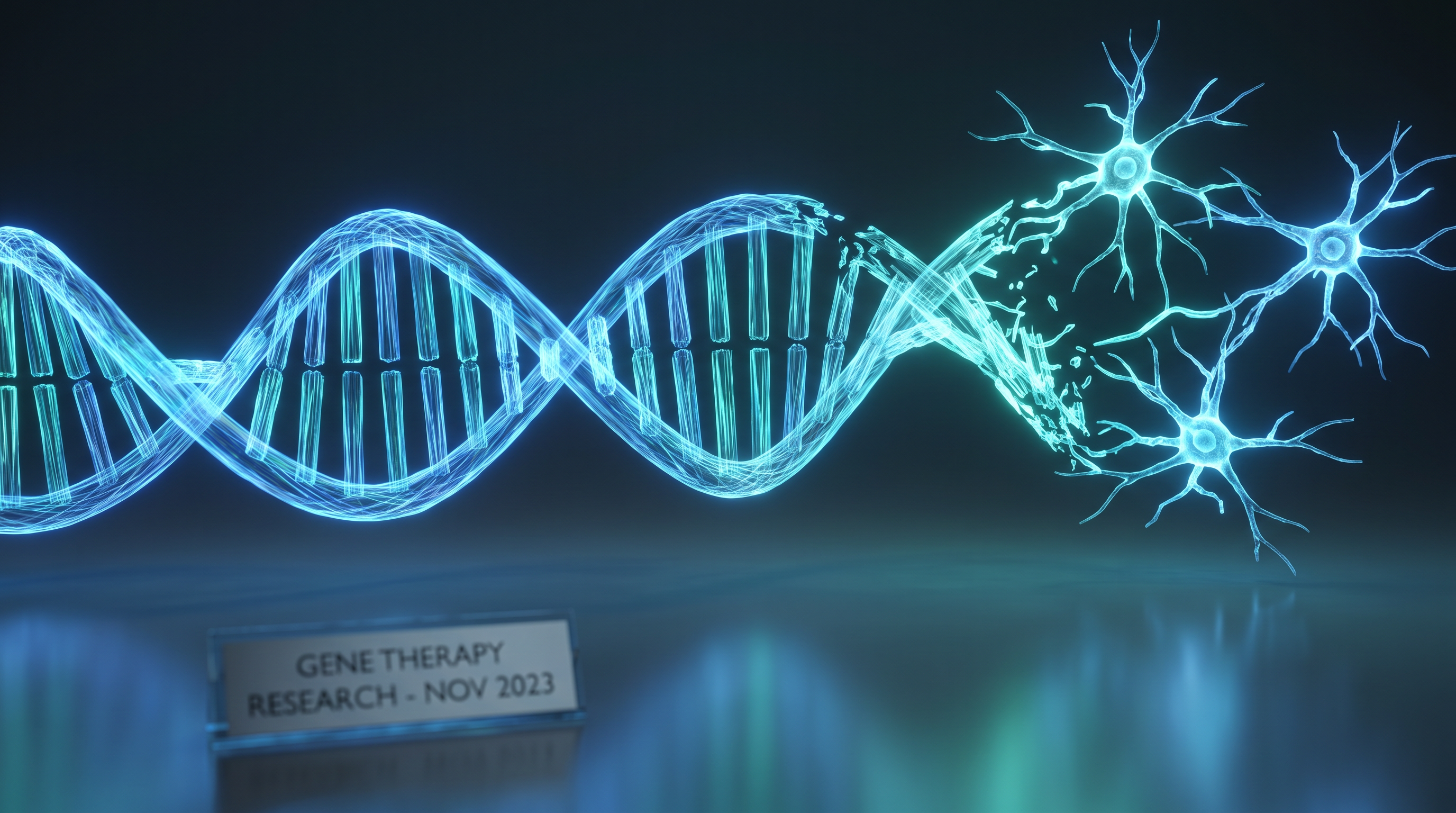
- The therapy uses an AAV5 vector to deliver microRNA directly into the brain, suppressing the toxic mutant huntingtin protein.
- Treated patients experienced a 60% slower decline in functional capacity and significant preservation of cognitive abilities.
- Biomarkers in the cerebrospinal fluid indicated a reduction in ongoing brain injury and neuronal death.
- The FDA has pushed back on accelerated approval, recommending a new randomized trial with a potential sham-surgery control arm.
Huntington's disease has historically been viewed as one of the most devastating diagnoses in medicine—a uniformly fatal neurodegenerative disorder with absolutely no approved disease-modifying treatments. Patients face a relentless, decades-long decline in motor control, cognitive function, and psychiatric stability. However, new 36-month clinical trial data suggests that a novel, one-time gene therapy could fundamentally alter that grim trajectory. The investigational treatment has demonstrated unprecedented efficacy in preserving brain function, sending ripples of cautious optimism through the neurology community and offering a tangible lifeline to families who have spent generations living under the shadow of the disease.[6]
The investigational therapy, known as AMT-130 and developed by uniQure, demonstrated a remarkable 75% slowing of disease progression over a three-year period in a pivotal Phase 1/2 clinical trial. This represents the most significant and durable clinical benefit ever recorded in a Huntington's disease trial. For the approximately 75,000 individuals affected by the condition across the United States, the United Kingdom, and Europe, these findings represent a paradigm shift. Rather than merely managing symptoms as the brain deteriorates, neurologists are now looking at a treatment that actively preserves the patient's existing neural architecture.[1][6]
The core scientific claim driving this breakthrough is that a single, highly targeted surgical intervention can durably suppress the genetic driver of the disease. The underlying cause of Huntington's is a well-understood mutation in the huntingtin gene, which forces the body to produce a toxic, misfolded protein. Over time, this mutant protein accumulates and gradually destroys neurons, particularly within the brain's striatum, which governs movement and higher cognitive functions. Halting the production of this specific protein has been the holy grail of Huntington's research for decades.[4]
To achieve this, AMT-130 utilizes an adeno-associated virus (AAV5) vector to deliver a custom-engineered microRNA directly into the deep brain structures—specifically targeting the caudate and putamen. Because the therapy cannot cross the blood-brain barrier effectively on its own, it requires a highly specialized, MRI-guided neurosurgical procedure to infuse the vector directly into the target tissue. Once integrated into the patient's cells, the therapy is designed to continuously lower the production of the mutant huntingtin protein for the rest of the patient's life, requiring only a single lifetime dose.[1][2][4]

The primary clinical evidence centers on the fact that overall disease progression is slowed by 75% across a variety of composite clinical measures. The pivotal data, which was recently presented in detail at the 2026 American Academy of Neurology (AAN) Annual Meeting in Chicago, tracked a cohort of 29 patients over a 36-month period. The patients were divided into high-dose and low-dose cohorts, allowing researchers to observe whether the therapy's effects scaled with the amount of microRNA delivered to the brain.[2][5]
Patients receiving the high dose of AMT-130 exhibited a 75% slowing of decline on the composite Unified Huntington's Disease Rating Scale (cUHDRS). The cUHDRS is a rigorous, standard metric utilized by neurologists that combines motor, cognitive, and functional assessments into a single score to track the holistic deterioration of the patient. The treated group experienced a mean cUHDRS decline of just -0.38 over three years, compared to a steep -1.52 decline in the matched control group, highlighting a massive divergence in patient outcomes.[1][2]
Beyond the composite score, the data provides strong evidence that functional independence is preserved significantly longer in treated patients. The trial successfully met a crucial secondary endpoint by demonstrating a 60% slower decline in Total Functional Capacity (TFC). This specific metric is incredibly important to patients and their families, as it directly measures a person's ability to maintain employment, manage their own finances, handle household chores, and perform basic activities of daily living without requiring full-time nursing care.[1][2][6]
Cognitive preservation among the treated cohort was equally stark and somewhat unexpected in its magnitude. Treated patients showed a 113% slowing in disease progression on the Stroop Word Reading Test, a standard cognitive assessment. Remarkably, this means the treated patients actually improved slightly from their baseline scores over the three years, while the control group predictably and steadily deteriorated. Motor control assessments also showed favorable trends, further cementing the broad-spectrum benefits of the genetic intervention.[1][2]

Cognitive preservation among the treated cohort was equally stark and somewhat unexpected in its magnitude.
These clinical observations are further corroborated by objective biological markers indicating a profound reduction in ongoing brain injury. Researchers closely monitored the patients' cerebrospinal fluid levels of neurofilament light chain (NfL)—a well-established structural protein that leaks into the spinal fluid when neurons are damaged or dying. In the treated patients, NfL levels actually dropped below their initial baseline levels at the 36-month mark, providing hard biological evidence that the therapy is actively preventing neuronal death rather than just masking symptoms.[5]
"The results are in some ways better than what we hoped to see at this point," noted Dr. Victor Sung, director of the Huntington's Disease Clinic at the University of Alabama at Birmingham and the principal study author who presented the findings. The sustained, widening separation between the treated group and the expected natural decline has bolstered confidence among investigators that they are witnessing true disease modification. The fact that the benefits appear to compound over time is exactly what researchers hope to see from a permanent genetic intervention.[2][5]
Despite the unprecedented efficacy signals and the optimism of clinical investigators, transparent uncertainty remains regarding the regulatory path forward, largely due to an ongoing debate over the trial's specific methodology. Because Huntington's is a rare, uniformly fatal disease, and the required delivery mechanism involves highly invasive brain surgery, the initial Phase 1/2 trial did not utilize a traditional, double-blind placebo group.[2][3][6]
Instead of subjecting a control group to a placebo surgery, researchers compared the 29 treated patients against a "propensity score-matched external control" cohort. This control group consisted of 940 highly similar patients drawn from the Enroll-HD natural history database, a massive observational dataset tracking over 60,000 Huntington's patients globally. Trial investigators argue that this external control is tightly matched and provides a highly accurate representation of how the treated patients would have deteriorated without the gene therapy.[2]
However, the U.S. Food and Drug Administration (FDA) recently communicated that this external control approach is fundamentally insufficient to support an accelerated approval application. Regulators maintain that comparing a small, surgically treated cohort to an external database of historical patients introduces unacceptable statistical bias. They argue that the profound placebo effect of undergoing major brain surgery, combined with the intensive follow-up care trial participants receive, could temporarily skew functional and cognitive assessments.[2][3][6]

In a highly controversial move in March 2026, the FDA strongly recommended that the developer conduct a entirely new randomized, double-blind trial to robustly demonstrate efficacy before the drug can be brought to market. Crucially, the agency suggested this new trial might need to include a "sham-surgery" control arm. In such a design, half of the participants would undergo the invasive MRI-guided surgical procedure—including having burr holes drilled into their skulls—without actually receiving the active gene therapy infusion.[3]
This strict regulatory stance has sparked intense debate and profound frustration within the Huntington's disease community. Patient advocates, ethicists, and several prominent neurologists argue that requiring a sham brain surgery in a fatal disease with no alternative treatments is ethically questionable. They contend that the 75% slowing of progression is a massive enough efficacy signal to warrant immediate accelerated approval, allowing the developer to conduct confirmatory observational trials post-market rather than delaying access by several years.[3][6]
"Turning this into real-world application is another step that will require some patience," cautioned Dr. Danny Bega, director of the Huntington's disease clinic at Northwestern Medicine, acknowledging the difficult regulatory road ahead. However, he emphasized that the community should not lose sight of the scientific achievement. The trial successfully met its goal of slowing disease progression on the exact clinical measures the FDA fundamentally values, proving that the underlying biological concept of mutant huntingtin suppression actually works in humans.[4]

Looking ahead, the safety profile of AMT-130 remains highly favorable, which could bolster the case for a compromise with regulators. Over the entire three-year follow-up period, no new long-term safety concerns or drug-related serious adverse events emerged. The primary risks observed were strictly associated with the initial surgical procedure itself, which were manageable and resolved in the weeks following the operation. This clean safety data is vital for any therapy intended to permanently alter a patient's genetic expression.[2][5]
As researchers and patient advocates negotiate the next phase of clinical trial design with federal regulators, the 36-month data stands as a historic milestone in neurogenetics. For the first time, a therapeutic intervention has demonstrated the clear ability to fundamentally alter the biological trajectory of Huntington's disease. Even with regulatory delays, the successful demonstration of AAV-mediated gene silencing in the deep brain transforms a uniformly rapid decline into a manageable, slowed progression, offering a viable blueprint for treating a host of other severe neurodegenerative disorders.[1][6]
How we got here
April 2021
Early animal models demonstrate that AMT-130 successfully lowers mutant huntingtin protein in the brain.
July 2021
The first-in-human Phase 1/2 clinical trial for AMT-130 is officially launched.
September 2025
uniQure announces positive topline results, showing a 75% slowing of disease progression at the 36-month mark.
March 2026
The FDA informs developers that the current data is insufficient for approval, recommending a new randomized trial.
April 2026
Detailed 36-month efficacy and biomarker data is presented to the medical community at the American Academy of Neurology Annual Meeting.
Viewpoints in depth
Clinical Researchers
Neurologists and trial investigators who view the 36-month data as a historic, disease-modifying breakthrough.
Investigators emphasize that the sustained separation between the treated cohort and the natural history control group across multiple domains—motor, cognitive, and functional—is unprecedented in Huntington's research. They point to the reduction in neurofilament light chain (NfL) biomarkers as objective proof that the therapy is actively preventing neuronal death, arguing that the magnitude of the effect far outweighs the limitations of the trial's external control design.
The FDA & Regulators
Regulatory agencies demanding rigorous, randomized, double-blind data before approving a permanent genetic alteration.
The FDA maintains that comparing a small, surgically treated cohort to an external database of historical patients introduces unacceptable statistical bias. Regulators argue that the placebo effect of undergoing major brain surgery could temporarily skew functional and cognitive assessments. Consequently, they are strongly recommending a new trial with a sham-surgery control arm to definitively prove that the microRNA—not the surgical intervention itself—is responsible for the clinical benefit.
Patient Advocacy Groups
Families and advocates who argue that delaying approval for a fatal disease is an ethical failure.
The Huntington's disease community has expressed profound frustration over the FDA's demand for a new, sham-controlled trial. Advocates argue that requiring patients to undergo invasive brain drilling without receiving the active therapy is ethically fraught, especially for a uniformly fatal disease with no existing treatments. They contend that the 75% slowing of progression is a massive enough signal to warrant accelerated approval while confirmatory trials are conducted post-market.
What we don't know
- Whether the FDA will ultimately mandate a sham-surgery control arm for the next phase of clinical trials.
- How long the therapeutic effects of the single-dose gene therapy will last beyond the 36-month observation window.
- Whether the therapy will be as effective in patients with more advanced stages of Huntington's disease.
Key terms
- Adeno-associated virus (AAV) vector
- A harmless, engineered virus used in gene therapy to deliver therapeutic genetic material directly into a patient's cells.
- MicroRNA
- A small cellular molecule that can bind to messenger RNA to prevent a specific gene from producing its target protein.
- Striatum
- A cluster of neurons in the subcortical basal ganglia of the brain, heavily involved in motor control, which is primarily destroyed by Huntington's disease.
- Neurofilament light chain (NfL)
- A structural protein found in neurons that leaks into the cerebrospinal fluid when brain cells are damaged or dying, serving as a biomarker for neurodegeneration.
- Sham-surgery control
- A clinical trial design where the control group undergoes a simulated surgical procedure without receiving the active treatment, used to rule out the placebo effect.
Frequently asked
What is Huntington's disease?
Huntington's disease is a rare, inherited neurodegenerative disorder caused by a genetic mutation. It leads to the progressive breakdown of nerve cells in the brain, resulting in severe motor, cognitive, and psychiatric decline.
How does the AMT-130 gene therapy work?
AMT-130 uses a harmless virus to deliver a custom microRNA directly into the brain via surgery. This microRNA instructs the cells to stop producing the toxic mutant huntingtin protein that causes the disease.
Is this a cure for Huntington's?
No, it is not a cure. However, the trial data suggests it can slow the progression of the disease by up to 75%, fundamentally altering the patient's trajectory and preserving their functional independence for much longer.
Why isn't the therapy approved yet?
The FDA has stated that the current trial's use of an external control group (comparing treated patients to a historical database) is insufficient. They are recommending a new, randomized trial with a placebo or sham-surgery arm to definitively prove efficacy.
Sources
Source coverage
6 outlets
3 viewpoints surfaced






[1]uniQureClinical Investigators
Advancing AMT-130 for the treatment of Huntington's disease
Read on uniQure →[2]American Academy of NeurologyClinical Investigators
Three-year results from a major gene therapy study met prespecified primary and key secondary endpoints
Read on American Academy of Neurology →[3]HDBuzzPatient Advocates
FDA communicates that current Phase 1/2 data are not sufficient to support approval of AMT-130
Read on HDBuzz →[4]Northwestern MedicineClinical Investigators
Gene Therapy Shows 75% Slowdown in HD Progression — More Research Ahead
Read on Northwestern Medicine →[5]NeurologyLiveClinical Investigators
AMT-130 Shows 75% Slowing of Disease Progression on cUHDRS
Read on NeurologyLive →[6]Factlen Editorial TeamRegulatory Authorities
Synthesis by Factlen editorial team
Read on Factlen Editorial Team →
More in science
See all 5 stories →Quantum Materials
Quantum Entanglement Observed in Centimeter-Scale Crystal, Challenging Classical-Quantum Boundary
6 sources

Ocean Circulation
Critical Atlantic Ocean Current System Found 'En Route to Tipping' in Major Climate Study
4 sources

Cancer Vaccines
Scientists Redirect COVID-19 Immune Memory to Create Powerful New Cancer Vaccine
8 sources

Every angle. Every day.
Get science stories with full source coverage and perspective breakdowns delivered to your inbox.