
Al Nassr Hit With Transfer Freeze as PIF Mandates Restructuring Over $213M Debt
Saudi Pro League champion Al Nassr has been temporarily barred from signing new players after accumulating over $213 million in internal debt. The Saudi Public Investment Fund has intervened with a mandate prioritizing commercial sustainability and financial restructuring.
By Meera Iyer

- Financial Regulators
- Focused on enforcing commercial sustainability and ending the era of unlimited club spending.
- Club Management
- Struggling to balance immediate on-pitch competitiveness with strict new financial mandates.
- Global Market Analysts
- Analyzing the crisis as a necessary market correction and maturation phase for Saudi football.
Perspectives this story doesn't cover
- Players whose salaries or contract renewals have been delayed.
- European clubs awaiting outstanding transfer fee installments from Al Nassr.
At a glance
- Al Nassr has accumulated over $213 million in internal debt, triggering a liquidity crisis.
- The Saudi Public Investment Fund has frozen the club's ability to sign new players.
- A planned transfer for Mallorca midfielder Samu Costa collapsed due to the financial freeze.
- PIF is implementing a recovery plan that includes independent audits and potential minority stake sales.
- The mandate signals a league-wide shift toward commercial sustainability and financial discipline.
- $213M
- Estimated internal debt (800M SAR)
- $200M
- Cristiano Ronaldo's reported annual salary
- 75%
- PIF ownership stake in Al Nassr
Saudi Pro League powerhouse Al Nassr has encountered a severe financial roadblock just weeks before the highly anticipated 2026-27 season, prompting a sweeping and immediate intervention by its majority owner. The Riyadh-based club, globally recognized as the home of Cristiano Ronaldo, has accumulated staggering internal liabilities exceeding 800 million Saudi riyals—approximately $213 million. This massive debt burden has led to a complete and indefinite freeze on all incoming transfer activities, effectively paralyzing the club's summer recruitment strategy. The sudden halt stands in stark contrast to the aggressive spending sprees that characterized the league's recent transfer windows, signaling a hard stop to the era of unchecked expenditures.[1][2]
The Saudi Public Investment Fund (PIF), which holds a controlling 75 percent stake in Al Nassr as part of a nationwide sports privatization initiative, has stepped in to halt all executive spending. The sovereign wealth fund has issued a strict mandate dictating that Al Nassr must clear its existing debts and demonstrate the ability to generate independent commercial revenue before any new players or coaching staff can be registered. This top-down intervention underscores the PIF's growing impatience with financial mismanagement and its determination to force the league's flagship clubs to operate as self-sustaining corporate entities rather than bottomless vanity projects.[2][5]
The immediate casualty of this severe liquidity crunch has been the club's meticulously planned summer recruitment strategy. A finalized, high-profile agreement to sign Portuguese midfielder Samu Costa from Spanish side Real Mallorca spectacularly collapsed at the final hurdle when Al Nassr's management could not provide the necessary financial assurances to underwrite the transfer fee. Furthermore, crucial contract renewal negotiations with key domestic players, including standout winger Abdulrahman Ghareeb, have been indefinitely delayed. The inability to secure reinforcements or lock down existing talent leaves the squad in a precarious position as they prepare to mount a title defense against increasingly well-funded domestic rivals.[1][4]
According to regional financial reports and insiders familiar with the club's ledger, the crippling debt stems from a perfect storm of financial obligations. The liabilities include ballooning wage bills for international stars, massive unpaid bonus obligations triggered by recent on-pitch successes, and outstanding, overdue installments owed to European clubs for previous high-profile transfers. The situation reached a critical boiling point in June, with multiple reports indicating that several first-team players received only partial salary payments due to the severe cash flow bottleneck, sparking internal frustration and forcing the PIF to take drastic, immediate action to prevent further reputational damage.[2][6]
In response to the escalating crisis, the PIF has implemented a stringent, non-negotiable three-point recovery plan designed to overhaul the club's financial architecture. The first and most immediate measure strips the current executive management team of its unilateral financial authority, strictly preventing any further unbacked expenditures or speculative investments. The second step involves the mandatory appointment of independent financial, commercial, and legal consultants who have been tasked with forensically restructuring the club's accounts, identifying operational inefficiencies, and developing entirely new, sustainable commercial revenue streams that do not rely on state subsidies.[1][5]
The third and arguably most structurally significant measure of the PIF's recovery plan involves actively exploring outside, private investment. The sovereign wealth fund is reportedly reviewing multiple proposals to sell a minority ownership stake in Al Nassr to private corporate investors. This approach directly mirrors a highly successful strategy recently employed by fierce domestic rivals Al-Hilal, who significantly strengthened their economic position and operational flexibility by selling a minority share to the Kingdom Holding Company earlier this year. Securing private capital is now viewed as the most viable path to injecting immediate liquidity without violating the PIF's new sustainability mandates.[1][4]
The third and arguably most structurally significant measure of the PIF's recovery plan involves actively exploring outside, private investment.
This sweeping financial restructuring inevitably raises urgent questions about the club's most expensive and visible asset: Cristiano Ronaldo. The Portuguese superstar's landmark contract, reportedly worth an astonishing $200 million annually, represents a massive, immovable portion of the club's long-term financial commitments. However, sports economists and regional analysts note that Ronaldo's unprecedented earnings are heavily subsidized by broader, state-backed promotional structures tied to Saudi Arabia's Vision 2030 initiative. This unique arrangement effectively shields his core income from the immediate, club-level liquidity crisis, ensuring that the league's marquee player remains financially secure despite the turbulence surrounding his employer.[2][6]
Furthermore, Ronaldo remains absolutely central to Al Nassr's long-term commercial viability and the PIF's ultimate exit strategy. As the club is forced to pivot aggressively toward revenue self-sufficiency, the five-time Ballon d'Or winner's unmatched global branding power is viewed as the primary engine for financial recovery. His presence is considered essential for attracting the lucrative international broadcasting rights, global corporate sponsorships, and high-net-worth minority investors required to execute the PIF's recovery plan. Rather than being viewed as a financial burden, Ronaldo is seen as the vital leverage needed to pull the club out of its current fiscal hole.[1][2]
The severe crackdown at Al Nassr reflects a much broader, league-wide paradigm shift across Saudi Arabian sports investment. After an initial, disruptive phase characterized by aggressive, headline-grabbing acquisitions designed to put the Saudi Pro League on the global map, the PIF is now ruthlessly enforcing a transition toward sustainable, modern business models. The brief era of unlimited, consequence-free spending is rapidly giving way to an environment of strict corporate governance, commercial accountability, and a hardline expectation of measurable return on investment, signaling that the league is entering a new, mature phase of its development.[1][5]
As the August 13 kickoff for the highly anticipated new Saudi Pro League season rapidly approaches, Al Nassr faces the daunting dual challenge of balancing its fractured books while simultaneously mounting a credible title defense. The club's executive leadership must navigate this complex restructuring under the intense scrutiny of both the PIF and a demanding global fanbase. Ultimately, Al Nassr's ability to survive this financial crucible and emerge as a self-sustaining entity will serve as a crucial, defining test case for the long-term viability and credibility of the entire Saudi football privatization project.[1][6]
The backstory
January 2023
Cristiano Ronaldo signs a landmark contract with Al Nassr, dramatically increasing the club's wage bill and global profile.
June 2023
The Saudi Public Investment Fund (PIF) officially acquires a 75% majority stake in Al Nassr and three other top Saudi clubs.
May 2026
Al Nassr wins the Saudi Pro League title, capping off a season of heavy investment.
July 2026
Reports emerge of a $213 million debt crisis, prompting PIF to freeze the club's transfer activities and mandate restructuring.
Different angles
Financial Regulators & PIF
Prioritizing long-term commercial sustainability over short-term transfer market dominance.
For the Saudi Public Investment Fund, the intervention at Al Nassr is a necessary step in the maturation of the Saudi Pro League. Regulators view the initial wave of massive spending as a successful loss-leader strategy to capture global attention. Now, the focus has shifted to Phase Two: forcing clubs to operate as sustainable, revenue-generating businesses. By freezing transfers and demanding independent audits, the PIF is signaling to the entire league that state subsidies are not infinite and that executive management must deliver commercial results.
Club Management & Supporters
Concerned about immediate on-pitch competitiveness and stalled squad development.
From the perspective of Al Nassr's sporting directors and fanbase, the sudden financial freeze is a severe handicap just weeks before a title defense. The collapse of agreed-upon transfers, such as the deal for Samu Costa, leaves the squad vulnerable against domestic rivals like Al-Hilal, who have already secured minority investment and stabilized their finances. Supporters worry that the mandate to balance the books will waste the remaining competitive years of their marquee players.
Global Market Analysts
Viewing the crisis as a predictable growing pain for state-backed sports projects.
Sports economists and global market analysts see Al Nassr's $213 million debt as an inevitable consequence of artificially inflating a club's wage bill without a corresponding organic increase in broadcasting and matchday revenues. Analysts note that while Cristiano Ronaldo's arrival exponentially increased the club's brand value, converting that brand awareness into liquid commercial revenue takes years. The current crisis is viewed as a necessary market correction that will ultimately force Saudi clubs to adopt the rigorous financial fair play standards seen in European leagues.
Sources
Source coverage
6 outlets
3 viewpoints surfaced






- [1]ASFinancial Regulators
Cristiano Ronaldo's Al-Nassr hit by financial crisis that stalls transfers
Read on AS → - [2]The Sunday GuardianGlobal Market Analysts
Al Nassr Debt Crisis Explained: Cristiano Ronaldo's Club Hit By 800 Million Saudi Riyals Debt, Transfer Plans Frozen
Read on The Sunday Guardian → - [3]MathrubhumiClub Management
Financial crisis hits Al Nassr as uncertainties loom over new player signings
Read on Mathrubhumi → - [4]Views BangladeshClub Management
Ronaldo's Al-Nassr hit by $213m debt crisis
Read on Views Bangladesh → - [5]Smashi TVFinancial Regulators
Saudi AlNassr's $213M Debt; Riyadh Studio Reps Saudi Stories in Gaming
Read on Smashi TV → - [6]Pasión FútbolGlobal Market Analysts
Cristiano Ronaldo suffers a major blow: Al Nassr's financial crisis shakes his future in Saudi Arabia
Read on Pasión Fútbol →
Comments
More in Sports
See all →Storyline
Kenny Bednarek Sheds 'Silver' Label, Sweeps 100m and 200m at Inaugural Ultimate Championship
4 sources

Storyline
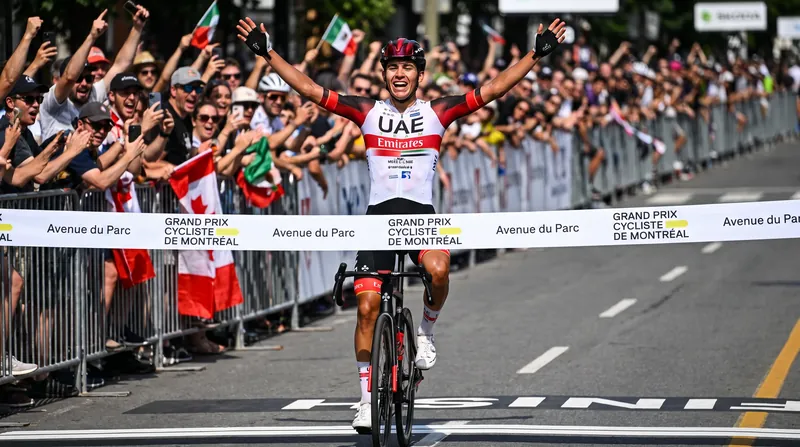
Isaac del Toro Wins Grand Prix de Montréal, Stakes Claim as World Championship Favorite
6 sources
Standings
Global Combat Sports Standings: How AI Rankings and Single-Elimination Brackets Are Reshaping the Fall Title Race
5 sources

Injury
Global Golf Injury Report: Tiger Woods Resumes Swinging as Schenk and Smylie Return to Action
6 sources

Every angle. Every day.
Get Sports stories with full source coverage and perspective breakdowns delivered to your inbox.