
The Gut-Brain Connection: How 'Psychobiotics' and Diet Shape Mental Health
Emerging research reveals that the trillions of bacteria in the human digestive tract directly influence mood, anxiety, and cognitive function. By understanding the gut-brain axis, individuals can use targeted dietary interventions to support their mental well-being.
By Factlen Editorial Team
- Nutritional Psychiatrists
- Advocate for using dietary interventions and specific psychobiotics as a primary or adjunctive treatment for mood disorders.
- Microbiome Researchers
- Focus on the biological mechanisms, emphasizing that while the gut-brain link is real, commercial claims often outpace clinical evidence.
- Public Health Advocates
- Emphasize accessible, whole-food dietary changes like eating more fiber and fermented foods over expensive, unproven probiotic supplements.
What's not represented
- · Commercial supplement manufacturers
- · Traditional psychopharmacologists
Why this matters
Mental health interventions have traditionally focused almost exclusively on brain chemistry and behavioral therapy. The discovery that everyday dietary choices can physically alter the microbiome to reduce anxiety and depression offers a powerful, accessible new tool for building emotional resilience.
Key points
- The gut-brain axis is a two-way communication network linking the digestive system directly to emotional and cognitive centers.
- Up to 90% of the body's serotonin, a key neurotransmitter for mood regulation, is produced in the digestive tract.
- Beneficial bacteria ferment dietary fiber into short-chain fatty acids, which actively reduce inflammation in the brain.
- Stanford research shows that eating fermented foods significantly increases microbial diversity and lowers stress-related inflammation.
- Experts recommend whole-food interventions—like diverse plant fibers and fermented foods—over expensive, unproven commercial supplements.
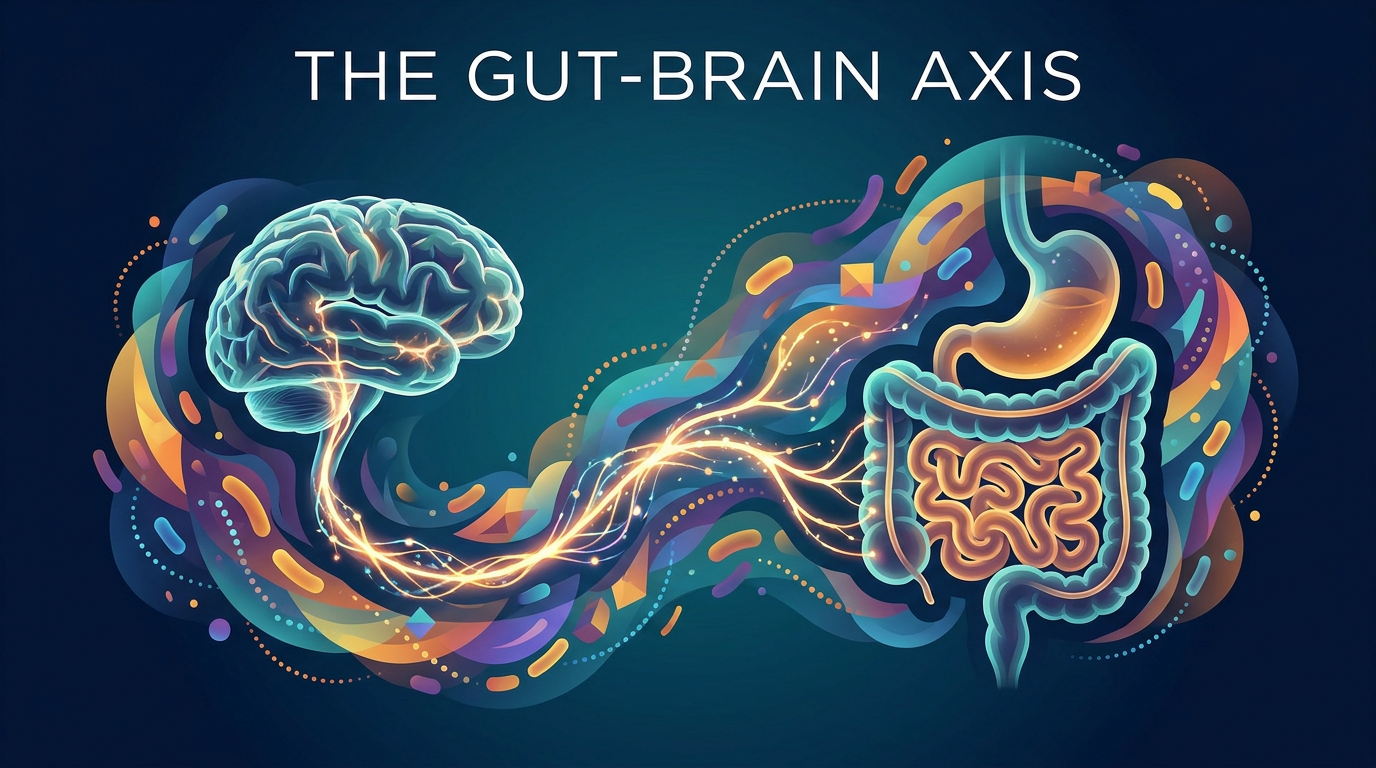
For decades, the fields of psychiatry and gastroenterology operated in entirely separate silos. Mental health was treated as a matter of brain chemistry, trauma, and behavioral patterns, while the digestive system was viewed merely as the body's engine room for processing fuel. That paradigm has fundamentally shifted. Over the last several years, a wave of clinical research has illuminated a bidirectional communication network known as the gut-brain axis, revealing that the trillions of microorganisms residing in the human digestive tract play a profound role in regulating mood, anxiety, and cognitive function.[1][6]
The sheer scale of the microbiome is staggering. The average human body contains roughly 39 trillion bacterial cells, slightly outnumbering human cells, with the vast majority concentrated in the large intestine. These microbes are not passive hitchhikers; they are highly active biochemical factories. They digest complex carbohydrates that human enzymes cannot break down, synthesize essential vitamins, and, crucially, produce a vast array of neurochemicals that directly impact the central nervous system.[2][6]
The physical connection between the gut and the brain is primarily facilitated by the vagus nerve, a massive cranial nerve that extends from the brainstem down into the abdomen. Think of the vagus nerve as a high-speed fiber-optic cable transmitting signals in both directions. While we often assume the brain is doing most of the talking, researchers have found that approximately 80 to 90 percent of the nerve fibers in the vagus nerve are actually carrying information from the gut to the brain, effectively allowing the microbiome to send continuous status updates to our emotional control centers.[1][5]
One of the most surprising discoveries in this field is the origin of the body's neurotransmitters. Serotonin, the chemical messenger most commonly associated with feelings of happiness and well-being, is heavily targeted by traditional antidepressant medications. Yet, an estimated 90 percent of the body's serotonin is actually manufactured in the digestive tract, not the brain. Specialized cells in the gut lining, stimulated by the activity of specific bacterial strains, produce this vital neurotransmitter, which then influences both local intestinal movements and systemic mood regulation.[3][5]

Beyond serotonin, gut bacteria produce other critical compounds, most notably short-chain fatty acids (SCFAs) like butyrate, propionate, and acetate. When we consume dietary fiber—which our own bodies cannot digest—our gut microbes ferment it, releasing SCFAs as a byproduct. These fatty acids are incredibly powerful anti-inflammatory agents. They help maintain the integrity of the intestinal barrier, preventing "leaky gut," and can even cross the blood-brain barrier to directly reduce neuroinflammation, a condition increasingly linked to severe depression and cognitive decline.[1][2]
This biological mechanism has given rise to a new class of interventions known as "psychobiotics." Originally coined to describe live bacterial interventions (probiotics) that yield mental health benefits, the term has expanded to include prebiotics—the specific types of fiber that feed these beneficial bacteria. Clinical trials have begun to demonstrate that targeted psychobiotic interventions can lower cortisol levels, reduce self-reported anxiety, and improve emotional processing in healthy volunteers.[3][6]
The evidence moving from animal models to human trials has been particularly compelling in the realm of whole-food diets. A landmark study conducted by researchers at Stanford Medicine tracked participants who were assigned to either a high-fiber diet or a diet rich in fermented foods for ten weeks. The results provided a clear roadmap for dietary intervention: while both diets had benefits, the fermented food group saw a significant increase in overall microbial diversity and a marked decrease in 19 different inflammatory proteins, including interleukin-6, which is heavily implicated in chronic stress and depression.[4]

The evidence moving from animal models to human trials has been particularly compelling in the realm of whole-food diets.
Fermented foods like kimchi, kefir, kombucha, sauerkraut, and traditional yogurt act as delivery vehicles for diverse, live bacterial cultures. Unlike isolated supplement pills, which often contain only a few specific strains that may not survive stomach acid, fermented foods provide a complex matrix of bacteria, yeasts, and the organic acids they produce. This synergistic environment appears to be highly effective at safely transporting beneficial microbes into the lower intestine where they can colonize and thrive.[2][4]
However, introducing new bacteria is only half the equation; they must be fed to survive. This is where prebiotics come into play. The Western diet, typically high in ultra-processed foods, refined sugars, and saturated fats, is notoriously deficient in the complex carbohydrates required to sustain a healthy microbiome. When beneficial bacteria are starved of fiber, they die off, allowing pathogenic, inflammation-promoting strains to multiply and dominate the gut ecosystem.[2][6]
To cultivate a resilient gut-brain axis, nutritional psychiatrists advocate for a diverse intake of plant-based fibers. Foods rich in specific prebiotic fibers—such as inulin and oligosaccharides—include garlic, onions, leeks, asparagus, Jerusalem artichokes, and slightly underripe bananas. By consistently providing this fuel, individuals can selectively encourage the growth of Bifidobacterium and Lactobacillus strains, which are most strongly associated with reduced anxiety and improved stress resilience.[3][5]

Despite the immense promise of psychobiotics, researchers caution that we are still in the early stages of understanding this complex ecosystem. The commercial supplement industry has moved much faster than the clinical science, flooding the market with expensive probiotic pills that make sweeping mental health claims. Many of these products have not been rigorously tested in human trials, and the specific strains they contain may not be the ones responsible for the mood-boosting effects observed in laboratory settings.[1][6]
Furthermore, the microbiome is highly individualized. Much like a fingerprint, no two people have the exact same composition of gut bacteria. What serves as an effective psychobiotic intervention for one person might have little to no effect on another, depending on their baseline microbial diversity, genetics, and environmental exposures. This variability makes it difficult to prescribe a universal "anti-anxiety probiotic" and underscores the need for personalized nutritional approaches.[1][3]
The future of mental health treatment will likely involve a hybrid approach. While severe psychiatric conditions will continue to require targeted medications and intensive therapy, the integration of nutritional psychiatry offers a foundational layer of support. By viewing the microbiome as an organ that requires daily care and feeding, patients are empowered with a tangible, daily practice to support their own emotional regulation.[5][6]

For the general public, the actionable takeaway is both simple and profound: eating for mental health means eating for your microbes. Gradually increasing the diversity of plants in one's diet and incorporating daily servings of fermented foods can begin to shift the microbial balance in a matter of weeks. As the science of the gut-brain axis continues to mature, the old adage "you are what you eat" is taking on a literal, neurological meaning.[2][4][6]
Viewpoints in depth
Nutritional Psychiatry
Views dietary intervention as a primary, actionable tool for managing mental health.
Nutritional psychiatrists argue that we can no longer treat the brain in isolation from the body. By mapping the specific pathways through which gut bacteria produce neurotransmitters and regulate inflammation, this camp advocates for prescribing dietary changes—such as increased fiber and fermented foods—alongside or even before traditional psychiatric medications for mild to moderate mood disorders. They view the daily act of eating as a continuous opportunity to modulate brain chemistry.
Microbiome Research
Focuses on the complex biological mechanisms and cautions against oversimplifying the science.
While deeply optimistic about the gut-brain axis, clinical researchers emphasize the immense complexity of the microbiome. They point out that microbial ecosystems are highly individualized, meaning a bacterial strain that reduces anxiety in one person might do nothing for another. This camp frequently pushes back against the commercial supplement industry, warning that many over-the-counter 'mood probiotics' lack rigorous human trial data and overpromise on the current state of the science.
Public Health Advocacy
Prioritizes accessible, whole-food dietary patterns over expensive clinical interventions.
Public health experts focus on the systemic dietary issues driving poor microbiome health, particularly the dominance of ultra-processed, low-fiber foods in the Western diet. Rather than focusing on isolating specific bacterial strains into expensive pills, they advocate for broad, accessible dietary shifts. Their primary message is that simply eating a wider variety of plants and traditional fermented foods is the most effective and equitable way to improve population-level mental and metabolic health.
What we don't know
- Which specific bacterial strains are most responsible for reducing anxiety in humans.
- How individual genetic differences alter the way our bodies interact with psychobiotics.
- The exact dosage and frequency of fermented foods required to achieve optimal mental health benefits.
Key terms
- Gut-Brain Axis
- The bidirectional communication network that links the enteric nervous system of the gut with the central nervous system of the brain.
- Vagus Nerve
- A major cranial nerve that runs from the brainstem to the abdomen, serving as the primary physical communication highway between the gut and the brain.
- Short-Chain Fatty Acids (SCFAs)
- Anti-inflammatory compounds produced when beneficial gut bacteria ferment dietary fiber, capable of reducing neuroinflammation.
- Prebiotics
- Specific types of complex carbohydrates and fibers that humans cannot digest, which serve as the primary food source for beneficial gut bacteria.
- Probiotics
- Live microorganisms that, when administered in adequate amounts, confer a health benefit on the host.
Frequently asked
What exactly is a psychobiotic?
A psychobiotic is a targeted intervention—usually a live bacteria (probiotic) or a specific fiber (prebiotic)—that yields mental health benefits by positively altering the gut microbiome.
Do I need to buy expensive probiotic supplements?
Not necessarily. Many researchers and public health advocates recommend getting probiotics from whole, fermented foods like kefir, kimchi, and yogurt, which provide a more complex and resilient matrix of bacteria than isolated pills.
How long does it take for diet to change the microbiome?
Research indicates that the composition of the gut microbiome can begin to shift rapidly, sometimes within a matter of days or weeks after significantly changing dietary fiber and fermented food intake.
Can diet replace my antidepressant medication?
No. Nutritional psychiatry is viewed as a powerful foundational support or adjunctive treatment, not a replacement for prescribed psychiatric medications for severe clinical conditions.
Sources
Source coverage
6 outlets
3 viewpoints surfaced






[1]Nature Reviews Gastroenterology & HepatologyMicrobiome Researchers
The microbiome-gut-brain axis in health and disease
Read on Nature Reviews Gastroenterology & Hepatology →[2]Harvard T.H. Chan School of Public HealthNutritional Psychiatrists
The Microbiome and Diet
Read on Harvard T.H. Chan School of Public Health →[3]National Institutes of HealthMicrobiome Researchers
Psychobiotics and the Manipulation of Bacteria-Gut-Brain Signals
Read on National Institutes of Health →[4]Stanford MedicinePublic Health Advocates
Fermented-food diet increases microbiome diversity, decreases inflammatory proteins
Read on Stanford Medicine →[5]American Psychological AssociationNutritional Psychiatrists
That gut feeling: How the microbiome affects mental health
Read on American Psychological Association →[6]Factlen Editorial TeamPublic Health Advocates
Synthesis by Factlen editorial team
Read on Factlen Editorial Team →
More in health
See all 115 stories →NAD+ Supplements
NAD+ Boosters for Longevity: What the Clinical Evidence Actually Shows
6 sources

Mental Health Interventions
The Evidence Pack: Why Exercise Is Becoming a First-Line Prescription for Depression
6 sources

Nutrition Labels
Chile's Strict Food Warning Labels Successfully Reduce Childhood Obesity Risk, New Data Shows
8 sources

Autoimmune Breakthrough
Revolutionary 'Immune Reset' Therapy Puts Severe Lupus Into Drug-Free Remission
7 sources
Every angle. Every day.
Get health stories with full source coverage and perspective breakdowns delivered to your inbox.