
The 'Growth Lag' and 'Pre-1940 Housing' Factors That Determine a City's Federal Community Development Block Grant
The federal CDBG program distributes billions annually through a dual-formula system designed in the 1970s. By heavily weighting pre-1940 housing and population growth lag, the math intentionally shifts funding toward older, shrinking industrial cities over rapidly growing metros.
By Ivan Smirnov

- Legacy City Administrators
- Argue that maintaining a century-old built environment with a shrinking tax base requires disproportionate federal support to prevent systemic collapse.
- Sunbelt Growth Managers
- Contend that federal anti-poverty funds should follow the actual location of low-income populations, which are increasingly concentrated in rapidly growing metros.
- Fiscal Conservatives
- Argue that formulas rewarding population loss subsidize municipal inefficiency and delay necessary local economic reforms.
Perspectives this story doesn't cover
- Local housing advocates in rapidly growing Sunbelt suburbs
- Historic preservation societies in legacy cities
Common questions
What is an entitlement community?
An entitlement community is a principal city of a metropolitan area, a city with a population of at least 50,000, or a qualified urban county that receives CDBG funds directly from HUD.
Why does the formula use 1940 as the cutoff for housing age?
The statute specifically defines 'age of housing' as units built in 1939 or earlier. This serves as a proxy for the presence of lead paint, aging plumbing, and the high costs of deferred maintenance in historic neighborhoods.
Does a city lose money if its population shrinks?
Not necessarily. Because of the 'growth lag' and 'age of housing' variables in Formula B, a shrinking city can actually receive a higher per-capita allocation than a growing city, as HUD awards whichever formula yields the higher amount.
The short answer
- The CDBG program distributes funds using a dual-formula system designed to balance the needs of growing and shrinking cities.
- Formula A favors growing Sunbelt cities by weighting raw population and overcrowding.
- Formula B favors older industrial cities by weighting pre-1940 housing stock and population growth lag since 1960.
- HUD calculates both formulas for every eligible city and awards the higher of the two amounts.
- Because the total federal appropriation is fixed, the formula weights create a zero-sum competition for urban funding.
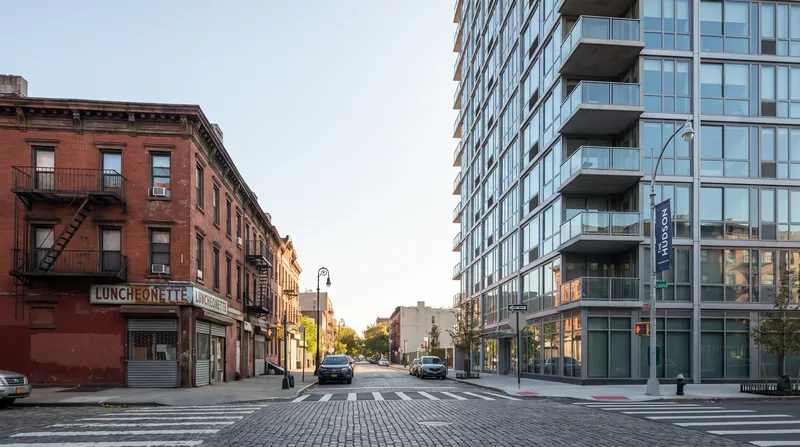
Sunbelt mayors argue that federal anti-poverty funds should follow the poor, pointing to their exploding populations and rising low-income census tracts as proof of immediate need. Legacy city administrators counter that poverty in a shrinking, century-old built environment is fundamentally more expensive to manage, arguing that maintaining aging infrastructure with a depleted tax base requires disproportionate federal support.
At the center of this structural disagreement is the Community Development Block Grant (CDBG), a multibillion-dollar annual program administered by the Department of Housing and Urban Development (HUD). For local governments, CDBG is the most flexible federal money available for neighborhood revitalization, affordable housing, and infrastructure repair.[2]
The exact amount a city receives is not determined by a simple per-capita calculation or a raw count of residents living below the poverty line. Instead, it is dictated by a dual-formula system codified in 42 U.S. Code § 5306, which mathematically balances the competing needs of growing and shrinking cities.[1]
To understand the allocation, administrators must look at the statutory weights. When Congress created the CDBG program through the Housing and Community Development Act of 1974, it established what is now known as Formula A. This initial calculation weights a city's share of the national poverty population at 50%, its total population at 25%, and its extent of housing overcrowding at 25%.[1][3]
Formula A effectively directed funds toward growing cities with expanding populations and high density. By 1977, older industrial cities in the Northeast and Midwest realized they were losing federal support precisely because their populations were declining, even as their infrastructure costs remained fixed.[3]
In response, Congress amended the statute to create Formula B. This alternative calculation drastically shifts the variables: it weights the "age of housing" at 50%, poverty at 30%, and "extent of growth lag" at 20%.[1][3]
The statute explicitly defines "age of housing" as the number of existing year-round housing units constructed in 1939 or earlier. This 1940 threshold serves as a mathematical proxy for the costs associated with legacy infrastructure, including lead paint remediation, aging plumbing, and deferred maintenance in historic neighborhoods.[1]
The statute explicitly defines "age of housing" as the number of existing year-round housing units constructed in 1939 or earlier.
The "extent of growth lag" is an even more specific metric. The law defines it as the shortfall in a city's population growth since 1960 compared to the average population growth of all entitlement cities over the same period. If a city has grown slower than the national average, or lost population entirely, this variable captures that deficit and converts it into a funding advantage.[1]
HUD calculates both Formula A and Formula B for every eligible "entitlement community"—generally defined as principal cities of metropolitan areas, other cities with populations of at least 50,000, and qualified urban counties.[2]
The critical mechanism in 42 U.S. Code § 5306 is that HUD assigns each city whichever formula yields the higher grant amount. There is no penalty for shrinking; the dual-formula system ensures that older cities automatically switch to Formula B to maximize their federal draw.[1][2]
Because the total annual CDBG appropriation is a fixed amount set by Congress, the allocation is a zero-sum game. Every dollar directed to a legacy city through the pre-1940 housing weight is a dollar not distributed to a growing Sunbelt city through the population weight.[3][4]
The Congressional Research Service notes that this dual-formula structure has successfully maintained a balance of political support across different regions for nearly five decades. However, the real-dollar value of the CDBG program has declined significantly since its peak, intensifying the local impact of these statutory weights.[4]
Critics of the current system, including analysts at the Cato Institute, argue that the formula subsidizes inefficiency. They contend that heavily weighting growth lag effectively rewards cities for failing to attract new residents and businesses, masking the need for local tax and regulatory reform.[5]
Conversely, the Center for the Study of Federalism highlights that the block grant model was specifically designed to decentralize decision-making. By providing flexible funds based on objective, albeit complex, demographic factors, the federal government allows local leaders to address their unique built environments without categorical restrictions.
Why it matters
Understanding this formula explains why federal urban funding doesn't simply follow population growth or raw poverty counts. For local administrators and residents, these statutory weights determine millions of dollars in neighborhood investment, infrastructure repair, and affordable housing support.
Jargon, explained
- Community Development Block Grant (CDBG)
- A flexible federal funding program administered by HUD that provides annual grants to local governments for neighborhood revitalization and economic development.
- Formula A
- The original 1974 CDBG allocation formula that weights poverty at 50%, population at 25%, and housing overcrowding at 25%.
- Formula B
- The 1977 alternative CDBG formula designed to aid older cities, weighting pre-1940 housing at 50%, poverty at 30%, and growth lag at 20%.
- Growth Lag
- A statutory metric defined as the shortfall in a city's population growth since 1960 compared to the average growth of all entitlement cities.
Sources
Source coverage
6 outlets
3 viewpoints surfaced






- [1]Cornell Law School
42 U.S. Code § 5306 - Allocation and distribution of funds
Read on Cornell Law School → - [2]HUD Exchange
CDBG Entitlement Program Eligibility Requirements
Read on HUD Exchange → - [3]Congressional Budget OfficeSunbelt Growth Managers
Community Development Block Grants: Reauthorization Issues
Read on Congressional Budget Office → - [4]Congressional Research Service
Trends in CDBG Program Funding and Grantee Participation
Read on Congressional Research Service → - [5]Cato InstituteFiscal Conservatives
Ending Community Development Subsidies
Read on Cato Institute → - [6]Factlen Editorial Team
Synthesis by Factlen editorial team
Read on Factlen Editorial Team →
Comments

More in Community
See all →Municipal Finance
How a Municipal Bond's 'Double-Barreled' Pledge Combines General Obligation and Revenue Security
6 sources

Urban Policy
The 40th Percentile Income and 33rd Percentile Education Thresholds That Statistically Define a Gentrifying Census Tract
5 sources
Social Capital
The Sociological Mechanisms of Bonding and Bridging Ties in Community Networks
7 sources

Pension Finance
How Actuarial Assumptions and Discount Rates Determine Public Pension Deficits
8 sources

Every angle. Every day.
Get Community stories with full source coverage and perspective breakdowns delivered to your inbox.