
The Statutory Roles and Responsibilities of the 18 Members of the U.S. Intelligence Community
Governed by Executive Order 12333 and the Intelligence Reform and Terrorism Prevention Act, the U.S. Intelligence Community divides national security collection and analysis across 18 distinct statutory elements. This federated structure legally separates foreign espionage, domestic law enforcement, and military reconnaissance into specialized jurisdictions.

- Centralized Integration Advocates
- Argue that the ODNI needs stronger budgetary and operational control over the 18 elements to prevent intelligence failures and eliminate redundant collection.
- Departmental Autonomy Defenders
- Maintain that cabinet secretaries and combatant commanders require direct control over their departmental intelligence elements to fulfill their specific statutory missions.
- Civil Liberties Watchdogs
- Focus on the strict enforcement of the boundary between foreign intelligence collection and domestic law enforcement to protect constitutional rights.
Perspectives this story doesn't cover
- Foreign intelligence services
- Cleared defense contractors
On December 4, 1981, President Ronald Reagan signed Executive Order 12333, establishing the modern jurisdictional boundaries of the United States Intelligence Community. That foundational document, heavily amended following the September 11 attacks by the 2004 Intelligence Reform and Terrorism Prevention Act, now governs a sprawling apparatus of 18 distinct statutory elements. The order dictates what each agency is permitted to collect, who they report to, and where their authorities end.[2][3]
The architecture of the intelligence apparatus is not a single monolith but a federated system. As defined by congressional reports, the community is a "federation of executive branch agencies and organizations that work separately and together to conduct intelligence activities." This decentralization is a deliberate statutory choice, designed to ensure competitive analysis and prevent any single department from monopolizing national security information.[7]
At the apex sits the Office of the Director of National Intelligence (ODNI), created in 2004 to integrate the community's efforts. The ODNI oversees the National Intelligence Program budget and establishes collection priorities for the other 17 elements. However, the Director of National Intelligence does not directly command the operational elements housed within other cabinet departments, relying instead on budgetary influence and statutory coordination mandates.[1][4]
The Central Intelligence Agency (CIA) remains the only independent agency within the community, operating entirely under Title 50 of the U.S. Code. It holds the primary statutory responsibility for human intelligence (HUMINT) collection overseas and serves as the sole authority for conducting covert action under presidential findings. Unlike departmental intelligence elements, the CIA reports directly to the ODNI and the President.[1][4]
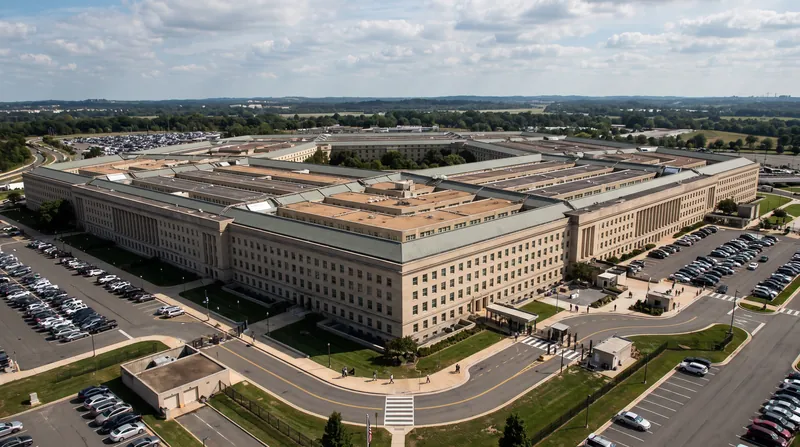
The Department of Defense houses the largest concentration of intelligence power, containing nine of the 18 elements. These defense agencies and military service components are funded primarily through the Military Intelligence Program and operate under a complex mix of Title 10 (armed forces) and Title 50 authorities, requiring them to balance national intelligence requirements with the tactical needs of combatant commanders.[4][7]
Within the defense portfolio, the National Security Agency (NSA) holds the statutory monopoly on signals intelligence (SIGINT). Operating from Fort Meade, the NSA is tasked with intercepting foreign communications and protecting U.S. national security information systems. Its operations are governed by strict minimization procedures mandated by Executive Order 12333 to protect domestic data from incidental collection.[2][5]
The National Geospatial-Intelligence Agency (NGA) manages imagery and geospatial intelligence (GEOINT), providing mapping and targeting data to both policymakers and combatant commands. Working in tandem, the National Reconnaissance Office (NRO) designs, builds, and operates the nation's fleet of reconnaissance satellites, serving as the primary orbital collection platform for both the NGA and the NSA.[1][4]
The Defense Intelligence Agency (DIA) provides foundational military intelligence, managing the defense attaché system globally and analyzing foreign military capabilities. It serves as the primary intelligence bridge between the combatant commands and the Secretary of Defense, ensuring that operational forces have the threat assessments necessary to execute Title 10 missions.[1]
The five military service intelligence branches—Army Intelligence and Security Command, the Office of Naval Intelligence, Marine Corps Intelligence Activity, 16th Air Force, and the Space Force's Space Delta 7—focus on tactical and operational intelligence specific to their respective warfighting domains. The Space Force became the 18th member of the community in December 2020, reflecting the statutory recognition of space as a distinct intelligence domain.[1][6]
The Space Force became the 18th member of the community in December 2020, reflecting the statutory recognition of space as a distinct intelligence domain.
Beyond the military, the community extends into domestic and civilian departments, bounded by strict statutory firewalls to protect civil liberties. Executive Order 12333 mandates that elements must collect "timely, accurate, and insightful information about the activities, capabilities, plans, and intentions of foreign powers," while explicitly prohibiting domestic espionage by foreign-facing agencies like the CIA and NSA.[2]
The Federal Bureau of Investigation's Intelligence Branch operates under both Title 50 and Title 18 (law enforcement), bridging the gap between domestic counterterrorism and foreign counterintelligence. It serves as the primary domestic collection agency, operating under the oversight of the Foreign Intelligence Surveillance Court to ensure constitutional protections are maintained during national security investigations.[1][4]
The Department of Homeland Security's Office of Intelligence and Analysis (I&A) and Coast Guard Intelligence focus on border security, maritime domain awareness, and critical infrastructure protection. They are uniquely positioned by statute to share classified threat data with state, local, tribal, and private-sector partners, acting as the conduit between federal intelligence and domestic infrastructure operators.[1]
The State Department's Bureau of Intelligence and Research (INR) provides all-source analysis directly to the Secretary of State. As a purely analytical body with no collection assets of its own, INR relies on data gathered by other elements. This detachment from collection operations frequently allows INR to serve as an independent dissenting voice in community-wide assessments.[1][4]
The Treasury's Office of Intelligence and Analysis (OIA) tracks terrorist financing, sanctions evasion, and foreign economic threats, providing the intelligence backbone for U.S. financial statecraft. Concurrently, the Department of Energy's Office of Intelligence and Counterintelligence monitors foreign nuclear weapons programs and secures the U.S. nuclear complex against foreign espionage.[1]
The Drug Enforcement Administration's Office of National Security Intelligence (ONSI) leverages global law enforcement networks to track transnational syndicates that threaten national security. This 18-member structure creates intentional redundancies, designed by Congress to prevent the concentration of intelligence power while ensuring policymakers receive competitive, multi-source analysis before making strategic decisions.[3][7]
What to know
- The U.S. Intelligence Community consists of 18 distinct statutory elements governed by Executive Order 12333.
- The Department of Defense houses the majority of the community's collection assets, containing nine of the 18 elements.
- The Central Intelligence Agency is the only independent agency in the community, operating outside of any cabinet department.
- The Office of the Director of National Intelligence oversees the community's budget and priorities but lacks direct operational command over departmental elements.
Key terms
- Title 10
- The section of the U.S. Code that outlines the role of the armed forces, providing the legal basis for military operations and defense intelligence support.
- Title 50
- The section of the U.S. Code governing war and national defense, which provides the statutory authority for foreign intelligence collection and covert action.
- Covert Action
- An activity of the U.S. government to influence political, economic, or military conditions abroad, where it is intended that the role of the United States will not be apparent or acknowledged publicly.
- HUMINT
- Human Intelligence; information gathered by human sources, primarily managed overseas by the Central Intelligence Agency.
- SIGINT
- Signals Intelligence; information gathered by intercepting electronic communications and radar emissions, a discipline statutorily controlled by the National Security Agency.
Sources
Source coverage
8 outlets
3 viewpoints surfaced








- [1]Office of the Director of National IntelligenceCentralized Integration Advocates
Members of the IC
Read on Office of the Director of National Intelligence → - [2]Office of the Director of National IntelligenceCentralized Integration Advocates
Executive Order 12333 United States Intelligence Activities
Read on Office of the Director of National Intelligence → - [3]Congressional Research ServiceCivil Liberties Watchdogs
U.S. Intelligence Community Establishment Provisions
Read on Congressional Research Service → - [4]Belfer Center for Science and International AffairsDepartmental Autonomy Defenders
Organization of the Intelligence Community
Read on Belfer Center for Science and International Affairs → - [5]National Security Agency
Executive Order 12333
Read on National Security Agency → - [6]Senate Select Committee on IntelligenceCentralized Integration Advocates
Intelligence Authorization Act for Fiscal Year 2024, as reported on June 22, 2023
Read on Senate Select Committee on Intelligence → - [7]GovInfoDepartmental Autonomy Defenders
An Overview of the Intelligence Community
Read on GovInfo → - [8]Factlen Editorial Team
Synthesis by Factlen editorial team
Read on Factlen Editorial Team →
Comments
More in Defense & Security
See all →Operational Art
The Source of Power: How a Center of Gravity is Identified and Targeted in Operational Art
7 sources
Defense Procurement
The Technology Readiness Level 6-7 Gap: How the 'Valley of Death' Separates Defense R&D from Program of Record
6 sources

Arctic Infrastructure
Ukraine Executes Deepest Strike of the War on Russian Arctic Gas Infrastructure
5 sources

Landmine Eradication
Croatia Achieves Mine-Free Status as Global Eradication Efforts Target 2030
6 sources

Every angle. Every day.
Get Defense & Security stories with full source coverage and perspective breakdowns delivered to your inbox.