
The 'Green Collar' Boom: How Vocational Schools Are Powering the Clean Energy Transition
As demand for wind turbine technicians and EV battery specialists skyrockets, community colleges are rapidly deploying specialized training programs to close a critical skills gap.
By Factlen Editorial Team
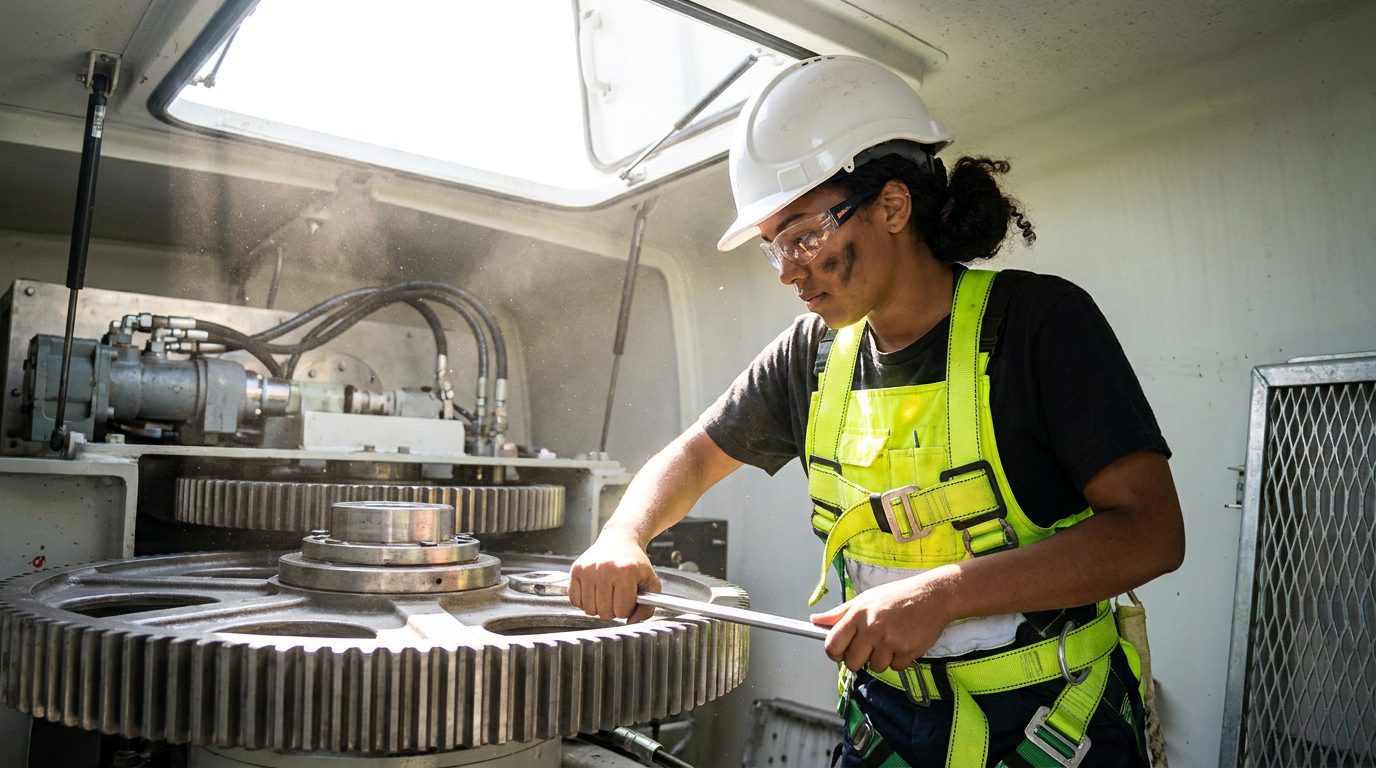
- Vocational Educators
- Focuses on the need to rapidly adapt curricula to provide hands-on, safety-first training for emerging technologies.
- Clean Energy Employers
- Emphasizes the critical skills gap and the urgent need for trained technicians to prevent deployment bottlenecks.
- Labor Economists
- Analyzes the shift away from four-year degrees while contextualizing high percentage growth rates against absolute job numbers.
What's not represented
- · Traditional fossil fuel workers transitioning to green energy
- · High school career counselors
Why this matters
The transition to renewable energy has created some of the fastest-growing occupations in the world. For workers seeking high-paying, future-proof careers without a four-year degree, this vocational shift offers a lucrative alternative to traditional college paths.
Key points
- Wind turbine technician is the fastest-growing occupation in the U.S., with a projected 50% growth rate.
- Community colleges are launching accelerated 14-week to 2-year programs in EV and wind technology.
- These jobs offer high salaries and strong job security without requiring a four-year university degree.
- The physical installation and maintenance of green infrastructure is highly resistant to AI automation.
- Despite high growth percentages, the absolute number of new jobs is smaller than traditional trades.
The global transition to clean energy has encountered a significant bottleneck, and it is not a lack of capital or technology—it is a shortage of skilled hands. Across the United States and Europe, solar panels are frequently being manufactured faster than they can be installed, and new wind farms are being commissioned in regions that lack qualified maintenance engineers.[2]
The solution to this deployment gap is quietly unfolding in community colleges and trade schools. A new wave of "green collar" vocational training is replacing traditional four-year degrees as the fastest and most direct route into the booming renewable energy sector, transforming how the next generation of infrastructure workers is educated.[6]
The data driving this educational shift is staggering. According to the U.S. Bureau of Labor Statistics, wind turbine service technician is currently the fastest-growing occupation in the country, boasting a projected growth rate of roughly 50% between 2024 and 2034. Solar photovoltaic installers follow closely behind at 42%.[1][5]

To meet this surging demand, educational institutions are rapidly rewriting their curricula. Traditional auto-mechanic and electrical programs are being overhauled or entirely replaced by specialized tracks that focus on high-voltage electric vehicle (EV) battery diagnostics, microgrid engineering, and Level 3 charging station maintenance.[6]
For example, Shelton State Community College in Alabama recently launched an intensive EV Training Program that covers everything from battery thermal management to commercial DC fast-charger troubleshooting. Similarly, Oakland Community College in Michigan now offers a 14-week EV Technician program designed to move students directly onto the assembly line or into specialized repair facilities.[3][4]
These modern vocational programs emphasize hands-on, simulation-heavy learning. Students practice disabling high-voltage systems, tracing complex wiring faults, and climbing simulated turbine towers in controlled environments. The focus is entirely on practical safety, regulatory compliance, and immediate employability.[3][4]

These modern vocational programs emphasize hands-on, simulation-heavy learning.
The financial return on these short-term educational investments is highly competitive. The median annual salary for a wind turbine technician sits around $64,000, with top earners in high-demand regions making well over $90,000. Crucially, these roles rarely require more than a high school diploma combined with a trade certificate or a two-year associate degree.[1][5]
Furthermore, labor analysts consider these jobs to be highly "future-proof." While automation and artificial intelligence are beginning to moderate job growth on the factory floor—particularly in solar panel manufacturing—the physical installation and maintenance of infrastructure remains strictly manual labor. An AI cannot climb a 300-foot turbine tower, nor can it physically replace a degraded EV battery cell.[2][5]
However, economists note that the absolute number of these jobs is still relatively small compared to traditional trades like plumbing or nursing. While the 50% growth rate for wind technicians is mathematically impressive, it translates to roughly 2,300 new openings per year in the U.S., because the base number of existing technicians is only around 13,600.[5]
Additionally, the reality of the work is physically demanding and carries inherent risks. Wind technicians must be comfortable working at extreme heights, in confined spaces, and in harsh weather conditions. Meanwhile, EV technicians must adhere to strict, life-saving protocols when handling high-voltage electrical systems that can be lethal if mishandled.[1][3]

Despite these hurdles, the influx of federal funding from legislation like the Inflation Reduction Act has cemented the long-term viability of the green-collar sector. With hundreds of billions of dollars committed to new wind, solar, and EV infrastructure over the next decade, the demand for specialized vocational training is only expected to accelerate.[5]
Ultimately, the rise of green vocational programs represents a significant shift in the American educational landscape. It proves that the road to a lucrative, technologically advanced career does not always run through a four-year university, but increasingly, up the ladder of a wind turbine or into the diagnostic bay of an EV service center.[6]
How we got here
2022
The Inflation Reduction Act passes, spurring massive investment in U.S. clean energy infrastructure.
2024
Global renewable energy employment reaches a record 16.6 million jobs.
2026
Community colleges rapidly expand accelerated EV and wind technician programs to meet surging industry demand.
Viewpoints in depth
Vocational Educators
Focuses on the need to rapidly adapt curricula to provide hands-on, safety-first training.
Educators at community colleges and trade schools argue that traditional four-year engineering degrees are not the most efficient way to solve the clean energy skills gap. Instead, they emphasize the need for rapid, hands-on certification programs—often lasting just 14 weeks to two years. These programs prioritize practical safety, such as high-voltage electrical protocols and tower-climbing rescue techniques, ensuring graduates are immediately employable on the factory floor or out in the field.
Clean Energy Employers
Emphasizes the critical skills gap and the urgent need for trained technicians.
For companies manufacturing solar panels, erecting wind turbines, and deploying EV charging networks, the primary bottleneck to growth is human capital. Industry leaders report that infrastructure is frequently being built faster than it can be maintained. They view the expansion of vocational training as an existential necessity for the sector, arguing that without a massive influx of skilled green-collar workers, billions of dollars in federal and private investments will stall.
Labor Economists
Analyzes the shift away from four-year degrees and contextualizes the growth data.
Labor analysts view the green-collar boom as a validation of the vocational education model, proving that high-paying, future-proof careers do not strictly require a university diploma. However, economists caution against misinterpreting the data. While a 50% growth rate for wind technicians is the highest in the nation, the occupation's small baseline means it will only add a few thousand absolute jobs per year—far fewer than slower-growing but massive sectors like healthcare or traditional construction.
What we don't know
- Whether vocational schools can scale their programs fast enough to meet the demand generated by federal infrastructure spending.
- How the long-term physical toll of wind turbine maintenance will affect career longevity for technicians.
Key terms
- Green-collar worker
- A professional whose job directly contributes to reducing environmental harm, such as installing solar panels or maintaining wind turbines.
- Photovoltaic (PV) system
- A technology that converts sunlight directly into electricity using solar panels.
- Level 3 Charger
- Also known as DC fast chargers, these are high-powered commercial stations capable of rapidly charging an electric vehicle.
- Nacelle
- The housing at the top of a wind turbine tower that contains the generator, gearbox, and other mechanical components.
Frequently asked
Do I need a college degree to become a wind turbine technician?
No. Most entry-level positions require a high school diploma combined with a postsecondary trade certificate or a two-year associate degree.
How much do green-collar jobs pay?
The median annual salary for a wind turbine technician is approximately $64,000, with top earners making over $90,000. Solar installers earn a median of roughly $51,000.
What does an EV technician do?
EV technicians diagnose, service, and repair high-voltage electric vehicles and commercial charging stations, focusing on battery thermal management and electrical safety.
Sources
Source coverage
6 outlets
3 viewpoints surfaced






[1]U.S. Bureau of Labor StatisticsLabor Economists
Wind Turbine Technicians: Occupational Outlook Handbook
Read on U.S. Bureau of Labor Statistics →[2]Green Fuel JournalClean Energy Employers
Renewable Energy Job Market Overview — Global Employment Trends
Read on Green Fuel Journal →[3]Shelton State Community CollegeVocational Educators
Electric Vehicle (EV) Training Program
Read on Shelton State Community College →[4]Oakland Community CollegeVocational Educators
Electric Vehicle (EV) Technician Training Program
Read on Oakland Community College →[5]ExternLabor Economists
Are Green Energy Jobs Actually Worth Pursuing?
Read on Extern →[6]Factlen Editorial TeamLabor Economists
Synthesis by Factlen editorial team
Read on Factlen Editorial Team →
Every angle. Every day.
Get education stories with full source coverage and perspective breakdowns delivered to your inbox.