
The Great Rebundling: How the 'Mega-App' Era is Finally Solving Streaming Fatigue
With the DOJ approving the $111 billion Paramount-Warner Bros. Discovery merger and Disney preparing to sunset the standalone Hulu app, the fragmented streaming landscape is rapidly consolidating into a few unified platforms.
By Factlen Editorial Team
- Media Conglomerates
- Driven by the need for profitability, they view app consolidation as the only way to reduce overhead and compete with tech giants.
- Consumer Experience
- Focused on the day-to-day usability of streaming, celebrating the end of app-juggling and fragmented watchlists.
- Market Regulators
- Tasked with ensuring that massive media mergers do not create monopolies that ultimately harm consumer pricing.
What's not represented
- · Independent Filmmakers
- · Mid-tier Streaming Services
Why this matters
For years, consumers have been forced to juggle multiple subscriptions, separate watchlists, and rising costs to watch their favorite shows. The shift toward unified 'Mega-Apps' means viewers will soon be able to access massive, combined content libraries from a single interface, significantly reducing subscription fatigue.
Key points
- The U.S. Justice Department has officially approved the $111 billion merger between Paramount and Warner Bros. Discovery.
- Disney is executing 'Project Gemini' to fully decommission the standalone Hulu app by the end of 2026.
- The streaming industry is abandoning the 'growth at all costs' model in favor of profitability and reduced overhead.
- Unified 'Mega-Apps' are designed to reduce subscriber churn by offering massive, all-in-one content libraries.
- While consumers benefit from reduced app fatigue, watchdogs warn the consolidation could eventually lead to higher prices.
For the better part of a decade, the streaming television landscape has resembled a chaotic, rapidly expanding digital land grab. Consumers who originally cut the cord to escape bloated cable packages found themselves forced to juggle a half-dozen separate subscriptions, navigate entirely different user interfaces, and manage increasingly fragmented watchlists just to keep up with the cultural zeitgeist. The financial toll of maintaining Netflix, Hulu, Disney+, HBO Max, and Paramount+ simultaneously led to widespread "subscription fatigue," leaving viewers frustrated by the sheer friction of finding something to watch. But in June 2026, the entertainment industry reached a definitive and highly anticipated tipping point. The era of endless fragmentation is officially drawing to a close, replaced by the dawn of the "Mega-App"—a structural rebundling that promises to put the viewer's convenience back at the center of the living room experience.[1][2]
This massive shift toward consolidation accelerated dramatically this month with two monumental developments that will reshape how billions of hours of content are consumed. First, the United States Justice Department officially closed its extensive antitrust investigation into the proposed $111 billion merger between Paramount and Warner Bros. Discovery. By finding no actionable threat to competition or consumers, federal regulators gave the definitive green light to combine two of Hollywood's most storied and content-rich studios into a single, unified streaming juggernaut. This regulatory clearance removes the final major hurdle for a deal that industry insiders have been anticipating for months, setting the stage for a seismic realignment of the global media hierarchy.[1]
Simultaneously, leaked internal documents and employee reports revealed that Disney is actively executing "Project Gemini," a comprehensive, multi-phased engineering initiative designed to fully decommission the standalone Hulu application by the end of the year. Rather than maintaining Hulu as a separate destination, Disney is migrating all of its mature-skewing content, live television features, and millions of active users directly into the flagship Disney+ platform. This isn't merely a cosmetic rebranding; it represents the complete dismantling of one of the internet's pioneering streaming architectures in favor of a single, all-encompassing digital ecosystem.[2][6]
Together, these twin developments signal a massive structural rebundling of the entertainment industry that directly benefits the end user. For consumers who have grown exhausted by the friction of modern television—constantly subscribing, canceling, and resubscribing to different services just to follow specific shows—the consolidation promises a return to a simpler, more centralized viewing experience. Ironically, this new Mega-App paradigm closely mirrors the traditional, all-in-one cable bundles that streaming technology was originally designed to disrupt and destroy, proving that convenience ultimately dictates consumer behavior.[5]

The Paramount-Warner Bros. Discovery merger stands as perhaps the most seismic shift in the media landscape since Disney acquired 21st Century Fox in 2019. By combining Paramount—which owns the CBS broadcast network, MTV, and the Paramount+ streaming service—with the much larger Warner Bros. Discovery portfolio, which includes HBO Max, CNN, and the Warner Bros. film studio, the newly formed conglomerate will boast a historic content library. This combined catalog of prestige Sunday-night dramas, live sports rights, and blockbuster cinematic franchises will create a platform genuinely capable of rivaling Netflix's dominant market share.[1]
In its final assessment, the Justice Department concluded that the $111 billion mega-deal poses no significant monopolistic threat to competition or consumers across the film, broadcast television, or digital streaming sectors. In a triumphant statement released immediately following the regulatory decision, Paramount executives described the merger as inherently "pro-competitive." They argued that creating a combined, heavyweight entity is the only viable way for legacy Hollywood studios to survive and thrive against dominant, cash-rich technology platforms like Apple and Amazon, which view entertainment as a loss-leader for their broader hardware and retail ecosystems.[1]
While the Paramount-Warner Bros. Discovery merger completely reshapes the corporate hierarchy of Hollywood, Disney's "Project Gemini" offers the clearest, most immediate look at how the Mega-App era will actually function on a consumer's television screen. The House of Mouse has been telegraphing this move for years, slowly conditioning its massive subscriber base to view Disney+ not just as a repository for animated classics and Marvel superhero films, but as a comprehensive general entertainment destination capable of housing everything from prestige FX dramas to live sports.[2]
Disney officially gained full, unencumbered control of Hulu after executing a contractual clause to buy out Comcast's remaining minority stake for roughly $8 billion. This massive financial transaction ended a complex, often fraught joint-venture arrangement that dated back to the very dawn of the streaming era, when multiple broadcast networks pooled their resources to combat the rise of digital piracy. Since taking full ownership, Disney's executive team has been steadily and methodically laying the technical and branding groundwork for a unified, single-app platform.[6]
Disney officially gained full, unencumbered control of Hulu after executing a contractual clause to buy out Comcast's remaining minority stake for roughly $8 billion.
According to internal engineering sources and leaked memos, Disney is no longer adding major new features, interface updates, or significant technical improvements to the standalone Hulu app. The legacy platform has effectively been placed on "life support" as the company's top software engineers and development resources are aggressively diverted to fortify the flagship Disney+ platform. The ultimate, stated goal of Project Gemini is to decommission the Hulu tech stack entirely and permanently shut down the app once all active users and their associated data have been safely transitioned to the new unified system.[2][6]
This deep technical integration is already becoming highly visible to everyday subscribers. In mid-June, Disney rolled out a significant software update allowing users to fully link their existing Hulu profiles directly to their Disney+ accounts. This backend handshake seamlessly imports years of watch history, meticulously curated saved lists, and highly personalized algorithmic recommendations into the unified app. By ensuring that users don't lose their personalized data during the transition, Disney is actively minimizing the friction that typically accompanies major platform migrations.[3]
This industry-wide rush toward technical consolidation is driven by a harsh, unavoidable financial reality. The "growth at all costs" mandate that defined the early, freewheeling days of the streaming wars—where studios burned billions of dollars to acquire subscribers at artificially low price points—has been entirely replaced by Wall Street's ruthless demand for immediate profitability. Maintaining two separate backend technology stacks, designing two distinct user interfaces, and funding two separate global marketing budgets is an exorbitant luxury that even the wealthiest legacy media studios can no longer afford to sustain.[2][5]

By merging platforms and decommissioning redundant apps, media giants can drastically reduce their operational overhead and streamline their engineering teams. Furthermore, unified Mega-Apps inherently reduce "churn"—the dreaded industry term for fickle subscribers who cancel their monthly service the moment they finish binge-watching a specific show. When a viewer has seamless access to HBO's prestige Sunday night dramas, CBS's live NFL broadcasts, and Warner's massive theatrical film library all within a single, unified application, the perceived value skyrockets, making them far less likely to ever hit the cancel button.[1][5]
Crucially, this rebundling trend is not confined to the United States; the global streaming market is undergoing a remarkably similar contraction as regional players seek safety, scale, and profitability in numbers. As the digital entertainment sector matures, companies around the world are realizing that fragmented, niche services simply cannot generate the sustained revenue required to fund premium original content in an increasingly crowded and expensive marketplace. International markets are now mirroring the American shift toward massive, unified platforms that offer comprehensive entertainment solutions rather than specialized niches.[4]
Just days after the Paramount-Warner Bros. Discovery merger received its regulatory approval in Washington, Asian streaming giants Viu and iQiyi International announced a massive, unprecedented bundled subscription partnership across Southeast Asia. This landmark agreement will seamlessly combine their respective, highly lucrative libraries of Korean television, Chinese cinema, and local Southeast Asian dramas into a single, powerhouse offering. The unified service will be made available to tens of millions of viewers across Indonesia, Thailand, the Philippines, and Malaysia, proving that the Mega-App strategy is a universally appealing solution to subscriber fatigue.[4]
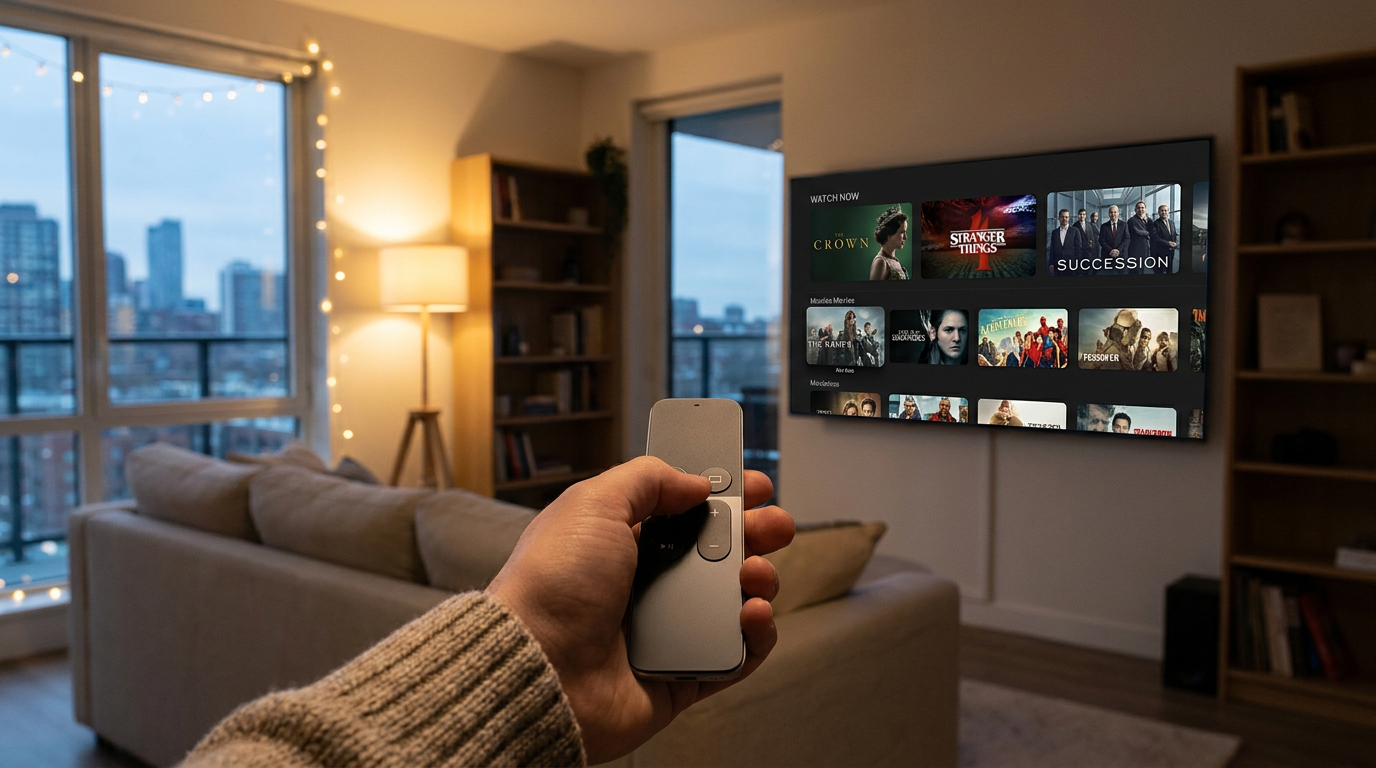
For the average viewer sitting on their couch, the immediate, tangible benefits of the Mega-App era are overwhelmingly positive. Finding a specific movie or discovering a new series will no longer require endlessly toggling and searching across four different, siloed platforms. Managing monthly entertainment budgets will become significantly easier and more predictable, and the overall user experience will finally deliver on the seamless, on-demand promise that streaming technology made over a decade ago.

However, this rapid, unprecedented wave of corporate consolidation does carry significant long-term risks that consumer watchdogs are monitoring closely. While the federal Justice Department ultimately cleared the $111 billion Paramount-Warner Bros. Discovery merger, several individual states—most notably California—have raised ongoing, vocal antitrust concerns regarding the concentration of media power. Furthermore, the European Union is currently conducting its own rigorous investigation into the deal's potential impact on the global entertainment market and independent content creators.[1]
Consumer advocates and industry skeptics worry that once the streaming landscape is permanently reduced to an oligopoly of three or four dominant Mega-Apps—likely Netflix, the combined Paramount/WBD platform, Disney+, and Amazon Prime—these behemoths will possess unprecedented, unchecked pricing power. Without the fierce, desperate competition for market share that defined the early 2020s, the monthly cost of these massive, unified bundles could eventually creep upward, ultimately mirroring the inflated, inescapable cable bills that consumers originally fled.
For now, though, the entertainment industry is entirely focused on smoothing the technical transition and winning back the goodwill of frustrated viewers. As the pioneering standalone Hulu app prepares for its final, inevitable sunset, and as Paramount and Warner Bros. begin the incredibly complex, multi-year process of merging their vast technological infrastructures, the modern living room television is finally getting a much-needed, highly celebrated decluttering. Consumers are currently enjoying the honeymoon phase of this transition, reaping the benefits of massive content libraries without yet facing the potential reality of monopolistic price hikes.[2][6]

The chaotic, fragmented era of the streaming wars is effectively over, replaced by a more stable, consolidated media landscape. The frantic battle for sheer subscriber growth has been permanently replaced by a calculated, high-stakes race for long-term retention and corporate profitability. In this new, mature phase of the digital entertainment industry, the ultimate weapon is no longer just a hit television show or a viral movie—it is the frictionless, all-in-one convenience of the Mega-App, a tool designed to keep viewers engaged, satisfied, and subscribed for years to come.
How we got here
2019
Disney acquires 21st Century Fox, gaining a controlling majority stake in the Hulu streaming platform.
2024
Disney officially buys out Comcast's remaining minority stake in Hulu for approximately $8 billion.
June 2026
The U.S. Justice Department approves the $111 billion merger between Paramount and Warner Bros. Discovery.
Late 2026
Disney's 'Project Gemini' is scheduled to fully decommission the standalone Hulu app tech stack.
Viewpoints in depth
Consumer Advocates
Excited about reduced app fatigue but wary of future price hikes.
Consumer advocacy groups largely view the end of the fragmented streaming era as a short-term victory for usability. Viewers have long complained about the friction of managing multiple subscriptions, remembering different passwords, and searching across various interfaces to find a specific movie. However, these groups are deeply concerned about the long-term implications of an oligopoly. They argue that once the market is controlled by just three or four Mega-Apps, the lack of fierce competition will inevitably lead to synchronized price hikes, effectively recreating the expensive cable bundles that streaming was supposed to replace.
Media Executives
Focused on profitability, reducing churn, and competing with tech giants.
For legacy Hollywood studios, consolidation is viewed as a matter of basic survival. The initial phase of the streaming wars required burning billions of dollars to build bespoke tech stacks and market individual apps. By merging platforms, executives can instantly slash redundant engineering and marketing costs. More importantly, massive content libraries are the most effective weapon against subscriber 'churn.' Executives argue that a unified app offering live sports, prestige dramas, and blockbuster films makes the service indispensable to a household, securing reliable, long-term revenue to compete against tech behemoths like Apple and Amazon.
Antitrust Regulators
Monitoring the consolidation for monopolistic pricing power, despite DOJ approval.
While the federal Justice Department ultimately found no actionable threat in the Paramount-Warner Bros. Discovery merger, regulatory scrutiny of the streaming sector remains high. State-level regulators, particularly in California, alongside international bodies like the European Union, continue to investigate whether these massive consolidations stifle independent content creation. Regulators are primarily concerned that as the number of buyers for original content shrinks, independent studios and creators will lose negotiating leverage, ultimately leading to a less diverse media landscape.
What we don't know
- It remains unclear exactly when the combined Paramount and Warner Bros. Discovery streaming platform will officially launch to the public.
- It is unknown whether the reduction in market competition will lead to higher baseline subscription prices across the remaining Mega-Apps.
Key terms
- Mega-App
- A unified streaming platform that houses content from multiple previously separate studios or networks, designed to be a one-stop entertainment destination.
- Churn
- An industry metric measuring the rate at which subscribers cancel their streaming service, often immediately after finishing a specific show.
- Tech Stack
- The underlying layers of software, servers, and code required to operate a digital platform like a streaming app.
Frequently asked
Do I need to cancel my standalone Hulu account?
Not yet. Disney is currently migrating profiles and watchlists to Disney+, but the standalone Hulu app will remain functional until the technical transition is fully completed later this year.
What happens to HBO Max and Paramount+?
With the DOJ approving the merger between Paramount and Warner Bros. Discovery, the two companies are expected to eventually combine their streaming platforms into a single service, though a specific launch date has not been announced.
Will these Mega-Apps save me money?
In the short term, bundled apps typically offer a discount compared to paying for each service individually. However, consumer advocates warn that less competition could lead to higher baseline prices in the future.
Sources
Source coverage
6 outlets
3 viewpoints surfaced






[1]NPRMarket Regulators
Justice Dept. approves Paramount's acquisition of Warner Bros. Discovery
Read on NPR →[2]Business InsiderMedia Conglomerates
Disney has internal plan to sunset Hulu app: Report
Read on Business Insider →[3]CBRConsumer Experience
Disney+ Adds More Hulu Features Ahead of Merger
Read on CBR →[4]Screen DailyMedia Conglomerates
Viu and iQiyi International partner to launch Southeast Asia streaming bundle
Read on Screen Daily →[5]Yahoo FinanceMedia Conglomerates
Disney to stop reporting subscriber numbers, focus on streaming profitability
Read on Yahoo Finance →[6]StuffConsumer Experience
Disney could be about to shutdown the longstanding Hulu streaming app
Read on Stuff →

Every angle. Every day.
Get entertainment stories with full source coverage and perspective breakdowns delivered to your inbox.