
The Global Rise of Office-to-Residential Conversions
As remote work leaves commercial towers vacant and cities face severe housing shortages, developers are increasingly transforming empty offices into apartments. While architectural challenges and high costs remain, aggressive municipal incentives and environmental benefits are driving a record number of adaptive reuse projects worldwide.
By Factlen Editorial Team
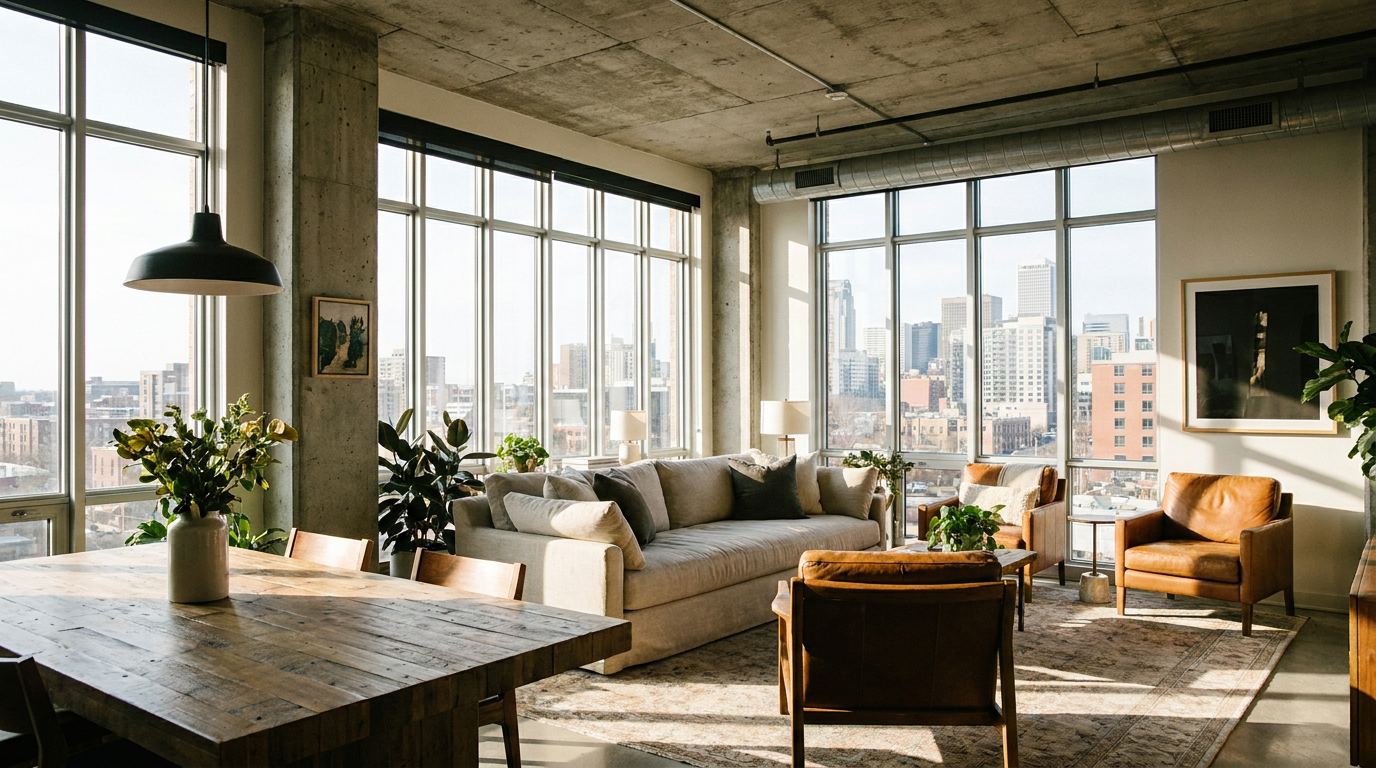
- Urban Planners & Developers
- Focuses on revitalizing downtowns, overcoming architectural hurdles, and unlocking real estate value.
- Municipal Governments & Financiers
- Prioritizes solving housing shortages, replacing lost commercial tax revenue, and structuring financial incentives.
- Environmental & Heritage Advocates
- Emphasizes the preservation of historic architecture and the reduction of embodied carbon emissions.
What's not represented
- · Existing commercial tenants facing eviction
- · Affordable housing advocates concerned about luxury-only conversions
Why this matters
The transformation of empty office buildings into housing offers a dual solution to two of the most pressing urban crises of the decade. For residents, it promises an influx of much-needed housing supply in dense downtowns, while for cities, it provides a lifeline to save local economies and reduce the massive carbon footprint of new construction.
Key points
- The number of US office spaces scheduled for conversion to apartments has tripled since 2022, reaching over 70,000 units.
- Deep commercial floorplates require developers to carve massive light wells into buildings to meet residential natural light requirements.
- Cities are offering aggressive tax abatements and zoning overhauls to offset the massive engineering costs of retrofitting plumbing and HVAC systems.
- Adaptive reuse significantly reduces greenhouse gas emissions by preserving the embodied carbon of existing concrete and steel structures.
For decades, the rhythm of the global city was dictated by the commercial office tower. Millions of workers commuted into dense downtown cores at dawn and evacuated at dusk, leaving behind canyons of glass and steel. But the post-2020 shift toward remote and hybrid work fundamentally broke that rhythm, leaving cities worldwide grappling with record-high commercial vacancy rates. Simultaneously, a severe shortage of affordable and market-rate housing has pushed urban living costs to breaking points. These two parallel crises—empty offices and missing homes—have collided to accelerate one of the most significant real estate trends of the decade: the office-to-residential conversion.[7]
The concept falls under the broader umbrella of "adaptive reuse," a practice that involves repurposing an existing structure for a new use rather than demolishing it. While adaptive reuse is not a new concept, its application to modern commercial office space is experiencing an unprecedented boom. Real estate developers, urban planners, and municipal governments are increasingly viewing vacant commercial towers not as distressed liabilities, but as the raw material for the next generation of urban housing.[4][5]
The numbers illustrate a dramatic shift in the real estate pipeline. According to industry data, the number of office spaces scheduled to be converted into apartments in the United States grew from roughly 23,100 units in 2022 to over 70,700 units in the 2025 pipeline. These conversions now account for nearly 42% of all future adaptive reuse projects nationwide. Major urban hubs like New York, Washington D.C., and Chicago are leading the charge, transforming millions of square feet of underutilized commercial space into vibrant residential communities.[1]

While the current surge is heavily concentrated in North America, the philosophy of adaptive reuse has deep roots globally. In Europe, where cities have centuries of architectural history to manage, repurposing industrial and commercial infrastructure is a well-established practice. Iconic projects like the transformation of London’s Battersea Power Station into a mixed-use neighborhood, or the Tate Modern art gallery—housed in a former power plant—demonstrate the continent's comfort with structural reincarnation.[4][7]
The trend is also gaining traction across Asia, where rapid urbanization has historically favored demolition and new construction. Cities are beginning to recognize the cultural and economic value of preserving older structures. In Bangkok, the Warehouse 30 project successfully transformed a historic riverside warehouse complex into a thriving creative and residential hub. Similarly, Factory Phnom Penh in Cambodia repurposed a 1960s garment factory into a vibrant mixed-use space, signaling a regional shift toward sustainable urban regeneration.[4]
However, transforming a mid-century office tower into a modern apartment building is far more complex than simply erecting drywall and moving in beds. Commercial buildings were engineered for a fundamentally different type of human occupation. The architectural and engineering hurdles are immense, requiring developers to completely reimagine the internal anatomy of these massive structures.[3][7]
The most significant architectural challenge is the "floorplate"—the total square footage of a single floor. Modern office buildings typically feature massive, deep floorplates designed to pack hundreds of cubicles into a single open space. Because residential building codes strictly require natural light and ventilation for bedrooms, these deep interiors become problematic. To solve this, architects often have to carve massive "light wells" or courtyards directly through the center of the building, sacrificing leasable square footage to ensure every apartment has access to a window.[5]

The most significant architectural challenge is the "floorplate"—the total square footage of a single floor.
Beyond the architecture, the mechanical systems require a total overhaul. Office buildings are built with centralized plumbing, featuring large communal bathrooms clustered around the elevator core. Residential buildings, by contrast, require complex, decentralized plumbing networks to service individual kitchens and bathrooms in every unit. Similarly, commercial HVAC systems are designed to heat and cool massive open zones, whereas apartments require individualized climate control.[5][7]
Because of these intense structural and mechanical requirements, the economics of adaptive reuse can be daunting. The cost of stripping a building to its concrete skeleton, cutting new elevator shafts, and installing hundreds of miles of new plumbing and electrical conduit can sometimes rival or even exceed the cost of ground-up new construction. Consequently, not every vacant office building is a viable candidate for conversion; developers must carefully select properties with the right dimensions, purchase price, and structural integrity.[5]
To bridge the financial gap and incentivize developers, municipal governments are stepping in with aggressive policy interventions. Recognizing that empty downtowns threaten local tax bases and small businesses, cities are rewriting zoning codes and offering substantial financial subsidies. In New York City, the "City of Yes" initiative is loosening restrictive zoning laws, a move projected to facilitate the creation of 80,000 new housing units over the next 15 years.[5]
Other cities are offering direct financial incentives. Boston has introduced a program offering up to a 75% property tax abatement for conversion projects that include a specific percentage of affordable housing. Chicago has approved hundreds of millions in tax increment financing (TIF) to support downtown office-to-residential projects, ensuring that a portion of the new units remain accessible to middle- and lower-income residents. These public-private partnerships are proving essential to making the math work for developers.[3]

Beyond the economic and social benefits, adaptive reuse offers a massive environmental advantage. The construction and real estate sectors are responsible for a significant portion of global greenhouse gas emissions. When a building is demolished and replaced, the environmental cost is twofold: the waste generated by the demolition, and the massive carbon footprint required to manufacture and transport new concrete, steel, and glass.[4][7]
By preserving the existing structure, adaptive reuse saves the "embodied carbon" already locked within the building's foundation and frame. Experts note that extending the life of an existing building is inherently more sustainable than building a new one, even if the new building features green technology. As cities and nations strive to meet aggressive climate targets, the environmental arithmetic of adaptive reuse is becoming a major driver of the trend.[7]
Successful examples of this synergy are emerging across North America. In Pittsburgh, the LiveWell Apartments project transformed a historic 1904 department store—which later served as the global headquarters for GNC—into a 253-unit luxury residential complex. The project utilized historic tax credits and property tax abatements to preserve the building's 14-foot ceilings and oversized windows while delivering much-needed downtown housing.[3]
In Canada, Calgary has become a global model for proactive municipal intervention. Facing a severe glut of vacant office space following a downturn in the energy sector, the city launched a dedicated program to subsidize conversions. As of 2025, the initiative has supported the construction of nearly 2,500 new apartments in the downtown core, breathing new life into the neighborhood and providing a blueprint for other cities grappling with high commercial vacancy.[4]

Looking ahead, the scale of the transition is staggering. Financial analysts estimate that a broader, nationwide conversion of suitable older office stock could require between $933 billion and $1.2 trillion in total investment. While adaptive reuse alone will not solve the global housing shortage, it represents a profound and permanent shift in urban planning. Cities are moving away from the rigid, single-use zoning of the 20th century, embracing a more dynamic, mixed-use future where the buildings of the past are continuously reimagined to serve the needs of the present.[1][6]
How we got here
Pre-2020
Adaptive reuse primarily focuses on historic warehouses and factories, with office conversions remaining a niche market.
2020-2022
The global shift to remote work empties downtown commercial centers, causing office vacancy rates to spike.
2023-2024
Cities like Calgary and Chicago launch aggressive municipal subsidy programs to incentivize developers to convert empty towers.
2025-2026
The US conversion pipeline hits a record high of over 70,000 units, supported by sweeping zoning reforms.
Viewpoints in depth
Urban Planners & Developers
Focuses on the architectural and economic realities of transforming commercial spaces.
For the development community, office conversions represent both a massive opportunity and a profound engineering challenge. Developers argue that while the pipeline of conversions is growing rapidly, the physical realities of commercial buildings—specifically deep floorplates and centralized plumbing—make many projects economically unviable without public assistance. They advocate for streamlined zoning approvals and emphasize that carving light wells and retrofitting HVAC systems often pushes costs close to those of ground-up construction.
Municipal Governments & Financiers
Views conversions as a necessary tool to stabilize downtown economies and address housing shortages.
City officials and institutional lenders approach adaptive reuse as a macroeconomic stabilizer. With commercial property values declining and remote work persisting, municipalities face a severe threat to their tax bases. This camp argues that aggressive tax abatements and zoning overhauls—such as New York's 'City of Yes' or Boston's 75% tax abatement program—are essential investments. By subsidizing the high costs of conversion, they aim to replace empty cubicles with 24/7 residential neighborhoods, thereby supporting local retail and transit systems.
Environmental & Heritage Advocates
Champions adaptive reuse as a critical strategy for reducing the real estate industry's carbon footprint.
This perspective shifts the focus from economics to ecology and culture. Environmental advocates argue that the most sustainable building is the one that already exists. By preserving the concrete and steel skeletons of older office towers, adaptive reuse saves massive amounts of 'embodied carbon' that would otherwise be emitted during demolition and new construction. Heritage advocates similarly value the practice for maintaining the historical fabric and architectural diversity of urban centers, preventing cities from becoming sterile landscapes of identical new builds.
What we don't know
- Whether the current wave of municipal tax incentives will be sufficient to sustain the trend if construction costs continue to rise.
- How the influx of residential populations will permanently alter the retail and transit ecosystems of traditionally commercial downtowns.
- The long-term performance of retrofitted commercial HVAC and plumbing systems under the strain of 24/7 residential use.
Key terms
- Adaptive reuse
- The process of repurposing an existing building for a purpose other than what it was originally designed for, rather than demolishing it.
- Floorplate
- The total leasable or usable square footage of a single floor in a commercial building.
- Embodied carbon
- The total greenhouse gas emissions generated during the manufacturing, transportation, and construction of a building's materials.
- Light well
- An unroofed external space carved into the volume of a large building to allow natural light and air to reach interior rooms.
Frequently asked
Are office conversions cheaper than building new apartments?
Not always. The cost of overhauling plumbing, replacing HVAC systems, and cutting light wells into deep office buildings can sometimes rival the cost of ground-up construction.
Will this trend solve the global housing crisis?
While helpful, conversions alone are not a silver bullet. They represent a relatively small percentage of total real estate, but they provide crucial infill housing in dense urban cores.
Why do office buildings need so much modification to become housing?
Offices are designed with central bathrooms and deep, windowless interior spaces. Residential codes require individual plumbing, separate climate controls, and natural light for every bedroom.
Sources
Source coverage
7 outlets
3 viewpoints surfaced







[1]RentCafe ResearchUrban Planners & Developers
Rising Trend of Office Space Conversion to Multifamily Residential Units
Read on RentCafe Research →[2]CBREUrban Planners & Developers
U.S. Office-to-Residential Conversions
Read on CBRE →[3]J.P. MorganMunicipal Governments & Financiers
What to know about office-to-residential conversion
Read on J.P. Morgan →[4]WikipediaEnvironmental & Heritage Advocates
Adaptive reuse
Read on Wikipedia →[5]LightBoxUrban Planners & Developers
Adaptive Reuse 101: Giving New Life to Old or Underperforming Properties
Read on LightBox →[6]JLLMunicipal Governments & Financiers
Office real estate outlook and conversion trends
Read on JLL →[7]Factlen Editorial TeamEnvironmental & Heritage Advocates
Synthesis by Factlen editorial team
Read on Factlen Editorial Team →
More in real estate
See all 42 stories →Adaptive Reuse
The Evidence Pack: How Empty Offices Are Solving the Housing Crisis
8 sources
Office Conversions
The Evidence Pack: How Empty Offices Are Becoming Affordable Housing in 2026
8 sources
Assumable Loans
Assumable Mortgages: How Homebuyers Are Bypassing 6.5% Rates
7 sources

Alternative Credit
How Renters Are Finally Building Credit: The Rise of Rent Reporting
7 sources

Every angle. Every day.
Get real estate stories with full source coverage and perspective breakdowns delivered to your inbox.