
The FBI Built a 22,000-Square-Foot Fake Town to Simulate Live Cyberattacks
The FBI has unveiled the Kinetic Cyber Range, a fully functional replica town in Alabama where investigators practice responding to ransomware and infrastructure breaches on live systems.
By Factlen Editorial Team
- Law Enforcement Leadership
- Argues that high-stress, physical simulation is the only way to prepare agents for the realities of modern cyber warfare.
- Cybersecurity Analysts
- Emphasizes the critical need to train for cascading infrastructure failures, noting that ransomware is now a physical safety issue.
- Digital Privacy Advocates
- Expresses concern that the digital forensics techniques taught at the facility rely on exploiting undisclosed vulnerabilities in consumer devices.
What's not represented
- · Local municipal IT directors who manage the real-world infrastructure being simulated.
- · Hardware manufacturers whose consumer devices are cracked during forensic training.
Why this matters
As ransomware attacks increasingly target physical infrastructure like hospitals and power grids, theoretical classroom training is no longer enough. This facility ensures that digital first responders have hands-on experience mitigating cascading failures before lives are on the line.
Key points
- The FBI has built a 22,000-square-foot replica town in Alabama to simulate live cyberattacks.
- The facility includes a mock hospital, power company, and a data center with over 200 servers.
- Trainees practice responding to ransomware and extracting data from encrypted devices.
- The entire network is air-gapped to prevent simulated malware from escaping.
- Over 1,400 students from the FBI, NASA, and the military have trained there since 2025.
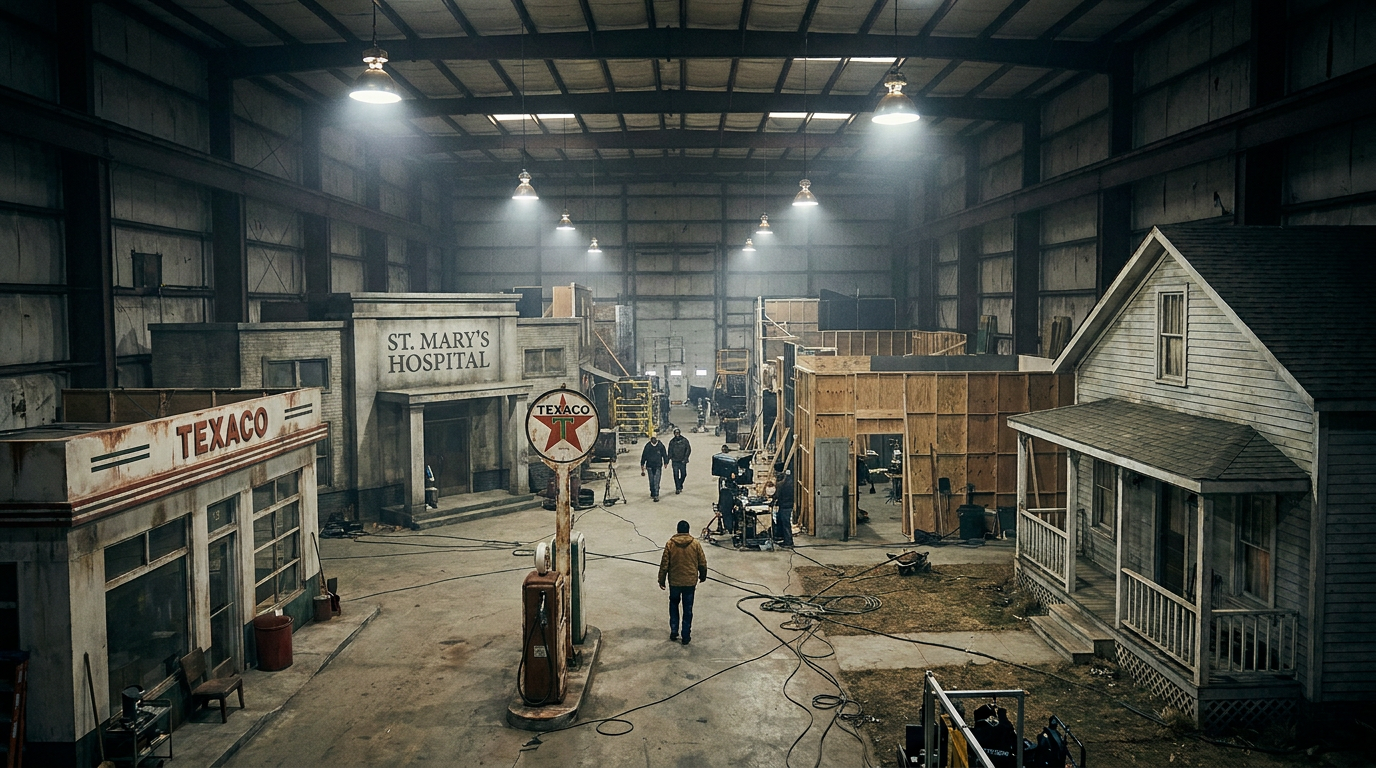
Tucked inside a massive facility on the Redstone Arsenal in Huntsville, Alabama, sits a town that looks entirely ordinary at first glance. It features fully furnished houses, a hotel, a gas station, a grocery store, a courthouse, and a hospital, all connected by roads with working traffic lights. But nothing in this community is real. It is a 22,000-square-foot replica built for a single purpose: to be relentlessly hacked, breached, and infected with malware.[1][5]
The Federal Bureau of Investigation has officially unveiled the "Kinetic Cyber Range," a life-size, fully functional mock city designed to serve as a high-stakes training ground for cybersecurity investigators. Opened in February 2025, the facility allows law enforcement personnel to practice responding to live cyberattacks in a realistic, physical environment rather than a sterile classroom.[2][4][5]
For decades, the FBI has utilized a famous mock town in Virginia known as Hogan's Alley to train agents in physical combat, tactical driving, and traditional law enforcement scenarios. The Kinetic Cyber Range serves as the digital successor to that concept. Every building in the Huntsville facility is wired with functioning devices, networks, and systems that behave exactly as they would in a real American community.[1][3][5]
At the heart of the replica town is a mock data center housing more than 200 physical servers running both Windows and Linux operating systems. This setup reflects the complex corporate environments that investigators encounter when responding to major breaches or executing search warrants.[2][3][4][5]

Dave Beachboard, the program manager for the Kinetic Cyber Range, noted that the server rooms are intentionally designed to be "cold, cramped, noisy, dark, and miserable." The goal is to replicate the exact, high-pressure conditions that digital first responders face in the field, ensuring that their first encounter with a chaotic server room does not happen during an actual crisis.[3][4][5]
Historically, the Bureau's cyber training was heavily theoretical and confined to the classroom. Agents would sit at desks, process loose media or cell phones, and learn about network architecture through presentations. The new Huntsville facility turns that model inside out, forcing trainees to interact with live Active Directory environments, firewalls, and email servers while under simulated duress.[4][5]
The creation of the Kinetic Cyber Range is a direct response to the escalating scale and severity of digital threats. According to the FBI's 2025 Internet Crime Report, cybercrime losses in the United States hit a record $20.9 billion last year, representing a 26 percent jump from the prior year.[2][3][6]
The creation of the Kinetic Cyber Range is a direct response to the escalating scale and severity of digital threats.
Ransomware remains the most pressing ongoing threat to critical infrastructure, and the facility is specifically tailored to address it. The mock town allows agents to practice responding to ransomware attacks on the replica hospital, simulating scenarios where medical systems go dark and investigators must make rapid decisions that impact patient safety, not just technical recovery.[3][5][6]

By simulating an entire interconnected community rather than a single isolated server room, the FBI is training agents to understand the cascading effects of modern cyberattacks. Trainees can observe firsthand how a breach at the local power company ripples outward to affect the hospital down the street, and how a localized ransomware demand creates pressure that extends far beyond a single keyboard.[3][4]
Beyond network defense, the facility also provides extensive training in digital forensics—the complex process of extracting data from encrypted devices for use in criminal investigations. In one exercise, students in an eight-week forensic examiner course are required to physically remove a vehicle's main computer and extract potential evidence from the hardware.[2][3][5]
The digital forensics curriculum also covers the extraction of data from consumer smartphones and internet-of-things (IoT) devices found inside the replica homes. Trainees must enter a house brimming with connected devices and make rapid, legally sound decisions about which hardware to seize and which to leave behind.[4][5]

This specific aspect of the training has drawn scrutiny from digital privacy advocates. The forensic tools utilized at the facility often work by exploiting undisclosed vulnerabilities in consumer devices manufactured by companies like Apple and Google, defeating the very protections those companies build to secure their users' data.[2][3]
To ensure that the highly advanced malware and ransomware used in these training exercises do not cause actual harm, the entire Kinetic Cyber Range is strictly air-gapped. The facility's networks are physically isolated from the outside internet, preventing any simulated attacks or malicious code from escaping the building.[3][5]
The hands-on approach has proven highly sought after across the federal government. Since its opening, the facility has trained more than 1,400 students. While it is operated by the FBI, the range also hosts personnel from NASA, the U.S. Army, and various state and local law enforcement agencies.[2][4][5]
As cybercrime continues to evolve from isolated data theft to systemic attacks on physical infrastructure, the need for realistic, stress-tested training environments has never been greater. The Kinetic Cyber Range represents a necessary evolution in how the United States prepares its digital first responders, ensuring they are ready for the moment when theoretical knowledge must be applied to save a real-world city.[4][5]
How we got here
February 2025
The FBI officially opens the Kinetic Cyber Range at its Huntsville, Alabama campus.
Early 2026
The FBI's Internet Crime Report reveals a record $20.9 billion in US cybercrime losses for 2025.
June 2026
The FBI publicly unveils detailed footage and operational metrics of the 22,000-square-foot replica town.
Viewpoints in depth
Law Enforcement Leadership
Argues that hands-on, high-stress simulation is the only way to prepare agents for modern cyber warfare.
For decades, cyber training was treated as a purely academic exercise, with agents learning about network architecture from the safety of a classroom desk. Law enforcement leaders argue this approach is no longer viable. The Kinetic Cyber Range changes the paradigm by forcing agents to confront Active Directory failures, compromised firewalls, and hostile networks under simulated duress, ensuring their first encounter with a chaotic server room doesn't happen during a national emergency.
Cybersecurity Analysts
Emphasizes the importance of training for cascading infrastructure failures caused by ransomware.
Security experts point out that modern cybercrime is no longer just about data theft; it is about physical disruption. The Huntsville facility's focus on cascading effects—such as a power grid hack taking down a hospital—reflects the new reality of ransomware. Analysts argue that training digital first responders to manage the human and physical fallout of a breach is just as critical as teaching them how to decrypt a server.
Digital Privacy Advocates
Expresses concern over the digital forensics techniques that exploit undisclosed vulnerabilities in consumer devices.
While acknowledging the need for better training, privacy groups raise alarms about the digital forensics methods practiced at the range. By utilizing undisclosed zero-day vulnerabilities to crack encrypted devices from Apple and Google, agencies may inadvertently weaken the broader security ecosystem. Advocates argue that hoarding these vulnerabilities for law enforcement use leaves everyday consumers exposed to the very hackers the FBI is training to stop.
What we don't know
- Whether the specific zero-day vulnerabilities exploited during the digital forensics training will eventually be disclosed to tech companies like Apple and Google.
- How quickly the facility's hardware and software can be updated to keep pace with the rapidly evolving tactics of state-sponsored hacking groups.
Key terms
- Kinetic Cyber Range
- A 22,000-square-foot mock town built by the FBI in Alabama to simulate live cyberattacks on physical infrastructure.
- Hogan's Alley
- The FBI's famous mock town in Virginia, used for decades to train agents in physical combat and tactical law enforcement.
- Ransomware
- Malicious software that encrypts a victim's files or locks their systems, demanding payment to restore access.
- Digital Forensics
- The process of recovering, analyzing, and preserving digital evidence from computers, smartphones, and connected devices.
- Air-gapped Network
- A computer network that is physically isolated from the public internet to prevent malware from escaping or external hackers from entering.
- Active Directory
- A Microsoft service used by most corporations to manage network permissions, making it a frequent target for hackers.
Frequently asked
Where is the Kinetic Cyber Range located?
The facility is located inside the FBI's North Campus on the Redstone Arsenal in Huntsville, Alabama.
Can the simulated cyberattacks escape the facility?
No. The entire replica town is air-gapped, meaning its networks are physically isolated from the outside internet to prevent simulated malware from spreading.
Who is allowed to train at the mock town?
While operated by the FBI, the facility has hosted over 1,400 students, including personnel from NASA, the U.S. Army, and local law enforcement agencies.
Why did the FBI build a physical town for digital training?
To teach agents how cyberattacks have cascading physical effects—such as how a breach at a power company can cause a nearby hospital to lose power—and to train them under realistic, high-stress conditions.
Sources
Source coverage
6 outlets
3 viewpoints surfaced






[1]The VergeDigital Privacy Advocates
The FBI built a small town to simulate cyberattacks
Read on The Verge →[2]TechCrunchDigital Privacy Advocates
FBI unveils simulation city to train for cyber attacks and investigations
Read on TechCrunch →[3]TNWCybersecurity Analysts
The FBI built a fake town to train agents for cyberattacks. It has a hospital, power company, and 200 servers.
Read on TNW →[4]CybernewsCybersecurity Analysts
First look at the FBI's "Kinetic Cyber Range"
Read on Cybernews →[5]Federal Bureau of InvestigationLaw Enforcement Leadership
Inside the FBI's Kinetic Cyber Range
Read on Federal Bureau of Investigation →[6]FBI Internet Crime Complaint CenterLaw Enforcement Leadership
2025 Internet Crime Report
Read on FBI Internet Crime Complaint Center →
More in technology
See all 5 stories →
Every angle. Every day.
Get technology stories with full source coverage and perspective breakdowns delivered to your inbox.