
The Evidence That Passkeys Have Finally Killed the Password
With 5 billion passkeys now in active use globally, cryptographic authentication has reached a critical tipping point, offering a mathematical defense against AI-driven phishing.
By Factlen Editorial Team
- Security Standards Bodies
- Argue that passwords and phishable MFA are systemic vulnerabilities that must be replaced by cryptographic, phishing-resistant standards.
- Platform Providers
- Focus on usability and ecosystem integration, prioritizing synced passkeys that make authentication seamless across their respective hardware and software environments.
- Enterprise IT Leaders
- Emphasize the operational challenges of the transition, noting that legacy systems and account recovery protocols make full passwordless deployment difficult at scale.
What's not represented
- · Small Business Owners
- · Elderly Technology Users
Why this matters
With 5 billion passkeys now in use, the technology industry has fundamentally changed how digital identity is secured. Understanding this shift is critical for users looking to protect their accounts from AI-driven phishing, and for organizations navigating the complex transition away from legacy passwords.
Key points
- Passkeys have reached global scale in 2026, with an estimated 5 billion in active use worldwide.
- Consumer awareness has hit 90%, and 75% of surveyed users have enabled a passkey on at least one account.
- Generative AI has industrialized credential attacks, rendering traditional passwords and SMS-based MFA highly vulnerable.
- Passkeys mathematically prevent phishing by keeping the private cryptographic key securely locked on the user's device.
- Microsoft telemetry shows passkeys are eight times faster than traditional MFA, with a 98% login success rate.
- Enterprise adoption is accelerating, though legacy systems and account recovery protocols remain significant hurdles.
For decades, the cybersecurity industry has pleaded with users to create longer, more complex passwords, only to watch attackers walk through the front door using stolen credentials. In 2026, the evidence indicates that this paradigm has fundamentally broken. Driven by the industrialization of AI-powered phishing and credential stuffing, the technology sector has aggressively accelerated the rollout of passkeys—cryptographic credentials that replace passwords entirely. The data shows this transition has now reached critical mass, shifting passkeys from an emerging standard to the default gatekeeper of human digital identity.[7]
The most comprehensive evidence of this shift comes from the FIDO Alliance's 2026 State of Passkeys report, which tracks deployment across both consumer and enterprise environments. According to the data, there are now an estimated 5 billion passkeys in active use worldwide. Consumer awareness has hit 90%, and 75% of surveyed users have enabled a passkey on at least one account. This represents a staggering acceleration from just two years prior, driven largely by platform-level integration from Apple, Google, and Microsoft, who have embedded the underlying FIDO2 standards directly into their operating systems.[1][5]

The urgency behind the passkey rollout correlates directly with the rapid degradation of legacy authentication methods. Generative AI has industrialized credential attacks, producing highly convincing phishing lures, automated credential stuffing, and voice clones that easily defeat traditional user security training. With an estimated 16 billion stolen login credentials currently circulating on the dark web, the traditional model of a "shared secret"—a password known by both the user and the server—has become a systemic liability.[4][7]
In response to these escalating threats, federal agencies have fundamentally changed their security guidance. The Cybersecurity and Infrastructure Security Agency (CISA) and the FBI have issued formal advisories warning that SMS-based one-time passcodes and push notifications are no longer sufficient to protect high-value systems. These agencies now mandate a shift to "phishing-resistant authentication," a technical classification that passkeys satisfy by design.[3]
Passkeys solve the credential theft problem by eliminating the shared secret entirely. When a user creates a passkey, their device generates a unique cryptographic key pair. The public key is registered with the service provider, while the private key remains securely stored in the device's hardware, such as Apple's Secure Enclave or a Windows TPM. Because the private key never leaves the device, a server breach only exposes useless public keys, neutralizing the threat of mass credential leaks.[1][7]

The phishing resistance of passkeys relies on cryptographic domain binding. When a user attempts to log in, the server sends a digital challenge to the device. The device will only sign this challenge with the private key if the website's domain exactly matches the domain where the passkey was originally created. Consequently, it is mathematically impossible for a user to be tricked into handing their credential to a visually identical fake phishing site, as the device's operating system will simply refuse to authenticate the mismatched domain.[3][7]
The phishing resistance of passkeys relies on cryptographic domain binding.
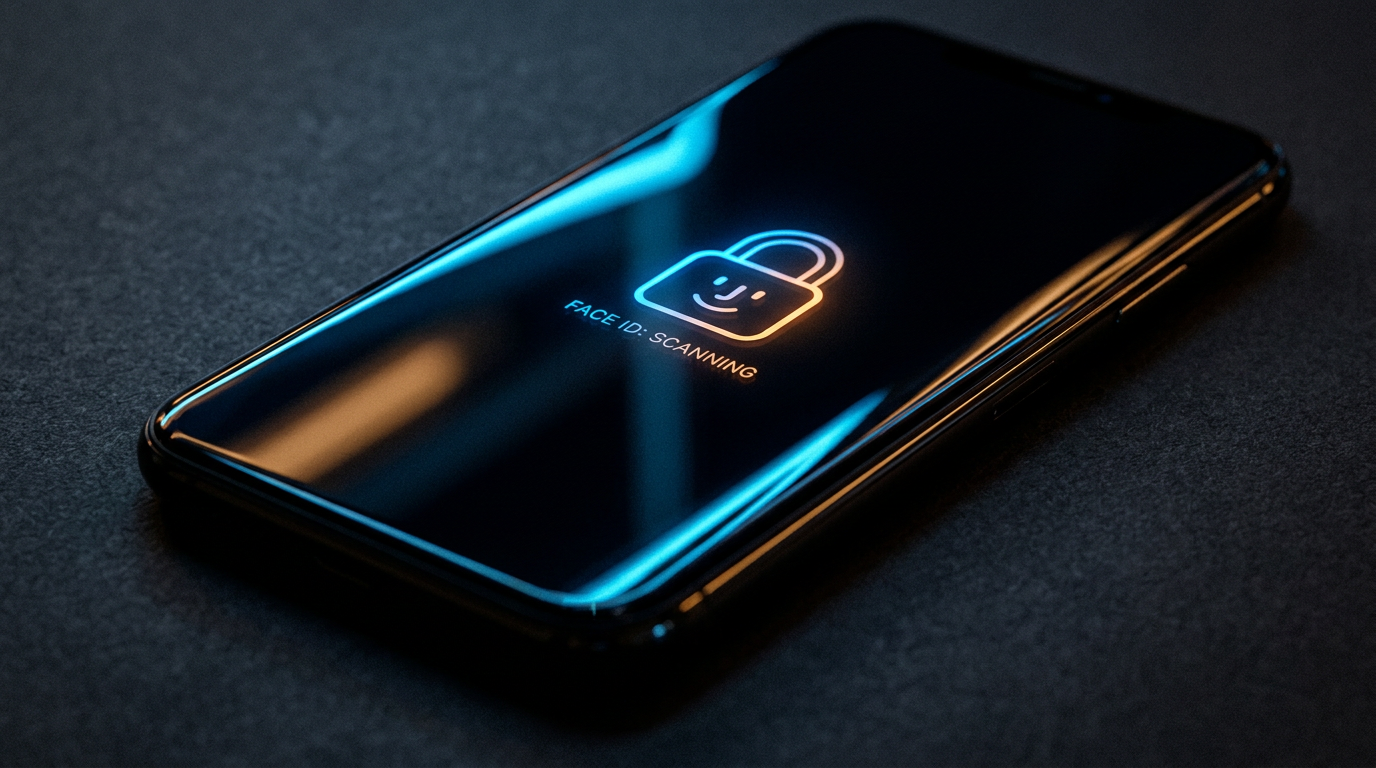
From a user perspective, this complex cryptography is entirely invisible. To authorize the device to sign the challenge, the user simply performs a standard biometric check—such as Face ID, Touch ID, or a Windows Hello fingerprint scan. This single action satisfies the requirements of multi-factor authentication, combining "something you have" (the physical device holding the private key) with "something you are" (the biometric scan), without requiring the user to type a single character.[1][5][6]
To prevent users from losing access to their accounts when they upgrade or lose a phone, the major tech platforms introduced synced passkeys. Apple's iCloud Keychain and Google's Password Manager now automatically sync passkeys across all of a user's devices using end-to-end encryption. While highly secure enterprise environments sometimes require "device-bound" passkeys that cannot be copied, the synced model has been crucial for consumer adoption, ensuring that a lost smartphone does not result in a permanently locked bank account.[1][5][7]
The push toward passkeys is heavily incentivized by the need to reduce user friction and corporate support costs. Internal metrics from Microsoft, which made passkeys the default sign-in method for personal accounts in 2025, demonstrate the operational benefits of the transition. Microsoft's telemetry showed that passkey users authenticate eight times faster than those using a password combined with traditional multi-factor authentication.[6]

Furthermore, the login success rate for passkeys reached 98%, compared to a dismal 32% for complex password-plus-MFA workflows. For large organizations, this translates directly to the bottom line. The FIDO Alliance report notes that organizations deploying passkeys have seen a 35% reduction in help-desk tickets related to password resets, alongside a 45% improvement in overall employee login speeds.[1][6]
While consumer adoption has been remarkably swift, the enterprise sector is currently navigating what industry analysts call the industrialization phase of passwordless identity. According to the 2026 State of Passwordless Identity Assurance report by HYPR, 68% of organizations are actively deploying or piloting passkeys for employee authentication. However, the data also reveals significant friction in corporate environments: 76% of organizations still rely on legacy passwords somewhere within their infrastructure, often as a fallback mechanism for older applications.[1][2]
The primary vulnerability in the current ecosystem is no longer the passkey itself, but the persistence of the password as a backup. Security researchers note that as long as a service allows a user to fall back to a password or an SMS code for account recovery, the account retains a phishing-exploitable attack surface. The HYPR report indicates that one-third of enterprises are currently stuck in pilot phases, struggling to integrate passkeys across fragmented legacy systems, HR directories, and help-desk recovery protocols without locking users out.[2][7]

Despite these enterprise integration challenges, regulatory mandates are forcing the hands of institutional holdouts. The EU Digital Identity Wallet rollout mandates phishing-resistant authentication as a baseline across member states by the end of 2026, and central banks in the Asia-Pacific region have begun issuing strict deadlines for financial institutions to deprecate passwords. These compliance pressures ensure that passwordless authentication is no longer viewed as an optional upgrade, but as a legal necessity.[5][7]
The empirical data from 2026 confirms that the era of the password is effectively ending. While passwords will likely linger in legacy databases and obscure enterprise applications for another decade, their role as the primary mechanism for digital trust has been permanently superseded. By combining cryptographic proof with biometric convenience, passkeys have achieved what decades of security awareness training could not: a system that is fundamentally secure by default.[1][7]
How we got here
2022
Apple, Google, and Microsoft announce a joint commitment to expand support for FIDO passkey standards across their platforms.
2024
Major consumer platforms, including Amazon and WhatsApp, roll out passkey support to billions of users.
2025
Microsoft makes passkeys the default sign-in method for personal accounts, driving a massive spike in adoption and usability.
2026
The FIDO Alliance reports 5 billion passkeys in active use, marking the tipping point for mainstream global adoption.
Viewpoints in depth
The Standards & Security View
Security agencies and standards bodies view passkeys as the only viable defense against industrialized phishing.
Organizations like CISA and the FIDO Alliance argue that user training and complex password policies have definitively failed. With AI drastically lowering the cost of generating convincing phishing lures, these bodies assert that security must be mathematically guaranteed rather than reliant on human vigilance. They advocate for the complete deprecation of shared secrets, including SMS-based one-time passcodes, in favor of cryptographic proofs.
The Enterprise IT View
Corporate IT departments face significant friction in operationalizing passwordless systems across legacy infrastructure.
While enterprise leaders acknowledge the security benefits of passkeys, they highlight the immense difficulty of the transition. Many corporate environments rely on decades-old legacy applications that do not support modern WebAuthn standards. Furthermore, IT departments must design secure account recovery protocols for employees who lose their devices, ensuring that the fallback methods do not inadvertently reintroduce the very phishing vulnerabilities that passkeys were deployed to eliminate.
What we don't know
- How quickly legacy enterprise applications that lack support for modern WebAuthn standards can be upgraded or replaced.
- The long-term security implications of synced passkeys across consumer cloud ecosystems if a primary cloud account is compromised.
- Whether smaller organizations have the IT budget and expertise to implement secure, passwordless account recovery protocols.
Key terms
- Passkey
- A digital credential tied to a user's device that uses public-key cryptography to authenticate without a password.
- Phishing-Resistant Authentication
- Security methods that mathematically prevent attackers from intercepting or tricking users into handing over their credentials.
- Public-Key Cryptography
- A cryptographic system that uses pairs of keys: public keys which may be disseminated widely, and private keys which are known only to the owner.
- FIDO2
- An open authentication standard developed by the FIDO Alliance that enables passwordless, secure logins across websites and devices.
- Credential Stuffing
- A cyberattack where stolen account credentials are used to gain unauthorized access to user accounts through large-scale automated login requests.
Frequently asked
What happens if I lose my phone with my passkeys?
For most consumers, passkeys are synced to cloud accounts like Apple iCloud or Google Password Manager. If you lose your device, you can recover your passkeys by signing into your cloud account on a new device.
Are passkeys stored on the website's server?
No. The website only stores a mathematical public key. Your private key remains securely locked inside your device's hardware and is never shared with the server.
Can a passkey be phished or stolen?
Passkeys are mathematically bound to the specific website they were created for. Even if a user is tricked into visiting a fake website, the device will refuse to hand over the passkey, making them highly phishing-resistant.
Do I still need a password manager?
Yes, for now. While passkeys are replacing passwords on major platforms, many older websites and legacy systems still require traditional passwords, making a password manager necessary during the transition.
Sources
Source coverage
7 outlets
3 viewpoints surfaced





[1]FIDO AllianceSecurity Standards Bodies
The State of Passkeys 2026: Global Consumer and Workforce Report
Read on FIDO Alliance →[2]HYPREnterprise IT Leaders
2026 State of Passwordless Identity Assurance Report
Read on HYPR →[3]Cybersecurity and Infrastructure Security AgencySecurity Standards Bodies
Implementing Phishing-Resistant MFA
Read on Cybersecurity and Infrastructure Security Agency →[4]IT Security GuruEnterprise IT Leaders
World Password Day 2026: The AI Threat to Credentials
Read on IT Security Guru →[5]DescopeEnterprise IT Leaders
Passkey adoption stats from the FIDO Alliance's 2026 report
Read on Descope →[6]Microsoft SecurityPlatform Providers
Making passkeys the default sign-in method for personal accounts
Read on Microsoft Security →[7]Factlen Editorial TeamEnterprise IT Leaders
Synthesis by Factlen editorial team
Read on Factlen Editorial Team →

More in technology
See all 5 stories →AI Infrastructure
Fine-Tuning Forgets, RAG Leaks: Why Hypernetworks Are the Next Era of AI Infrastructure
6 sources
Open Social Web
How the Open Social Web is Finally Giving Users Control of Their Data
8 sources

Decentralized Web
The End of Walled Gardens: How Open Protocols Are Rewiring Social Media
6 sources

Every angle. Every day.
Get technology stories with full source coverage and perspective breakdowns delivered to your inbox.