
The Evidence Pack: The ROI and Health Outcomes of 'Universal Design' and Aging-in-Place Modifications
Clinical data and real estate economics reveal that 'universal design' home modifications not only reduce senior falls by 40%, but also boost property resale values by up to 10%.
By Factlen Editorial Team
- Geriatric Health Researchers
- Focus on measurable clinical outcomes, specifically fall reduction and the preservation of daily mobility.
- Real Estate Economists
- Focus on the financial ROI of home modifications and the market premium of future-proof properties.
- Aging-in-Place Advocates
- Emphasize the psychological, emotional, and community benefits of remaining in a familiar environment.
What's not represented
- · Assisted Living Facility Operators
- · Home Insurance Providers
Why this matters
With 82% of seniors wanting to remain in their homes and assisted living costs exceeding $74,000 a year, understanding the true ROI of home modifications can save families tens of thousands of dollars while preserving their loved ones' independence.
Key points
- Over 80% of older adults prefer to age in their current homes, but only 10% of U.S. housing stock is equipped for safe accessibility.
- Clinical studies show that personalized home modifications can reduce in-home falls by nearly 40% and fall-related injuries by 22%.
- The national median cost of assisted living has reached $74,400 annually, making upfront home modifications highly cost-effective.
- Universal design features, such as curbless showers and widened doorways, are now viewed as luxury amenities that can boost a home's resale value by 5% to 10%.
The demographic reality of the 2026 housing market is inescapable. Over 4.1 million Americans turned 65 in a single recent year, and the senior population is projected to reach 82 million by 2050. Surveys consistently show that over 80% of older adults want to remain in their current homes for the rest of their lives, prioritizing independence and familiar community ties over institutional care.[7]
But there is a severe structural mismatch: only 10% of U.S. housing stock is equipped with the basic accessibility features necessary to support aging safely. For decades, families have viewed "aging in place" as a default, passive choice, only to be forced into sudden, expensive assisted living transitions after a preventable fall or mobility crisis.[7]
Now, a growing body of clinical and economic evidence is reframing home modifications—specifically the architectural concept of "universal design"—not as a sunk medical cost, but as a high-yield real estate investment. By installing curbless showers, widening doorways, and integrating smart lighting, homeowners are simultaneously preventing injuries, delaying facility care, and boosting their property's resale value.[3][7]
The most immediate return on investment for home modifications is measured in health outcomes, specifically fall prevention. Falls are the leading cause of injury and premature nursing home placement among older adults, costing the U.S. healthcare system an estimated $30 billion to $80 billion annually in acute care and rehabilitation.[1][7]
Clinical evidence demonstrates that the physical environment is a highly modifiable risk factor. A landmark study published in JAMA Network Open by researchers at Washington University found that a community-based program providing personalized, occupational therapist-led home modifications reduced in-home falls by nearly 40%.[1]

These findings are corroborated by large-scale population data. Research from Duke University analyzing the Health and Retirement Study (HRS) tracked 4,620 community-dwelling older adults. The data revealed that participants who implemented home modifications had 17% lower odds of falling and 22% lower odds of sustaining a fall-related injury compared to those who left their environments unchanged.[4]
Beyond physical safety, the National Institutes of Health highlights that environmental modifications actively preserve functional independence. When individuals feel secure navigating their homes, they are more likely to continue performing activities of daily living without caregiver assistance. This reduces the psychological fear of falling, which often leads to inactivity and accelerated physical decline.[5]
Beyond physical safety, the National Institutes of Health highlights that environmental modifications actively preserve functional independence.
The financial calculus of these modifications becomes stark when compared to the alternative: assisted living. According to the Genworth Cost of Care Survey, the national median cost for an assisted living facility in 2025 reached approximately $74,400 per year, or $6,200 per month. Memory care and skilled nursing facilities command even higher premiums.[2]
In contrast, basic home modifications typically require a one-time upfront investment of $3,000 to $15,000. Even when factoring in the cost of part-time in-home care—which averages $28,000 to $42,000 annually for 20 hours a week—aging in place remains significantly more cost-effective for early-to-middle stage care needs.[2][7]

The financial crossover point, where assisted living becomes the more economical choice, typically only occurs when a senior requires more than 40 hours of paid in-home care per week. Until that threshold is reached, the upfront cost of a ramp, grab bars, or a stairlift pays for itself in a matter of months simply by delaying facility admission.[2]
But the most surprising evidence emerging in 2026 is how these modifications impact the broader real estate market. Historically, accessibility features were viewed as clinical or institutional, potentially detracting from a home's aesthetic appeal. The rise of universal design has completely inverted this dynamic.[3][7]
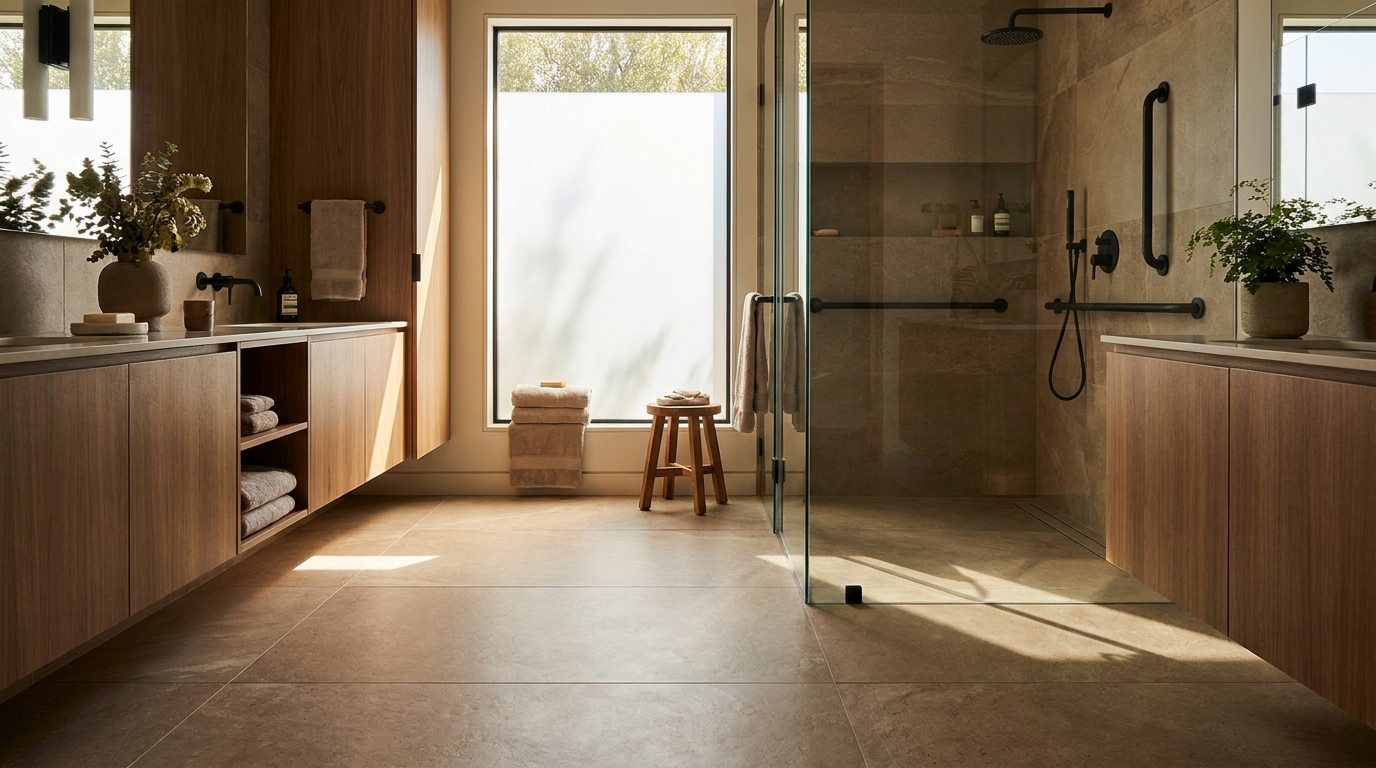
Universal design integrates accessibility seamlessly into the architecture—think zero-threshold walk-in showers, lever-style door handles, and open floor plans. According to Realtor.com, these "future-proof" upgrades can increase a home's resale value by 5% to 10%, as they appeal to a massive demographic of aging baby boomers and multi-generational families.[3]
Specific features yield measurable premiums. Research indicates that widening doorways to accommodate mobility aids—while simultaneously creating a more open, modern flow—can increase property values by over $30,000 in major markets like Dallas-Fort Worth.[3]

Similarly, replacing a traditional bathtub with a curbless, spa-like shower is one of the highest-ROI bathroom renovations available, yielding up to a 70% return on investment. Buyers increasingly view these features not as medical necessities, but as luxury conveniences that enhance the daily living experience.[3]
Qualitative research underscores the human impact of these investments. A study by Meals on Wheels America examining home repair programs found that modifications profoundly reduced anxiety and caregiver burden, with participants reporting a renewed sense of autonomy and a "new lease on life" once their environments were secured.[6]
Ultimately, the evidence pack is clear: retrofitting homes for longevity is one of the most effective interventions available today. By merging healthcare prevention with real estate strategy, universal design allows older adults to maintain their independence while transforming their homes into safer, more valuable assets.[7]
How we got here
2015-2017
Washington University conducts a landmark community-based intervention, proving occupational therapy-led home modifications drastically reduce falls.
2022
Australia implements the Liveable Housing Design Standard, mandating basic universal design features in new residential construction.
2024
The U.S. 65+ population surges as 4.1 million Americans turn 65 in a single year, accelerating the demand for accessible housing.
2025
The national median cost of assisted living reaches $74,400 annually, pushing more families to seek cost-effective home modification alternatives.
2026
Real estate data confirms that 'future-proof' universal design upgrades are yielding 5% to 10% premiums in the resale market.
Viewpoints in depth
Geriatric Health Researchers
Focus on measurable clinical outcomes, specifically fall reduction and the preservation of daily mobility.
Clinical researchers view the home environment as a highly modifiable health risk factor. By applying targeted interventions—such as grab bars, improved lighting, and zero-step entries—they argue that the healthcare system can drastically reduce the $80 billion annual cost of fall-related injuries. Their evidence emphasizes that physical safety directly correlates with psychological confidence, preventing the fear-induced inactivity that accelerates physical decline.
Real Estate Economists
Focus on the financial ROI of home modifications and the market premium of future-proof properties.
Economists analyze aging-in-place through the lens of cost avoidance and asset appreciation. They point out that a $15,000 upfront investment in universal design pays for itself in less than three months if it delays a $6,200-per-month assisted living admission. Furthermore, they track how features once considered clinical—like curbless showers and wide hallways—have been rebranded as luxury "spa-like" amenities, driving 5% to 10% premiums in the broader resale market.
Aging-in-Place Advocates
Emphasize the psychological, emotional, and community benefits of remaining in a familiar environment.
For advocacy groups and social workers, the primary metric of success is human dignity. They argue that institutional care, while necessary for complex medical needs, often strips older adults of their autonomy and severs their community ties. By funding and normalizing home modifications, these advocates believe society can reduce caregiver burden and allow seniors to maintain their daily routines, pets, and social networks, which are critical for long-term cognitive health.
What we don't know
- How the insurance industry might evolve to cover proactive home modifications, given the massive potential savings in acute medical care.
- The exact tipping point in local markets where universal design features transition from a 'nice-to-have' premium to a baseline buyer expectation.
- How the integration of AI-driven smart home health monitoring will alter the cost-benefit analysis of aging in place over the next decade.
Key terms
- Universal Design
- The design of buildings and environments to make them accessible to all people, regardless of age, disability, or other factors, without the need for adaptation.
- Curbless Shower
- A shower with a zero-threshold entry, eliminating the need to step over a ledge, which reduces tripping hazards and accommodates wheelchairs.
- Aging in Place
- The ability of an older adult to live in their own home and community safely, independently, and comfortably, regardless of age or income level.
- Activities of Daily Living (ADLs)
- Fundamental skills required to independently care for oneself, such as eating, bathing, dressing, and mobility.
Frequently asked
How much does a typical aging-in-place home modification cost?
Basic modifications typically range from $3,000 to $15,000, though extensive renovations like full bathroom remodels or custom stairlifts can cost more.
Does universal design make a home look like a hospital?
No. Modern universal design focuses on aesthetics, using features like spa-like curbless showers, integrated smart lighting, and open floor plans that appeal to buyers of all ages.
When is assisted living more cost-effective than aging in place?
The financial math typically flips when a senior requires more than 40 hours of paid in-home care per week, at which point the bundled services of assisted living become more economical.
Sources
Source coverage
7 outlets
3 viewpoints surfaced







[1]JAMA Network OpenGeriatric Health Researchers
Effectiveness of Home Modifications on Fall Prevention
Read on JAMA Network Open →[2]GenworthReal Estate Economists
Cost of Care Survey 2025
Read on Genworth →[3]Realtor.comReal Estate Economists
Future-Proof Projects That Pay Off: Universal Design
Read on Realtor.com →[4]Duke UniversityGeriatric Health Researchers
The Impact of Home Modification on Falls Among Older Adults
Read on Duke University →[5]National Institutes of HealthGeriatric Health Researchers
Systematic Review of Home Modifications for Aging in Place
Read on National Institutes of Health →[6]Meals on Wheels AmericaAging-in-Place Advocates
Helping Homebound Heroes: Impact of Home Modifications
Read on Meals on Wheels America →[7]Factlen Editorial Team
Synthesis by Factlen editorial team
Read on Factlen Editorial Team →
Every angle. Every day.
Get real estate stories with full source coverage and perspective breakdowns delivered to your inbox.