
Federal Courts Strike Down Trump Administration's Proof-of-Citizenship and Voter Roll Demands
In a pair of major rulings, federal judges permanently blocked the president's election integrity executive order and rejected the Justice Department's attempt to seize unredacted state voter data.
By Factlen Editorial Team
- State Election Officials
- Argue that the executive branch is overstepping its constitutional authority and violating state sovereignty over elections.
- Trump Administration
- Maintains that federal oversight and proof of citizenship are necessary to prevent noncitizens from voting.
- Voting Rights Advocates
- Contend that the administration's efforts are designed to disenfranchise eligible voters and create a chilling effect on registration.
What's not represented
- · Local county clerks who actually administer the voter rolls and process registrations.
- · Voters who lack documentary proof of citizenship and would be affected by the proposed requirements.
Why this matters
These rulings severely limit the executive branch's ability to unilaterally change voter registration rules and access sensitive state data ahead of the 2026 midterms, shifting the battle over election integrity back to Congress and the states.
Key points
- A federal judge in Boston permanently blocked the president's executive order requiring proof of citizenship for federal voter registration.
- The 6th Circuit Court of Appeals ruled that the DOJ cannot force Michigan to hand over unredacted voter rolls containing sensitive personal data.
- The DOJ has now lost 10 consecutive court cases in its nationwide effort to audit state voter databases.
- The rulings shift the administration's focus to Congress, where it is pushing the SAVE America Act to enact the voting requirements legislatively.
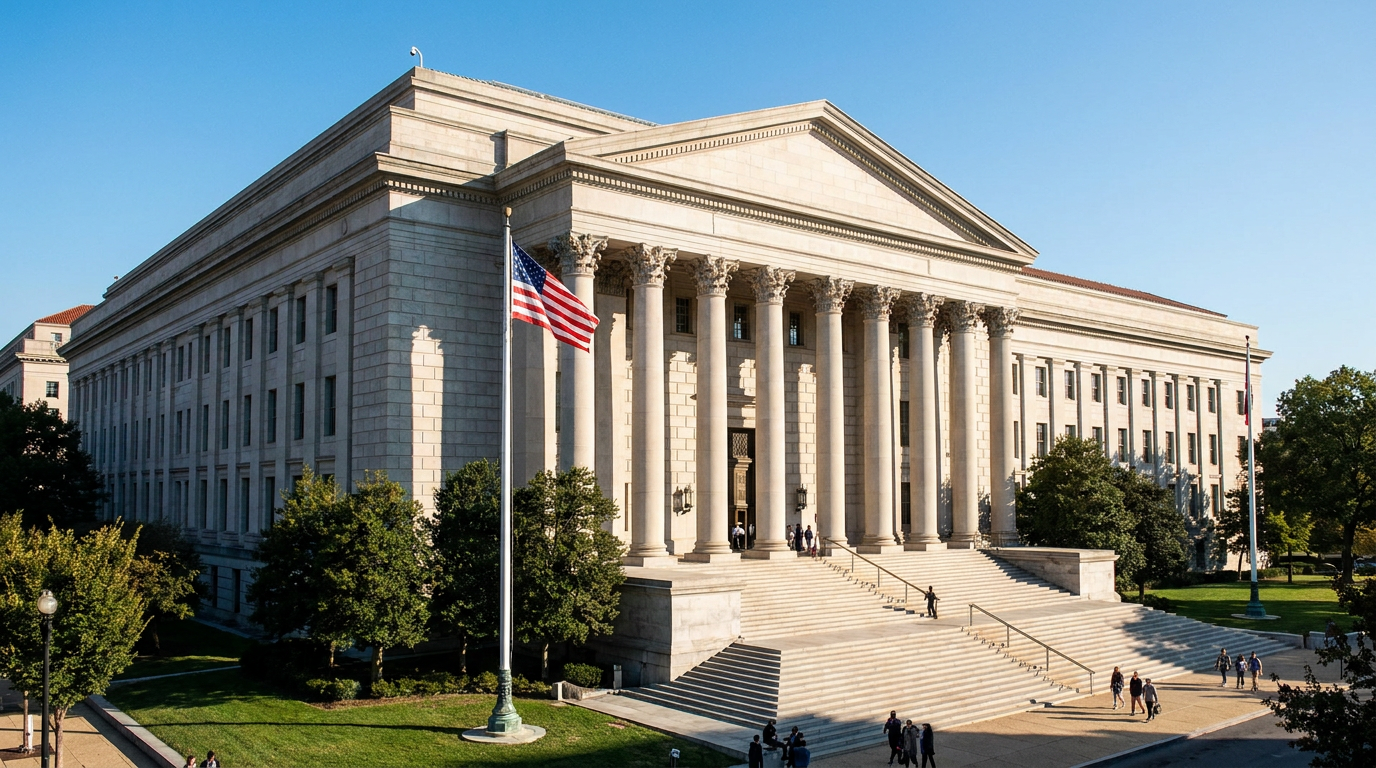
In a pair of sweeping legal defeats for the Trump administration, federal courts in Massachusetts and Michigan have struck down central pillars of the White House's effort to overhaul national voting rules ahead of the 2026 midterms.[1][3]
In Boston, U.S. District Judge Denise Casper issued a permanent injunction Wednesday against the president's primary election integrity executive order. The directive had sought to mandate documentary proof of citizenship for anyone using the federal voter registration form and threatened to withhold federal funds from states that count mail-in ballots arriving after Election Day.[3][6]
Casper ruled that the executive branch lacks the constitutional authority to unilaterally rewrite election procedures. She noted that the Constitution assigns the administration of elections to the states and the regulation of federal elections to Congress, concluding that the president's order violated the separation of powers.[3][6]
The ruling makes permanent a preliminary injunction Casper issued last year in a lawsuit brought by a coalition of 19 Democratic state attorneys general. New York Attorney General Letitia James praised the decision as a defense against an "unconstitutional attempt to seize control of our elections."[3]

The administration and its allies reacted sharply to the injunction. A White House deputy characterized the Boston decision as the work of a "rogue" judge appointed by former President Barack Obama, issuing a stark warning that the ruling undermines efforts to secure the ballot box from noncitizen voting.[2]
The administration and its allies reacted sharply to the injunction.
Meanwhile, the 6th U.S. Circuit Court of Appeals dealt the Justice Department a major blow in its parallel campaign to audit state voter databases. In a 2-1 decision, the appellate panel affirmed a lower court's dismissal of a DOJ lawsuit that sought to force Michigan to hand over unredacted voter rolls.[1][4]
The Justice Department had demanded that Michigan Secretary of State Jocelyn Benson provide the state's complete voter file, including sensitive personal data such as partial Social Security numbers, dates of birth, and driver's license numbers. The DOJ argued it needed the data to ensure the state was complying with federal election laws and to check for noncitizen registrants.[1][5]
The 6th Circuit rejected the DOJ's reliance on Title III of the 1960 Civil Rights Act. Writing for the majority, Circuit Judge Andre Mathis noted that the law was originally designed to preserve records so the federal government could investigate racial discrimination. "Today, the government invokes Title III for an inverse purpose—to ensure that some people have not voted," Mathis wrote.[1][4]

The Michigan ruling marks the Justice Department's tenth consecutive defeat in its nationwide litigation over voter rolls. The DOJ has sued 30 states that refused to voluntarily turn over unredacted data, but federal judges in states including Arizona, California, Maryland, and Wisconsin have consistently dismissed the administration's demands.[4][5][7]
For voters, the rulings mean that the standard federal registration form will not require attached birth certificates or passports, and state-level privacy protections regarding personal identification numbers will remain intact for now.[3][5]
The dual rulings severely constrain the administration's ability to act unilaterally on election security, shifting the battleground entirely to the legislative branch.[3][6]
Acknowledging the legal hurdles of executive action, the White House has intensified its push for the SAVE America Act, a bill stalled in the Senate that would codify the proof-of-citizenship requirement into federal law. The administration has recently begun leveraging other legislative priorities, including a bipartisan housing bill, to force a vote on the election measure.[3][6]

How we got here
March 2025
President Trump signs an executive order mandating proof of citizenship for federal voter registration.
June 2025
Judge Denise Casper issues a preliminary injunction temporarily blocking the executive order.
September 2025
The Justice Department sues Michigan to obtain unredacted state voter rolls.
February 2026
A federal district judge dismisses the DOJ's lawsuit against Michigan.
June 24, 2026
Federal courts issue rulings permanently blocking the executive order and rejecting the DOJ's appeal in the Michigan voter roll case.
Viewpoints in depth
State Election Officials' view
State leaders argue the administration is overstepping its constitutional authority and violating state sovereignty.
Secretaries of State and Attorneys General, primarily Democrats, contend that the Constitution explicitly delegates the administration of elections to the states. They argue that the DOJ's demand for unredacted voter data violates state privacy laws and that the executive order on proof of citizenship bypasses Congress. They view these federal efforts as an unconstitutional power grab designed to intimidate voters and seize control of local election infrastructure.
The Administration's view
The White House and DOJ maintain that federal oversight is necessary to prevent noncitizens from voting.
Administration officials argue that the federal government has a compelling interest in ensuring the integrity of federal elections. They assert that without documentary proof of citizenship and access to unredacted state voter rolls, it is impossible to verify that only eligible U.S. citizens are casting ballots. They view the judicial rulings as activist interference by 'rogue' judges that undermines efforts to secure the ballot box.
Voting Rights Advocates' view
Civil rights groups argue the administration's efforts are designed to disenfranchise eligible voters.
Organizations like the Brennan Center and the League of Women Voters point out that there is no evidence of widespread noncitizen voting. They argue that requiring documentary proof of citizenship disproportionately harms low-income, minority, and elderly voters who may not have easy access to birth certificates or passports. They view the DOJ's data demands as a pretext for conducting aggressive voter purges.
What we don't know
- Whether the Supreme Court will ultimately intervene to resolve the dispute over the executive branch's authority to demand state voter data.
- How the rulings will impact the ongoing legislative negotiations over the SAVE America Act in the Senate.
- Whether the DOJ will continue to pursue lawsuits against the remaining states that have refused to hand over unredacted voter rolls.
Key terms
- Documentary Proof of Citizenship
- A requirement that individuals provide physical documents, such as a passport or birth certificate, to prove they are U.S. citizens when registering to vote.
- National Voter Registration Act
- A 1993 federal law that created a standard mail-in registration form for federal elections, which currently requires applicants to attest to their citizenship under penalty of perjury.
- Title III of the 1960 Civil Rights Act
- A federal law originally designed to preserve voting records so the government could investigate racial discrimination, which the DOJ recently attempted to use to audit voter rolls.
- SAVE America Act
- Proposed federal legislation that would mandate documentary proof of citizenship for voter registration nationwide.
Frequently asked
What did the executive order try to do?
It sought to require documentary proof of citizenship to register to vote using the federal form and to block mail-in ballots that arrive after Election Day.
Why did the judge strike down the executive order?
The judge ruled that the Constitution gives states and Congress the power to regulate elections, meaning the president cannot unilaterally impose new voting requirements.
What information was the DOJ trying to get from Michigan?
The Justice Department demanded unredacted voter rolls, which include sensitive personal data like partial Social Security numbers, dates of birth, and driver's license numbers.
What happens next?
The administration is expected to appeal the rulings, but is also pushing Congress to pass the SAVE America Act to enact the proof-of-citizenship requirement legislatively.
Sources
Source coverage
7 outlets
3 viewpoints surfaced







[1]NYTVoting Rights Advocates
Federal Appeals Panel Rejects Trump’s Effort to Gather Voting Data From States
Read on NYT →[2]Fox NewsTrump Administration
'Rogue' Obama judge's smackdown of Trump election rules provokes ominous warning from White House deputy
Read on Fox News →[3]AP NewsState Election Officials
Federal judge bars Trump from implementing proof of citizenship requirement to vote
Read on AP News →[4]CNNVoting Rights Advocates
Appeals court deals biggest setback yet to Trump DOJ's demands for confidential voter roll data
Read on CNN →[5]VotebeatState Election Officials
Michigan can keep a lid on the personal information of registered voters
Read on Votebeat →[6]Law CommentaryVoting Rights Advocates
A federal judge in Boston permanently blocked most of President Donald Trump's 2025 election executive order
Read on Law Commentary →[7]NewsdayVoting Rights Advocates
Trump administration loses appeal over access to personal information of Michigan voters
Read on Newsday →
More in news politics
See all 5 stories →Media Trust
Evidence Pack: Do 'Nutrition Labels' for News Sources Actually Improve Media Trust?
7 sources
NATO Alliance
Trump Rebukes NATO Over Iran War as White House Seeks $87.6 Billion to Replenish Military
7 sources
Taiwan Strait
Taiwan Warns of Shrinking Attack Warning Time as China Escalates Naval and Coast Guard Pressure
7 sources

Every angle. Every day.
Get news politics stories with full source coverage and perspective breakdowns delivered to your inbox.