
Why a Dual Blockade of Hormuz and Bab el-Mandeb Threatens $200 Oil
Iran and its Houthi allies have threatened to simultaneously block two of the world's most critical maritime chokepoints. Here is the data on how much global energy flows through these straits and the mechanics behind the $200 oil warning.

Share this story
The global energy market is facing a scenario that maritime strategists have long modeled but rarely witnessed: the simultaneous threat to two of the world's most vital shipping chokepoints. Following escalating military exchanges with the United States and Israel, Iranian officials and their Houthi allies in Yemen have signaled their intent to blockade both the Strait of Hormuz and the Bab el-Mandeb Strait.[1][3]
The rhetoric reached a new threshold in mid-July 2026, when a senior Houthi political official warned that an "operational alliance" would close both waterways if regional strikes continued. The official explicitly stated that such a move would trigger a "dreadful shock," sending global crude oil prices skyrocketing to $200 per barrel.[1]
To understand the gravity of this threat, one must look at the physical mechanics of global energy transit. The global economy relies on a network of narrow maritime corridors—chokepoints—that connect energy producers to consumers. The Strait of Hormuz and the Bab el-Mandeb Strait are the two most critical arteries in this system, handling a combined 25% of the world's seaborne oil trade.[4]
The Strait of Hormuz, located between Iran and Oman, is the undisputed center of gravity for global oil. At its narrowest, the shipping lanes are just two miles wide in either direction. In peacetime, approximately 20 to 21 million barrels of oil pass through this corridor every single day—roughly one-fifth of total global consumption.[4]
Hormuz is essentially irreplaceable. While Saudi Arabia and the United Arab Emirates operate pipelines that can bypass the strait, their combined spare capacity is only a fraction of the total volume that relies on the waterway. When traffic through Hormuz is disrupted, millions of barrels of oil are effectively trapped in the Persian Gulf.[2][4]
The Bab el-Mandeb Strait, meanwhile, serves as the southern gate to the Red Sea, positioned between Yemen and the Horn of Africa. Translating to the "Gate of Tears," this 18-mile-wide passage connects the Indian Ocean to the Suez Canal. It typically handles between 4 and 9 million barrels of petroleum products daily, alongside 30% of all global container shipping.[4]
Iran's strategy to link these two straits represents a significant escalation in asymmetric warfare. While Tehran directly borders and influences the Strait of Hormuz, it relies on the Houthi movement to project power over the Bab el-Mandeb. By coordinating disruptions across both locations, the alliance aims to transform localized regional conflicts into a systemic crisis for the global economy.[1][5]
The $200 per barrel oil warning is designed to capture attention, but energy analysts suggest it is not entirely hyperbole under a worst-case scenario. For oil to reach such unprecedented levels, the market would need to experience a sustained, structural loss of supply—removing 5 to 10 million barrels per day with no immediate replacement.[2]
A simultaneous closure of both straits would easily exceed that threshold. Markets can typically absorb temporary geopolitical violence, pricing in the risk of delayed shipments. However, if the physical flow of oil is halted at both the Persian Gulf exit and the Red Sea entrance, the market shifts from pricing risk to pricing absolute scarcity.[2]
The economic blowback of a dual closure extends far beyond the energy sector. Because the Bab el-Mandeb is a primary artery for container ships traveling between Asia and Europe, a blockade forces vessels to reroute around the Cape of Good Hope at the southern tip of Africa.[4]
This diversion adds thousands of miles, millions of dollars in fuel costs, and weeks of transit time to every voyage. While the shipping industry has already adapted to partial Red Sea rerouting since late 2023, a total, coordinated blockade of both the Red Sea and the Persian Gulf would severely strain global vessel capacity and drive up inflation across consumer goods.[5]
Despite the severe warnings, executing and maintaining a total blockade of both straits presents immense logistical and military challenges. The Bab el-Mandeb is legally an international transit passage, and a multinational naval coalition actively patrols the region to protect commercial vessels.[4]
Furthermore, a complete closure of the Strait of Hormuz would inflict severe economic damage on Iran's own primary trading partners. The vast majority of oil flowing through Hormuz is destined for Asian markets, particularly China. Halting these shipments would test the diplomatic limits of Tehran's most crucial international relationships.[4]
The situation remains highly fluid as of July 2026. Ship-tracking data indicates that commercial vessels are already altering their behavior, with many tankers turning off their Automatic Identification System (AIS) transponders to avoid detection while transiting the high-risk zones.[4]
Ultimately, the dual-chokepoint threat underscores the fragile nature of global supply chains. As long as the world relies on a handful of narrow waterways for its energy and goods, the ability to disrupt these corridors will remain one of the most potent geopolitical levers in existence.[5]
Key points
- Iran and Houthi allies have threatened a simultaneous blockade of the Strait of Hormuz and the Bab el-Mandeb Strait.
- The two maritime chokepoints handle a combined 25% of the world's seaborne oil trade and 30% of global container shipping.
- Houthi officials warned that an operational alliance to close the waterways could send global crude oil prices to $200 per barrel.
- Energy analysts note that a sustained loss of 5 to 10 million barrels per day would fundamentally restructure global energy pricing.
Unanswered questions
- Whether the Houthi forces possess the military capability to completely close the 18-mile-wide Bab el-Mandeb Strait against active multinational naval patrols.
- How long the global economy could sustain oil prices approaching $200 per barrel before triggering a severe worldwide recession.
- The threshold at which Iran's primary oil customers, such as China, would intervene diplomatically to force the reopening of the straits.
How we got here
Oct 2023
Houthi forces begin attacking commercial shipping in the Red Sea following the outbreak of the Gaza war.
Early 2026
Escalating military exchanges lead to severe disruptions and effective partial closures in the Strait of Hormuz.
July 14, 2026
A senior Houthi official publicly threatens an 'operational alliance' to close both the Bab el-Mandeb and Strait of Hormuz.
July 15, 2026
Global energy markets react to the dual-chokepoint threat, with analysts modeling the potential for $200 per barrel oil.
- Global Energy Markets
- Focuses on the mathematical reality of supply and demand, warning that a sustained loss of 5-10 million barrels per day would inevitably trigger unprecedented price shocks.
- Maritime Security Analysts
- Emphasizes the logistical difficulty of maintaining a total blockade against multinational naval forces and the economic self-harm such a move would inflict on the blockading nations.
- Iranian & Houthi Alliance
- Views the control of maritime chokepoints as a necessary and legitimate deterrent against US and Israeli military operations in the region.
Perspectives this story doesn't cover
- Asian energy importers who rely heavily on the uninterrupted flow of oil through the Strait of Hormuz.
- Commercial shipping crews who face the physical danger of transiting contested maritime chokepoints.
Sources
Source coverage
5 outlets
3 viewpoints surfaced




- [1]ReutersMaritime Security Analysts
Having choked off shipping through the Strait of Hormuz, Iran is now signaling it could play its most dangerous card yet
Read on Reuters → - [2]ForbesGlobal Energy Markets
As The Iran War Escalates, $200 Oil Moves From Unthinkable To Plausible
- [3]Middle East MonitorIranian & Houthi Alliance
Iran threatens to close Bab al-Mandab Strait
Read on Middle East Monitor → - [4]U.S. Energy Information AdministrationMaritime Security Analysts
Volume of crude oil and petroleum liquids transported through world chokepoints
- [5]Modern DiplomacyMaritime Security Analysts
Iran Warns of Wider Maritime Disruption

More in Transportation
See all →Marine Engineering
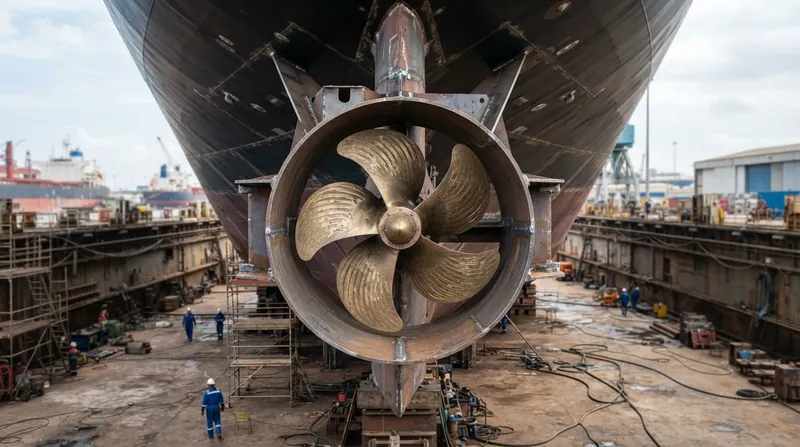
Skewed Blades and Kort Nozzles Quench Cavitation Pulses to Protect Ship Hulls
8 sources
Maritime Physics
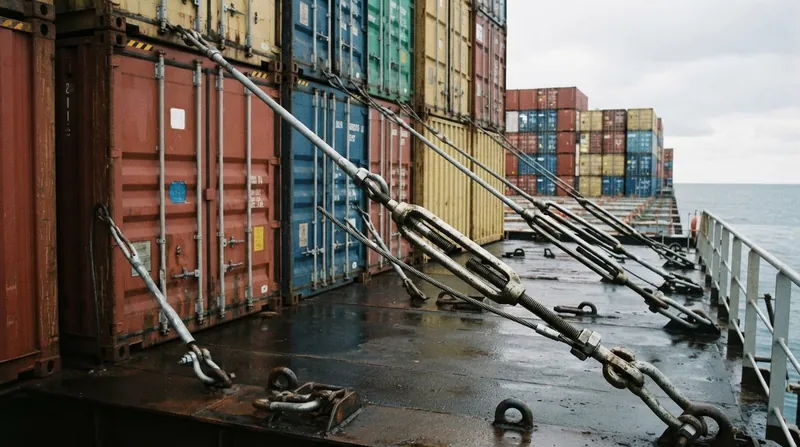
How Twistlocks and Lashing Rods Prevent Container Stacks From Collapsing During Parametric Rolling
6 sources
Cargo Liquefaction
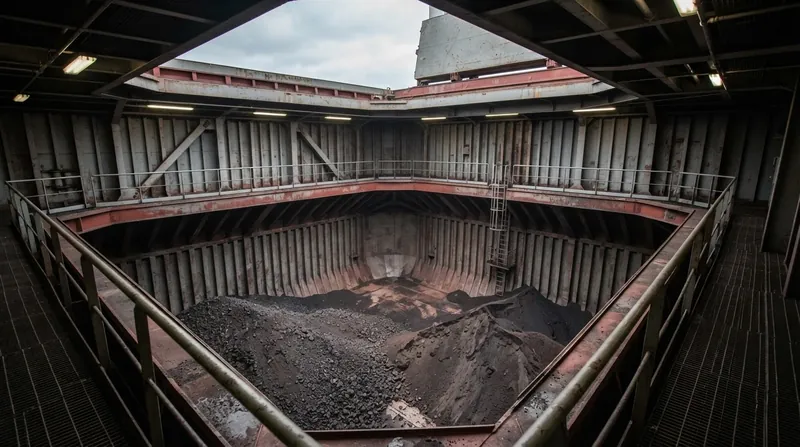
Cyclic Hull Compaction Spikes Pore Water Pressure to Liquefy Solid Ore Cargoes and Capsize Bulk Carriers
6 sources
Naval Blockade
US Fighter Jet Disables Panama-Flagged Cargo Ship in Gulf of Oman Amid Blockade
5 sources

Comments
Every angle. Every day.
Get Transportation stories with full source coverage and perspective breakdowns, free every day.