
The Evidence for Rapamycin: What the Science Actually Says About the Leading Longevity Drug
Rapamycin is the most consistently effective lifespan-extending drug in animal models. Here is a breakdown of the evidence for its use in human longevity, from immune resilience to body composition.
By Factlen Editorial Team
- Longevity Researchers
- Argue that mTOR inhibition is the most robust biological intervention for aging discovered to date.
- Clinical Skeptics
- Warn that animal data rarely translates perfectly to humans and caution against off-label use without long-term safety data.
- Early Adopters
- Believe the risk-reward ratio of low-dose weekly rapamycin is favorable now for extending healthspan.
What's not represented
- · Regulatory Agencies
- · Pharmaceutical Companies
Why this matters
Rapamycin is currently the most evidence-backed candidate drug for slowing human aging. Understanding its proven benefits and real limitations helps separate legitimate longevity science from unregulated wellness hype.
Key points
- Rapamycin consistently extends median lifespan in mice by 10% to 25%, making it the most robust anti-aging compound in animal models.
- No clinical trial has yet proven that rapamycin extends human lifespan, as such trials require decades of tracking.
- Low-dose weekly rapamycin appears to enhance immune function and vaccine response in older adults, rather than suppressing it.
- The 2025 PEARL trial missed its primary endpoint for fat reduction but showed secondary benefits in lean tissue and subjective well-being.
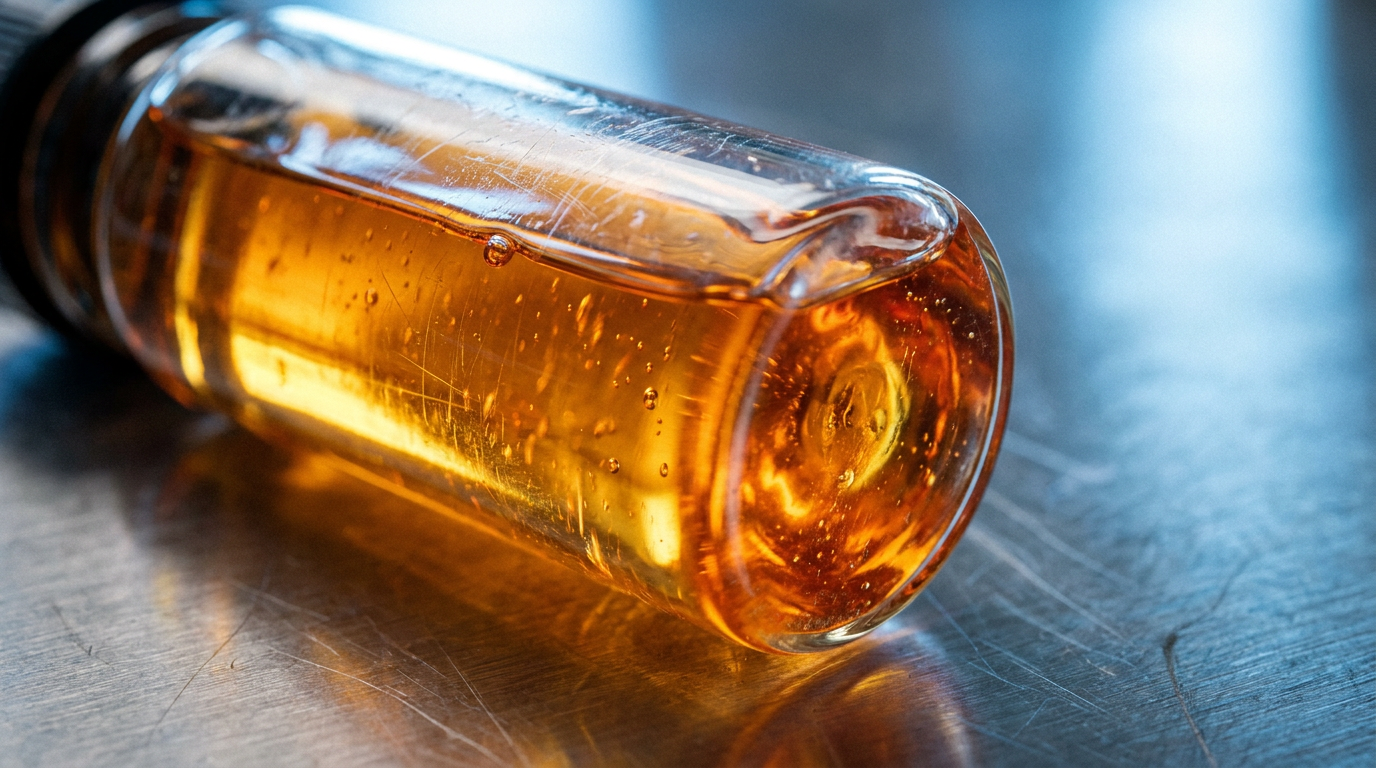
In 1975, a microbiologist analyzing soil samples from Easter Island—known locally as Rapa Nui—isolated a novel molecule produced by the bacterium Streptomyces hygroscopicus. Named rapamycin, it was initially developed as a potent antifungal agent, then repurposed as a powerful immunosuppressant to prevent organ rejection in kidney transplant patients.[2]
Today, rapamycin is the undisputed heavyweight champion of longevity science. Over the past two decades, researchers discovered that the drug inhibits a cellular pathway called mTOR (mechanistic target of rapamycin), a central regulator of growth and metabolism that becomes chronically overactive as we age.[3]
By turning down the mTOR pathway, rapamycin tricks the body into a state of cellular conservation, triggering a cleanup process known as autophagy. This mechanism has made rapamycin the most consistently effective pharmacological intervention for extending lifespan ever tested in mammalian models.[1][2]
However, the leap from laboratory mice to human longevity is fraught with biological complexity. To separate hope from hype, we have compiled an evidence pack evaluating the three core claims surrounding rapamycin's use as an anti-aging therapy.[6]
The first major claim is that rapamycin significantly extends maximum lifespan. The evidence for this in animal models is exceptionally robust. The National Institute on Aging's Interventions Testing Program has repeatedly demonstrated that rapamycin extends median lifespan in genetically heterogeneous mice by 10% to 25%, depending on the strain, sex, and timing of the dose.[2][4]

Despite this, the claim remains entirely unproven in humans. No clinical trial has been large enough or long enough to demonstrate that rapamycin extends human lifespan, a feat that would require tracking thousands of healthy individuals over several decades.[1]
The second core claim is that rapamycin enhances immune resilience in older adults. The human data here is moderate and surprisingly counterintuitive. While high daily doses of rapamycin are explicitly used to suppress the immune system in transplant patients, low intermittent doses—typically 3 to 10 milligrams taken once weekly—appear to do the exact opposite.[1][2]
The second core claim is that rapamycin enhances immune resilience in older adults.
Multiple human studies have shown that low-dose weekly rapamycin can improve responses to vaccines in older adults, suggesting a partial reversal of age-related immune decline rather than suppression.[1][2]
Despite these promising surrogate markers, long-term controlled data on how longevity-dose rapamycin affects real-world infection rates does not yet exist. Physicians caution that anyone taking the drug off-label should pause their protocol if they develop a significant infection.[2]
The third major claim is that rapamycin improves body composition and physical function. The clinical data on this front is decidedly mixed. The longevity community eagerly awaited the results of the PEARL trial—the first 48-week, randomized, placebo-controlled trial of rapamycin for longevity in healthy adults—which published its findings in 2025.[2]
The trial missed its primary endpoint, showing no significant reduction in visceral fat among participants taking either 5 mg or 10 mg weekly compared to a placebo.[2]
However, the PEARL trial did uncover significant secondary benefits. Women taking 10 mg weekly showed improvements in lean tissue mass and reduced pain, while the 5 mg group reported improvements in emotional well-being and general health.[2]

Furthermore, recent 2026 data from the National Institutes of Health demonstrated that chronic rapamycin supplementation in older mice prevented age-related declines in motor function, associating the drug with reduced oxidative stress in specific brain regions.[4]
As the field matures, researchers are increasingly looking beyond rapamycin as a standalone therapy. A landmark 2025 study from the Max Planck Institute revealed that combining rapamycin with the cancer drug trametinib extended the lifespan of mice by an astonishing 30%, while simultaneously reducing chronic inflammation and delaying cancer onset.[5]
The combination therapy influenced gene expression differently than either drug alone, suggesting that the future of pharmacological longevity may lie in multi-drug cocktails that target the aging network from multiple angles.[5]

Aging remains the single greatest risk factor for most chronic diseases, yet historically, modern medicine has treated it as an inevitable decline rather than a modifiable biological process.[3]
Rapamycin represents the first serious pharmacological challenge to that assumption. While it is not a guaranteed fountain of youth, its ability to reliably target the biology of aging makes it the most important molecule in the current longevity toolkit—and the benchmark against which all future anti-aging drugs will be measured.[3][6]
How we got here
1975
Researchers isolate rapamycin from soil bacteria found on Easter Island (Rapa Nui).
1999
The FDA approves rapamycin as an immunosuppressant for kidney transplant patients.
2009
The NIH Interventions Testing Program first demonstrates that rapamycin extends lifespan in mice.
2025
The PEARL trial, the first large randomized trial of rapamycin for human longevity, publishes its results.
Viewpoints in depth
Longevity Researchers
Focus on the robust biological mechanisms and animal data.
For scientists studying the biology of aging, rapamycin is the gold standard. It is the most consistently effective pharmacological intervention for extending lifespan ever tested in mammalian models, replicated across dozens of independent labs. Researchers emphasize that aging is the primary risk factor for most chronic diseases, and targeting the mTOR pathway offers a unified approach to delaying these conditions simultaneously, rather than playing 'whack-a-mole' with individual diseases.
Clinical Skeptics
Emphasize the lack of long-term human lifespan data and potential side effects.
Medical skeptics and conservative clinicians warn against the premature adoption of rapamycin for anti-aging. They point out that mice are not humans, and many drugs that work in rodents fail in clinical trials. They highlight that the 2025 PEARL trial missed its primary endpoint for visceral fat reduction, and caution that the long-term consequences of chronically suppressing the mTOR pathway in healthy humans—including potential risks of infection or metabolic disruption—remain unknown.
Early Adopters
Believe the risk-reward ratio of low-dose weekly rapamycin is favorable now.
A growing community of biohackers and progressive longevity physicians are not waiting for decades-long human lifespan trials to conclude. They argue that the safety profile of low-dose, intermittent rapamycin (typically 3 to 10 mg weekly) is well-established and fundamentally different from the high daily doses used in transplant patients. For this group, the near-term improvements in immune resilience, joint pain, and subjective well-being justify off-label use today.
What we don't know
- Whether the lifespan extension seen in mice will definitively translate to humans.
- The long-term safety profile of taking low-dose rapamycin for decades.
- The optimal dosing schedule (e.g., weekly vs. bi-weekly) to maximize benefits while minimizing side effects.
Key terms
- Rapamycin
- A drug originally discovered in Easter Island soil, FDA-approved as an immunosuppressant, now studied for its anti-aging properties.
- mTOR
- A cellular protein complex that regulates cell growth and metabolism; inhibiting it triggers cellular cleanup.
- Autophagy
- The body's process of clearing out damaged cells and proteins, often stimulated by fasting or mTOR inhibitors.
- Healthspan
- The period of a person's life spent in good health, free from chronic diseases and disabilities of aging.
Frequently asked
What is rapamycin originally used for?
It was FDA-approved in 1999 as an immunosuppressant to prevent organ rejection in kidney transplant patients, taken at high daily doses.
Does rapamycin extend human lifespan?
This is currently unproven. While it consistently extends lifespan in mice, human trials have not been long enough to prove lifespan extension, focusing instead on healthspan markers.
Is rapamycin safe for healthy adults?
At low, intermittent doses (e.g., weekly), early trials like PEARL suggest a favorable safety profile, but long-term risks remain unclear.
Does it suppress the immune system?
At high daily doses, yes. However, low weekly doses appear to actually enhance immune function and vaccine response in older adults.
Sources
Source coverage
6 outlets
3 viewpoints surfaced






[1]GetHealthspanEarly Adopters
Rapamycin Benefits: An Evidence-Based Guide to What the Drug Can—and Cannot—Do for Healthy Aging
Read on GetHealthspan →[2]Dr. Hillary LinClinical Skeptics
What is rapamycin, and why is it being used for longevity?
Read on Dr. Hillary Lin →[3]University of ArizonaLongevity Researchers
Targeting Aging with Rapamycin: The Science of Healthspan
Read on University of Arizona →[4]Journal of GerontologyLongevity Researchers
Chronic rapamycin supplementation prevents age-related decline in motor function
Read on Journal of Gerontology →[5]Max Planck InstituteLongevity Researchers
Treatment with the drugs rapamycin and trametinib together can prolong the life of mice
Read on Max Planck Institute →[6]Factlen Editorial Team
Synthesis by Factlen editorial team
Read on Factlen Editorial Team →
More in health
See all 114 stories →Mental Health Interventions
The Evidence Pack: Why Exercise Is Becoming a First-Line Prescription for Depression
6 sources

Nutrition Labels
Chile's Strict Food Warning Labels Successfully Reduce Childhood Obesity Risk, New Data Shows
8 sources

Autoimmune Breakthrough
Revolutionary 'Immune Reset' Therapy Puts Severe Lupus Into Drug-Free Remission
7 sources

Adaptogen Science
The Emerging Science of Adaptogens: How Ashwagandha and Rhodiola Rewire the Stress Response
6 sources

Every angle. Every day.
Get health stories with full source coverage and perspective breakdowns delivered to your inbox.