
The End of 'Drill and Fill': How Biomimetic Science and Regrowth Drugs Are Transforming Dentistry
Advances in biomimetic adhesives and the world's first human clinical trials for a tooth-regrowing drug are shifting dentistry from mechanical repair to biological regeneration.
By Factlen Editorial Team
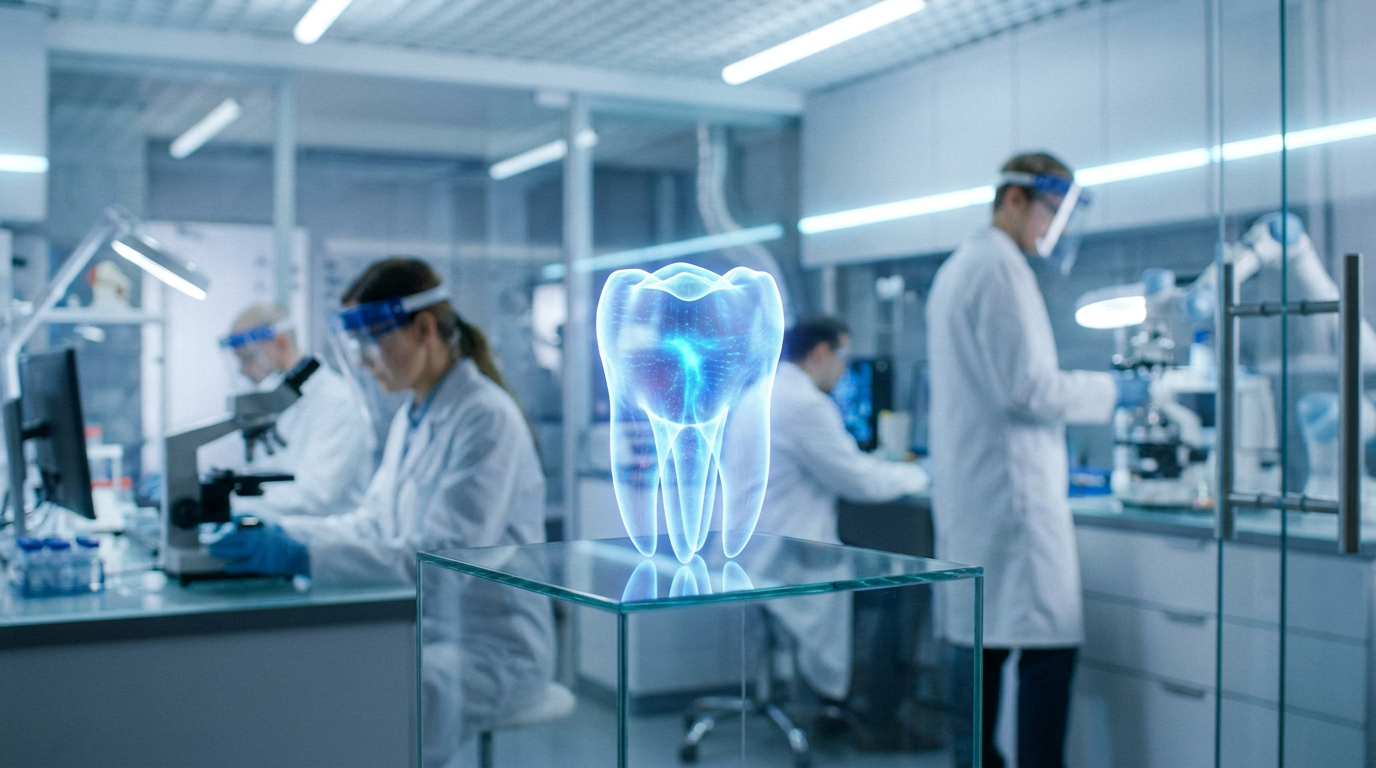
- Regenerative Researchers
- Argue that targeting genetic pathways like USAG-1 can cure congenital dental defects and eventually replace synthetic implants with natural, lab-stimulated teeth.
- Biomimetic Practitioners
- Focus on preserving existing natural tooth structure through advanced adhesives, arguing that aggressive 'drill and fill' techniques cause unnecessary long-term damage.
- Clinical Skeptics
- Caution that regrowing teeth in adults faces massive cellular hurdles and that systemic drugs may struggle to target growth to a single specific socket.
What's not represented
- · Dental Insurance Providers
- · Traditional Prosthodontists
Why this matters
For over a century, treating dental decay meant permanently grinding away healthy tooth structure and relying on synthetic implants. The shift toward regenerative and biomimetic dentistry promises to preserve natural teeth longer, reduce the need for painful root canals, and potentially offer a biological cure for tooth loss.
Key points
- Clinical trials are underway in Japan for TRG035, an experimental drug designed to regrow natural human teeth.
- The drug works by inhibiting the USAG-1 protein, which normally suppresses the development of dormant tooth buds.
- Initial trials focus on children with congenital tooth agenesis, with hopes of eventually treating adults with acquired tooth loss.
- Meanwhile, biomimetic dentistry is transforming everyday clinics by prioritizing the preservation of natural tooth structure over traditional crowns.
- Biomimetic techniques use advanced adhesives to replicate the natural flexibility and biomechanics of teeth, preventing fractures and root canals.
For over a century, the fundamental philosophy of dentistry has been subtractive. When a tooth is damaged by decay or trauma, the standard protocol is to drill away the disease, remove compromised tissue, and replace it with inert synthetic materials like amalgam, porcelain, or titanium. It is a mechanical solution to a biological problem, often trapping patients in a cycle of increasingly invasive procedures—from fillings to crowns, root canals, and eventually extractions. But a profound paradigm shift is currently sweeping through dental science. Driven by advances in molecular biology and adhesive technologies, the era of "drill and fill" is giving way to the regenerative era.[1][5][6]
The most dramatic evidence of this shift is unfolding in clinical trials across Japan, where researchers are testing the world's first tooth-regrowing drug. Developed by Toregem Biopharma, a biotech startup spun out of Kyoto University, the experimental intravenous drug aims to do what was long considered scientifically impossible: stimulate the human body to grow a brand-new, natural tooth from scratch. Following successful animal trials in mice and ferrets, and initial Phase 1 safety trials in adult men in late 2024, the treatment has advanced to a critical new phase.[2][4]
The drug, currently known as TRG035, works by targeting a specific protein called Uterine Sensitization Associated Gene-1, or USAG-1. In human biology, USAG-1 acts as a natural brake on tooth development. While humans are born with the cellular blueprints for primary (baby) and permanent (adult) teeth, we also possess dormant "third" tooth buds. Under normal circumstances, the USAG-1 protein suppresses these dormant buds, preventing humans from growing continuous sets of teeth like sharks or alligators do.[3][4]
Toregem's breakthrough was developing a monoclonal antibody that temporarily inhibits the USAG-1 protein. By neutralizing this biological brake, the drug allows Bone Morphogenetic Proteins (BMPs)—signaling molecules that regulate bone and organ development—to freely stimulate those dormant tooth buds. In laboratory settings, a single dose of the antibody was enough to trigger the formation of a complete, structurally sound tooth.[2][3][4]

The immediate focus of the ongoing 2025 and 2026 clinical trials is not the general public, but children aged two to six who suffer from congenital tooth agenesis (anodontia). This genetic condition affects roughly 0.1% of the global population, leaving children entirely without permanent tooth buds. For these patients, the absence of teeth causes severe functional difficulties with chewing and speech, alongside significant psychological and developmental challenges. Currently, their only options are poorly fitting pediatric dentures or waiting until adulthood for invasive titanium implants.[1][3][4]
If TRG035 proves safe and effective in these pediatric trials, Toregem Biopharma hopes to eventually expand the treatment to adults who have lost teeth due to severe cavities, gum disease, or trauma. The prospect of replacing a lost molar with a biologically identical, lab-stimulated natural tooth would fundamentally disrupt the $5 billion global dental implant market, offering a seamless biological cure rather than a prosthetic patch.[1][2]
However, clinical skeptics caution that regrowing teeth in adults presents massive biological hurdles. Dr. Mary MacDougall, a leading dental researcher at the University of British Columbia, has noted that while young children possess abundant dental epithelial cells necessary for tooth formation, adults who have been missing teeth for years may lack the cellular foundation required for the drug to work.[2][7]
However, clinical skeptics caution that regrowing teeth in adults presents massive biological hurdles.
Furthermore, targeting the therapy remains a complex pharmacological challenge. Because the drug is administered systemically, researchers must ensure that inhibiting USAG-1 only triggers tooth growth in the specific, desired empty socket, rather than causing unwanted supernumerary teeth to erupt elsewhere in the jaw or disrupting bone development in other parts of the body.[2][7]
While systemic tooth regeneration remains in the trial phase, the underlying philosophy of working with the body's biology—rather than against it—is already transforming everyday dental clinics through a movement known as "biomimetic dentistry." Derived from "bio" (life) and "mimetic" (to mimic), this approach abandons the aggressive mechanical retention techniques of the past in favor of preserving maximum natural tooth structure.[5][6]
Traditional dentistry often relies on geometry to keep restorations in place. To fit a conventional crown, a dentist must grind down the tooth into a small peg, frequently removing up to 70% of healthy, structurally sound enamel and dentin just to create room for the porcelain cap. This aggressive reduction traumatizes the living nerve inside the tooth, significantly increasing the likelihood that the patient will eventually need a root canal.[1][5]

Biomimetic dentists view the natural tooth as a masterpiece of engineering that cannot be perfectly replicated by any synthetic material. Instead of grinding down a compromised tooth for a crown, they use advanced adhesive protocols to bond composite resins or ceramic onlays directly to the remaining healthy structure. Techniques like Immediate Dentin Sealing (IDS) protect the freshly exposed inner tooth layer from bacterial invasion and sensitivity, while Deep Margin Elevation (DME) allows dentists to restore deep cavities without cutting away healthy bone.[5][6]
The goal of these biomimetic restorations is to replicate the exact biomechanics of a natural tooth. Natural teeth are not rigid; they flex microscopically under the immense pressures of chewing, thanks to the shock-absorbing properties of the dentino-enamel junction. Traditional stiff crowns disrupt this flexibility, often leading to catastrophic root fractures. Biomimetic materials are layered specifically to mimic this natural flexibility, absorbing stress and preventing the tooth from cracking down the middle.[5][6]

This biological approach is also reshaping preventative home care. For decades, the standard for cavity prevention has been fluoride, which hardens existing enamel. Today, biomimetic oral care products are increasingly utilizing nano-hydroxyapatite—the exact calcium-phosphate mineral that makes up 97% of human tooth enamel. Rather than just hardening the surface, these biomimetic toothpastes actively remineralize the tooth, filling in microscopic scratches and reversing early decay before a cavity can fully form.[1]
Ultimately, the shift toward biomimetic and regenerative dentistry represents an ethical and economic realignment in oral healthcare. By prioritizing right-sized, evidence-informed care over aggressive overtreatment, the industry is moving toward a model where patients keep their natural teeth longer, experience fewer complications, and avoid the painful, expensive cascade of structural dental failure. Whether through advanced adhesives that mimic natural enamel or groundbreaking antibodies that regrow missing teeth entirely, the future of dentistry is undeniably biological.[1][5][6]
How we got here
2007-2018
Researchers identify the USAG-1 gene's role in suppressing tooth growth and successfully regrow teeth in mice and ferrets.
2020
Toregem Biopharma is founded as a spin-off from Kyoto University to commercialize the USAG-1 antibody.
Late 2024
Phase 1 clinical trials begin, testing the safety of the TRG035 drug in healthy adult men.
2025-2026
Phase 2 clinical trials commence, focusing on children aged two to six with congenital tooth agenesis.
2030
Toregem Biopharma's target date for bringing the tooth-regrowth treatment to the general market.
Viewpoints in depth
Regenerative Researchers
Focus on the biological potential to regrow tissue and cure congenital defects.
Scientists at Kyoto University and Toregem Biopharma view the mouth not as a mechanical system to be repaired with hardware, but as a biological environment capable of regeneration. By isolating the USAG-1 protein, they believe they have found the 'master switch' for dental development. Their immediate goal is curing congenital tooth agenesis in children, but their long-term vision is a future where biological tooth regeneration completely replaces the need for titanium implants and synthetic dentures.
Biomimetic Practitioners
Advocate for maximizing the preservation of natural tooth structure through advanced adhesive science.
This camp argues that the traditional dental model of grinding down teeth for crowns is inherently destructive and accelerates the eventual loss of the tooth. Biomimetic dentists rely on the science of advanced adhesion, using techniques like Immediate Dentin Sealing to bond restorations directly to the tooth. They argue that by mimicking the natural flexibility and biomechanics of the dentino-enamel junction, they can prevent fractures, avoid root canals, and keep natural teeth alive for a patient's entire lifespan.
Clinical Skeptics
Highlight the pharmacological and cellular challenges of systemic tooth regeneration in adults.
While acknowledging the breakthrough nature of the USAG-1 antibody, skeptics point out that adult biology is vastly different from that of young children. Adults who have been missing teeth for years often lack the foundational dental epithelial cells required to form a new tooth bud. Furthermore, administering a systemic drug to regrow a single missing molar raises concerns about off-target effects, such as the unintended growth of supernumerary teeth in other parts of the jaw.
What we don't know
- Whether the TRG035 antibody will be effective in older adults who lack the abundant dental epithelial cells found in children.
- How researchers will ensure the systemic drug only triggers tooth growth in the specific, desired locations without causing unwanted supernumerary teeth.
- The long-term durability and structural integrity of lab-stimulated teeth compared to naturally developed ones.
Key terms
- Biomimetic Dentistry
- A branch of dentistry focused on preserving natural tooth structure and using materials that mimic the biological properties of natural teeth.
- USAG-1
- Uterine Sensitization Associated Gene-1, a protein that naturally suppresses the growth of supernumerary (extra) teeth in humans.
- Anodontia
- A congenital genetic condition where a person is born missing one, several, or all of their permanent teeth.
- Immediate Dentin Sealing (IDS)
- A biomimetic technique where freshly cut dentin is immediately sealed with a resin adhesive to protect the nerve and improve bond strength.
- Hydroxyapatite
- A naturally occurring mineral form of calcium apatite that makes up the majority of human tooth enamel and dentin.
Frequently asked
What is the USAG-1 protein?
It is a natural protein in the human body that suppresses the development of dormant tooth buds, preventing us from growing extra sets of teeth.
Can adults use the new tooth regrowth drug?
The current clinical trials are focused on children with genetic conditions, but researchers hope to eventually expand the treatment to adults, though experts remain skeptical about its efficacy in older patients.
How is biomimetic dentistry different from traditional dentistry?
Traditional dentistry often involves aggressively grinding down teeth to fit crowns, while biomimetic dentistry uses advanced adhesives to preserve maximum natural tooth structure and replicate natural flexibility.
What is nano-hydroxyapatite?
It is the exact calcium-phosphate mineral that makes up human tooth enamel, increasingly used in biomimetic toothpastes to actively remineralize and repair early decay.
Sources
Source coverage
7 outlets
3 viewpoints surfaced







[1]Factlen Editorial Team
Synthesis by Factlen editorial team
Read on Factlen Editorial Team →[2]FuturismClinical Skeptics
A Drug That Regrows Teeth Is Entering Human Trials
Read on Futurism →[3]Oral Sphere JournalRegenerative Researchers
USAG-1 and Regenerative Dentistry: Molecular Mechanisms and Clinical Trials
Read on Oral Sphere Journal →[4]Kyoto University HospitalRegenerative Researchers
Clinical trials for world's first tooth regeneration drug begin
Read on Kyoto University Hospital →[5]Biomimetic Study ClubBiomimetic Practitioners
Dentist's Guide to Biomimetic Dentistry
Read on Biomimetic Study Club →[6]The Cosmetic Dental ClinicBiomimetic Practitioners
Biomimetic Dentistry: Learning from Nature's Blueprint
Read on The Cosmetic Dental Clinic →[7]New ScientistClinical Skeptics
Can a new drug really regrow human teeth?
Read on New Scientist →

More in health
See all 9 stories →Dementia Research
The Shingles Vaccine Is Emerging as a Powerful Shield Against Dementia
7 sources

Exercise Mimetics
The Science of 'Exercise in a Pill': How New Longevity Drugs Mimic Physical Activity
7 sources
Brain Health
How Deep Sleep Washes the Brain: The Science of the Glymphatic System
7 sources

Longevity Science
The Postbiotic Promise: How Urolithin A Recycles Aging Cells
6 sources
Every angle. Every day.
Get health stories with full source coverage and perspective breakdowns delivered to your inbox.