
The Complete Guide to Upgrading to a Cold-Climate Heat Pump in 2026
Technological breakthroughs and fully active IRA rebates have made cold-climate heat pumps the default HVAC upgrade for 2026. Here is how the technology works, what the new efficiency ratings mean, and how to navigate the transition.
By Factlen Editorial Team
- Pragmatic HVAC Professionals
- Contractors focused on reliability, comfort, and practical installation realities.
- Electrification Advocates
- Proponents of moving entirely away from fossil fuels for home heating.
- Cost-Conscious Homeowners
- Consumers prioritizing upfront affordability and long-term utility savings.
What's not represented
- · Renters who lack control over HVAC upgrades
- · Electrical grid operators managing winter peak loads
Why this matters
Heating and cooling account for over half of the average home's energy use. Upgrading to a modern heat pump can cut utility bills by hundreds of dollars annually, eliminate fossil fuel combustion from your home, and unlock thousands in federal tax credits.
Key points
- Modern cold-climate heat pumps can maintain 100% heating capacity down to 5°F.
- Heat pumps move thermal energy rather than generating it, achieving up to 400% efficiency.
- The Inflation Reduction Act provides up to $2,000 in federal tax credits for eligible installations.
- Dual-fuel systems remain a popular option for homes in extreme northern climates.
The residential heating landscape has crossed a historic threshold in 2026. For the first time, electric heat pumps are consistently outselling traditional gas furnaces across the United States. The narrative has definitively shifted from a technology that "only works in the South" to the default HVAC upgrade for homes in northern, freezing climates.[1][2]
The catalyst for this rapid transition is twofold. First, the technology behind cold-weather performance has matured into a highly reliable science. Second, the financial incentives established by the Inflation Reduction Act (IRA) have fully rolled out across state portals, fundamentally changing the math for homeowners.[2]
But for a homeowner facing a failing furnace or planning a major remodel, the terminology can still feel overwhelming. Between SEER2 ratings, inverter compressors, and dual-fuel setups, navigating an HVAC quote requires a new baseline of knowledge. Understanding exactly how these systems work is the key to unlocking their benefits.[6]
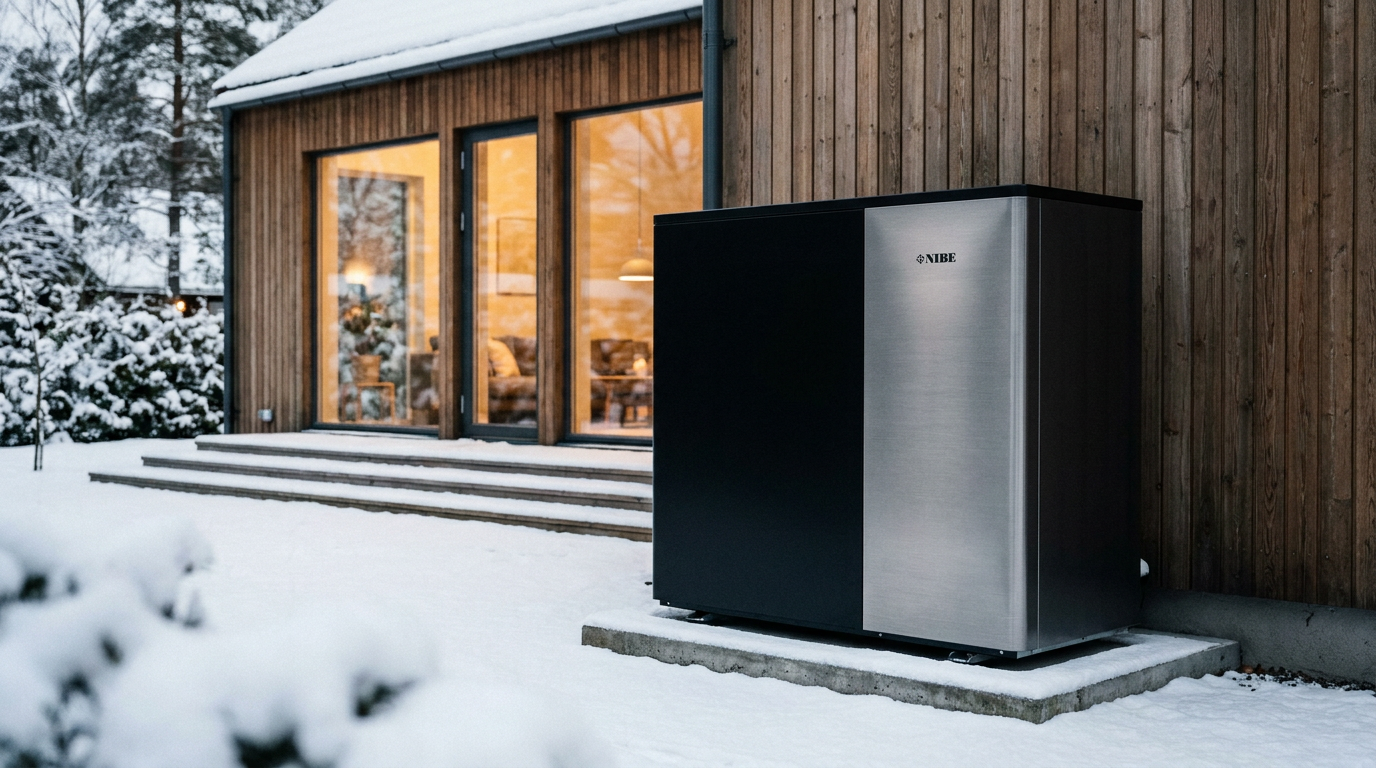
At its core, a heat pump does not generate heat; it simply moves it. While a traditional gas furnace burns fossil fuels to create warmth, a heat pump acts much like a reversible refrigerator, utilizing advanced physics to transfer thermal energy from one place to another.[5]
In the summer, the system extracts heat from inside the home and pumps it outside, providing high-efficiency air conditioning. In the winter, a specialized reversing valve switches the flow of the refrigerant. This allows the system to absorb ambient thermal energy from the outdoor air and transfer it indoors to warm the house.[1]

The concept can sound counterintuitive to anyone who has stood outside in a blizzard—how can there be heat in freezing air? The reality is that thermal energy exists in the air all the way down to absolute zero. The specialized refrigerants used in modern systems are capable of absorbing this energy even when the thermometer reads -20°F.[3]
Older generations of heat pumps struggled in northern winters because their single-speed compressors could not adapt to extreme temperature drops. Once the outdoor temperature fell below 35°F, those legacy units would lose up to 60% of their heating capacity, forcing the home to rely on expensive electric resistance backup heat.[3]
The 2026 "Cold Climate Heat Pump" (CCHP) solves this limitation using variable-speed inverter compressors and Enhanced Vapor Injection (EVI) technology. Instead of simply turning fully on or fully off, an inverter compressor modulates its speed, working exactly as hard as necessary to extract heat from the frigid air.[1][4]
The 2026 "Cold Climate Heat Pump" (CCHP) solves this limitation using variable-speed inverter compressors and Enhanced Vapor Injection (EVI) technology.
This engineering breakthrough allows top-tier cold-climate units to maintain 100% of their rated heating capacity down to 5°F. Even more impressively, they can continue operating efficiently at temperatures as low as -13°F or -22°F before requiring any backup assistance.[3][5]

To measure this performance, the industry relies on two updated metrics: SEER2 for cooling efficiency and HSPF2 for heating efficiency. For a true cold-climate system capable of handling a northern winter, experts recommend looking for an HSPF2 rating of 9.0 or higher.[3]
Another crucial metric is the Coefficient of Performance (COP), which measures real-time efficiency. A COP of 3.0 means the system produces three units of heat for every one unit of electricity it consumes. This makes the heat pump 300% efficient, a staggering improvement over the absolute best high-efficiency gas furnaces, which max out at around 98%.[1][4]
Beyond the engineering, the financial equation has fundamentally changed the consumer approach to HVAC replacement. Under Section 25C of the IRA, any homeowner can claim a 30% federal tax credit, up to $2,000 annually, for installing an ENERGY STAR-certified heat pump.[2][5]
In addition to the tax credit, the High-Efficiency Electric Home Rebate Act (HEEHRA) is now fully operational in most states. These point-of-sale rebates are income-dependent and can cover up to 100% of the installation cost for qualifying low- and moderate-income households, turning a luxury upgrade into an accessible necessity.[2]
Because a heat pump replaces both the central air conditioner and the furnace, homeowners also save on the long-term labor and equipment costs of maintaining two separate mechanical systems. It is a single, unified appliance for year-round climate control.[1]

However, retrofitting an older home requires careful planning. Heat pumps deliver a lower, more continuous flow of warm air compared to the short, intense blasts of a gas furnace. This means existing ductwork must be evaluated to ensure it can handle the required airflow without creating static pressure issues.[1][6]
Additionally, moving to an all-electric heating system might necessitate an electrical panel upgrade. Homes still operating on legacy 100-amp service often need to be upgraded to 200-amp service to safely handle the increased electrical load during the winter months.[6]
For homeowners in the most extreme northern climates—such as the upper Midwest or rural Canada—a "dual-fuel" system remains a highly recommended compromise. This setup pairs a high-efficiency electric heat pump with a traditional gas furnace backup.[1][5]

In a dual-fuel configuration, the heat pump handles the heating load for 90% of the winter, maximizing efficiency and minimizing carbon emissions. The gas furnace only kicks on during the most severe "Arctic blast" days when the temperature drops below the heat pump's optimal operating range.[5]
Ultimately, the transition to cold-climate heat pumps represents one of the most significant and empowering upgrades a homeowner can make in 2026. It offers a rare intersection of improved daily comfort, substantially lower utility bills, and a meaningful reduction in residential carbon emissions.[6]
How we got here
1850s
The foundational concepts of heat pump technology and refrigeration are first developed.
Jan 2023
The Department of Energy introduces the stricter SEER2 and HSPF2 testing standards to better reflect real-world efficiency.
2024-2025
State energy offices begin rolling out the HEEHRA point-of-sale rebate portals funded by the Inflation Reduction Act.
2026
Cold-climate heat pump sales surpass traditional gas furnaces in the US as building electrification mandates and incentives take full effect.
Viewpoints in depth
Electrification Advocates
Proponents of moving entirely away from fossil fuels for home heating.
This camp argues that the technology is now mature enough to completely sever the home's connection to natural gas or fuel oil. They point to the 300%+ efficiency of modern heat pumps and the rapidly greening electrical grid as proof that full electrification is the only responsible choice for the climate. For these advocates, even dual-fuel systems are seen as an unnecessary tether to legacy fossil fuel infrastructure.
Pragmatic HVAC Professionals
Contractors focused on reliability, comfort, and practical installation realities.
While fully supportive of the heat pump transition, many seasoned contractors caution against a one-size-fits-all approach. In older, poorly insulated homes or regions that regularly see temperatures below -15°F, they advocate for dual-fuel systems. Their primary concern is ensuring the homeowner isn't left relying on expensive electric resistance backup heating during extreme cold snaps, and they emphasize that ductwork and electrical panels must be properly evaluated before ditching the gas furnace.
Cost-Conscious Homeowners
Consumers prioritizing upfront affordability and long-term utility savings.
For this group, the environmental benefits are a bonus; the primary driver is the bottom line. They are highly motivated by the $2,000 federal tax credit and state-level HEEHRA rebates. Their main concern is the 'split incentive'—whether the monthly savings on natural gas will outweigh the increased electricity usage, especially in regions where electricity rates are exceptionally high. They rely heavily on accurate ROI calculations before committing to a retrofit.
What we don't know
- How quickly all 50 states will fully deploy their allocated HEEHRA rebate funds.
- The long-term impact of mass heat pump adoption on local electrical grid stability during extreme winter weather.
Key terms
- SEER2
- Seasonal Energy Efficiency Ratio 2; the updated federal standard for measuring how efficiently a system cools a home.
- HSPF2
- Heating Seasonal Performance Factor 2; the updated metric that measures a heat pump's heating efficiency over an entire winter season.
- Inverter Compressor
- A variable-speed motor that can precisely adjust its output to match the home's heating or cooling needs, rather than just turning fully on or off.
- Coefficient of Performance (COP)
- A ratio measuring efficiency at a specific moment; a COP of 3.0 means the unit produces three units of heat for every one unit of electricity used.
- Dual-Fuel System
- A hybrid HVAC setup that uses an electric heat pump for the vast majority of the year, but switches to a gas furnace during extreme cold snaps.
Frequently asked
Do heat pumps actually work in freezing weather?
Yes. Modern cold-climate heat pumps use advanced compressors and refrigerants to extract heat from the air even when outdoor temperatures drop to -13°F or lower.
What happens if the temperature drops below the heat pump's limit?
The system will automatically switch to a backup heat source. In a fully electric setup, this is usually electric resistance heat strips; in a dual-fuel setup, it switches to a gas furnace.
How much money can I get from the IRA rebates?
All homeowners qualify for a 30% federal tax credit up to $2,000. Low- and moderate-income households may also qualify for point-of-sale HEEHRA rebates that can cover up to 100% of the installation cost.
Do I need to upgrade my electrical panel for a heat pump?
It depends on your current service. Homes with older 100-amp panels often require an upgrade to 200-amp service to handle the increased electrical load of an all-electric heating system.
Sources
Source coverage
6 outlets
3 viewpoints surfaced






[1]HVAC Pro SalesPragmatic HVAC Professionals
The Cold Climate Breakthrough: 2026 Heat Pump Guide
Read on HVAC Pro Sales →[2]ServiceMagCost-Conscious Homeowners
Why IRA Heat Pump Rebates Change the Contractor's Pitch
Read on ServiceMag →[3]Heat Pump NetworkPragmatic HVAC Professionals
HSPF2 and Cold Climate Ratings Explained
Read on Heat Pump Network →[4]Northeast Energy Efficiency Partnerships (NEEP)Cost-Conscious Homeowners
Cold Climate Air Source Heat Pump (ccASHP) Specification Version 4.0
Read on Northeast Energy Efficiency Partnerships (NEEP) →[5]ENERGY STARElectrification Advocates
Air-Source Heat Pumps: Cold Climate Designation
Read on ENERGY STAR →[6]Factlen Editorial TeamElectrification Advocates
Synthesis by Factlen editorial team
Read on Factlen Editorial Team →
Every angle. Every day.
Get home stories with full source coverage and perspective breakdowns delivered to your inbox.