
The Complete Guide to Modern Heat Pumps: How They Work and When to Upgrade
Advances in inverter technology and low-temperature refrigerants have transformed heat pumps into the primary HVAC solution for modern homes. Here is how they work, what they cost, and why they are replacing traditional gas furnaces even in sub-zero climates.
By Factlen Editorial Team
- Electrification Advocates
- View heat pumps as the critical technology for decarbonizing the residential sector.
- Cost-Conscious Consumers
- Focus on the immediate financial realities of upgrading home infrastructure.
- HVAC Industry Professionals
- Prioritize technical execution, proper sizing, and reliable performance in extreme conditions.
What's not represented
- · Fossil fuel industry representatives
- · Renters who cannot control their building's HVAC infrastructure
Why this matters
Heating and cooling account for roughly half of the average home's energy use. Upgrading to a modern heat pump can drastically lower utility bills, eliminate the need for a separate air conditioner, and significantly reduce a household's carbon footprint.
Key points
- Modern cold-climate heat pumps can maintain 100% of their heating capacity at temperatures as low as 5°F.
- Unlike traditional furnaces, heat pumps do not generate heat; they move thermal energy from one place to another.
- A reversing valve allows the system to act as a highly efficient air conditioner during the summer months.
- The technology is 3 to 5 times more energy-efficient than the most advanced condensing gas boilers.
- Federal tax credits and state rebates are currently available to help offset the higher upfront installation costs.
For decades, the heat pump was viewed as a regional luxury—a highly efficient way to heat and cool homes in the mild climates of the American South or the Mediterranean, but fundamentally unsuited for harsh winters. When temperatures dropped below freezing, older models struggled to extract enough thermal energy from the air, forcing homeowners to rely on expensive electrical resistance backup heating. That regional limitation is officially a relic of the past. As we move through 2026, rapid advancements in compressor technology and low-temperature refrigerants have transformed the heat pump into the primary mechanical solution for both new construction and deep energy retrofits across all climates.[4][6]
To understand why this technology is rapidly replacing traditional gas and oil furnaces, it helps to look at the fundamental physics of how a heat pump operates. Unlike a combustion furnace that burns fossil fuels to create heat, or a baseboard heater that uses electrical resistance to generate warmth, a heat pump does not create heat at all. Instead, it moves thermal energy from one location to another. It operates on the same thermodynamic principles as a standard kitchen refrigerator, utilizing a closed loop of refrigerant, a compressor, and two heat exchanger coils to absorb heat from a cooler space and release it into a warmer one.[1][3]
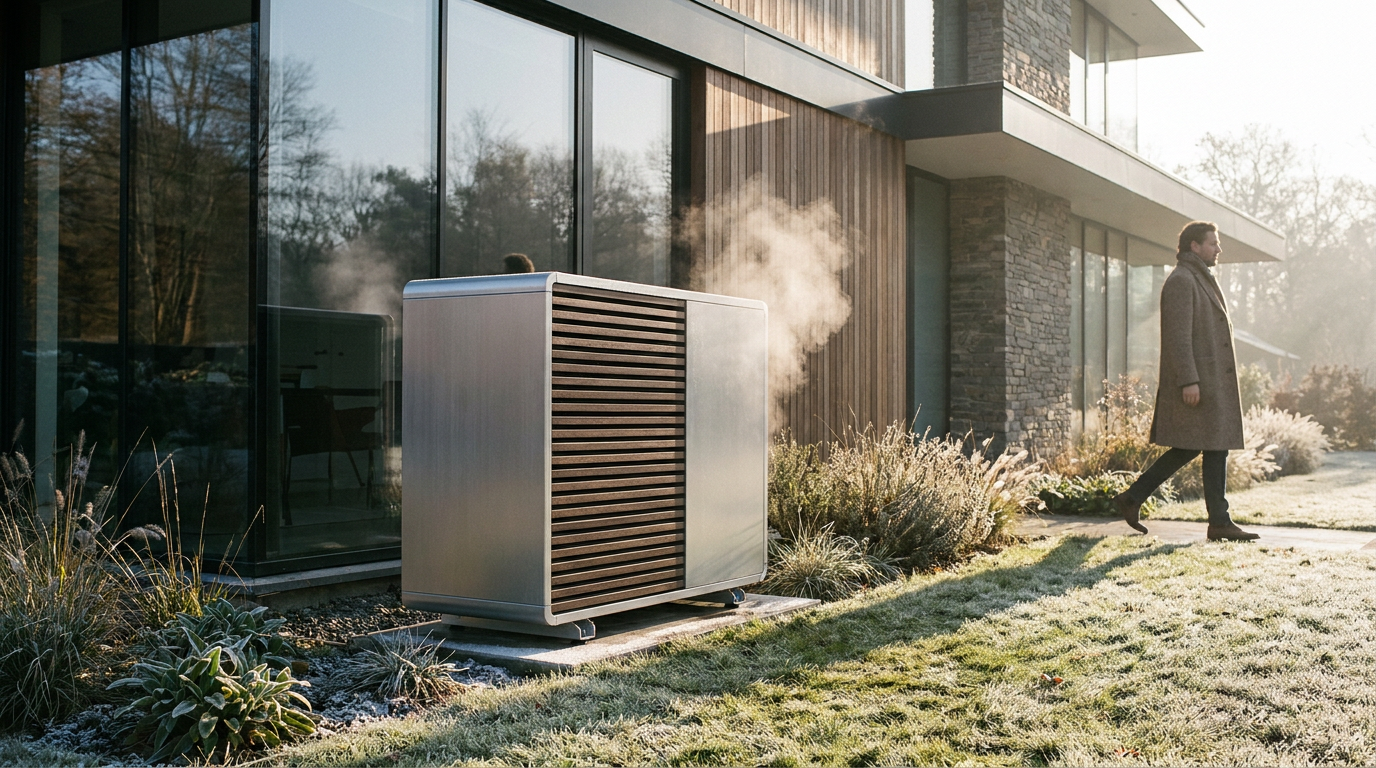
During the winter, the system's outdoor unit extracts ambient heat energy from the outside air. Even when the air feels freezing to human skin, it still contains a significant amount of thermal energy. The refrigerant inside the outdoor coil absorbs this heat, and the compressor pressurizes the gas, significantly raising its temperature. This hot, pressurized gas is then pumped to the indoor unit, where a fan blows air across the heated coil, distributing warmth throughout the home. Because moving heat requires far less energy than generating it from scratch, this process is remarkably efficient.[1][2]
The true versatility of the system becomes apparent in the summer, when a reversing valve inside the unit flips the direction of the refrigerant flow. Instead of pulling heat from the outside in, the system acts exactly like a traditional central air conditioner. It absorbs the heat from inside the house and rejects it outdoors, simultaneously dehumidifying the indoor air. This dual functionality means homeowners can replace both an aging furnace and a failing air conditioner with a single, highly efficient appliance.[1][3]

The breakthrough that allowed heat pumps to conquer northern climates is the widespread adoption of the inverter-driven, variable-speed compressor. Older single-stage heat pumps operated like a light switch: they were either blasting at 100 percent capacity or completely off. This constant cycling was inefficient and struggled to maintain consistent temperatures. Modern inverter compressors, by contrast, act more like a car's accelerator pedal. They can continuously modulate their speed, ramping up to extract heat when the temperature plummets and dialing back to a low, steady hum to maintain comfort once the target temperature is reached.[4]
This variable-speed technology is the engine behind the modern 'cold-climate' heat pump. Today's premium models are engineered to maintain 100 percent of their rated heating capacity even when the outdoor temperature drops to 5 degrees Fahrenheit (-15 degrees Celsius). Furthermore, they can continue operating efficiently at temperatures as low as -22 degrees Fahrenheit (-30 degrees Celsius), providing reliable warmth through the deepest winter freezes without relying on backup heat. This capability has completely erased the old geographic boundaries that once restricted heat pump adoption to the southern United States.[4][5]
The efficiency of these systems is quantified by a metric known as the Coefficient of Performance (COP). A COP of 1.0 means that for every unit of electricity consumed, one unit of heat is produced—which is the maximum theoretical efficiency of standard electric resistance heating, like a baseboard heater. Modern cold-climate heat pumps routinely achieve a COP of 3.0 or 4.0, meaning they deliver three to four times more thermal energy to the home than the electrical energy they consume. This exponential return on energy investment is what makes the technology so financially compelling over the long term.[2][4]
The efficiency of these systems is quantified by a metric known as the Coefficient of Performance (COP).
According to the International Energy Agency (IEA), this multiplier effect makes current heat pump models three to five times more energy-efficient than the most advanced condensing gas boilers on the market. The IEA notes that heat pumps are now the central technology in the global transition toward secure and sustainable heating. Their widespread adoption has the potential to reduce global carbon dioxide emissions by at least 500 million tonnes by 2030—an environmental impact equivalent to removing all the cars in Europe from the road today.[2]

For the individual homeowner, this translates to a massive reduction in their personal carbon footprint. A study cited by Consumer Reports found that switching to an air-source heat pump trims a household's carbon dioxide emissions by an average of 40 percent compared to a gas furnace, though the exact figure depends on how the local electrical grid generates its power. As grids increasingly rely on wind, solar, and nuclear power, the emissions associated with running a heat pump will only continue to fall.[3][6]
When shopping for a system, homeowners generally choose between two main configurations of air-source heat pumps. Ducted systems are designed to serve as a direct drop-in replacement for a central furnace, utilizing the home's existing network of metal ductwork to distribute conditioned air throughout the various rooms. For homes without existing ducts—such as older properties that rely on radiators, radiant floor heating, or electric baseboards—ductless 'mini-split' systems offer a highly efficient and minimally invasive alternative.[1][3]
A mini-split system connects a single outdoor compressor to one or more indoor 'heads' mounted high on the walls or recessed into the ceilings of individual rooms. This setup not only bypasses the need for expensive and messy ductwork installation but also allows for precise 'zoned' heating and cooling. Homeowners can set different temperatures for the living room and the bedroom, or turn off the conditioning entirely in unoccupied guest spaces, further driving down overall energy consumption and maximizing comfort.[3][5]

While air-source models dominate the residential market, ground-source or geothermal heat pumps represent the pinnacle of HVAC efficiency. Instead of extracting heat from the variable outdoor air, these systems utilize a network of fluid-filled pipes buried in the yard to exchange heat with the earth. Because the ground maintains a stable temperature of 50 to 60 degrees Fahrenheit year-round, geothermal pumps operate with incredible efficiency regardless of the weather above ground. However, the extensive excavation required makes them prohibitively expensive to install for many homeowners.[1][3]
For residents in the most extreme northern climates, HVAC professionals often recommend a hybrid or 'dual-fuel' approach. In this configuration, a high-efficiency electric heat pump handles the heating load for 90 percent of the winter. However, during rare, record-breaking cold snaps where the temperature drops well below zero and electricity rates peak, the system automatically switches over to a smaller backup gas or propane furnace. This ensures maximum comfort and economic efficiency without oversizing the heat pump equipment.[4][6]
The industry is also undergoing a significant transition in the chemical refrigerants used inside these systems. As of 2026, new environmental regulations have phased out older refrigerants like R-410A in favor of alternatives with a significantly lower Global Warming Potential (GWP). Manufacturers are now utilizing R-32, R-454B, and even highly refined R-290 (propane). Propane is particularly notable because it boasts a near-zero GWP and has the unique ability to produce higher flow temperatures, making it incredibly useful for retrofitting older homes equipped with traditional high-temperature radiators.[4]

Despite the clear operational advantages, the upfront cost of installing a modern heat pump remains a hurdle for some consumers. A premium cold-climate system can cost several thousand dollars more than a standard gas furnace replacement. To bridge this financial gap, federal, state, and local governments, alongside utility companies, have rolled out unprecedented financial incentives. Tax credits and point-of-sale rebates can offset a significant portion of the installation cost, fundamentally altering the return-on-investment calculation and making the technology accessible to millions of middle-class households.[3][4][5]
Ultimately, the success of a heat pump installation relies heavily on the expertise of the HVAC contractor performing the work. Because these systems operate differently than traditional combustion furnaces, proper sizing is absolutely critical. A qualified contractor must perform a detailed 'Manual J' load calculation, factoring in the home's square footage, insulation levels, window quality, and local climate data to determine the exact heating and cooling capacity required. An oversized heat pump will short-cycle and fail to dehumidify the air, while an undersized unit will struggle to keep the home warm during a freeze.[3][4][6]
As the technology continues to mature, the heat pump has evolved from a niche environmental upgrade into the undisputed gold standard for residential comfort. By combining the fundamental physics of thermodynamics with advanced digital compressors and cleaner refrigerants, these systems offer a rare convergence of benefits. They lower monthly utility bills, drastically reduce household greenhouse gas emissions, and provide superior, whisper-quiet comfort year-round. For homeowners looking to future-proof their properties, the transition away from fossil fuels has never been more practical or financially viable.[4][6]
How we got here
1970s
Early air-source heat pumps gain popularity in the American South but struggle to operate efficiently in freezing northern climates.
2010s
The widespread introduction of variable-speed inverter compressors allows heat pumps to maintain heating capacity in sub-zero temperatures.
2022
The U.S. passes the Inflation Reduction Act, introducing significant federal tax credits and rebates for high-efficiency heat pump installations.
2026
New environmental regulations phase out high-GWP refrigerants like R-410A, pushing the industry toward cleaner alternatives like R-32 and R-290.
Viewpoints in depth
Electrification Advocates
View heat pumps as the critical technology for decarbonizing the residential sector.
This camp, which includes environmental groups and international energy watchdogs, argues that phasing out combustion furnaces is non-negotiable for meeting global climate targets. They emphasize that because heat pumps run on electricity, their carbon footprint shrinks every year as the broader power grid transitions to renewable energy sources like wind and solar.
Cost-Conscious Consumers
Focus on the immediate financial realities of upgrading home infrastructure.
While acknowledging the long-term savings, this perspective highlights the significant upfront capital required to install a modern heat pump system. They advocate for maximizing federal tax credits and local utility rebates to offset the initial sticker shock, and closely calculate the 'payback period' based on local electricity versus natural gas rates.
HVAC Industry Professionals
Prioritize technical execution, proper sizing, and reliable performance in extreme conditions.
Contractors and engineers stress that a heat pump is not a simple plug-and-play appliance. They argue that the success of an installation depends entirely on accurate 'Manual J' load calculations and proper ductwork assessment. In regions with brutal winters, they often advocate for dual-fuel hybrid systems to ensure homeowners aren't left in the cold during extreme temperature drops.
What we don't know
- How quickly the electrical grid infrastructure in older neighborhoods can adapt to the increased load of mass residential electrification.
- Whether the upfront costs of premium cold-climate models will drop significantly as manufacturing scales up globally.
- The long-term lifespan of the newest ultra-low GWP refrigerants in harsh real-world operating conditions.
Key terms
- Coefficient of Performance (COP)
- A metric measuring a heat pump's real-time efficiency; a COP of 3.0 means the unit produces three units of heat for every one unit of electricity it consumes.
- Inverter-driven compressor
- An advanced motor that can continuously adjust its speed to match the exact heating or cooling demand of the home, rather than just turning fully on or fully off.
- Dual-fuel system
- A hybrid HVAC setup that uses an electric heat pump for most of the winter but automatically switches to a backup gas or propane furnace during extreme cold snaps.
- SEER2
- Seasonal Energy Efficiency Ratio 2; a standardized metric used to measure the cooling efficiency of a heat pump or air conditioner over a typical cooling season.
- HSPF2
- Heating Seasonal Performance Factor 2; a standardized metric used to measure how efficiently a heat pump heats a home during the colder months.
Frequently asked
Do heat pumps work in freezing weather?
Yes. Modern cold-climate heat pumps utilize advanced inverter-driven compressors and low-temperature refrigerants to extract heat from the air even when temperatures drop to -22°F (-30°C).
Can a heat pump replace my air conditioner?
Yes. A heat pump provides both heating and cooling. In the summer, a reversing valve changes the flow of refrigerant, allowing the unit to pull heat from inside your home and release it outdoors, exactly like a central air conditioner.
What is a mini-split system?
A mini-split is a type of ductless heat pump. It connects an outdoor compressor to individual wall or ceiling-mounted units inside the home, making it ideal for older houses without existing ductwork or for zoning specific rooms.
Are heat pumps more expensive to install than gas furnaces?
The upfront cost of a premium heat pump is typically higher than a standard gas furnace. However, federal tax credits, state rebates, and long-term energy savings often offset the initial price difference over the lifespan of the unit.
Sources
Source coverage
6 outlets
3 viewpoints surfaced





[1]Department of EnergyHVAC Industry Professionals
How Air-Source Heat Pumps Work
Read on Department of Energy →[2]International Energy AgencyElectrification Advocates
The Future of Heat Pumps
Read on International Energy Agency →[3]Consumer ReportsCost-Conscious Consumers
4 Reasons to Consider a Heat Pump for Your Home
Read on Consumer Reports →[4]EcoHomeElectrification Advocates
The 2026 Guide to Heat Pumps
Read on EcoHome →[5]EnergySageCost-Conscious Consumers
Best Cold Climate Heat Pumps in 2025 and 2026
Read on EnergySage →[6]Factlen Editorial TeamHVAC Industry Professionals
Synthesis by Factlen editorial team
Read on Factlen Editorial Team →

Every angle. Every day.
Get home stories with full source coverage and perspective breakdowns delivered to your inbox.