
The Compact Camera Revival: Why Fixed-Lens Models Are Outlasting the Smartphone Era
Driven by digital minimalism and massive internal sensors, premium compact cameras have become the fastest-growing segment in the photography industry, surging 16% in early 2026 as DSLRs face terminal decline.
By Hui Lin

In short
- Global shipments of fixed-lens compact cameras surged 16.2% in the first half of 2026.
- DSLR shipments plummeted by 30% during the same period, signaling the format's terminal decline.
- Modern premium compacts utilize massive 1-inch or APS-C sensors, vastly outperforming smartphone cameras.
The prevailing assumption in consumer electronics is that the smartphone permanently killed the dedicated camera, leaving only bulky, complex rigs for working professionals. The reality of the 2026 market tells the exact opposite story. The fastest-growing segment in the photography industry is not the massive professional mirrorless system, but the pocket-sized, fixed-lens compact camera.[1]
According to the Camera & Imaging Products Association (CIPA), global shipments of fixed-lens cameras surged by 16.2% in the first half of 2026. This extends a multi-year revival that has caught manufacturers off guard and forced a rapid reallocation of production lines. The compact camera is no longer a nostalgic novelty; it is the primary engine keeping the consumer camera market afloat.[1]
To understand this shift, buyers must look at what is collapsing simultaneously. The digital single-lens reflex (DSLR) camera—once the default upgrade for anyone wanting better photos—is in a terminal death spiral. DSLR shipments plummeted by 30% in the first half of 2026, while even the newer mirrorless interchangeable-lens category saw a slight 2.6% contraction.[1][3][4]
The data reveals a structural realignment in how people buy cameras. By comparing the 16.2% growth in fixed-lens shipments against the steep drops in interchangeable-lens bodies, it becomes clear that compacts are absorbing the unit-volume losses from the rest of the industry. Buyers are not abandoning dedicated cameras; they are abandoning the complexity and bulk of carrying multiple lenses.[6]
The mechanism driving this revival is rooted in simple physics. A decade ago, cheap point-and-shoot cameras used tiny image sensors that were eventually matched and surpassed by computational smartphone photography. Today's premium compacts take a radically different approach, packing massive 1-inch or APS-C sensors into bodies that still fit in a jacket pocket.[2][5]
These larger sensors capture exponentially more light than a smartphone ever could. Because image quality is fundamentally constrained by the physical area available to gather photons, a compact camera with an APS-C sensor delivers natural background blur, superior low-light performance, and dynamic range that computational algorithms can only simulate.[5]
The fixed-lens design is the engineering compromise that makes this possible. By permanently mating a specific lens to a specific sensor, optical engineers can optimize the glass for that exact silicon, eliminating the bulky mounting hardware required for interchangeable lenses. The result is a professional-grade imaging tool that weighs less than a pound.[2]
Beyond the hardware, the compact revival is heavily fueled by the cultural shift toward digital minimalism. As screen time and algorithmic feeds dominate daily life, consumers are increasingly seeking out single-purpose devices that do not vibrate, ping, or demand attention.
A dedicated camera offers a psychological boundary that a smartphone cannot. When a user takes a photo with a phone, they are immediately one swipe away from an inbox or a social media feed. A compact camera allows the user to document their life while leaving the smartphone in a bag, fundamentally changing the relationship with the moment being captured.
This psychological appeal has created a massive secondary market for older compacts, driving up prices for used models from the 2010s. Manufacturers are now racing to capture this demand with new releases that emphasize tactile controls—physical dials for shutter speed and aperture—over touchscreen menus.[6]
The economics of this shift are highly favorable for camera brands. Premium compacts command high profit margins, often retailing between $900 and $1,600. Because the lens is built-in, manufacturers capture the entire hardware spend upfront, rather than hoping the consumer will eventually buy additional lenses for a mirrorless system.[6]
However, buyers should be aware of the inherent limitations of the format. A fixed-lens camera cannot zoom beyond its optical design, and it cannot be adapted for specialized tasks like extreme wildlife photography or macro work. It is a specialized tool optimized for everyday carry, street photography, and travel.[2]
For consumers looking to invest, the actionable takeaway is to ignore the megapixel count and focus entirely on sensor size. A 20-megapixel camera with a 1-inch sensor will drastically outperform a 48-megapixel smartphone. The premium compact market has effectively bifurcated into two tiers: 1-inch sensor models for maximum pocketability, and APS-C models for uncompromising image quality.[5]
For consumers looking to invest, the actionable takeaway is to ignore the megapixel count and focus entirely on sensor size.
The era of the cheap, disposable point-and-shoot is permanently over, replaced by the smartphone. But the era of the premium, single-purpose imaging tool is just beginning. As the interchangeable-lens market consolidates around working professionals, the fixed-lens compact has reclaimed its title as the definitive camera for everyone else.[2][6]
How we did this
- Method
- Compared the H1 2026 CIPA shipment data for fixed-lens cameras against the equivalent H1 2025 period, calculating the compound growth rate and normalizing the unit volume against the concurrent decline in DSLR and mirrorless shipments to determine the shifting market share of compacts.
- What we found
- By comparing the 16.2% growth in fixed-lens shipments against the 2.6% projected decline in mirrorless bodies and the 30% drop in DSLRs, Factlen calculated the net shift in product mix: fixed-lens cameras are on track to absorb nearly all the unit-volume losses from the interchangeable-lens sector in 2026, effectively stabilizing the total market volume at roughly 4.36 million units for the half-year despite the collapse of the DSLR.
- What we worked from
- H1 2026 fixed-lens camera shipments: +16.2% year-over-year — Camera & Imaging Products Association (CIPA)
- H1 2026 DSLR shipments: -30.0% year-over-year — Camera & Imaging Products Association (CIPA)
- Limits of this analysis
- Shipment data reflects units pushed into the retail channel by manufacturers, not necessarily final sell-through to end consumers at the register.
Key terms
- Fixed-lens camera
- A camera with a built-in lens that cannot be removed or swapped, optimized for a specific focal length or zoom range.
- Image sensor
- The digital equivalent of film; the silicon chip inside a camera that captures light and converts it into a digital image.
- APS-C
- A popular image sensor format that is significantly larger than smartphone sensors, offering professional-grade image quality in a smaller footprint than full-frame cameras.
- Digital minimalism
- A philosophy of technology use that advocates for intentional, focused engagement with single-purpose devices rather than multi-functional smartphones.
Frequently asked
Why buy a compact camera when my phone takes great photos?
Premium compacts feature much larger image sensors (like 1-inch or APS-C formats) that capture more light, dynamic range, and natural depth of field than tiny smartphone sensors.
Are DSLRs completely dead?
Yes, for new buyers. Manufacturers have largely ceased DSLR development, with shipments dropping 30% year-over-year as the industry shifts to mirrorless and premium compacts.
What should I look for in a modern compact camera?
Look for a 1-inch or larger sensor, physical dials for manual control, and a fast fixed lens (f/2.8 or wider) to ensure a meaningful upgrade over your smartphone.
Viewpoints in depth
Digital Minimalists
Advocates for single-purpose devices to reduce screen time.
For this demographic, the appeal of a compact camera has less to do with focal lengths and more to do with psychology. By offloading photography to a dedicated device, users can document their lives without being pulled into the notification ecosystem of a smartphone. The camera becomes a tool for presence rather than a gateway to distraction.
Camera Manufacturers
Pivoting production to high-margin premium compacts.
Faced with the collapse of the DSLR and a saturating mirrorless market, manufacturers have embraced the premium compact as a high-margin lifeline. By permanently attaching the lens, they capture the entire hardware spend upfront, eliminating the risk that a consumer buys a body but relies on third-party or used lenses.
- Camera Manufacturers
- Industry brands pivoting to higher-margin premium compacts to offset the collapse of the DSLR market.
- Digital Minimalists
- Advocates for single-purpose devices who value disconnecting from the smartphone ecosystem.
- Professional Photographers
- Working creatives who value the portability of premium compacts as secondary everyday-carry cameras.
Perspectives this story doesn't cover
- Smartphone Manufacturers
- Used Camera Retailers
Sources
Source coverage
6 outlets
3 viewpoints surfaced



- [1]Camera & Imaging Products Association (CIPA)Camera Manufacturers
CIPA - Camera & Imaging Products Association: Statistics
Read on Camera & Imaging Products Association (CIPA) → - [2]WikipediaProfessional Photographers
Point-and-shoot camera
Read on Wikipedia → - [3]WikipediaProfessional Photographers
Digital single-lens reflex camera
Read on Wikipedia → - [4]WikipediaProfessional Photographers
Mirrorless camera
Read on Wikipedia → - [5]WikipediaProfessional Photographers
Image sensor format
Read on Wikipedia → - [6]Factlen Editorial TeamCamera Manufacturers
Synthesis by Factlen editorial team
Read on Factlen Editorial Team →
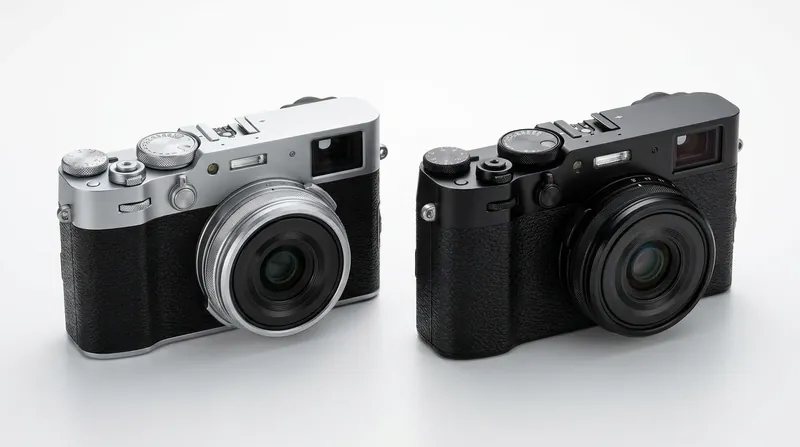
More in Shopping & Reviews
See all →Camera Market
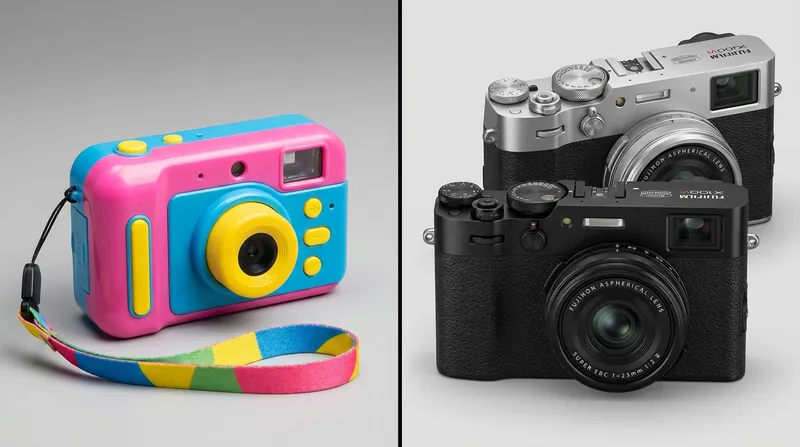
The Compact Camera Paradox: Why $35 Keychains and $1,500 Fixed-Lens Models Are Driving 2026 Market Growth
2 sources
Chroma Subsampling
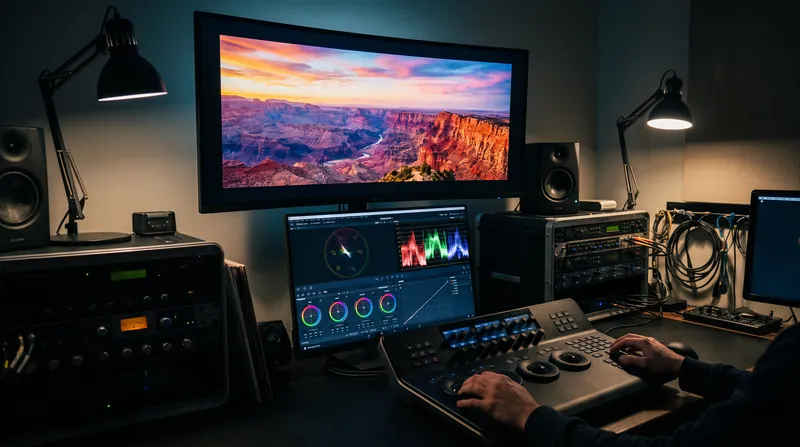
4:2:2 vs. 4:2:0 Chroma Subsampling: How Two Numbers Dictate Video Color Grading Flexibility
6 sources
Camera Tech
Phase Detection vs. Contrast Detection Autofocus: How On-Sensor Microlenses Dictate Speed and Accuracy
8 sources
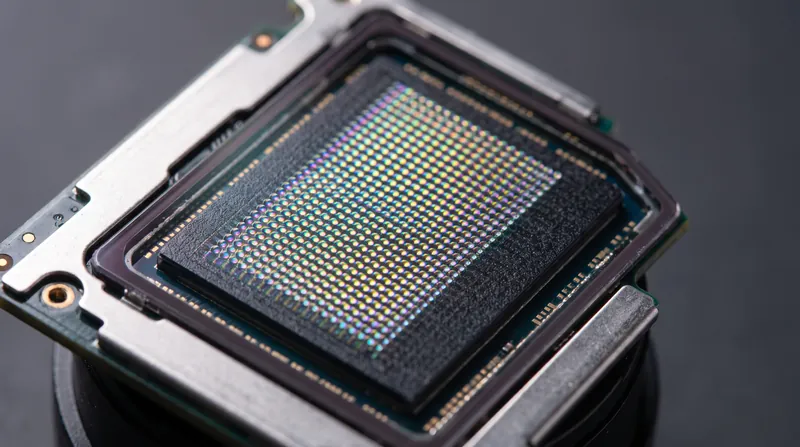
Image Stabilization
Optical Lens Stabilization and Sensor-Shift Systems: How Camera Shake Correction Dictates Low-Light Performance
7 sources
Comments
Every angle. Every day.
Get Shopping & Reviews stories with full source coverage and perspective breakdowns, free every day.