
US and Lebanon Secretly Harbor Wanted Syrian General for Intel on Missing Journalist Austin Tice
A joint investigation reveals that American and Lebanese authorities are bankrolling and protecting a former Syrian general accused of crimes against humanity. The arrangement was struck to secure intelligence regarding the 2012 abduction of American journalist Austin Tice.
By Adel Khoury
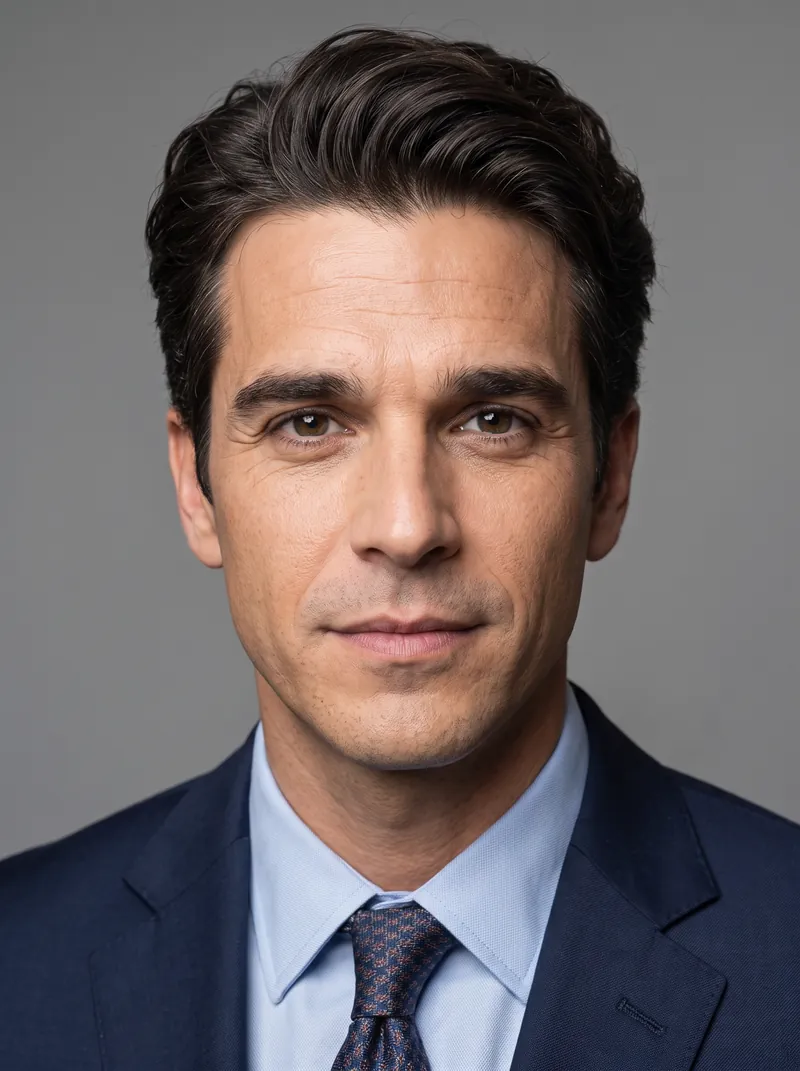
When Western intelligence agencies historically shielded former regime figures, they typically demanded actionable military secrets or defector networks in return. The arrangement protecting Bassam al-Hassan in Beirut differs on a single point. The primary currency securing his safety is the fate of one missing American journalist.[4][6]
A joint investigation has revealed that the United States and Lebanon are secretly harboring a former Syrian general wanted internationally for crimes against humanity. Hassan, who oversaw Syria's chemical weapons program under Bashar al-Assad, is living quietly in Lebanon under American protection.[1][5]
The arrangement, brokered after the Assad regime collapsed in late 2024, involves the FBI, the Central Intelligence Agency, and Lebanese security officials. These agencies are bankrolling Hassan's living needs and ensuring his physical security in exchange for intelligence regarding Austin Tice, an American journalist abducted in August 2012.[4][6]
The revelation exposes a profound diplomatic and moral tension at the heart of American foreign policy. Authorities are actively shielding a sanctioned official tied to mass atrocities from a new Syrian government that formally demands his extradition to face trial in Damascus.[1][6]
The Price of Intelligence
According to a detailed record of a meeting reviewed by investigators, Hassan was explicitly offered residency and financial support to secure his cooperation. Sources familiar with the arrangement confirmed that Hassan receives American funds through an intermediary, a mechanism designed to make the payments harder to trace.[4][5]
Hassan's journey to American protection was circuitous. Following the fall of the Assad government, he initially crossed into Lebanon and then traveled to Iran with the assistance of Iranian Revolutionary Guard officers. He later returned to Beirut under the intelligence cooperation agreement with the United States.[1]
The primary objective for the FBI and CIA remains locating Tice, a former Marine who disappeared while reporting near Damascus. Tice represents one of the highest-profile missing persons cases for the American government, spanning multiple presidential administrations that have repeatedly attempted to negotiate his release.[1][6]
Hassan's value stems from his former position at the apex of the Syrian security apparatus. As a senior advisor to Assad, he operated within the chain of command that investigators say orchestrated Tice's abduction as a planned operation, rather than a random militia kidnapping.[5][6]
Doubts and Dead Ends
However, the intelligence Hassan has provided remains highly contested. In 2025, the former general told American investigators that Tice had been executed on Assad's direct orders in 2013. He provided a specific location where the journalist's remains were allegedly buried.[1][6]
American authorities subsequently searched the site Hassan identified, but recovered nothing. Multiple sources with knowledge of the operation indicated that the failure to find remains cast immediate doubt on the validity of Hassan's account, though questions linger over whether security concerns forced the search to end prematurely.[6]
The Tice family has expressed profound frustration with the arrangement. Debra Tice, Austin's mother, flew to Lebanon in May 2025 to attempt to meet Hassan but was unsuccessful. She stated at the time that her only goal was to learn the truth about her son.[6]
"If what you are saying is true, the fact that our tax dollars are being used to furnish a comfortable life for someone associated with the use of chemical weapons on Syrian civilians... is offensive," Phil Elwood stated. Elwood serves as a spokesperson for the Tice family.[5]
A Network of Protected Figures
Elwood further characterized the arrangement as "nothing less than aiding and abetting the escape" of a war criminal. The FBI declined to comment on the specific financial and security arrangements, directing inquiries to a past statement emphasizing their focus on securing Tice's return.[5][6]
The protection agreement places the United States in direct conflict with the new government in Damascus. Officials from two different branches of the current Syrian administration stated they want Hassan returned to face justice for his role in the Assad era.[4][5]
Despite the formal extradition requests from Damascus, Syrian officials acknowledge there is little they can do to force the issue while Hassan remains under American and Lebanese patronage. Lebanese authorities have consistently refused to comment on the general's legal status within their borders.[1][5]
Hassan is not the only former regime official connected to the Tice case who has seemingly secured a comfortable exile. Investigators found that Mohammad Makhlouf, a senior officer at the facility where Tice was detained, is also currently residing in Lebanon.[6]
The Limits of Leverage
Another former general, Ghassan Nassour, who reportedly presided over the jail where Tice was held, is living with his family in the United Arab Emirates. Sakr Rustom, Hassan's nephew and another figure linked to the abduction, also resides in the UAE and declined to discuss the case.[6]
When contacted by reporters last year, Hassan refused to answer questions directly. Instead, he directed journalists to seek permission for an interview from "the FBI and CIA officials at the embassy," underscoring the extent to which American agencies control his current circumstances.[6]
The arrangement highlights the extreme measures the American government will authorize to resolve legacy hostage cases. The strategy persists even when the target's human rights record would typically trigger severe sanctions enforcement rather than financial support.[3][4]
People connected to the investigation note that the Tice case has not significantly advanced since the deal was struck in the spring of 2025. The enduring concern is that Hassan's protected status could continue indefinitely, incurring significant moral and financial costs with little tangible gain.[5][6]
Key points
- The US and Lebanon are secretly protecting Bassam al-Hassan, a former Syrian general wanted for crimes against humanity.
- Hassan is receiving residency and financial support in exchange for intelligence regarding abducted American journalist Austin Tice.
- Syria's new government has demanded Hassan's extradition to face trial, but American authorities have blocked his return.
- The Tice family condemned the arrangement, noting that the intelligence provided by Hassan has so far led to dead ends.
What we don’t know
- The exact amount of financial support the United States is providing to Bassam al-Hassan through intermediaries.
- Whether the search for Tice's remains was halted due to genuine security threats or because investigators concluded the intelligence was fabricated.
- The specific legal mechanism Lebanese authorities are using to permit Hassan's continued residency despite international sanctions.
How we got here
August 2012
American freelance journalist Austin Tice is abducted while reporting near Damascus, Syria.
Late 2024
The government of Bashar al-Assad collapses, prompting senior officials like Bassam al-Hassan to flee the country.
Spring 2025
American intelligence agencies strike a deal to provide Hassan with protection and financial support in Lebanon.
May 2025
Debra Tice travels to Lebanon in an unsuccessful attempt to meet with Hassan and learn about her son.
October 2026
A joint investigation reveals the extent of the protection arrangement, sparking outrage from the Tice family and extradition demands from Syria.
- American Intelligence Agencies
- Prioritizing the recovery of a missing American citizen over international war crimes prosecutions.
- Syrian Transitional Government
- Demands the extradition of former regime figures to face justice for atrocities committed during the civil war.
- Hostage Families and Advocates
- Frustrated by the lack of progress and morally opposed to bankrolling war criminals with taxpayer funds.
Perspectives this story doesn't cover
- Lebanese civil society groups opposing the harboring of Syrian war criminals
- International human rights organizations focused on chemical weapons accountability
Sources
Source coverage
6 outlets
3 viewpoints surfaced






- [1]Middle East EyeSyrian Transitional Government
US and Lebanon hosting Syrian general wanted for war crimes: Report
Read on Middle East Eye → - [2]NaharnetSyrian Transitional Government
Why is the US protecting a wanted Syrian general in Lebanon?
Read on Naharnet → - [3]Saudi GazetteHostage Families and Advocates
US and Lebanon protecting wanted Syrian general, says report
Read on Saudi Gazette → - [4]WLIWAmerican Intelligence Agencies
Syrian general accused of atrocities is protected by U.S. and Lebanon, NPR and BBC find
Read on WLIW → - [5]WINNFM 98.9Hostage Families and Advocates
US and Lebanon protecting wanted Syrian general, BBC finds
Read on WINNFM 98.9 → - [6]WNYCAmerican Intelligence Agencies
Syrian general accused of atrocities is protected by U.S. and Lebanon, NPR and BBC find
Read on WNYC →

More in News & Politics
See all →Intelligence Breach
Former German Intelligence Chief August Hanning Arrested on Treason and Espionage Charges
6 sources

Aviation Security
Interrogation Reveals FlyDubai Co-Pilot Planned Ben Gurion Airport Suicide Crash Before Airline Hired Him
6 sources
Transnational Repression
The Predominance Test: How Interpol Screens and Cancels Politically Motivated Red Notices
5 sources
UN Reform
African Union Demands Two Permanent, Veto-Wielding Seats on UN Security Council
6 sources

Comments
Every angle. Every day.
Get News & Politics stories with full source coverage and perspective breakdowns, free every day.