
The Cold-Climate Heat Pump Explainer: How Retrofitting Works and Why It Matters
Advances in cold-climate air-source heat pumps have made it possible to efficiently heat existing homes in sub-zero temperatures without fossil fuels. This explainer breaks down the technology, the retrofit process, and the economics of electrifying older properties.
By Factlen Editorial Team
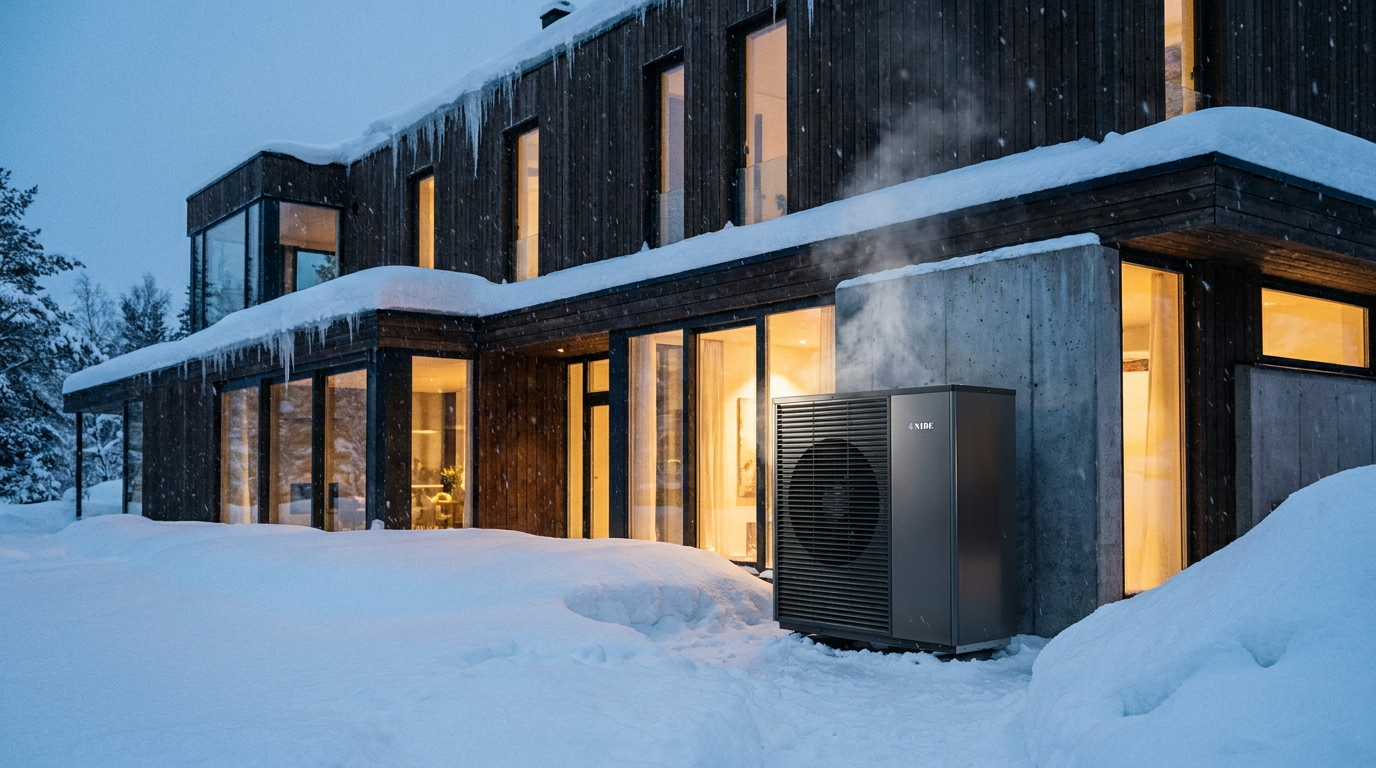
- Electrification Advocates
- Focus on the urgent need to decarbonize residential heating and the long-term efficiency gains.
- Retrofit Realists
- Focus on the practical, financial, and structural challenges of installing heat pumps in older housing stock.
- HVAC Manufacturers & Regulators
- Focus on the technological breakthroughs that have made sub-zero heating possible without backup systems.
What's not represented
- · Electric utility grid operators managing winter peak loads
- · Renters who cannot control their building's HVAC upgrades
Why this matters
Heating accounts for a massive portion of residential energy bills and carbon emissions. Understanding how to successfully retrofit an older home with a cold-climate heat pump allows homeowners to drastically reduce their utility costs while future-proofing their property against volatile fossil fuel prices.
Key points
- Modern cold-climate heat pumps can efficiently extract heat from outdoor air even at temperatures as low as -22°F.
- Variable-speed compressors allow these systems to adjust their output dynamically, achieving efficiencies up to 400%.
- Retrofitting older homes often requires assessing the building envelope and upgrading insulation before installation.
- Ductless mini-split systems offer a flexible retrofit option for historic homes without existing forced-air ductwork.
- Hybrid 'bivalent' systems allow homeowners to retain their existing gas boiler as a backup for extreme cold snaps.
- Government incentives are significantly reducing the upfront cost of transitioning away from fossil-fuel heating.
For decades, homeowners residing in regions with brutal, sub-zero winters faced a stark and often expensive choice when it came to keeping their properties warm. The standard approach involved burning fossil fuels like natural gas, propane, or heating oil in a basement furnace, or relying on electric resistance heating that caused monthly utility bills to skyrocket. These legacy systems, while capable of producing intense blasts of heat, are fundamentally inefficient because they must consume a fuel source to generate thermal energy from scratch. As energy prices have fluctuated and the environmental toll of residential carbon emissions has become a pressing global concern, the search for a cleaner, more cost-effective alternative has intensified. For a long time, the holy grail of home heating—the electric heat pump—was viewed with deep skepticism by anyone living north of the Sunbelt, dismissed as a technology that simply could not handle the rigors of a true winter freeze.[1][3]
The skepticism surrounding early heat pumps was entirely justified by the limitations of the technology at the time. Traditional heat pumps, which operate by moving ambient heat from one place to another rather than generating it, were engineered primarily for mild climates where temperatures rarely dipped below freezing. When the mercury plummeted, these older units struggled to extract enough thermal energy from the frigid outdoor air. Their single-speed compressors would run continuously without producing sufficient warmth, forcing the system to rely on an integrated electric resistance backup heater. This emergency backup was notoriously expensive to operate, effectively negating any efficiency gains the heat pump offered during milder weather. Consequently, contractors and homeowners in northern states and provinces largely abandoned the idea of heat pumps, cementing the conventional wisdom that fossil fuels were the only reliable option for surviving a harsh winter.[3][5]
Today, that conventional wisdom is entirely obsolete, thanks to a quiet but profound revolution in thermodynamics and compressor engineering. The advent of the Cold-Climate Air-Source Heat Pump (ccASHP) has fundamentally rewritten the rules of residential HVAC systems. These modern, hyper-efficient units are specifically designed to maintain robust heating capacity even when the outdoor environment resembles an arctic tundra. By leveraging advanced refrigerants and sophisticated software controls, ccASHPs can extract meaningful thermal energy from air that feels bone-chillingly cold to human skin. This technological leap has transformed home remodeling and retrofitting, allowing homeowners in historically frigid regions to fully electrify their heating systems, drastically reduce their carbon footprints, and insulate themselves against the volatile price swings of the global fossil fuel market.[1][5]
To understand how a cold-climate heat pump achieves this seemingly impossible feat, it helps to think of the appliance as a standard kitchen refrigerator running in reverse. A refrigerator keeps food cold by extracting the ambient heat from inside the insulated box and dumping it into the surrounding kitchen. A heat pump performs the exact same thermodynamic trick, but on a much larger scale. It utilizes a closed-loop system filled with a specialized liquid refrigerant that possesses an extremely low boiling point. Even when the outdoor air temperature drops to zero degrees Fahrenheit, that air still contains a significant amount of thermal energy compared to absolute zero. As the outdoor fan pulls this freezing air across the exterior evaporator coils, the ultra-cold refrigerant absorbs the ambient heat and undergoes a phase change, boiling into a low-pressure gas.[1][3]

The true magic of the cold-climate heat pump—and the primary reason it outperforms its predecessors—lies in the compressor. Older heat pumps relied on single-speed compressors that operated on a simple binary: they were either running at maximum capacity or turned off completely. Modern ccASHPs, by contrast, utilize variable-speed, inverter-driven compressors. This technology acts like the accelerator pedal in a car, allowing the system to infinitely adjust its operating speed to match the precise heating load required by the home at any given moment. When the temperature drops rapidly, the inverter ramps up the compressor speed, squeezing the warmed refrigerant gas under immense pressure. This rapid compression drastically raises the temperature of the gas, creating a high-grade heat that is then pumped indoors to warm the living space.[1][5]
The performance metrics of these advanced compressors are nothing short of remarkable. Leading manufacturers have developed cold-climate models that can maintain 100 percent of their rated heating capacity down to 5 degrees Fahrenheit, ensuring that the home remains perfectly comfortable without any drop in output. Even more impressively, these systems continue to operate efficiently at temperatures as low as negative 15 degrees or negative 22 degrees Fahrenheit. The U.S. Department of Energy recently concluded a multi-year Cold-Climate Heat Pump Technology Challenge, which rigorously tested these units in extreme laboratory conditions and real-world field trials. The results confirmed that modern ccASHPs can reliably deliver heat in the harshest winter environments, effectively eliminating the need for fossil-fuel backup systems in all but the most extreme, off-grid scenarios.[3][5]
The efficiency of any heating system is typically measured by its Coefficient of Performance (COP), a metric that compares the amount of heat delivered to the home against the amount of electrical energy consumed to produce it. A brand-new, top-of-the-line natural gas boiler might achieve an efficiency rating of 90 to 95 percent, meaning that for every unit of energy consumed, nearly all of it is converted into usable heat, with a small fraction lost as exhaust. However, because a heat pump moves heat rather than creating it through combustion, it routinely breaks the 100 percent efficiency barrier. A modern cold-climate heat pump can achieve a COP of 3 or 4, meaning it delivers three to four times more thermal energy to the home than the electrical energy it draws from the grid.[3][4]
However, because a heat pump moves heat rather than creating it through combustion, it routinely breaks the 100 percent efficiency barrier.
Even when the outdoor temperature drops to 5 degrees Fahrenheit and the heat pump has to work significantly harder to extract thermal energy, it still maintains a massive efficiency advantage over legacy systems. Studies have shown that in these freezing conditions, a cold-climate heat pump remains more than twice as efficient as a traditional fossil-fuel furnace. This exponential leap in efficiency is what makes the technology so attractive to policymakers and environmental advocates. By transitioning a home from a gas or oil boiler to a high-efficiency heat pump, the property's overall energy consumption plummets. Furthermore, as the broader electrical grid continues to incorporate more renewable energy sources like wind and solar, the carbon footprint of operating the heat pump shrinks year after year, offering a clear pathway to residential decarbonization.[4][7]

Despite the clear technological advantages, retrofitting an older home with a cold-climate heat pump presents a unique set of engineering and logistical challenges. Unlike new construction, where the HVAC system can be perfectly integrated into the architectural design from day one, existing buildings come with a host of inherited constraints. Older homes often feature legacy ductwork that was sized for high-velocity gas furnaces, aging cast-iron radiators designed for boiling water, and varying levels of insulation that allow precious heat to leak through the walls and roof. In Europe, where approximately 85 percent of the building stock was constructed before the year 2000, navigating these retrofit complexities is widely considered the primary hurdle to scaling low-carbon heating and meeting ambitious climate targets.[6]
Before a contractor even begins to design a heat pump retrofit, building science experts strongly recommend conducting a comprehensive assessment of the home's thermal envelope. Upgrading the property's weatherization—by sealing drafty windows, adding blown-in insulation to the attic, and addressing air leaks in the basement—is often the most cost-effective first step in the remodeling process. By reducing the overall heat loss of the building, homeowners can significantly lower their peak heating demand. This allows the HVAC contractor to specify a smaller, more affordable heat pump system that won't have to strain to keep the house warm during a severe cold snap. A well-insulated home also ensures that the heat pump operates in its most efficient, low-speed mode for the majority of the winter.[1][3]
For older homes that lack existing ductwork—such as those that have historically relied on hot water radiators, electric baseboards, or radiant floor heating—ductless 'mini-split' systems offer an incredibly flexible and minimally invasive retrofit solution. A mini-split system consists of a single outdoor compressor unit connected via small refrigerant lines to one or more indoor air-handling units, which are typically mounted high on the walls or recessed into the ceiling. Because they do not require the installation of bulky sheet metal ducts, mini-splits can be retrofitted into historic properties without destroying the architectural integrity of the home. Furthermore, they allow for precise 'zoning,' enabling homeowners to set different temperatures for different rooms and avoid wasting energy heating empty spaces.[1][3]

Conversely, if a home already features central air conditioning or a forced-air furnace, a centrally ducted cold-climate heat pump can often be installed to utilize the existing infrastructure. In this scenario, the outdoor compressor is paired with an indoor air handler that pushes the warmed air through the home's existing vent network. However, this type of retrofit requires careful calculation. Heat pumps generally deliver air at a lower, more consistent temperature than the scorching blasts produced by a gas furnace. Therefore, contractors must thoroughly inspect the existing ductwork to ensure it is properly sized, sealed, and capable of handling the specific airflow requirements of the new system without creating uncomfortable drafts or whistling noises in the living areas.[1][3]
In some exceptionally cold regions, or in drafty older homes where a deep energy retrofit is financially out of reach, homeowners and contractors often opt for a 'bivalent' or hybrid heating strategy. This pragmatic approach involves installing a new cold-climate heat pump to handle the vast majority of the home's heating needs, while retaining the existing natural gas or heating oil boiler as a supplemental backup. The system's smart thermostat is programmed with a specific 'switchover' temperature. When the outdoor air drops below a certain threshold—say, negative 10 degrees Fahrenheit—the heat pump temporarily pauses, and the fossil-fuel boiler kicks in to carry the load through the extreme cold snap. This hybrid model provides peace of mind while still delivering massive reductions in carbon emissions and fuel consumption.[2][7]
The economics of retrofitting a home with a cold-climate heat pump have become increasingly favorable, driven by both the inherent efficiency of the technology and a wave of new government incentives. While the upfront installation cost of a ccASHP can be higher than simply swapping out an old gas furnace for a new one, the long-term operational savings are substantial. The U.S. Department of Energy estimates that homeowners in cold regions who replace an aging oil system with a high-efficiency heat pump can save nearly $1,000 annually on their utility bills. Over the 15-to-20-year lifespan of the equipment, these savings easily offset the initial capital investment, making the heat pump a financially sound upgrade for the average household.[1][3]

To further accelerate the transition away from fossil fuels, governments across North America and Europe are rolling out aggressive rebate and grant programs specifically targeted at heat pump retrofits. In Canada, for example, the Oil to Heat Pump Affordability program provides direct, substantial funding to help low-to-median-income homeowners transition away from expensive and highly polluting heating oil. By subsidizing the upfront cost of cold-climate models—which can reach efficiencies up to three times higher than traditional oil furnaces—these programs are democratizing access to clean technology. Similar initiatives in the United States, funded by recent federal legislation, offer point-of-sale rebates and tax credits that significantly lower the barrier to entry for working-class families looking to upgrade their home infrastructure.[2][7]
Ultimately, the widespread adoption of cold-climate air-source heat pumps represents a critical and necessary shift in residential infrastructure. For decades, the built environment has been inextricably linked to the combustion of fossil fuels, locking millions of homes into a cycle of volatile energy costs and unavoidable carbon emissions. By electrifying home heating and proving that the technology can thrive in the harshest winter conditions, the HVAC industry has provided a viable blueprint for the future of home remodeling. As contractors become more adept at navigating the complexities of retrofitting older properties, and as the technology continues to mature, the cold-climate heat pump is poised to become the undisputed standard for residential comfort, efficiency, and sustainability.[4][7]
How we got here
1970s-1990s
Early heat pumps gain popularity in the U.S. Sunbelt but fail to provide adequate heating in northern climates, cementing their reputation as a warm-weather technology.
Early 2010s
HVAC manufacturers introduce variable-speed inverter compressors, drastically improving the low-temperature performance of air-source heat pumps.
2021
The U.S. Department of Energy launches the Cold-Climate Heat Pump Technology Challenge to accelerate the development of sub-zero heating systems.
2023-2024
Major manufacturers successfully demonstrate heat pumps that maintain 100% capacity at 5°F and operate efficiently down to -22°F.
2025-2026
Government incentive programs in the U.S. and Canada drive a massive surge in heat pump retrofits for older, fossil-fuel-dependent homes.
Viewpoints in depth
Electrification Advocates
Focus on the urgent need to decarbonize residential heating and the long-term efficiency gains.
This camp argues that the transition to cold-climate heat pumps is a non-negotiable step in fighting climate change. They point to the massive efficiency gains—often achieving 300% to 400% efficiency compared to the 90% ceiling of fossil-fuel boilers—as proof that the technology is ready for mass deployment. Advocates emphasize that as the electrical grid becomes greener, the carbon footprint of a heat pump approaches zero, making it the only viable long-term solution for residential heating.
Retrofit Realists
Focus on the practical, financial, and structural challenges of installing heat pumps in older housing stock.
While acknowledging the environmental benefits, this perspective highlights the friction of real-world retrofits. They caution that simply dropping a heat pump into a drafty, poorly insulated 100-year-old home will lead to subpar performance and high electric bills. This camp advocates for a 'fabric first' approach, insisting that deep energy retrofits—such as upgraded insulation, sealed ductwork, and window replacements—must precede or accompany heat pump installations to ensure the systems perform as advertised.
HVAC Manufacturers
Focus on the technological breakthroughs that have made sub-zero heating possible without backup systems.
The manufacturing sector emphasizes the rapid evolution of inverter-driven, variable-speed compressors and advanced refrigerants. They argue that the outdated reputation of heat pumps failing in the cold is based on legacy single-speed technology. By showcasing units that maintain 100% heating capacity at 5°F and operate reliably down to -22°F, manufacturers are pushing to rewrite building codes and consumer expectations, proving that modern engineering has solved the cold-weather problem.
What we don't know
- How quickly local electrical grids will need to be upgraded to handle the increased winter demand from mass heat pump adoption.
- Whether the shortage of trained HVAC installers familiar with cold-climate retrofits will create a bottleneck in the market.
Key terms
- Cold-Climate Air-Source Heat Pump (ccASHP)
- A specialized heating and cooling system designed to efficiently extract thermal energy from outdoor air even in sub-zero temperatures.
- Coefficient of Performance (COP)
- A metric of efficiency that measures the amount of heating or cooling provided by a system relative to the electrical energy it consumes.
- Variable-Speed Compressor
- An advanced motor that can infinitely adjust its operating speed to match a home's exact heating demand, rather than simply turning on and off.
- Bivalent System
- A hybrid heating setup that uses a heat pump as the primary heat source, with a traditional fossil-fuel boiler retained as a backup for extreme cold.
- Mini-Split
- A ductless heat pump system featuring an outdoor compressor connected to individual indoor air-handling units mounted in specific rooms.
- Building Envelope
- The physical separator between the conditioned and unconditioned environment of a building, including the roof, walls, windows, and foundation.
Frequently asked
Do heat pumps really work in freezing weather?
Yes. Modern cold-climate air-source heat pumps (ccASHPs) use variable-speed compressors and advanced refrigerants to extract heat from the air even when temperatures drop to -15°F or -22°F.
Do I need to replace my ductwork to install a heat pump?
Not necessarily. If your existing ductwork is properly sized and sealed, a central heat pump can use it. If you don't have ducts, a ductless 'mini-split' system can be installed instead.
Should I keep my old gas boiler as a backup?
In exceptionally cold regions or poorly insulated homes, a 'bivalent' or hybrid system is common. The heat pump handles 90% of the winter, and the boiler only kicks in during extreme cold snaps.
Are heat pumps more expensive to run than gas furnaces?
Because they move heat rather than generating it, heat pumps are up to three times more efficient than gas furnaces. In most regions, this translates to significant annual savings on utility bills.
Sources
Source coverage
7 outlets
3 viewpoints surfaced





[1]Department of EnergyHVAC Manufacturers & Regulators
Air-Source Heat Pumps
Read on Department of Energy →[2]Natural Resources CanadaHVAC Manufacturers & Regulators
Heat pumps for the Oil to Heat Pump Affordability program
Read on Natural Resources Canada →[3]EnergySageRetrofit Realists
Do Heat Pumps Work In Cold Climates?
Read on EnergySage →[4]BEUCElectrification Advocates
Yes, heat pumps work when it's freezing cold!
Read on BEUC →[5]CarrierHVAC Manufacturers & Regulators
Cold Climate Heat Pump Systems | Efficient Heating in Extreme Weather
Read on Carrier →[6]GrundfosRetrofit Realists
Heat pump retrofit is the key to scaling in Europe
Read on Grundfos →[7]Factlen Editorial TeamElectrification Advocates
Synthesis by Factlen editorial team
Read on Factlen Editorial Team →

More in home
See all 33 stories →HVAC Tech
How to Optimize Your Heat Pump for Maximum Efficiency and Lower Bills
8 sources
Home Electrification
The Economics and Mechanics of the Zero-Emission Home Retrofit
6 sources
Appliance Tech
How Induction Cooking Works: The Science and Stakes Behind the Kitchen Transition
8 sources

Neuroaesthetics
The Science of the 'Sensory Sanctuary': How Interior Design Literally Rewires Your Brain
6 sources

Every angle. Every day.
Get home stories with full source coverage and perspective breakdowns delivered to your inbox.